Kentucky Academy of Science

Program Archive

Print Version


University of Louisville
November 21-22, 2025
2025 Annual Meeting Program
 
Welcome to the 111th
Kentucky Academy of Science Annual Meeting
and
the 93nd Anniversary meeting of the Kentucky Junior Academy of Science


Welcome to the University of Louisville

Katie Cardarelli, Interim University Provost
 
Welcome to the 2025 Annual Meeting of the Kentucky Academy of Science — we are thrilled to host you here at the University of Louisville. It is an honor to bring together scientists, educators, students, and community partners from across the commonwealth and beyond to support and promote Science, Technology, Engineering and Mathematics (STEM) achievements and initiatives.

As Kentucky’s premier metropolitan research university, UofL is committed to advancing knowledge that improves lives, strengthens communities and fuels innovation. Our Cardinal community takes great pride in being a place where bold ideas take flight, where discovery is driven by purpose and where interdisciplinary collaboration leads to transformative impact. That commitment is embodied in our reaffirmation as a “Research 1: Very High Spending and Doctorate Production” institution by the Carnegie Foundation, a distinction held by only one other school in the state.
Contributing to that distinction is UofL’s commitment to STEM initiatives. In 2023, the UofL J.B. Speed School of Engineering opened a STEM+ Hub for K-12 students and community activities. Earlier this year, UofL joined the American Association for the Advancement of Science’s STEMM Opportunity Alliance. UofL is the alliance’s only academic partner in the region. And, earlier this semester, the Speed School opened its new Student Success & Research Building.
Of course, we are fortunate to have strong community partners, such as the Kentucky Academy of Science, whose Athey Science Education and Outreach program recently awarded funding to UofL for the development and distribution of science education materials focused on nanoparticle synthesis to chemistry students across Kentucky.
During your stay on UofL’s campus, you will experience the full spectrum of scientific disciplines. Please take advantage of every opportunity to ask questions, share insights and form new connections that will strengthen your STEM work as well as the scientific community throughout Kentucky. We hope this meeting inspires you to continue pursuing your scientific interests.
We also offer heartfelt thanks to our sponsors, volunteers and program organizers. Your dedication reflects UofL’s commitment to be a great place to learn, discover, connect and work — values that guide our mission and strengthen our shared commitment to advancing science for the public good.
On behalf of the University of Louisville and the Kentucky Academy of Science, welcome to Louisville, welcome to our campus and welcome to a community where science, innovation and impact thrive.


Registration is at the Student Activities Center (SAC), 2nd floor
2100 South Floyd Street, Louisville, Kentucky 40292


Table of Contents
Kentucky Junior Academy of Science
Code of Conduct
Special Accommodations
Land Acknowledgment
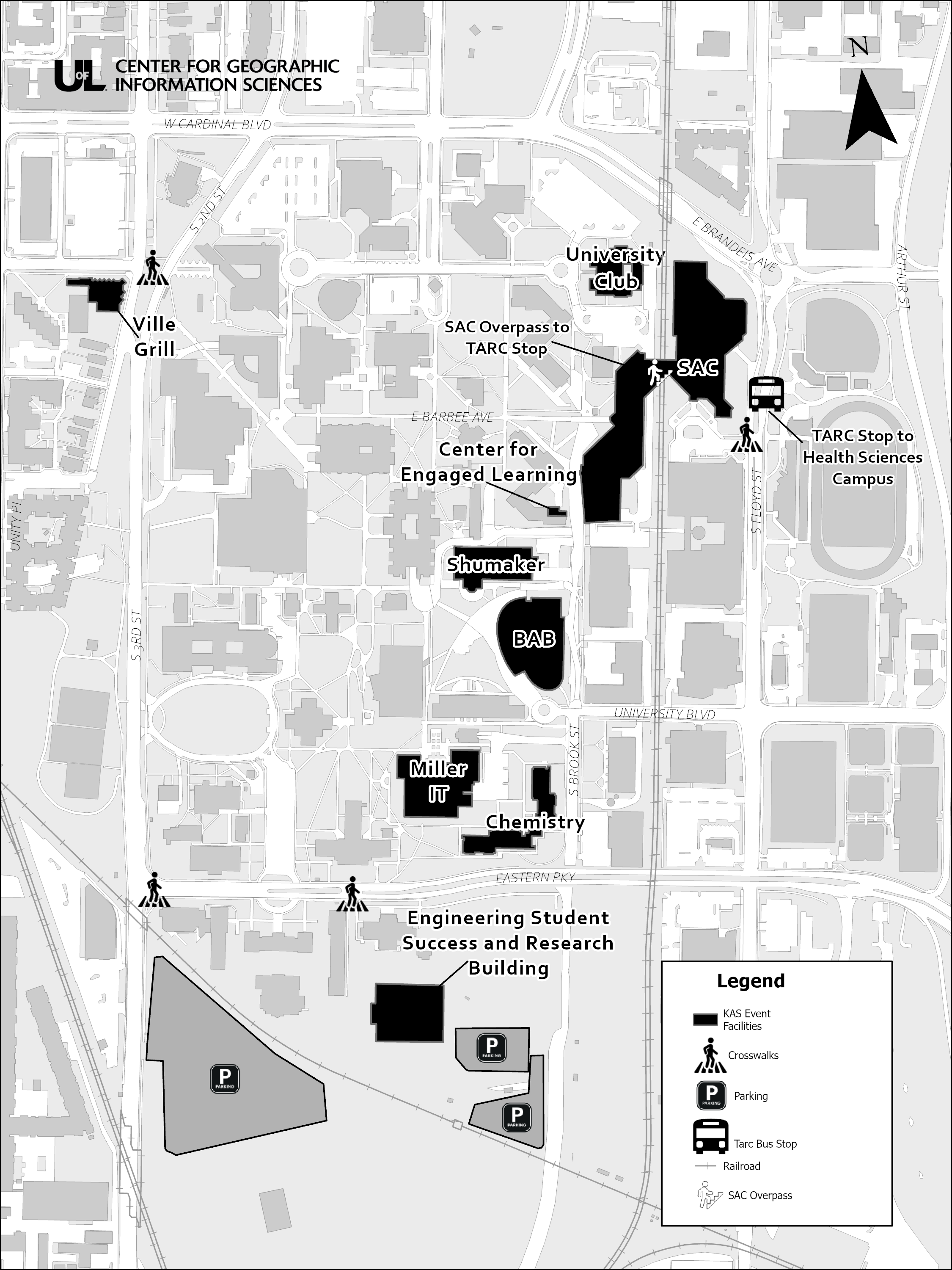
Campus Map 
Parking
WiFi at U of L
Food
Photo Contest

Sponsors
Exhibitors


Friday Schedule Grid (download pdf )

FRIDAY Nov 21
8:00 Check-in, Coffee, Breakfast -
SAC Room 201
8:00 Practice Room Open - W116A
9:00 – 12:00 Oral Presentations, opening with Section Meetings
Twist, Extract & Solve, Hands-on Lab with Spalding University -
SAC Room 107
Science Education- SAC Room 116
Cellular & Molecular Biology - SAC Room 117
Ecology- SAC Room 118
Psychology, Anthropology, SociologySAC Room 303A
Special Session: Nuclear Energy in Kentucky -SAC Room 308 (Floyd Theater)
Physiology & Biochemistry- SAC Room 309K
Geology - Center for Engaged Learning Conference Room

9am - 1:00pm Exhibitors - SAC 2nd floor
11:00am - 2:30pm    U of L Engineering Design & Innovation Showcase, drop in next door at University Club
12:00 noon - 1:15 STEM Careers lunch (by RSVP) - SAC Room 201
12:00 noon - 1:15 Lunch on your own / Exhibitors - SAC Food Court or nearby


1:30-3:30 Poster Session- All Sections Belknap Academic Building
(All Posters are up the whole time! Odd numbers present 1:30-2:30; Even numbers present 2:30-3:30)
Agricultural Sciences Posters

Anthropology & Sociology Posters
Cellular and Molecular Biology Posters
Chemistry: Analytical & Physical Posters
Chemistry: Organic / Inorganic Posters
Computer & Informational Sciences Posters
Ecology Posters
Engineering Posters
Environmental Sciences Posters
Geography Posters
Geology Posters
Health Sciences Posters
Mathematics Posters
Microbiology Posters
Physics & Astronomy Posters
Physiology and Biochemistry Posters
Psychology Posters
Science Education Posters
Zoology & Botany Posters


3:30 - 4pm Snack break – Belknap Academic Building

4:00- 6:00pm Lab Crawl - Follow signs to open labs
    Shuttle to Health Sciences Campus - meet your leader in BAB lobby at 3:40
    Campus Sustainability walking tour - meet outside BAB front doors


6:00-8:30 – pm Kentucky Scientists reception  - Speed School of Engineering ESSR Building
7:00 Science Policy meetup - Speed School of Engineering ESSR Building, 2nd floor lounge area


Saturday Schedule Grid (download pdf)


SATURDAY Nov 22

8:00 Check-in, Coffee, Breakfast-
SAC Room 201
KCTCS Faculty Breakfast (by RSVP)- SAC Room 309K

8:00 Practice Room Open - W116A

9:00 – 10:15 Keynote Speaker, Dr. Joel Brown- SAC Room 201
"The evolution of an evolutionary ecologist: from desert rodents to cancer"

10am - 2:00pm Exhibitors -
SAC 2nd fl.

10:15-10:30 Break

10:30- 12:00 noon Oral Presentations
Mathematics -
SAC Room 107
Computer & Information Sciences- SAC Room 116
Chemistry: Analytical & Physical- SAC Room 117
Agricultural Sciences - SAC Room 118
Microbiology - SAC Room 303A
Special Session: Federal Funding- SAC Room 308 (Floyd Theater)
Engineering - SAC Room 309
Zoology & Botany -  Center for Engaged Learning conference room

12:00 Box Lunch Pickup (by preorder) - outside SAC Room 201
or Lunch on your own - SAC Food Court or nearby

12:15 - 1:15pm KAS Business Meeting Lunch- SAC Room 201

1:30 – 4:30pm Oral Presentations (with 2:45 Break)
Health Sciences -
SAC Room 107
Physics & Astronomy (until 4:45)- SAC Room 116
Chemistry: Analytical/ Physical and Chemistry: Organic/ Inorganic- SAC Room 117
Agricultural Sciences - SAC Room 118
Special Session: Kentucky Aerospace Research- SAC Room 308 (Floyd Theater)
Environmental Sciences - Center for Engaged Learning conference room



Thank you to our Sponsors and Partners


Additional Sponsors
University of Louisville Graduate School

University of Louisville Center for Engaged Learning
 

Thank you to our partners at the University of Louisville
College of Arts & Sciences
Speed School of Engineering


Thank you to our Program Partners


Visit Our Event Exhibitors on the 2nd floor of the Student Activities Center 

Friday 9am - 1pm
Saturday 10am - 2pm


KY INBRE
The KY INBRE is a collaborative network of biomedical researchers in state-supported and independent institutions of higher education within Kentucky and is funded through a grant from the National Institutes of Health (NIH) National Institute of General Medical Sciences (NIGMS).                                                                                
https://www.kyinbre.org

Kentucky Association for Environmental Education
The mission of Kentucky Association for Environmental Education (KAEE) is to increase environmental knowledge and community engagement in Kentucky through the power of environmental education. Our vision is a sustainable world where environmental and social responsibility drive individual and institutional choice.
https://www.kaee.org/

University of Louisville-Integrated Programs in Biomedical Sciences
The Integrated Programs in Biomedical Sciences (IPIBS) is a gateway for graduate students interested in biomedical research as a career choice. The University of Louisville offers a supportive academic environment in a friendly, vibrant city and a financial assistance package consisting of an annual stipend of $33,000, health insurance and full tuition coverage. Once a student passes their Qualifying Exam and advances to Doctoral Candidacy, the stipend amount increases to $35,000. Graduate students enter the IPIBS program through one of the five basic biomedical discipline-based PhD programs at the School of Medicine. IPIBS awards fellowships for students in the first two years in the program, after which support is maintained through the Departments.                                                                                                     
https://louisville.edu/medicine/ipibs

College of Arts and Sciences / University of Louisville
The natural sciences at UofL’s College of Arts & Sciences foster critical thinking and innovation in fields enhancing our understanding of the physical world and human life. Faculty support includes research opportunities, study abroad and student organizations, preparing graduates for careers in actuarial science, business, education, environmental policy, government, medicine and research, as well as readiness for dental, medical and veterinary schools.
https://artsandsciences.louisville.edu/

University of Louisville School of Medicine  and MD-PhD Program
The University of Louisville School of Medicine impacts the Louisville community, the commonwealth of Kentucky, and beyond through forging new paths in academic medicine, training the future health workforce, driving innovation and discovery, and fueling the economy. We pioneer groundbreaking research while preparing the next generation of physicians and scientists to carry that work forward. We are committed to pushing the boundaries of medical knowledge, translating research into practice and fostering innovation that elevates the standard of care. 
louisville.edu/medicine 

University of Kentucky PhD Program in Pharmaceutical Sciences
The University of Kentucky PhD Program in Pharmaceutical Sciences is a multidisciplinary program designed to prepare motivated individuals for academic, industrial, or government careers in pharmaceutical and biomedical research. It is a graduate training program that encompasses research in areas of pharmaceutical sciences that range from identifying fundamental mechanisms of human disease, to the design, development and formulation of new medicines, to understanding the impact of drug policies on health care systems. Within this broad scientific framework, students develop individually tailored programs of study to meet their particular research interests and career objectives. All students who are admitted to the Pharmaceutical Science Graduate Program receive a teaching or research assistantship which includes fully paid tuition and paid health insurance.
https://pharmacy.uky.edu/apply/phd-program

Spalding University
Spalding University in downtown Louisville, Ky. is a private, liberal arts institution with a commitment to compassion & a deep connection to community. We offer many graduate programs at the Master's and Doctorate level, such as Athletic Training, Physical Therapy, Occupational Therapy, and more!
spalding.edu

Ogden College of Science and Engineering, Western Kentucky University
Ogden College encompasses the applied and basic sciences, offering a broad range of degree programs through our eight Academic Units.  Our mission is to empower individuals to become leaders through academic achievement, global connections, and engagement in research, education, and service.
https://www.wku.edu/ogden/

Jones College of Science, Engineering and Technology, Murray State UnIversity
Six departments with graduate and undergraduate degrees prepare students for careers in a variety of fields with applications like physics, engineering, industrial technology, occupational safety and health, biological sciences, chemistry, wildlife conservation, earth and environmental science, sustainability, telecommunications systems management and so much more.
https://www.murraystate.edu/academics/CollegesDepartments/CollegeOfScienceEngineeringandTechnology/index.aspx

The Laboratory Safety Institute
The Laboratory Safety Institute (LSI) is a non-profit dedicated to empowering people to practice safer science in schools and labs worldwide. We believe every breakthrough starts with a safe place to explore curiosity,  but safety lays the groundwork for success. Our vision is a world where safer science is intrinsic to education, work, and life. For over 45 years, LSI has trained 100,000+ scientists, educators, and lab personnel in 130 industries across 30 countries, providing the tools, training, and resources to integrate safety into STEM education and research through our Safer Science Program.
https://www.labsafety.org/

University of Louisville Science Policy and Outreach Group
We are a graduate and undergraduate student organization at the University of Louisville, interested in helping others understand the importance of science. Our goals are to:
1) Educate the community about science research, careers, and policy
2) Expose students to science-related careers and research at a younger age
3) Create a dialogue with members of Congress in order to promote science-based policy and STEM-education.
In sum, our purpose is to create and facilitate a dialogue between students in the sciences, members of Congress, and the community in order to mutually benefit all groups.
https://spogatuofl.weebly.com/

University of Kentucky - Kentucky Geological Survey
The Kentucky Geological Survey (KGS) is a state-supported research center and public resource within the University of Kentucky. Our mission is to support the sustainable prosperity of the Commonwealth, the vitality of its flagship land grant university, and the welfare of its people. We do this by conducting research in the geological sciences, providing unbiased data and information to the public, and engaging with stakeholders. Research conducted by the KGS serves the Commonwealth and its people by building resilience.
https://www.uky.edu/KGS/

Kentucky College of Osteopathic Medicine (KYCOM) +  College of Optometry (KYCO)
The Kentucky College of Osteopathic Medicine (KYCOM) is ranked second among all D.O. and M.D. granting medical schools in the U.S. for graduates entering primary care residencies. KYCOM’s guiding principle has always been to educate physicians to serve underserved and rural areas, with an emphasis on primary care. UPIKE’s Kentucky College of Optometry (KYCO) is the only program in Kentucky to offer the doctor of optometry (O.D.) degree.
https://www.upike.edu/osteopathic-medicine/about-kycom/       
https://www.upike.edu/optometry/program-overview/

Speed School of Engineering, University of Louisville
https://engineering.louisville.edu/

Kentucky State University
KSU is a Public HBCU and an 1890 Land-Grant Institution. 
www.kysu.edu

Kentucky Department of Agriculture
The State Apiarist will BEE on hand with information about the KDA Apiary program and the Office of State Veterinarian. Visit us to learn about KDA's college level internship program. 
https://www.kyagr.com/

Kentucky FIRST Robotics
Kentucky FIRST Robotics inspires young people to be science and technology leaders through hands-on robotics programs that foster innovation, teamwork, and problem-solving. Serving students across the Commonwealth, Kentucky FIRST provides opportunities from elementary through high school to engage in STEM learning that's fun, challenging, and transformative.
www.kyfirstrobotics.org

Thank you to our Local Arrangements Team
Jenna Burns, Drew Jacobs, Sean Johnson, Paul Demarco, Craig Grapperhaus, Karen Blake, Missi Moutardier, Wayne Holloway, Billye Potts, Wei Song, Paula Huffman, Linda Fuselier, Jeff Masters, Rafael Demarco, Kyle Lucas

Thank you to KAS Officers
President LiLi Zyzak 
President - Elect Jessica Moon 
Vice President  Marilyn Akins
Past President Noel Novelo

Thank you to our Program Coordinator and Kentucky Junior Academy Director
Melony Stambaugh

KAS Executive Director
Amanda Fuller

Thank you to Our 2025 Section Leaders & Session Chairs


Aerospace Research in Kentucky
Jacob Owen, NASA-KY

Agricultural Sciences
Theoneste Nzaramyimana, Chair, Kentucky State University
Navdeep Singh, Secretary, Western Kentucky University

Anthropology and Sociology
Daniel Joseph, Chair, Eastern Kentucky University

Cellular and Molecular Biology
Smita Joshi, Chair, EKU
Lisa Middleton, Secretary, EKU

Chemistry: Analytical/ Physical and Chemistry: Organic / Inorganic
Laura Rowe, Chair, Eastern Kentucky University
Laura Walther, Secretary, Asbury University

Computer and Information Sciences
Neil Moore, Chair, University of Kentucky
Nathan Johnson, Secretary, Bellarmine University

Ecology
Marvin Ruffner, Chair, Asbury University
Ben Brammell, Secretary, Asbury University

Engineering
Madhav Baral, Chair, UK

Environmental Sciences
John Starnes, Chair, KCTCS
Lalitha Kannan , Secretary, KCTCS

Geography
Buddhi Gyawali, Chair, Kentucky State University

Geology 
Walter Borowski, Chair, EKU
Richard Smath, Secretary, University of Kentucky

Health Sciences 
Frederick Bebe, Chair, Kentucky State University
Savannah Blair, Secretary, Morehead State University

Mathematics
Justin Trulen, Chair, Kentucky Wesleyan College
Jena Hinds, Secretary, University of Kentucky

Microbiology
Amanda Seaton, Chair, Spalding University
Simran Banga, Secretary, WKU

Nuclear Energy in Kentucky
Austin McMasters, KAS
Trent Garrison, KCTCS

Physics and Astronomy
Kevin Adkins, Chair, Morehead State University
John Waite, Secretary, Morehead State University

Physiology and Biochemistry
Michael Guy, Chair, NKU
Catherine Shellton, Secretary, NKU

Psychology
Matthew Shake, Chair, Western Kentucky University

Science Education
Matt Downen, Chair, Centre College
Charlisa Daniels, Secretary, NKU

Zoology / Botany
Jeremy Gibson, Chair, Kentucky Wesleyan University


Thank you Melissa Dougherty for Cover Design & Printed Program Layout

2025 KAS Annual Meeting Online Program


Join Your Section meeting &  Oral Presentation
This year look for Section meetings at the top of each Oral Presentation session. These meetings are for you to discuss issues, events or business specific to your Section, and to elect new officers for 2026. Graduate and Professional members are welcome to serve as Section Chair or Section Secretary, and we encourage you to participate in electing these officers. 
Stay around after presentations to talk informally with colleagues & presenters. Find out more about your colleagues’ research, and tell people more about your own research. This is your chance to follow up on something you learned, and ask about something that sparked your interest!

Get the Most out of Posters
When you enter the Belknap Academic Building, we’re asking you to draw a couple numbers and visit those posters. Talk to presenters and ask them about their research.  What are you curious to know more about? Ask a friendly question, or offer an idea. Science is a community process and advances with feedback & input from fellow scientists!


 Junior Academy


We welcome the Kentucky Junior Academy of Science -- middle and high school students have opportunities over these two days to interact with undergraduates, graduates, and faculty members.  I encourage you to use this opportunity to guide the next generation of scientists towards their future scientific ventures.  Please help support these budding scientists and welcome them to KAS and the University of Louisville!
 
Melony Stambaugh
Director, Kentucky Junior Academy of Science
Program Coordinator, Kentucky Academy of Science


KAS Code of Conduct
The Kentucky Academy of Science Annual Meeting is an interdisciplinary professional environment that cultivates scientific discovery and understanding.
Thank you for contributing to our advancement of science by behaving professionally, respectfully and collegiately at all times. If you witness inappropriate behavior please notify a KAS staff person or officer.


KAS has adopted a Code of Ethics, which applies to all attendees, speakers, exhibitors, staff, and volunteers at any KAS-sponsored meeting, event, and workshop.
 

Special Accommodations
We are doing our best to plan and host an inclusive and welcoming Annual Meeting.  If you have a suggestion or concern please share it with a KAS staff person or board member.

Gender Neutral restrooms are available in the Student Activities Center and in the Belknap Academic Building 1st fl.
Mothers' Room is available in the Student Activities Center W108 and in the Belknap Academic Building 1st fl.
A Prayer & Meditation Room is is available in the Student Activities Center W303E
A Practice Room is available for presenters in the Student Activities Center W116A


Land Acknowledgment
We are gathering on lands of the Shawnee, Osage, Cherokee, Hopewell and Adena people. For more information about the indigenous peoples of North America go to https://native-land.ca/


U of L Campus Map

Digital version


Parking


On Friday morning, if you are not taking a hotel shuttle, park in the 3rd St. South (Black) lot at 2531 S. 3rd St.
On Friday afternoon, you may park in the Blue lot at 123 Eastern Parkway if spaces are available. Do not park in red reserved parking spaces. If you are parking in the Blue or Black lots on Friday please display your KAS parking pass.
After 4pm Friday or anytime Saturday, Special event parking is available in the Floyd Garage (2126 South Floyd Street) for $5.00. On Saturday, parking is free in Blue or Black lots and no pass is needed.
This 
U of L campus map indicates the two parking areas near the "Speed School Building": the 3rd St. South lot (black) and the area indicated with blue parking icons.
More parking information  & shuttle at the KAS website.


Connecting to U of L Wireless
Please use the U of L Guest wifi


Food
Coffee & light breakfast will be available both days.
On campus, lunch options are at the Student Activities food court or the Ville Grill Campus Dining, 300 W. Brandeis Ave. open Friday and Saturday 10am-4:30 and 10 minutes' walk from the Student Activities Center  ($10.59 cash/ card). Nearby on Cardinal Blvd. are Coffee, Smoothies, QDoba, Mt Fuji, Fire Oven Pizza, Home Run Burgers, and Jimmy John's.
The Reception Friday evening event features substantial hors d'oeuvres.
The Saturday Business Meeting includes Lunch. 


Photo contest
Share your creativity in the Annual Meeting photo contest!
With a phone in every pocket, we’re all photographers now! Please help us share the excitement and  action during the 2025 KAS Annual Meeting and let your creativity shine by sharing your conference photos to social media.
You’ll win $50 if your photo is judged as the meeting’s best! You can join the contest by posting photos on Facebook, Instagram or BlueSky using the hashtag  #KASMeeting2025 . Post them by 8 p.m. on Sunday, Nov. 23.
 
Find KAS:
BlueSky @Kyscientists
Instagram @kentuckyscience
Facebook @kyscience
YouTube Kentucky Academy of Science

 
Friday, November 21, 2025  8:00am - 1:00pm
Check in at Registration Table
SAC 201
Good morning! Pick up your nametag and materials at the Registration Table. Coffee & Light Breakfast will be available
Friday, November 21, 2025  8:00am - 5:00pm
Practice Room Available
SAC 116A
Friday, November 21, 2025  9:00am - 10:15am
Anthropology/ Sociology Oral Presentations
W303A
Chair: Daniel Joseph  
Section meeting opens at 9:00am
9:15 - The Use of Non-Human Animal Proxies in Forensic Anthropological Research: Contributions and Limitations
First Author
Cheyenne Collins
University of Kentucky 
Co-author
Morgan Ferrell 
University of Kentucky 
Co-author
John Schultz 
University of Kentucky 

     Research utilizing human and non-human animal analogues has provided valuable information to forensic anthropology. This includes data on taphonomic processes that have assisted in the refinement of forensic archaeological techniques that are crucial to locating clandestine graves, recovery of decedents, and scene documentation. Additionally, research on the effects of various trauma mechanisms on skeletal remains has allowed for increased involvement of forensic anthropologists in trauma-specific casework. Animal models have long been used to replicate humans, dating back to early anatomical and biomedical research. However, despite their widespread use, recent studies have called into question the legitimacy of research involving animal models. While the number of outdoor taphonomic facilities using human donors continues to expand, access to such resources remains limited. As a result, a substantial portion of current forensic anthropological data is still derived from studies using non-human analogues. These models often serve as practical alternatives where human donors are unavailable, though their limitations must be acknowledged. This presentation highlights the contributions of non-human animal proxies in forensic anthropological research and discusses when their use may be appropriate. Guidelines are proposed for evaluating proxy suitability, including the overarching goals of the project, what research has previously been conducted, the availability of different species and locations for research, as well as the ethical considerations of the research. Thus, before discounting non-human animal proxies entirely, their distinct advantages and disadvantages should be evaluated for each research goal during the project design process to determine the applicability of proxy use in forensic anthropological research. 

9:30 - Evaluation of Decision Trees for Estimating Osteological Sex from the Skull Using a New Population Sample
First Author
Morgan Ferrell
University of Kentucky 
Co-author
John Schultz 
University of Kentucky 
Osteological sex estimation from morphological traits and measurements of the skull is commonly performed in forensic anthropology. In previous studies, the authors developed decision tree sex classification models for the skull from a European American and African American sample from four skeletal collections. However, decision trees do not typically perform as well when classifying skeletons that are not from the original sample. Thus, the goal of the present study is to evaluate the sex classification performance of these previously developed decision trees for a different sample of individuals. Overall, 195 European American and African American individuals, including a sample of Hispanic individuals, were sampled from two documented skeletal collections: John A. Williams and the Maxwell Museum. Eight classification models were tested for the skull, cranium, and mandible, using morphological data, metric data, or a combination of both. When testing the models on the pooled population sample, the morphological (83.1 – 85.1%) and morphometric (84.1 – 87.7%) skull and cranium models typically produced higher classification accuracies compared to the metric models (80.5 – 81.5%). Higher accuracies and lower sex bias were also achieved for the skull (81.5 – 87.7%) and cranium (80.5 – 85.1%) models compared to models for the mandible. Additionally, the models performed well on the Hispanic sample (84.6% - 100%), despite Hispanic individuals not being included in the sample used to develop the original models. These results demonstrate the ability of decision trees to produce high classification accuracies for new samples as well as the potential for using population-inclusive models for sex estimation.
 
 
9:45 - Ritual Without Union: Reproducibility, Performance, and the Symbolic Stakes of 'Fake' Nigerian Weddings
First Author
Jessica Nwafor
University of Kentucky 
This paper examines the growing phenomenon of 'fake' Nigerian weddings—staged grand ceremonies that replicate marriage rituals without legal bonds. Though recently gaining traction through digital platforms, such practices may have long existed in less formal or undocumented forms. Their heightened visibility raises new questions about how ritual adapts to social dislocation, aesthetic expectation, and mediated life. Drawing on digital ethnographies of performances in Nigeria, Canada, the United States, and the United Kingdom, I analyze how participants adopt familiar roles such as bride, groom, and family not to formalize relationships, but to animate the structure of tradition in moments when its original social anchors may be absent. I argue that these events function as re-performances of cultural memory and projections of imagined belonging, where ritual carries forward the gestures, aesthetics, and even spirits of union, revealing how tradition endures as a symbolic form even when emptied of its conventional content.
 
Friday, November 21, 2025  9:00am - 12:00pm
Cellular & Molecular Biology Oral Presentations
W117
Chair: Smita Joshi  Secretary: Lisa Middleton
Section meeting opens at 9:00am. Break at 10:30
9:15 - Investigating the mechanisms of polarisome regulation by the kinase Elm1
First Author
Jenson Harner
Western Kentucky University 
Co-author
Joseph Marquardt 
Western Kentucky University 
Co-author
Sophia Blair 
Western Kentucky University 
    A cell's shape is often indicative of and critical for its function. In the budding yeast Saccharomyces cerevisiae, cell growth is a tightly controlled process. Elm1, a key player in this regulation, controls the shape of the growing bud in part by regulating the septin cytoskeleton at the mother-bud interface. When its gene is removed from the genome, cells missing this kinase exhibit highly elongated growth and mislocalization of the septin cytoskeleton. Proteomics data has suggested there may be more downstream effectors for Elm1 than previously thought. Several of these potential substrates – namely Bni1, Bud6, Msb3, and Spa2 – are components of a polarity complex that directs cell growth called the polarisome. This study analyzes the effects of polarisome component gene deletion in reference to Elm1-related phenotypes through classical yeast genetics and fluorescent microscopy.
    Through codeletion experiments, we show that full polarisome functionality is required for Elm1-mutant bud morphology phenotypes, but it is not sufficient to rescue Elm1-mutant septin mislocalization. We also discovered strong, temperature-sensitive negative genetic interactions between Elm1 and polarisome member Bni1. Further preliminary data suggests that polarisome localization may be partially Elm1-dependent, further linking cell polarity to the morphogenesis checkpoint. These findings prompt inquiry into whether the cell shape data gathered thus far is a result of phosphorylation of four key polarisome residues, and whether Elm1 interacts physically with polarisome subunits.
 
9:30 - Elucidating the role of 53BP1 in telomere protection in CST-deleted cells
First Author
Grayson Duvall
Western Kentucky University 
Telomeres are repetitive DNA sequences located at the end of chromosomes. Although telomeres appear as double strand breaks, several factors block this region from being detected as DNA damage. CST (CTC1-STN-TEN1), a telomere-associated protein complex, helps maintain telomere length. Previous work determined that loss of CST leads to telomere elongation and activation of a telomere-specific DNA damage response, specifically through activation of the ATR kinase. Typically, activation of this pathway would result in unnecessary repair and chromosome fusions. However, telomere fusions were mostly absent from CST-deleted cells. The goal of this study is to investigate how telomeres remain protected despite the loss of CST. Using both a CTC1 and a STN1 knockout cell line, we characterized whether specific DNA damage response factors are present at telomeres in the absence of CTC1 or STN1. One of the proteins we found localized was 53BP1, which can inhibit one of the DNA repair mechanisms. Furthermore, we determined that the inhibition of ATR kinase activity prevents 53BP1 recruitment, suggesting 53BP1’s recruitment to telomeres is ATR-dependent. Additionally, we are investigating whether another DNA damage response kinase, ATM, is activated following ATR inhibition. Our results suggest that 53BP1 works to prevent unnecessary DNA repair of telomeres despite the presence of several DNA repair proteins. Overall, these findings begin to define a novel backup mechanism of telomere protection that prevents unwanted DNA repair, and thus prevents chromosome fusions, even in the presence of ATR signaling.
9:45 - The Connection of Yeast to Tumors: Exploring Boi1/Boi2's Role in Cell Cycle Control and Cancer
First Author
Sophia Thomas
Gatton Academy at Western Kentucky University 
Co-author
Aanyaa Arora 
Western Kentucky University 
Co-author
Joseph Marquardt 
Western Kentucky University 

The regulation of the cell cycle is essential for maintaining cell health and preventing cellular diseases like cancer. The budding yeast Saccharomyces cerevisiae is widely used as a eukaryotic model to investigate these mechanisms because of its rapid cell cycle and ease of genetic manipulation. Elm1, a protein kinase, has been shown to regulate the septin cytoskeleton, mitotic exit, and cell polarity; however, the process behind these connections remains a mystery. A recent proteomic screen identified the polarity protein Boi1 as a potential Elm1 substrate. In this study we investigated Boi1 and paralog Boi2 for their effects on the Mitotic Exit Network (MEN). Fluorescence microscopy revealed that Boi1 and Boi2 localize to septin structures with timing like the MEN phosphatase, Cdc14. The absence of Boi1 leads to premature Cdc14 recruitment. The removal of Boi2 produced more subtle effects on the cell cycle timing, as shown by the microtubules, with no statistically significant differences in the microtubule dynamics. Cells lacking Boi2 had an increase in transitional double-ring septins, while Cdc14 was localized earlier than normal. Together, these results highlight distinct but similar roles for Boi1 and Boi2 in coordinating septin architecture with MEN signaling. Boi1 appears to play a more dominant role in the regulation of the cell cycle, while Boi2 refines the coordination of mitotic exit events. This research helps provide new information about how polarity proteins work together with signaling networks to ensure proper cell division and offers a baseline for understanding similar regulatory mechanisms in humans.


10:00 - Investigating the Role of Styrene Maleic Acid Lipid Particles (SMALPs) for Structural Dynamics of Membrane Proteins
First Author
Indra Sahu
Campbellsville University 
Co-author
Conner Campbell 
Campbellsville University 
Co-author
Ihsanne Damoh 
Campbellsville University 
Co-author
Gabriel Mbey-Ogbonnaya 
Campbellsville University 
Co-author
Jevaan Govender 
Campbellsville University 
Co-author
Luke Babak 
Campbellsville University 
Co-author
Dimitri Sourov 
Campbellsville University 
Co-author
Gary Lorigan 
Miami University 
Membrane proteins play critical role in many life processes for the survival of living organisms. However, their biophysical studies are challenging for obtaining reasonable structural and dynamics information due to the lack of suitable solubilizing metrics. Although several membrane mimetics are utilized to solubilize membrane proteins, no universal membrane mimetic system is available to solubilize all membrane proteins while maintaining the functional integrity. Recently, a potentially novel membrane mimetic based on styrene maleic acid (SMA), known as styrene maleic acid lipid particles (SMALPs), has been introduced for studying membrane proteins. However, the formation of SMALPs from different phospholipids has not been fully characterized for EPR spectroscopic studies. Electron paramagnetic resonance (EPR) spectroscopy is a very popular and rapidly growing biophysical technique to study structural dynamic properties of membrane proteins. In this study, we characterized the impact of the lipid saturation on the formation of SMALPs incorporating KCNE3 proteins using EPR spectroscopy to determine the structural dynamic properties of the spin-labeled KCNE3.  KCNE3 is a potassium channel accessory protein that regulates the function of several potassium channels including KCNQ1. Continuous wave EPR spectral lineshape analysis was employed on several spin labeling sites on different segments of KCNE3 incorporated into SMALPs prepared from saturated lipids (DMPC) and unsaturated lipids (POPC/POPG) to determine the structural dynamics to understand the suitable SMALPs for studying membrane proteins. We are developing membrane mimetics that to obtain superior quality of EPR spectroscopic data for structural dynamics of complicated membrane proteins.
 
10:15 - Computational Simulation of Phosphoacetylglucosamine Mutase (PGM3) Enzyme for Detection and Treatment of Glioblastoma
First Author
Tanav Gudapati
WesternHills Hihn School 
Co-author
Gaurav Sharma 
Eigen Sciences 

Glioblastoma(GBM) is one of the most aggressive brain cancers, causing around 200,000 deaths annually in the United States. The phosphoacetylglucosamine mutase(PGM3) has been recently identified as a potential therapeutic target for GBM. The goal of this study is identifying a monoclonal antibody that binds effectively to PGM3 using computational modeling and molecular docking techniques, leading to the effective treatment and detection of GBM . The amino acid sequence for PGM3 and antibodies was obtained from UniProt and modeled by the AI system AlphaFold3, effectively predicting its 3D structure. Multiple antibodies then underwent docking simulation with PGM3 using the HDOCK machine learning model. PLIP was then used to analyze the interactions such as hydrogen bonds and π-π stacking in the docking, while Prodigy (Machine learning model) estimated binding affinity in ΔG (kcal/mol). Using P2Rank(Machine learning model) and ScanNet (AI deep learning model), the binding site of PGM3 was identified. Plugging the previous data into an antibody selection criteria, antibody 6KDH was identified as the ideal candidate. To further validate the effectiveness of 6KDH, molecular dynamic simulation was performed using GROMAC software, which confirms that 6KDH has a stable bond with the PGM3 protein making it the most ideal antibody out of the antibodies tested. These results show that antibody 6KDH may serve as a framework for future computational as well as laboratory validation and could be a starting point in the treatment and detection of GBM. 
 

10:45 - In-Silico Design of Chitosan-Ceria Nanoparticles for Targeted Curcumin Delivery Across the Blood-Brain Barrier
First Author
Soham Patel
The Gatton Academy of Mathematics and Sciences 
Co-author
Anik Pansuria 
The Gatton Academy of Mathematics and Sciences 
Co-author
Arthur Elliott 
The Gatton Academy of Mathematics and Sciences 
Alzheimer’s disease (AD) is marked by neuronal loss, synaptic dysfunction, and amyloid-β and tau accumulation. A major barrier to treatment is the blood–brain barrier (BBB), which prevents effective delivery of drugs like curcumin. Although curcumin shows antioxidant and anti-amyloid properties, its poor solubility, rapid degradation, and low bioavailability limit clinical use. This project addresses these challenges through in-silico design of chitosan-coated cerium oxide (ceria) nanoparticles for targeted curcumin delivery across the BBB. The study had two goals: (1) to design nanoparticles that balance BBB penetration, stability, and release kinetics; and (2) to build a computational model that quantifies nanoparticle configurations. Using combinatorial nanodesign, 192,000 configurations were simulated based on seven parameters: particle size, zeta potential, chitosan coating, hydrophobicity, curcumin loading, release kinetics, and surface functionalization. A novel permeability score integrated diffusivity, electrostatic interaction, hydrophobicity, and mucoadhesion to rank each configuration. Optimal designs consistently featured ~30 nm diameter, +20 mV charge, 45–55% chitosan coating, 60° hydrophobicity, 70–90% curcumin loading, ~50% release in 24 hours, and PEGylated surfaces. Permeability scores above 0.965 indicated strong translational potential. This approach demonstrates how computational screening can accelerate nanoparticle design while minimizing experimental waste. The multifunctional ceria–chitosan–PEG system also combines antioxidant activity, amyloid inhibition, and improved BBB transport. Limitations include reliance on computational models that can’t fully mimic AD pathology, emphasizing in vivo validation. Overall, this framework bridges computational chemistry and neurotherapeutics to advance curcumin-based treatment for Alzheimer’s disease.
 
11:00 - The utilization of pharmacogenomic testing to optimize antidepressant selection
First Author
Laikin Tackett
University of Pikeville 
Co-author
Kevin Wang 
University of Pikeville 
The selection of appropriate antidepressant therapy is frequently hindered by trial-and-error prescribing, which can delay therapeutic benefit and increase the risk of adverse effects. Pharmacogenomic testing offers a precision-medicine approach by incorporating genetic information to guide antidepressant selection. Evidence suggests that pharmacogenomic-guided prescribing can reduce time to effective treatment, minimize side effects, and improve overall patient outcomes. In addition, this approach has the potential to lower healthcare costs by decreasing treatment resistance and reducing unnecessary medication trials. Despite these advantages, barriers such as cost, limited access, and variability in provider adoption remain significant challenges. These findings highlight the growing role of pharmacogenomic testing in advancing personalized treatment for depression and underscore the need for broader integration into clinical practice.
 
11:15 - Simultaneous measurement of food intake and sleep in Drosophila
First Author
Bre Beard
University of Louisville 
Co-author
Abigail Bohn 
University of Louisville 
Co-author
Mubaraq Opoola 
University of louisviile 
Co-author
Dae-Sung Hwangbo 
University of Louisville 
Sleep and feeding are conserved behaviors across many taxa of the animal kingdom and are essential for an organism’s survival and fitness. Although Drosophila melanogaster has been used to study these behaviors for decades, concurrent measurement of these two behaviors in the same flies on solid media has been a challenge. Here, I discuss a method I developed termed Con-DAM, which enables simultaneous quantification of food intake and sleep/activity at the single fly resolution. Con-DAM integrates the Con-Ex (Consumption-Excretion) assay and the DAM (Drosophila Activity Monitor), two widely used tools to quantify food consumption and sleep/activity in flies into a single unit. Using Con-DAM, I explored the relationship between food consumption and various sleep parameters (sleep depth, sleep amount, etc) in response to dietary sugar manipulation. I found that the relationship between feeding and sleep changes in response to dietary cues. My results indicate that Con-DAM can be used as a tool to predict sleep behaviors from food consumption in the fruit fly.
 
11:30 - Biomarkers of Erythrocyte Aging Change Post-Treatment with Cationic Microbubbles Indicating Lipid Integration
First Author
Mariah Priddy
University of Louisville 
Co-author
Charles Elder 
University of Louisville 
Co-author
Michael Menze 
University of Louisville 
Co-author
Jonathan Kopechek 
University of Louisville 
     Transfusable red blood cells (RBCs) have a limited storage life of 42 days at 4 ºC or 10 years at -80 ºC by glycerolization. However, glycerol induces hemolysis and deformation, requiring a laborious washing protocol for removal. This process is costly, time-consuming, and has a short post-thaw shelf life. To combat time constraints and the limited shelf life of current clinical blood products, researchers have attempted to make blood products that can be stored desiccated at ambient conditions. One method involves loading RBCs with cryoprotectants commonly used by cryptobiotic species to survive extreme environments, including desiccation. Our research involves sonoporation, a loading process utilizing inertial cavitation of microbubbles to induce transient pore formation, allowing cryoprotectants to cross the cell membrane. To assess RBC cell survivability post-microbubble exposure, CD47, an anti-phagocytic marker, was evaluated to determine if treated RBCs would survive circulation without removal. RBCs were exposed to Cy5-conjugated cationic lipid microbubble doses ranging from 0%-10% v/v without sonoporation. FITC-conjugated antibody staining was used to determine CD47 expression via flow cytometry. Samples were washed to remove fluorophores not incorporated into the RBCs. Cy5 and CD47 detection both increased in a dose response to the treatment. This indicates a correlation between microbubble lipid exposure and antibody staining. Cy5-conjugated lipid detection in samples indicated lipids incorporated into RBCs. The dose-response increase in antibody staining suggests increases in CD47 expression or an interaction between the charged lipids on the RBC surface and the antibodies. (CDMRP W81XWH-20-1-0866 and JWMRP HT9425-24-1-0600 supported this work).
 
11:45 - Characterization of thyroid development in glis3 mutant zebrafish
First Author
Maria Ingram
Murray State University 
Co-author
Abigail Santos 
Murray State University 
Co-author
Molly Musselman 
Murray State University 
Co-author
Gary ZeRuth 
Murray State University 
GLIS3 deficiency in humans is associated with a multisystem phenotype that includes neonatal diabetes, congenital hypothyroidism, and polycystic kidney disease.  Furthermore, a number of genome-wide association studies (GWAS) have implicated GLIS3 mutations in the development of type-1 and type-2 diabetes mellitus.  Despite its clinical significance, little is known about the role(s) GLIS3 plays during development or the role crosstalk plays between the pleiotropically affected systems. Thyroid hormones, for instance, have been previously shown to decrease the rate and severity of renal cystogenesis and developmentally stimulate pancreatic β-cell proliferation and maturation. To gain greater insight into how the loss of Glis3 function contributes to metabolic disease, we have evaluated thyroidal and pancreatic development in a mutant line of zebrafish (Danio rerio) that lacks functional glis3 expression.  Homozygous mutant zebrafish generated both the initial thyroid follicle and the principal pancreatic islet and both organs produced their respective hormones similar to wild type controls.  Mutant zebrafish however produced significantly fewer secondary pancreatic islets while the thyroid exhibited defective proliferation and migration, which was coincident with larvae exhibiting hyperglycemia and hypothyroidism by 15 dpf.  RNA-seq analysis was performed at 3 and 8 dpf with more than 200 differentially expressed genes identified at both time points.  Collectively, these data indicate that glis3 is not required for the specification of the endocrine pancreas or thyroid follicles but likely has roles in their subsequent expansion and maturation.  It is possible that insufficient thyroid hormone signaling in glis3 mutant larvae negatively impacts the formation of secondary pancreatic islets.
 
Friday, November 21, 2025  9:00am - 12:00pm
Ecology Oral Presentations
W118
Chair: Marvin Ruffner  Secretary: Ben Brammell
Section meeting opens at 9:00am. Break at 10:30.
9:15 - Discovering New Species via Population Genetics Data: a case study in Western North American Alpine Mustards.
First Author
Ingrid Jordon-Thaden
Murray State University 
Co-author
Noah Garland 
Murray State University 
This presentation will summarize a systematics quandary in alpine mustards of North America. The location of the potential taxonomic changes is between the Untias Mountains of eastern Utah, east of Flaming Gorge in Sweetwater County of Wyoming, and north into the Beartooth Plateau and neighboring Gallatin and Northern Rocky Mountains of Wyoming, Montana, and Alberta. In our larger study of the population genetics of the alpine mustard, Draba oligosperma (Brassicaceae), the sequence results led us to further investigate this area and the taxonomic entities found within. This talk will present how these species were uncovered with population genetics sequence data, small morphological characters that led us to investigate populations further, and chromosome counts from root tip cells to determine ploidy variation between these populations. It has resulted in uncovering cryptic species and their distinct genetic lineages that were otherwise not commonly visible in the field. Using this as a model system, our lab seeks to use high-throughput population genomics of widespread plant species to identify new lineages for potential species discovery. These data will inform the methodology of genetic conservation of plant species by defining the boundaries or finding new species within important lineages in need of habitat protection.
9:30 - Temperature- and Density-dependent Effects on Mole Salamander (Ambystoma talpoideum) Life History and Trophic Cascades
First Author
Andrew Brown
Murray State University 
Co-author
Howard Whiteman 
Murray State University 
Amphibians serve as excellent bioindicators of ecosystem health, enabling them to act as early-warning sentinels of climate change. Polyphenic amphibians, including many salamander species, are particularly useful models for understanding the ecological effects of global change because morph production is environmentally-induced. Facultative paedomorphosis is a process by which individuals can either metamorphose into terrestrial adults or mature into fully aquatic adults based on environmental cues experienced as larvae. Since paedomorphs facilitate important trophic interactions, climate-induced changes in paedomorph production should directly affect predation of invertebrate assemblages and thus prey for future salamander populations. I am experimentally testing the effect of a warmed environment on mole salamander (Ambystoma talpoideum), including the resulting predator-prey interaction between salamanders and invertebrates and subsequent carryover effects on the next generation of salamanders. Using 36 mesocosms, I am manipulating temperature (ambient versus +1℃) and density (zero, low, high) to assess their interactive effects on salamander body condition. To compare treatments I am measuring snout-vent length, mass and sexual maturity of salamanders. Initial results show salamanders in the high density and warmed treatments are smaller than the low density and ambient treatments. By manipulating temperature and density simultaneously, which naturally interact to create variation in paedomorph production and paedomorph health, I am assessing how climate warming may act in density-dependent fashion to fuel these feedbacks, and therefore affect the surrounding ecosystem. Predicting the effects of climate change is necessary so conservation efforts can be created before irreversible damage is done to these ecosystems.
9:45 - Smelling the Roses: Linking Volatile Composition and Anthosphere Fungal Microbes in Rose Cultivars
First Author
Noelle Visser
University of Louisville 
Co-author
Natalie Christian 
University of Louisville 
Rose petals and products have been used medicinally throughout antiquity and into modern-day. Rose water and rose oil are used in numerous applications, such as skin care products, perfumes and food dishes, and therapeutically as antimicrobial agents. While roses have been cultivated for thousands of years, little is known about their floral microbiome—the anthosphere. The anthosphere can influence various floral characteristics, including eco-evolutionary dynamics.  Numerous studies demonstrate positive roles associated fungal microbes play in plant protection against biotic and abiotic stressors. Importantly, microbes can also have large effects on plant chemistry. Microbial communities in the anthosphere are understudied, and little is known about their relationship to flower phenotype, including flower fragrance. Fungal microbial communities in and on petals of eleven different rose cultivars from three different groups were investigated: wild, old, and modern roses using sequencing and culture-based methods. Additionally, floral phenotype and microbes in the anthosphere will be compared to floral volatility composition via gas chromatography-mass spectrometry. Given that microbes in plants can influence the makeup of floral volatiles and that these chemicals relate to medicinal properties, a better understanding of the anthosphere of roses will be of medicinal and economic importance. Moreover, this research will help inform multi-trophic interactions from plant microbes to floral phenotypes to pollinators. 
 
10:00 - Ectomycorrhizal fungi inoculation of Quercus influences tree establishment in a forested wetland restoration
First Author
Erin Brennan
Resource Environmental Solutions, University of Louisville 
Co-author
Sarah Emery 
Bowling Green State University 
Wetland restoration projects often transform disused agricultural fields with hydric soil into forested wetlands utilizing hydrologic manipulation. However, the presence of hydric soil and wetland geomorphology does not always result in a biodiverse, functional wetland. Struggling wetland restorations experience stunted tree growth and tree mortality, likely resulting from impacts to soil health and microbial diversity from intensive agriculture. Previous studies have shown positive effects of associations between arbuscular mycorrhizae and herbaceous vegetation in emergent wetlands and prairie restorations, but less is known about the effects of inoculating oak trees in wetland restorations with ectomycorrhizal fungi. To evaluate the effectiveness of inoculums in forming viable symbioses with oak saplings, and to determine their effectiveness in increasing the survival of oaks in wetland restorations, four commercially available inoculums containing ectomycorrhizal fungi and beneficial bacteria species and one soil transfer treatment of humus, soil, and fine root material from an on-site reference forested wetland were applied to containerized oak trees prior to planting in a wetland restoration project. Treatments were applied to five oak trees each, and 25 oak trees were planted without treatment. Tree height and diameter were measured at the time of planting, and survival and growth were recorded during the first growing season. Root samples were collected and examined for ectomycorrhizal associations. Comparisons were made between inoculated and uninoculated saplings. Higher rates of survival and growth were recorded in inoculated saplings, indicating that inoculation has a positive effect on the establishment of oak trees in wetland restorations.
10:15 - Assessing disturbance-mediated microclimate quality for thermally-sensitive ectotherms
First Author
James Carroll
Murray State University 
Co-author
Conor Jeffords 
Murray State University 
Disturbance processes (e.g., fire, habitat fragmentation, etc.,) interact to produce the environmental conditions that biota must cope with.  However, fine-scale thermal patterns occurring across dynamic landscapes remain mostly unquantified.  Our objectives were to characterize thermal patterns across disturbance gradients at scales relevant to plethodontid salamanders at the Hancock Biological Station in western KY, USA.  Accordingly, we recorded >2,000,000 temperature measurements from thermographic images (n = 160) and habitat data collected among time since fire treatments and distance from road intervals in spring and summer 2025.  We observed that the forest landscape was thermally heterogenous (range: 1.08 – 62.26°C and 7.01- 40.87°C at the ground-surface and in sub-surface retreats, respectively) during diurnal periods, yet sub-surface retreats (hereafter, retreats) were 3.7°C cooler on average than the ground-surface (p < 0.001).  Nevertheless, average temperatures routinely exceeded thresholds of avoidance for plethodontids (i.e., 25.6°C) at the ground-surface (66%) as well as in retreats (25%).  Generalized linear models suggest that, 1) neither distance from road or time since fire influenced microclimate conditions in retreats, and 2) differences in ground-surface temperatures were only observed for interior unburned sites which tended to be warmer than other sites (p < 0.05).  No differences in coarse woody debris, rock abundance, or tree basal area were observed across habitat treatments (p > 0.05).  While subject to periodic extremes, these findings suggest that both thermal habitat quality (i.e., spatial thermal variance) and availability (i.e., presence of retreat cover) for plethodontids were similar across disturbance gradients. Further analysis is ongoing.
10:45 - Morphological differences accumulate before mating preferences between populations of walnut flies
First Author
Sophia Anner
University of Louisville 
Co-author
Jenna Burns 
University of Louisville 
Co-author
Isabella Bastien 
University of Louisville 
Co-author
Marlee Mincher 
University of Louisville 
Co-author
Brianna Neubacher 
University of Louisville 
Co-author
Alycia Lackey 
University of Louisville 

Crucial to our understanding of speciation is how populations diverge and accumulate differences. Walnut-infesting Rhagoletis speciated allopatrically with geographic isolation as the primary barrier to reproduction between species. When this barrier is experimentally removed, sexual isolation is maintained, suggesting behavioral mechanisms underlie mating decisions between closely related species. We performed mate choice assays by pairing a female R. juglandis with a conspecific and a heterospecific male. We found strong assortative mating (91% of females mating within species) which is not surprising given ~0.5 million years of divergence and morphological differences, notably in body size.

To further understand how sexual isolation develops within species, we conducted behavioral trials between two geographically separated (~150 km) populations of R. juglandis. We also measured body size to evaluate morphological variation. We found that individuals from one population were significantly larger. However, we found no evidence of assortative mating; only 42% of copulations were between flies of the same population. These results suggest that morphological divergence between populations may precede divergent mate choice preferences. While species of Rhagoletis exhibit strong sexual isolation in experimental settings, geographically separated populations of R. juglandis do not, despite evolving morphological differences. Divergence in courtship behavior may additionally clarify patterns of sexual isolation. Understanding the full scope of variation within and between Rhagoletis species can clarify how mating decisions contribute to early stages of speciation.

11:00 - Using RFID microchips to investigate the activity of commercial Bombus impatiens colonies in apple orchards/high-tunnel.
First Author
Daniel Flores
University of Pikeville 
Co-author
Byron Meade 
University of Pikeville 
75% of our commercially grown fruit crops require animal pollination to yield abundant, high-quality fruits; Malus x domestica (Borkhausen, 1803), the traditionally cultivated apple, accounted for ~$361 billion on the global market in 2009.  Bombus impatiens (Cresson, 1863), or the common eastern bumblebee, are medium-sized bees belonging to the family Apidae and are one of our most common and formidable pollinators. These bees are commonly used to increase pollination in orchards and high-tunnel farming settings instead of the non-native European honeybee, Apis millifera (L., 1758), which are significantly less effective pollinators of many of our most valuable crops. This study aims to uncover the efficacy of commercial B. impatiens hives as a management tool in apple orchards (M. x domestica) and high-tunnel Solanum lycopersicum (tomato) (L., 1753) farms. We deployed six domestic hives across three locations, an apple orchard, a high-tunnel farm, and a young successional forest. 300 B. impatiens were fitted with RFID microchips from the Koppert Naturpol colonies that recorded ~11,700 unique entries/exits over two-week periods per location. We found higher mean activity rates in our high-tunnel tomato farm, 12.16 activities per hour, outperforming our apple orchard, 8.74 activities per hour, and our young successional forest, 9.14 activities per hour. Moreover, our tomato farm also had significantly more counts of unique entries/exits against our apple orchard and young succession forest, p-value = 0.0112. This suggests that domestic bumblebee colonies may not be appropriate in all agricultural settings, and alternative management tactics could be advantageous.
11:15 - Evaluation of urban ecological restoration through the use of vertebrate eDNA metabarcoding surveys.
First Author
Ben Brammell
Department of Biology and Chemistry, Asbury University 
Co-author
Kenton Sena 
Lewis Honors College, University of Kentucky 
Co-author
Zachary Hackworth 
Department of Forestry and Natural Resources, Univ. of KY 
Co-author
Cy Mott 
Department of Biological Sciences, Eastern Kentucky Univ. 
Co-author
Sara Brewer 
Department of Biology and Chemistry, Asbury University 
Co-author
Ethan Hoogerheide 
Department of Biological Sciences, Eastern Kentucky Univ. 
Co-author
Natalie Hill 
Department of Biology and Chemistry, Asbury University 
Co-author
Ben McLaughlin 
Department of Mathematics and Computer Science, Asbury Univ. 
Despite the growing practice of urban restoration, one of the recognized issues with these efforts is a lack of standardization in evaluation of restoration success. The recent emergence of eDNA metabarcoding facilitates taxonomic composition analysis of entire communities through the identification of up to millions of DNA fragments per sample, providing a powerful approach that is rapidly emerging as a cost-effective method and currently transforming biodiversity studies globally. Although numerous matrices have been utilized in these studies, recent works have highlighted the large number of both aquatic and terrestrial organisms detected in lotic environments, suggesting that these systems act as conveyor belts which transport DNA from surrounding ecosystems. In the present study, an eDNA metabarcoding approach was utilized to survey vertebrate communities found in seven sites that have undergone various types of ecological restoration as well as in relatively undisturbed and degraded reference sites in the Lexington, KY area. A total of 71 vertebrate species were detected: 34 fish, 17 bird, 10 mammal, seven amphibian, and three reptile. Pairwise comparisons of restored/non-restored sites revealed significant increases in numerous parameters in restored sites relative to non-restored controls. An eDNA fish-based Index of Biotic Integrity demonstrated significant differences in 5/16 metrics in undisturbed/degraded sites but no differences in restored/non-restored sites. Likewise, NMDS analysis showed clear separation of undisturbed/degraded communities, but not of restored/non-restored communities. These data represent the first application of vertebrate eDNA metabarcoding in the evaluation of urban ecological restoration efforts.
 
 
Friday, November 21, 2025  9:00am - 12:00pm
Geology Oral Presentations
Center for Engaged Learning conference room

Chair: Walter Borowski  Secretary: Richard Smath
Section meeting opens at 9:00am. Break at 10:30
9:15 - Paleoecology of the Late Devonian lingulid brachiopod Barroisella from the Three lick Bed, Ohio Shale, eastern Kentucky
First Author
Frank Ettensohn
University of Kentucky 
Co-author
Charles Mason 
Morehead State University 
     Barroisella is an elongate-oval, phosphatic, lingulid brachiopod, which is a Late Devonian index fossil, common in the Upper Devonian Ohio, Chattanooga, and  New Albany shales. We report here its occurrence in the Three Lick Bed of the Ohio Shale at two localities near Morehead and Berea in eastern Kentucky. The brachiopods occur only in the second of the three blue-gray shale beds that comprise the Three Lick Bed and always occur in the lower parts of the shale bed just above the underlying black shale. Some of the brachiopods are still in vertical living position and show organic pedicle traces; others are disarticulated and moved. They always occur in heavily bioturbated areas and show the mixing of black muds from below with the blue-gray muds in which they were living. The brachiopods are the only macrofaunal elements present in the unit, although a mollusk-dominated, micromorph fauna of pyritized juveniles is relatively common. Previous work suggests depth estimates of about 160 m. for the unit.
    Our interpretations suggest that the brachiopods lived in a dysaerobic, deep-water setting and used their pedicles to burrow and dislodge organic-rich muds from below, which were then kept in suspension for feeding by flapping valves or by waving valves on a moving stem-like pedicle. Pedicle burrowing and waving were also responsible for the intense bioturbation, which probably disarticulated and moved nearby brachiopods. Overall, Barroisella was adapted for living in oxygen-deficient environments and used its pedicle, not only for attachment and burrowing, but as a food-generating implement.
 
9:30 - New Mississippian Trilobite Assemblage from the Borden Formation of Central Kentucky
First Author
Kai Weaver
Garrard County High School 

The Nancy Member of the Borden Formation of central Kentucky contains an assemblage of Osagean trilobites which includes new occurrences of several species, extends the range of an existing genus, and contains an occurrence of one new species. Two species from the assemblage have been previously recorded from the Borden Formation, Phillibole conkini and Australosutura lodiensis, but only in its lowermost member: the New Providence Shale. Breviphillipsia semiteretis has been recorded from several occurrences throughout the United States, but never in the Borden Formation. Namuropyge (Cuyapyge) brooksi has been recorded from earlier (Kinderhookian) strata in the United States, but the occurrence of this genus in the younger (Osagean) strata of the Borden Formation marks an extension to the chronostratigraphic range of this genus in North America. The new species Australosutura sp. nov. is distinguished from all other known Australosutura species by the unique array of spines along the margins of its cephalon and pygidium, as well as by its glabella shape and overall tuberculation pattern. The occurrence of Australosutura lodiensis and Australosutura sp. nov. in the same assemblage is significant because it marks the first known cooccurrence of multiple species of this genus.

9:45 - Comparison of Mesh Bag and Milk Sock Charcoal Receptors in Fluorescent Dye Tracing
First Author
Monica Galvez
Western Kentucky University 
Co-author
Lee Anne Bledsoe 
Crawford Hydrology Lab 
Co-author
Autumn Singer 
Crawford Hydrology Lab 
Co-author
Benjamin Miller 
U.S. Geological Survey 
Co-author
Amy Hourigan 
U.S. Geological Survey 

Fluorescent dye tracing is essential for delineating groundwater flow in karst aquifers, where subsurface connectivity governs water quality, protection, and contaminant transport. Charcoal receptors are standard, yet construction materials may bias dye recovery. Despite widespread use, few field studies quantify material effects. Controlled tests by Crawford Hydrology Lab (CHL) and the Kentucky Geological Survey (KGS) suggested little difference between fiberglass mesh bags and filter fiber “milk socks,” but field deployments introduce variables that could alter performance. This study presents the largest field-based comparison of these two receptor types.
To evaluate these differences, CHL, in partnership with U.S. Geological Survey (USGS), conducted a series of multi-dye tracer tests using paired mesh and milk-sock receptors. Tracers included Tinopal, Fluorescein, Eosine, Rhodamine WT, and Sulphorhodamine B. Of 1,043 paired samples, 312 yielded measurable dye; the remainder were pairs of non-detects. Among the 312 positive pairs, 72% of mesh receptors recorded concentrations more than 10% higher than their paired milk socks, and 35% were more than 50% higher. Several mesh samples required dilution due to high concentrations, whereas paired milk socks did not. Milk socks frequently contained fine charcoal dust, elevating background signal and complicating peak interpretation.
These results indicate that mesh bags more consistently yield higher dye recoveries than milk socks. While milk socks provide logistical and cost advantages, their use increases the risk of underestimating dye presence. Understanding material limitations will improve receptor selection and interpretation in karst dye tracing and strengthen decision-making for water resource protection.

10:00 - New Information on the origin of the Strodes Creek Member of the Lexington Limestone
First Author
Claire Mendenhall
University of Kentucky 
Co-author
Frank Ettensohn 
University of Kentucky 
The Strodes Creek Member of the Lexington Limestone is one of the most unusual members of the Lexington Limestone and is largely known for its fragmented and overturned stromatoporoid beds; it is wholly encompassed by the Millersburg Member of the Lexington. The unit is largely bound on the west by faults that appear to have been active during deposition, generating deeper-water deposits in the midst of the shallow-open-marine Millersburg platform. Background sedimentation consisted of dark, organic-rich, calcareous shales with sparse fauna. The stromatoporoid-rich beds are very irregularly bedded, fossiliferous packstones and wackestones and are commonly associated with hummocky crossbedding and gutter casts; they also occur preferentially near the westerly fault-bound margins of the unit. More distal to the faults, Strodes Creek beds become thinner, more even-bedded, and contain fewer stromatoporoids.
     We interpret the Strodes Creek background sedimentation to represent deeper-water, dysaerobic, lagoonal conditions associated with the downdropped fault blocks. The beds of fragmented, overturned stromatoporoids, in contrast, represent lobes of storm debris transported from Millersburg platform environments and dumped into the lagoonal setting. Most of the stromatoporoids were too fragmented to regrow again, but in a few cases, they were able to regenerate new colonies in the Strodes Creek lagoons. The coarser, stromatoporoid-dominated storm beds were dumped very close to the fault-bound margins of the lagoon. The thinner, more even-bedded parts of the unit were deposited distally in more easter parts of the lagoons.
 
10:15 - Characterizing the Falling Tails of Salt Dilution Breakthrough Curves in Cave Stream Discharge Measurements
First Author
Kathryn Harris
Crawford Hydrology Lab, Western Kentucky University 
Co-author
Chris Groves 
Crawford Hydrology Lab, Western Kentucky University 
Co-author
Lee Bledsoe 
Crawford Hydrology Lab, Western Kentucky University 
Co-author
Rick Toomey 
Mammoth Cave National Park 
Conservative tracers, such as salt, are used to measure the discharge of streams, including cave streams. A salt-based tracer dilution method results in a graph called a breakthrough curve, showing specific conductance versus time. In this research, these breakthrough curves were examined to determine the significance of the potential error associated with their incomplete tails and a possible procedure to minimize and correct for the error. Incomplete breakthrough curves can be the result of the significant amount of time it can take to complete a salt dilution and the difficulty of transporting the equipment for wading methods through caves. To quantify the error significance, a digital simulation was created using complete breakthrough curves from salt tracer dilution injections in Great Onyx Cave of Mammoth Cave National Park. The break-through curve tails were decreased from 95% to 50% of their original value. Then, each of the discharges were calculated using the area under the break-through curves, and using the known discharge, the percent error was calculated. It was determined that losing even 5% of the area under the breakthrough curve creates significant error, resulting in an increased discharge value. This proved that incomplete breakthrough curve tails must be considered when calculating discharge. Additionally, complete salt dilution data were analyzed at different times during the dilution process. The analysis determined a procedure that estimated the most minimum and reasonable amount of time to calculate the most accurate discharge value as possible and to correct for remaining error.
10:45 - Structural Lineament Mapping with Digital Elevation Models for Speleogeneic Patterns in the Mammoth Plateau
First Author
Ljubomir Risteski
Western Kentucky University 
Co-author
Dr. Patricia Kambesis 
Western Kentucky University 
Lineament analyses provide a valuable framework for understanding the structural controls on karst development, groundwater flow, and surface–subsurface interactions in karst terrains. In the Mammoth Cave region of south-central Kentucky, the intersection of mapped faults, joints, and fracture zones with topographic lineaments strongly influences the orientation of cave passages, sinkhole alignments, and conduit-dominated aquifers. By integrating remote sensing of 10-inch resolution Digital Elevation Models (DEM), ArcGIS-based lineament mapping, and ongoing field verification, this study highlights the role of regional structural trends in the Mammoth Cave Plateau in guiding speleogenesis and level development within the Mammoth Cave Plateau. It can be utilized to identify zones of preferential flow pathways and can therefore improve vulnerability mapping, help predict contaminant transport, and influence land-use decisions within sensitive recharge areas. The results indicate that lineaments of NE–SW and NW–SE trending orientation exert some directional influence on conduit orientation, thereby influencing both the hydrologic regime and the geomorphic expression of the Mammoth Cave Plateau. These findings show the importance of structural mapping in karst terrains, providing an interpretive framework for predicting anisotropic groundwater flow, delineating zones of enhanced vulnerability, and refining conceptual models of karst aquifer dynamics. In addition, this research demonstrates that lineament analyses offer an essential tool for advancing both theoretical understanding of karst evolution and applied strategies for the conservation and management of large cave systems.
11:00 - Assessing the Effects of Persulfate Oxidation on Fluorescent Tracers
First Author
Chris Gachagua
Gatton Academy 
Co-author
Lee Bledsoe 
Western Kentucky University 

Persulfates are compounds capable of oxidizing a wide range of organic materials. They can be used in soil and groundwater remediation to break down organic contaminants. More than 50% of the U.S. population relies on groundwater for drinking water, which is also one of the most important sources of water for irrigation. Unfortunately, groundwater is highly susceptible to pollution. Fluorescent dyes are organic compounds used to detect and quantify the presence of target molecules. The use of these dyes can help trace the direction of groundwater flow and determine travel times. The goal of this research is to understand how persulfate oxidizing agents interact with fluorescent dyes. Samples collected in the field and stored under subsurface-like conditions were analyzed using a field fluorometer. Insights into the behaviors of contaminant oxidation by persulfates, as well as the fluorescence dye, will be presented.
 

11:15 - How Old is the Cathedral Domes Complex in Mammoth Cave and What Might it Tell us About Past Kentucky Climate?
First Author
MacKenzie Senig
WKU 
Co-author
Chris Groves 
Western Kentucky University 
Co-author
Lee Anne Bledsoe 
Western Kentucky University 
Co-author
Rick Toomey 
Mammoth Cave National Park 
Co-author
Autumn Singer 
Western Kentucky University 
This work reports on an initial yet critical phase of a project that explores use of a previously untried method using cave morphology data within a section of the Mammoth Cave System to potentially obtain ancient climate data for the area of Kentucky above the cave.
 
While the landscape within which Kentucky’s Mammoth Cave has formed currently lies within a humid-subtropical climate, this landscape/aquifer system has evolved over millions of years. Records of past climate variation have been identified in features within caves from throughout the world including speleothems (secondary cave formations), sediments, and even the morphology of passages themselves. In this research we are quantifying evolution of the Cathedral Domes vertical shaft complex, a 30-m tall canyon formed within the Mississippian Ste. Genevieve Limestone, to explore what ancient records of climate change might be recorded here, with a focus on the width of the canyon reflecting drier of wetter conditions.

A first question concerns the age of the canyon, to assess what time interval such records might include. Water from Bridal Veil Falls, the 30-m waterfall that is cutting back one end and thus forming the canyon, was sampled for temperature, pH, an the concentrations of significant cations and anions. Using the limestone dissolution kinetics rate law of Plummer et al. (1978) a dissolution rate of about 1.2 mm/yr was determined. Combined with the length of.the canyon this gives a preliminary age estimation of about 40,000 years for Cathedral Domes.    .      
 
Friday, November 21, 2025  9:00am - 12:00pm
Science Education Oral Presentations
W116
Chair: Matt Downen  Secretary: Charlisa Daniels
Section meeting opens at 9:00am. Break at 10:30.
9:15 - Measuring student conceptions of assessment: how US students understand and engage with assessments in general chemistry
First Author
Haley Palm
University of Louisville 
Co-author
Morgan Balabanoff 
University of Louisville 
     Assessments are a significant component of collegiate chemistry education practices, with high-stakes summative assessments, like midterm and final exams, operating as the primary approach to measuring student knowledge. It is well known that many chemistry assessment practices are in conflict with evidence-based practices, resulting in calls for assessment reform. However, actual improvement has not been widespread. This lack of response has been attributed to several instructor focused factors like incompatible course logistics or insufficient time and resources, necessitating the focus of assessment reform on reducing barriers for instructors. However, these reform discussions are missing a critical aspect: how students understand the function and value of assessment and how that affects their engagement with assessments in the classroom. This study seeks to investigate the assessment conceptions in US undergraduates in General Chemistry through the modification and administration of the Student Conceptions of Assessment Inventory, a survey instrument that has been used to successfully measure assessment conceptions in international education communities but has seen little use in the United States. Preliminary findings suggest that US students hold meaningfully different assessment conceptions compared to previously studied populations, with the most substantial differences in their understanding of the relationship an assessment has to external metrics beyond their control and how assessments shape their learning environment, especially regarding how instructors use their assessment results and the importance of peer interactions to the classroom atmosphere. These findings have implications in how instructors support students as they participate in and frame assessments in their classrooms.
9:30 - The Chemistry of Silence - Uncovering the Hidden Crisis in Our School Laboratories
First Author
Stephen Taylor
The Laboratory Safety Institute 
Behind the locked doors of countless school laboratories lies an invisible crisis. Across the country, aging prep rooms harbor forgotten chemicals—mercury salts, dichromates, unlabeled ethers—remnants of an era when safety standards lagged behind scientific enthusiasm. These “legacy chemicals” represent more than clutter; they are a moral hazard silently threatening teachers and students alike.
     Drawing from national injury data, field investigations, and surveys conducted by the Laboratory Safety Institute, this talk exposes the hidden epidemic of chemical neglect in K–12 education. The findings reveal a system where those bearing the most risk—teachers and students—hold the least authority to fix it, while administrators and agencies often lack the resources or expertise to intervene. The result is a cycle of fear, avoidance, and lost educational opportunity, particularly in under-resourced schools.
     In this 15-minute session, we’ll explore how legacy hazards persist, why current systems fail to detect them, and what can be done to restore safety and confidence in science teaching. Solutions include coordinated national audits, disposal funding, safer chemical sales policies, required safety certifications for educators, and curriculum reform that embeds safety and sustainability at every level.
     The chemistry classroom should be a place of discovery—not danger. It’s time to replace silence with action, empowering educators to build safer, more equitable, and inspiring environments for the next generation of scientists.
9:45 - Co-mentoring for change: Empowering undergraduates through improvement science
First Author
Madhura Kulkarni
Northern Kentucky University 
Co-author
Charlisa Daniels 
Northern Kentucky University 
Co-author
Amanda Brockman 
Northern Kentucky University 
Co-author
Jayme Burks 
Northern Kentucky University 
Co-author
Perle Suana 
Northern Kentucky University 
Co-author
Hannah Childs 
Northern Kentucky University 
Co-author
Betty Russell 
Northern Kentucky University 
Co-author
Cynthia Thomas 
Northern Kentucky University 
Co-author
Seth Adjei 
Northern Kentucky University 
Co-author
Christine Perdan Curran 
Northern Kentucky University 
Co-author
Nicole Dillard 
University of Minnesota 
Co-author
Kenneth Simonson 
Northern Kentucky University 
     In a cohort-based co-mentoring initiative at Northern Kentucky University (NKU), undergraduate students and faculty collaboratively designed, implemented, and refined change ideas aimed at enhancing student success. Grounded in the principles of improvement science, the program adapted methodologies from the West Virginia First2 INCLUDES Network to create a structured framework for iterative testing using the improvement science steps of “plan”, “do”, “study”, “act”, or PDSA. Through cycles of PDSA, participants identified barriers to student persistence, developed targeted interventions, and assessed their impact using data-driven approaches. This presentation will detail the integration of improvement science into NKU’s TRUE ACCCESS program, highlighting how student-led experimentation fostered agency, leadership development, and a culture of continuous improvement. Faculty and student co-mentors will discuss the process of adapting the First2 model at NKU, outcomes, and lessons learned.
10:00 - The Design and Impact of a Novel Guided Inquiry Lab in Upper-Level Analytical Chemistry
First Author
Amanda Borden
University of Louisville 
Co-author
Eric Glasser 
U of L 
Co-author
Andrew Wilson 
U of L 
Co-author
Morgan Balabanoff 
U of L 
     Chemistry laboratory courses play a significant role in a students’ ability to integrate foundational chemistry principles learned in their lecture courses with analytical methodology in the lab. However, typical lab courses do not give students insight into research, hands-on practice with analytical instruments, method development or troubleshooting. To support students in their understanding and application of foundational analytical concepts, a Guided Inquiry Based Lab (G-IBL) was developed, implemented, and assessed in an upper-level analytical chemistry laboratory course. Using the G-IBL design, students were asked to synthesize, characterize, and test the catalytic activity of gold-silver (Au-Ag) bimetallic nanoparticles to find the most effective composition for hydrogen generation during a 9-week project. Qualitative data was collected from five students which included in-lab observations using audio and video recordings, students’ individual lab reports, and semi-structured interviews. Interviews were designed to elicit student’s conceptual knowledge and their attitudes towards their participation.  This data provided evidence for the students’ conceptual understanding of the instruments with the underlying principals, and their perceptions of analytical chemistry after participating in the G-IBL. Observational data allowed for the capture of real-time interactions during the lab sessions to evaluate how the structure of the G-IBL played a role in their engagement with their peers, the advanced instrumentation, the data analysis skills they developed, and their overall understanding of the research project. Overall, the findings provide evidence to support the incorporation of authentic research into the upper-level undergraduate curriculum and how these authentic research experiences can provide students with an understanding of future careers in science.
 
10:15 - Analyzing the African American students' high school to STEM college transition in Kentucky
First Author
Nicolette Josue
Morehead State University 
Co-author
Wilson Gonzalez-Espada 
Morehead State University 
Co-author
Daryl Privott 
Morehead State University 

National research statistics reported that the six-year certificate and degree completion rates of students differ by race and ethnicity. For African American students, about 29% completed their degree, and 45% were no longer enrolled in college at the end of the six-year timeframe. The corresponding average values for non-minority students are 43% and 31%, respectively. Although the literature explores several explanations for this phenomenon, few studies have examined this topic from the perspective of African American high school students from Kentucky who plan to attend college and major in a Science, Technology, Engineering, and Mathematics (STEM) field or program. The purpose of this study is to listen to the voices of African American high school students from Louisville, Kentucky and identify the extent to which their level of motivation, self-efficacy, mentorship, and family support are aligned with a success mindset when they face their freshman year, and what obstacles the participants think they may face as they transition from high school to college in a STEM major. It is expected that the researchers' findings will result in actionable recommendations to minimize attrition and promote collaboration among communities, higher education personnel, and policymakers to implement effective retention strategies.

10:45 - How students engage in science practices in organic chemistry and the components that influence this process
First Author
Emma Drake
University of Louisville 
Co-author
Gader Kaisi 
University of Louisville 
Co-author
Morgan Balabanoff 
University of Louisville 
     It has been well established that incorporation of science and engineering practices (SEPs) are necessary within K-12 curriculums, and that these practices must also be fostered in post-secondary education. In doing so, students develop the skills that allow them to apply and make sense of the concepts they learn and to think critically about the world around them. In undergraduate chemistry programs, organic chemistry provides a challenge and is often described as a “gatekeeping” course for many students, as they are expected to make use of an assortment of models and associated data without explicit instruction, causing them to often resort to memorization. To mitigate this and support students in the acquirement and fostering of these SEPs, it is necessary to first understand how students are using these practices and what factors influence this use. Investigations of SEPs are often limited to focusing on an isolated practice even though they are often employed in tandem by practicing scientists. Thus, this study seeks to investigate how students engage in the specific SEPs of data interpretation and modeling together in Organic Chemistry while attending to variation in their cognitive models that affect how students partake in these cyclical processes. Preliminary findings suggest that students' ideas towards what constitutes a model and their conceptual frame surrounding the topic at hand are both important influences on how students engage in these practices, providing implications for how these skills are taught and fostered in the classroom.
11:00 - Analysis of students' knowledge in developing the practice of modeling: Application within atomic structure models
First Author
Salawat Lateef
University of Louisville 
Co-author
Morgan Balabanoff 
University of Louisville 
Because of the dominance of the classical idea of the atom in students across educational levels, efforts have been made to ensure they embrace the modern theory of the atom and understand the fundamental principles of quantum mechanics in the face of their classical conceptions. Much of the work in this area recognizes that quantum theory demands a solid grasp of mathematical concepts which are abstract and counterintuitive. Through semi-structured interviews, we sought to explore some of the other possible reasons behind such resistance with thirteen General Chemistry II students. Interviews were designed to engage students in the generation and application of atomic structure models to elicit variation in their engagement with both classical and quantum mechanical atomic models. Analyzing their verbal explanations of chemical concepts revealed that students do not just prefer the classical model of the atom because it is the most encountered model, but also because of its clarity and ease of interaction by attending to the observable attributes of the model. Collectively, students demonstrated an understanding of basic atomic knowledge, which can serve as a foundation for developing a scientifically accurate concept of the atom. However, we found that while nature of task can prompt students to activate relevant knowledge elements, it does not automatically help them overcome conceptual barriers. These ideas can consequently be leveraged in instruction to promote the practice of modeling as a tool for scientific inquiry.
No Show - - Cancer research
First Author
Angel Williams
Kentucky State University 
How different treatments of cancer research helps us fight for a potential cure or better options for treatment we know that there are many treatments Such as chemotherapy and radiation but we can also introduce anigiogenesis in the discussion I will also discuss what they are there beneficial effects why we have them in our body why they are so crucial in our understanding of cancer therapies.
11:30 - Self-Graded Quizzes as a Tool for Reflection and Mastery
First Author
Matthew Williams
Murray State University 
Chapter quizzes have long served as a key formative assessment in my undergraduate physics courses. Over the last 2 years, I have been experimenting with allowing students to grade their own quizzes, transforming a routine task into an opportunity for metacognition and self-assessment. This talk will describe how I implemented this policy, including the logistics, safeguards, and communication strategies that make it work. I will share the benefits I have observed such as greater student accountability, improved understanding of expectations, and reduced grading time. The session aims to encourage instructors to consider the role of assessment in promoting student reflection and ownership of learning.
 
11:45 - Cultivating geospatial thinking and systems understanding through active learning in environmental science courses
First Author
Matt Downen
Centre College 
Geospatial thinking and systems understanding are crucial skills for understanding the dynamic nature of Earth’s surface and all of the physical, chemical, and biological processes connected within Earth systems. In two courses, Intro to Environmental Science and Environmental Geology, online tools (Google Earth (Pro and Online) and iNaturalist) that allow students to practice and develop geospatial thinking and systems understanding were incorporated for regular in-class active learning assignments. Students in the Intro to Environmental Science course use Google Earth Online in tandem with iNaturalist during in-class activities to make connections across the geosphere, hydrosphere and biosphere. In the environmental geology course, students regularly use Google Earth Pro to examine geology at different scales around the world. Informal surveys, reflections, and class evaluations suggested students felt like they improved their geospatial thinking skills and were able to relate spatial thinking to course concepts. The students’ end of semester project assessment suggested that students are able to use geospatial skills to do higher order thinking. Although no formal data was collected for this talk, these observations have inspired a more formal and robust project investigating the usefulness of these tools in developing geospatial thinking and systems understanding in environmental science education. The project proposal includes pursuing IRB approval and data collection in the 26–27 academic year.
Friday, November 21, 2025  9:15am - 12:00pm
Physiology & Biochemistry Oral Presentations
309K
Chair: Michael Guy  Secretary: Catherine Shelton
Section meeting opens at 9:15 am. Break at 10:30
9:30 - Engineering Autologous Cardiac Constructs Through 3D Bioprinting to Address Organ Shortages and Immune Rejection
First Author
Sai Charan Chouta
The Gatton Academy of Mathematics & Sciences 
Co-author
Suren Dhasarathan 
The Gatton Academy of Mathematics & Sciences 
     The global demand for donor hearts has increased due to the rise of severe cardiovascular diseases. Heart transplants are usually needed for conditions such as cardiomyopathy, myocardial infarction, congenital heart defects, hypertension and coronary artery disease. Although the one-year survival rate is approximately 85-90%, they usually drop to about 70% after five years. Approximately half of the patients develop chronic rejection called the cardiac allograft vasculopathy within at least 10 years. Treatments much as immunosuppressive drugs heart biopsies help reduce rejection but usually cause side effects including risk of infection. Patient specific 3D bioprinting of cardiac tissues offers a solution. In this method, autologous stem cells are collected and differentiated into cardiomyocytes, fibroblasts and endothelial cells, the main cell types of heart tissues. These cells are then mixed with biomaterial based bioinks and printed layer by layer to create 3D cardigan constructs. Modern bioprinting systems allow precise layers by later placement of cells and formation of vascular networks, which are crucial for nutrient transport and synchronized contraction. After, tissues are cultured in bioreactor that provide mechanical and fluid simulation, supporting maturation and function. This approach represents the native heart’s structure and electrical activity while reducing rejection risks. Through many challenges remain in achieving full vascularization, large production, and long term durability, progress in biomaterials and biotechnology could make engineered tissues a practical solution to donor hearts.
 
9:45 - Effects of prefrontal stroke on motor deficits through B cell localization and angiogenesis in adult female mice
First Author
Ayesha Hamid
Paul Laurence Dunbar High School 
Co-author
Katherine Cotter 
University of Kentucky 
Co-author
Ann Stowe 
University of Kentucky 
Ischemic stroke is a leading cause of disability. Movement is controlled by the primary motor cortex, but the effects of prefrontal stroke on higher-order motor deficits are unclear, given involvement of motor planning areas in the ischemic area. A few of the many roles of the immune system include cytokine release and angiogenesis promotion. While the role of B cells is beneficial in acute post-stroke through neurotrophic support, aggregation of B cells in the chronic post-stroke brain could become detrimental, therefore requiring further study. I hypothesized that prefrontal stroke results in functional motor deficits for aged mice, increasing protective B cell localization in the peri infarct pia and inducing angiogenesis to improve motor function. To test the role of B cells in motor recovery, female (7-16 month-old, n=7) CD19CL wildtype mice were trained for 4 weeks on the Operant Forelimb Reach Box task to confirm paw preference, adaptive strength, and motivation for strawberry milkshake reward. Following baseline, mice underwent a bilateral prefrontal photothrombotic stroke. Mice completed triweekly Reachbox task acquisition at weeks 1 and 3 post-stroke. Measures were the number of trials and success and reach strength, recording a maximum force threshold and pull. Neural tissue is being processed for immunohistochemistry, staining for B cells using B220/DAB and vessels using an alkaline phosphatase stain to quantify capillary density and angiogenesis. I expect to confirm a hypothesis that greater B cell localization to motor areas correlates to improved motor recovery.
WITHDRAWN - Leveraging The Stress Performance Evaluation (SPE) with Artificial Intelligence Software Application to Measure Stress
First Author
Jenalee Hinds
University of Kentucky 
Since the COVID-19 pandemic, K-12 schools and universities have been working to address the mental health concerns that have become more apparent, affecting each student’s performance. One issue that's on the rise is test anxiety. Test anxiety affects more than 1 in 3 students. It is even more common among students who struggle academically in that subject area and those diagnosed with a disability. This can trigger physiological responses during testing, such as increased cortisol levels, blood pressure, breathing, and heart rate, which can significantly impact academic performance and self-esteem, ultimately leading to lower scores. I developed the Stress Performance Evaluation (SPE) formula, used in studies at middle schools and colleges to determine the best intervention plan for each student. The SPE formula combines psychological factors with academic scores to provide an overall measure of intervention effectiveness. Building on this work, we are expanding the model by integrating artificial intelligence (AI). This application will use a phone or computer camera to measure heart rate and blood pressure in real time. The SPE-AI is a new intervention tool that removes guesswork regarding each student’s physiological responses and aims to improve academic performance.
 
10:15 - The mechanistic effects of isoflurane on crayfish synaptic transmission
First Author
Jiwoo Kim
The Gatton Academy of Mathematics & Science 
Co-author
Robin Cooper 
University of Kentucky 
Isoflurane is a volatile anesthetic that clinically induces and maintains general anesthesia in the operating room. Isoflurane is known to selectively activate proteins like ion channels and hyperpolarize the cellular membrane potential by interacting with two-pore domain potassium channels. However, despite the clinical relevance, the mechanisms of action of isoflurane are not well characterized. Thus, we analyzed the effects of isoflurane on synaptic transmission in the crayfish model to determine whether the effects were presynaptic, postsynaptic, or a mix of both. The effects of isoflurane at 0.1% and 0.2% were analyzed in the crayfish muscle receptor organ (MRO). Isoflurane was added to the crayfish neuromuscular junction (NMJ) at different frequency stimulations (40 Hz and 60 Hz) and combined with serotonin (100µM) and glutamate (1mM). Finally, muscle tension was measured. The MRO results were mixed, though the activity with isoflurane after five minutes was significantly greater than in saline (p=0.028). At the NMJ, higher frequency stimulations resulted in greater amplitude values of excitatory junction potentials. Isoflurane induced muscle contraction and mostly reversed glutamate’s depolarizing effects. Serotonin did not inhibit the effects of isoflurane. Muscle tension increased without evoked nerve stimulation. These results suggest that the mechanisms of isoflurane are a mix of pre- and postsynaptic transmission. This study is significant for understanding basic mechanisms of isoflurane, which holds implications for understanding states such as malignant hyperthermia and hyper- and hypocalcemia. Further experiments are currently underway to analyze the effects of isoflurane on compound action potential.
10:45 - Mechanistic Insights Into LPS-Induced Electrical Potential Modulation: Quantifying Ionic Contributions Through Modeling
First Author
Youngwoo Kim
Gatton Academy of Mathematics & Science 
Co-author
Jiwoo Kim 
Gatton Academy of Mathematics & Science 
Co-author
Maria Hadjisavva 
University of Kentucky 
Co-author
Robin Cooper 
University of Kentucky 

  Lipopolysaccharides (LPS), also known as endotoxin, is a component of Gram-negative bacterial cell walls that are known to activate immune responses but also directly affect ion channels. LPS, from Serratia marcescens, results in a transient hyperpolarization of the membrane potential, followed by a subsequent depolarization in larval Drosophila muscle. The mechanisms of action appears to be that LPS transiently activates two-pore-domain K+ (K2P) channels, followed by action on the Na+ leak channels (NALCN) channels. Substitution of the ionic composition and concentrations of ions in the bathing media, as well as genetic overexpression of dORK1 (i.e., a Drosophila K2P subtype), helped to substantiate the proposed mechanisms. However, the effects on the overall permeability of the ions in varied conditions have yet to be estimated. With the use of the Goldman-Hodgkin-Katz (GHK) equation, the known concentrations of ions in the bathing media, and empirical data of the membrane potential, the focus is now to estimate the permeability of the ions with computational simulations. In this study, through computational simulations, the GHK equation provided an accurate framework for estimating ionic permeabilities during LPS-induced changes in membrane potential, highlighting the use of the GHK equation in modeling complex ion channel dynamics.
 

11:00 - Generation of a zebrafish model of polycystic kidney disease
First Author
Jeremiah Kay
Murray State University 
Co-author
Jenna Kesselring 
Murray State University 
Co-author
Gary ZeRuth 
Murray State University 
     The Krüppel-like transcription factor, Gli-similar 3 (Glis3) has been implicated in several human pathologies including polycystic kidney disease (PKD).    Despite its clinical significance however, much remains unknown about Glis3 function in the kidney and the target genes it regulates.
     In this study, we have characterized the effect of ubiquitous glis3 loss-of-function on development of the kidney using a zebrafish model generated using CRISPR/Cas9 technology.  Large renal cysts were detected in some homozygous mutant larvae as early as 6 dpf and most mutants developed large, bilateral renal cysts by 15 dpf that increased in severity with age.  Immunohistochemical analyses indicated that homozygous glis3 mutant zebrafish presented with moderate to severe dilation of the pronephric collecting ducts (CDs) and grossly enlarged, dysmorphic proximal convoluted tubules (PCTs). RNA-seq analysis identified over 300 DEGs in the mutant larvae that included genes implicated kidney disease and maintenance of the primary cilia.  Confocal microscopic analysis showed that while acetylated tubulin was found throughout the renal tubules, arl13b expression was highly concentrated within the PCTs.  These data suggest that although the primary cilia appear to form in glis3 mutant zebrafish, the PKD phenotype may be associated with dysfunction of the primary cilia within the renal tubules.
     Our results suggest that glis3 plays a critical role in the proper patterning of the zebrafish kidney and may be important for the maintenance or downstream function of the primary cilia.  A better understanding of role(s) glis3 plays during development could provide key insights into the pathogenesis of chronic renal disease.
11:15 - Isolating the role of V-ATPase in metastasis of the air sac primordium in Drosophila
First Author
Ava Matthews
Gatton Academy of Mathematics and Science 
During tumor metastasis and normal development the basement membrane (BM), a specialized form of extracellular matrix, is remodeled. The air sac primordium (ASP) is the larval precursor of the dorsal thoracic air sacs in Drosophila melanogaster, a structure that supplies oxygen to the flight muscles. ASP development proceeds in response to certain signals (Srivastava Et Al, 2007), culminating eventually in the invasion of larval wing imaginal disc. As such, the wing imaginal disc is a model for invasive cellular behavior. Our study attempts to understand the role of a proton pump, V-type ATPase (V-ATPase) (Vasanthakumar & Rubinstein, 2020 & Stransky Et Al, 2016), in the development of the ASP. We created a generation of D. melanogaster larvae with downregulated V-ATPase in the ASP through RNA interference. Employing immunohistochemistry and fluorescence microscopy, we analyzed the structure of the ASP by visualizing GFP and the respective target protein (E-Cadherin, Armadillo, or DLG) indicated by Alexa Fluor 546. We will present our findings that shed light into the role of the V-type ATPase in ASP development with implications for better understanding of tumor metastasis.


11:30 - Plasminogen Activator Inhibitor-1 Deficiency Augments Cardiac Fibrosis in Hypertensive Mice
First Author
Valerie Guzmán
Georgetown College 
Co-author
Alex Pettey 
University of Kentucky 
Co-author
Sohei Ito 
Universtiy of Kentucky 
Co-author
Michael Franklin 
University of Kentucky 
Co-author
Jessica Moorleghen 
University of Kentucky 
Co-author
Deborah Howatt 
University of Kentucky 
Co-author
Hong Lu 
University of Kentucky 
Co-author
Hisashi Sawada 
University of Kentucky 
Co-author
Alan Daugherty 
University of Kentucky 
Cardiac fibrosis caused by injury or stress can lead to heart failure. Collagen deposition around the cardiomyocytes makes the heart stiffer, leading to heart failure. In mice, fibrosis develops during infusion of angiotensin II (AngII). Plasminogen activator inhibitor-1 (PAI-1), which promotes thrombosis, increases with AngII infusion. Previous work from our laboratory showed that PAI-1 deficiency augments AngII-induced fibrosis in mice. However, it is unclear whether the fibrosis in PAI-1-deficient mice is a direct cause of hypertension. To examine this, we infused whole-body PAI-1-deficient (PAI-1 –/–) and wild-type (PAI-1 +/+) mice with norepinephrine (NE) for 28 days using osmotic pumps. Cardiac pathology was assessed by imaging and staining mid-ventricular sections for collagen and ferric iron. Images were quantified using color thresholds normalized to tissue area, and statistical comparisons were performed using the Mann–Whitney rank-sum test. After 28 days of NE infusion, fibrosis was evident in PAI-1 –/– mice. Masson’s trichrome staining revealed augmented fibrosis in PAI-1 –/– hearts, in both males and females, primarily within the myocardium and epicardium. To explore how injury may lead to fibrosis, we stained serial sections for ferric iron, a marker of previous hemorrhage. Ferric iron was minimal in PAI-1 +/+ hearts but greatly increased in PAI-1 –/– mice of both sexes, mainly in fibrotic regions. These results show that hypertension induced by NE augments cardiac fibrosis in PAI-1 –/– mice and that ferric iron deposition co-localizes with fibrosis. Thus, PAI-1 may protect against cardiac hemorrhage and subsequent fibrosis through a shared mechanism.
11:45 - Dose-dependent sodium arsenite-induced oxidative stress drives TDP-43 mislocalization and phosphorylation in HT22 cells
First Author
Caleb Poczatek
Georgetown College 
Co-author
Christopher Saunders 
Sanders-Brown Center on Aging 
Co-author
Maj-Linda Selenica 
Sanders-Brown Center on Aging 
     TAR DNA-binding protein 43 (TDP-43) mislocalization and aggregation, from the nucleus to the cytoplasm, are pathological hallmarks of amyotrophic lateral sclerosis, frontotemporal dementia, and related neurodegenerative disorders. A central driver of these mechanisms is cellular stress, which can perturb redox balance and promote abnormal post-translational modifications. In this study, we examined how graded concentrations of sodium arsenite (Control, 100 μM, 300 μM, 1 mM, 1.5 mM), a known oxidative stressor, affect TDP-43 localization and modification in HT22 mouse hippocampal neuronal cells. To obtain nuclear and cytoplasmic protein fractions, cells were subcellularly fractionated. Western blotting was performed with antibodies against phosphorylated TDP-43 (pS409/410), total TDP-43 (mouse + human), and the TDP-43 C-terminal domain, complemented by immunocytochemistry (ICC) to assess localization. Blot band intensities were quantified as fold change relative to loading control and reported as average ± SEM across replicates. Among the readouts, pS409/410 TDP-43 levels rose consistently with increasing sodium arsenite concentrations, a trend qualitatively supported by ICC, while total and C-terminal TDP-43 measurements showed variable responses. Additionally, ICC revealed a qualitative parallel rise in TIA-1–positive stress granules and elevated MAP2 signal intensity, consistent with broader cellular stress responses observed under oxidative conditions. These patterns could indicate stress-related alterations in TDP-43 solubility or localization, though technical factors in fractionation and detection cannot be excluded. Further replication is needed to confirm these trends and clarify the relationship between total, phosphorylated, and aggregated TDP-43 species. 
Friday, November 21, 2025  10:00am - 12:00pm
Junior Academy Lab Demonstration
W107
Get ready to twist, extract, and solve!

Explore nucleic acids with exciting hands-on activities with students from Spalding University.

 Nucleic acid origami: Fold your own models to compare the structures of DNA and RNA and learn why structure is critical to function.
 DNA extraction: Mash some strawberries and find out how DNA is extracted from a cell.
 Crack the case: Be a crime scene investigator by modeling PCR, restriction enzyme digests, and gel electrophoresis to solve a crime.

Friday, November 21, 2025  10:00am - 12:00pm
Special Session: Nuclear Energy in Kentucky
308 Floyd Theatre
Organizer: Trende (Trent) Garrison  Organizer: Austin McMasters
A panel discussion will follow the presentations. Senator Danny Carroll joins us to speak about Kentucky legislation concerning nuclear technology.
10:00 - Building Kentucky's Nuclear Energy Workforce: The Role of Universities
First Author
Y. Charles Lu
University of Kentucky Pigman College of Engineering Paducah 
As of 2025, Kentucky has no operating nuclear power plants; however, the Commonwealth is taking decisive steps toward reestablishing a nuclear presence. Private industry has begun reshaping the state’s energy landscape, with major nuclear companies announcing plans to build facilities in Western Kentucky. This emerging momentum underscores a pressing challenge: the shortage of a qualified nuclear workforce. Developing and sustaining the specialized expertise required for nuclear operations, regulation, and safety will be critical to Kentucky’s success in this sector.
This presentation examines the essential roles universities must play in meeting this challenge. It begins with a survey of nuclear engineering programs across the United States and within Kentucky, highlighting existing gaps and opportunities. Recommendations will be offered on how higher education institutions can most effectively support the growing nuclear industry through expanded academic programs, advanced training facilities, and enhanced community engagement. Ultimately, universities are positioned to lead the effort in cultivating a skilled, innovative workforce capable of powering Kentucky’s nuclear future.
 
10:20 - Nuclear Revival: Environmental and Community Considerations
First Author
Lane Boldman
Kentucky Conservation Committee 
Currently, there are no operating nuclear reactors located within Kentucky. Most of Kentucky’s electricity comes from coal (68%), followed by Natural Gas (abt. 23%), with smaller amounts coming from hydroelectricity and solar. In 2017, the Kentucky General Assembly passed Senate Bill 11 (Carroll), “An Act Relating to Nuclear Power” which repealed a ban on the construction of nuclear power facilities and certain low-level nuclear waste disposal sites. Kentucky’s Energy and Environment Cabinet has also been exploring the potential for small scale nuclear power, including “Small modular reactors” (SMRs) that have a power capacity of up to 300 MW(e) per unit.
 While these advances are promising, environmental groups such as the Kentucky Conservation Committee are exploring related questions on the environmental impact of these facilities, learning from lessons of the past, and outlining the kind of preparations needed for the communities where these operations reside. This may include a robust framework of monitoring, emergency preparedness, and safety systems, as well as factoring in the environmental justice impacts when there are communities that are disproportionately impacted by high risk or highly polluting operations.
 Lane Boldman is Director of the Kentucky Conservation Committee, and a former member of the state’s Nuclear Development Workgroup.
 
10:40 - Recent advances in small modular reactor technologies
First Author
Rodney Andrews
University of Kentucky Center for Applied Energy Research 
The small modular reactor sector has entered a transformative phase marked by early first-of-a-kind installations accompanied by critical advances in domestic fuel infrastructure. This presentation will discuss leading SMR technologies, including key features of the designs approved or undergoing NRC review.  These technologies include key features such as liquid metal or molten salt cooling, high temperature operation for co-utilization, and inherent safety features. The presentation will also cover critical developments in domestic fuel production infrastructure, including HALEU and TRISO fuel programs. These advances in reactor design and fuel supply chains represent a critical inflection point for advanced nuclear deployment in the United States.
 
Friday, November 21, 2025  10:30am - 11:30am
Psychology Oral Presentations
W303A
Chair: Matthew Shake  
Section meeting opens at 10:30
10:45 - Belonging for Students of Color at a Predominantly White Institution
First Author
Soleila Elliott Gonzalez
Centre College 
Co-author
Jennifer Goetz 
Centre College 

     Where and with whom do students of color (SOC) find a sense of belonging in college? SOCs currently make up 33% of undergraduate students and projections suggest that they will reach as much as 57% by 2050. Compared to their White classmates, SOCs have shown lower rates of persistence towards completing a degree in higher education. Sense of belongingness is a key predictor of students’ persistence towards graduation. At Centre College, as a PWI, we are focused on understanding where and with whom SOC find a sense of belonging. In the present research, we conducted 21 semi-structured interviews with students of color (10 Men, 10 Women, 1 Non-binary) at Centre College. Participants discussed spaces where they do and do not belong, their transition to college and support from family, and the role of language in their experiences. Qualitative coding revealed that counterspaces and shared identity with other students contributed to a sense of belonging. Our findings also point to a key role of white professors and professors of color contributing to a sense of belonging both in and outside of the classroom. Students shared being misunderstood and feeling ‘othered’ because of cultural and language differences. Some SOCs also attributed difficulties to their perceived lack of academic preparation. In this presentation, we will discuss initial findings and identify contributors towards feelings of belonging and not belonging in college.

11:00 - Computational Modeling of Free Association with Word2Vec and Frequency Analysis
First Author
Amogh Patnaik
Gatton Academy 
Co-author
Lance Hahn 
Western Kentucky University 
Free association (FA) is the mental process by which one word (cue) may spontaneously suggest another (target/response). FA can reveal the cognitive processes underlying word creation. We developed an artificial intelligence (AI) model that replicates human FA data from the Nelson et al. (1998) FA norms. Using Python and a pre-trained Word2Vec model, cue and response words were transformed into high-dimensional vector embeddings. Cosine similarity analysis revealed that responses are not necessarily semantically similar to their cues. As a result, word vector differences were used to capture global relationships. Dimensionality reduction identified spatial patterns, leading to a novel prediction algorithm for zero-shot FA responses. To model repeated responses from a single simulated participant, an exponential moving average and word stem lemmatization were integrated. Model context was further augmented by incorporating word frequency information from the Google n-grams dataset. A Monte Carlo simulation evaluated model performance and corroborated the model’s ability to replicate human-like FA while revealing meaningful differences. This work presents a promising approach to computationally modeling FA, with potential applications in natural language processing, cognitive psychology, and AI.
11:15 - Evaluating Pain Through the Face: Human and Machine Coding of Genuine and Posed Pain Expressions
First Author
Judah Thornton
Gatton Academy 
Co-author
Aron DeMarse 
Gatton Academy 

Evaluating how much pain one is in given pain facial expressions (PFE) can be difficult. Numerous scales exist to assist health care professionals in documenting pain experienced by patients. Despite strong evidence that pain is often displayed with a narrow set of facial muscle activation, even trained human coders have difficulty distinguishing between genuine and posed expressions of pain. We compared an existing data set created by humans who observed a dynamic set of pain expressions and coded them for facial cue activation to coding data newly generated by the OpenFace software platform. OpenFace allows users to estimate facial action coding unit activation in videos, recording the presence and proportional strength of cues. We evaluated the extent to which outcomes from human coders coding and from automated platforms were similar, especially in their ability to note differences in real and posed pain given the sex of the emoter. Past research suggests that PFE are recognized differently between sexes, with pain being harder to identify in women’s faces.

Friday, November 21, 2025  10:30am - 12:00pm
U of L Campus Tours
Starts in SAC 212
U of L Admissions Office offers a presentation at 10:30 and campus tour begins at 11.
Reserve your spot or take a virtual campus tour at https://apply.louisville.edu/portal/campusvisit
Friday, November 21, 2025  11:00am - 2:30pm
Engineering Design & Innovation Showcase
University Club
Stop by to see projects from the Speed School of Engineering
Friday, November 21, 2025  12:00pm - 1:15pm
STEM Careers Lunch
SAC 201

The STEM Careers Lunch is for

Kentucky Junior Academy of Science (KJAS) participants
KAS Members signed up as prospective mentors or mentees in KAS' Mentor Match program
K-12 Teachers
Professionals in higher education or STEM industries who would like to share career information

Friday, November 21, 2025  12:00pm - 1:30pm
Lunch on your own
Lunch options listed elsewhere in this program
Friday, November 21, 2025  1:30pm - 3:30pm
Kentucky Science Center Lab Demonstration
Belknap Academic Building
Drop in to participate in a hands-on science activity with the Kentucky Science Center

Ozobots:
  • Engage with Kentucky Center in a hands-on science lesson featuring robotics! Learn the basics of coding to program a robot's actions, no screens necessary!
3D Pen Exploration:
  • Test out your 3D printing skills with a 3D pen! Learn about the unique properties of polymers that allow us to 3D print with materials like PLA plastic.
Tiny Drawings:
  • Put art under the microscope to explore how pointillism creates an illusion of different colors, lines, and shading, then use pointillism to create your own tiny illusion!

Friday, November 21, 2025  1:30pm - 3:30pm
Poster Session - Agricultural Sciences
Belknap Academic Building
Chair: Dr. Theoneste Nzaramyimana  Secretary: Navdeep Singh
All Posters are up the whole time!
Odd numbers present 1:30-2:30 
Even numbers present 2:30-3:30
AG1 - Comparative Evaluation of Vitamin C Content and Growth Traits in Kale Cultivars under Varying Treatments
First Author
Helena Anang
Kentucky State University 
Co-author
Alex Kofi 
Kentucky State University 
Co-author
Theoneste Nzaramyima 
Kentucky State University 
Kale (Brassica oleracea L. var. acephala) is a nutrient-dense leafy vegetable with significant contributions to human nutrition, particularly as a source of vitamin C. This study evaluated the vitamin C concentration and growth performance of three kale cultivars, Darkibor, Mamba, and Red Russian, across four magnesium treatment levels (12.3, 24.6, 36.9, and 49.2 mg/L). Growth parameters assessed included fresh shoot biomass, number of leaves, and average plant height per plot. Vitamin C content was quantified in mg/g DW equivalents, while morphological traits were measured using standardized field protocols. Results indicated a cultivar-dependent variation in both biochemical and agronomic parameters. Vitamin C concentration was highest in Darkibor (5.53 mg/g) followed by Mamba (4.97 mg/g) and Red Russian (4.78 mg/g). Conversely, Red Russian consistently produced superior biomass (392.66 g) compared with Darkibor (300.16 g) and Mamba (291.23 g). Mamba exhibited the highest mean plant height (11.50 cm), whereas Darkibor recorded the greatest leaf production (48.1 leaves per plot). Treatment effects were also evident, with intermediate levels (24.6–36.9 mg/L) generally enhancing both vitamin C accumulation and vegetative growth compared to the lowest (12.3 mg/L) and highest (49.2 mg/L) treatments. In conclusion, the study demonstrates trade-offs between nutritional quality and biomass yield among kale cultivars. Darkibor is superior in vitamin C enrichment, while Red Russian favors fresh weight production
AG2 - Evaluating Soil Health Indicators under Pastures Managed for Different Livestock Systems in Western Kentucky
First Author
Chandralekha Joga
Murray State University 
         Soil health is a key factor in sustainable pasture management, influencing fertility, water retention, and carbon storage. This study evaluated the effects of different livestock systems on soil (0–7.5 cm) properties in western Kentucky. Six fields were selected, representing beef, equine, swine, sheep/goat, poultry, and control (no livestock) systems. Disturbed and undisturbed samples were collected to measure soil organic carbon (SOC) stock, relative bulk density (rBD), soil water at field capacity (SWFC), organic matter (OM), and soil pH. SOC stock ranged from 2.68 Mg C ha⁻¹ in the control to 5.41 Mg C ha⁻¹ in the beef pasture. rBD indicated compaction differences, with the highest in sheep/goat pasture (55.1%) and the lowest in equine pasture (43.8%). SWFC varied from 23.07% in sheep/goat to 34.29% in poultry pasture, and OM content ranged from 4.90% in control to 9.98% in the equine pasture. Soil pH remained near neutral across all fields, ranging from 6.15 to 6.68. These results highlight how pasture management under different livestock systems influences key soil health indicators and emphasize the importance of selecting appropriate management practices to sustain soil productivity and ecological function in livestock-based agricultural systems of western Kentucky.
   
AG3 - Effect of Selenium Fertilization on Carotenoid & Glucosinolate Accumulation in Two Cress Varieties Grown Hydroponically
First Author
Adekunle Adeyeye
Kentucky State University 
Co-author
Theoneste Nzaramyimana 
Kentucky State University 
Nutrient biofortification in leafy vegetables is a sustainable approach to improving dietary health benefits and crop nutritional quality. Hydroponic cultivation with targeted micronutrient fertilization offers precise control over nutrient uptake and secondary metabolite production. Selenium (Se), an essential trace element, plays a key role in plant metabolism and influences the biosynthesis of bioactive compounds such as carotenoids and glucosinolates. This study evaluated the effects of selenium fertilization at four concentrations (0, 1.0, 2.0, and 4.0 mg Se·L⁻¹ as sodium selenate) on two hydroponically grown cress species, Nasturtium officinale (watercress) and Barbarea verna (upland cress). Plants were cultivated under controlled greenhouse conditions using a randomized complete block design. Growth performance, biomass accumulation, and metabolite concentrations were measured. Carotenoids and glucosinolates were quantified spectrophotometrically, while mineral elements were analyzed through chromatographic methods. Selenium fertilization significantly affected both plant growth and secondary metabolite accumulation. Moderate supplementation (2.0 mg Se·L⁻¹) enhanced carotenoid content in both species, while the highest level (4.0 mg Se·L⁻¹) reduced biomass, suggesting phytotoxic stress. Glucosinolate accumulation exhibited species-specific responses, with upland cress showing a stronger positive response compared to watercress. These findings indicate that selenium fertilization can enhance the nutritional and functional value of leafy greens, but its benefits are concentration- and genotype-dependent. Optimizing selenium supply in hydroponic systems provides an effective strategy for improving crop quality, advancing functional food development, and addressing micronutrient deficiencies through sustainable agricultural practices.
AG4 - Exploring the Commercial Potential of Maypop (Passiflora incarnata) as a Specialty Crop in Kentucky
First Author
DEMARIYAH FLINT
Kentucky State University 
Co-author
Kirk Pomper 
Kentucky State University 
Co-author
Srijana Thapa Magar 
Kentucky State University 
Co-author
Jeremiah Lowe 
Kentucky State University 
Co-author
sheri Crabtree 
Kentucky State University 
Maypop (Passiflora incarnata) is a native perennial vine with a fruit that has a tropical-like flavor. Maypop is related to Passiflora edulis (Passion fruit), which only grows in subtropical climates. Maypop is well adapted to Kentucky and has resilience to cold and drought. This plant has potential as a high-value fruit crop for temperate regions. The objective of this study was to evaluate the performance of two Maypop cultivars, ‘PinkPop’ and ‘SnowPop,’ in a field trial at Kentucky State University’s Harold R. Benson Research Farm. A randomized complete block design was used to assess fruit size, weight, and seed weight. Fruit from a wild relative were also analyzed for comparison. Plants were established in spring of 2024 and emerged again in June of 2025. Survival rates were 56% for both ‘PinkPop’ and ‘SnowPop’ over the winter. Fruiting of vines was assessed on September 16, 2025. There was a trend for ‘PinkPop’ to produce more fruits (27.3) than ‘SnowPop’ (13.5), though the difference was not statistically significant. Both ‘PinkPop’ and ‘SnowPop’ had similar weight fruit at 29.1 g and 27.4 g per fruit, respectively.  Both ‘PinkPop’ and ‘SnowPop’ had similar seed weight per fruit at 5.7g and 6.3 g per fruit, respectively. Both ‘PinkPop’ and ‘SnowPop’ had similar diameter fruit at 40.6 mm and 37.7 mm, respectively. The wild relative produced comparatively larger fruits (45.0 g, 43.8 mm diameter). Overall, both cultivars demonstrated strong potential for commercial cultivation in Kentucky, and their traits, along with those of the wild relative, highlight opportunities for breeding programs to develop improved Maypop cultivars with enhanced fruit quality. 
 
AG5 - Vendor perceptions and practices of meat and poultry safety at farmers' markets
First Author
Samantha Massey
Western Kentucky University 
Co-author
John Khouryieh 
Western Kentucky University 
Farmers' markets are increasingly recognized as a growing distribution channel for locally produced meat and poultry products. However, there is limited understanding regarding vendor knowledge and food safety practices within these markets. The objective of this study was to assess the knowledge, attitudes, and practices of Kentucky farmers' market vendors regarding meat and poultry safety. A face-to-face survey was conducted with 33 poultry vendors across 11 farmers' markets in Kentucky. Results indicated that 75.8% of vendors stored poultry products in a freezer following packaging, and 81.8% recognized that inadequate chilling of poultry can facilitate pathogen growth that poses health risks to consumers. Despite this general awareness, only 12.8% of vendors correctly identified Salmonella and Campylobacter as the primary bacterial pathogens associated with raw poultry. Furthermore, only 45.5% of vendors reported using electrically powered coolers for poultry transportation to market locations. These findings reveal significant gaps in vendor knowledge and practices, underscoring the need for targeted food safety education and training programs for farmers' market vendors selling meat and poultry products.
 
AG6 - Assessing the Status and Distribution of Soilless Agriculture in Kentucky
First Author
Akanksha Gautam
Kentucky State University 
Co-author
Shreesha Pandeya 
Kentucky State University 
Co-author
Suraj Upadhaya 
Kentucky State Univeristy 
The future of sustainable agriculture requires innovative approaches like soilless farming to address the global challenge of resource scarcity, urbanization, and climate change. Traditional farming methods rely heavily on fertile land and extensive water use which makes it more vulnerable to underlying constraints. In contrast, soilless agriculture such as hydroponics, aquaponics, and aeroponics, offers a transformative solution that enhances food security and promotes agriculture resilience. This study will investigate the current developmental status, distribution and operational scale of soilless farming across Kentucky. Utilizing primary datasets through survey and secondary datasets from USDA, Kentucky Department of Agriculture (KDA) directories, Extension publications, and verified local farm reports we will spatially map and synthesize the operational areas of soilless farming across Kentucky. The preliminary findings are expected to reveal an increasing adoption trend of soilless farming particularly among small to mid-scale farmers in economically active central and western counties of Kentucky. This study will highlight Kentucky's potential to expand year-round, sustainable crop production through controlled environment agriculture. Lastly, this study will provide policy insights highlighting the importance of soilless farming systems for creating a sustainable resource efficient and future of agriculture in Kentucky.

 
AG7 - Effects of Magnesium Fertilization on Chlorophyll Accumulation in Watercress
First Author
Richard Kabanda
KENTUCKY STATE UNIVERSITY 
Co-author
Affoue Sephora Yao 
Kentucky State University 
Co-author
Germaine AkezaNkunzu 
Kentucky State University 
Co-author
Theoneste Nzaramyima 
Kentucky State University 


Magnesium (Mg) is an essential macronutrient in plants, serving as the central atom in chlorophyll molecules and playing key roles in photosynthesis, enzyme activation, and energy metabolism. This study Investigated the effect of varying Magnesium levels (24.3[control], 100, 150, 200, and 250 mg/L) supplied as magnesium sulfate on chlorophyll accumulation in watercress (Nasturtium officinale). This fast-growing, nutrient-rich leafy vegetable from the Brassicaceae family grew hydroponically under controlled greenhouse conditions. The chlorophyll content was measured using SPAD meter (Soil Plant Analysis Development meter) readings and spectrophotometric analysis. Two-way ANOVA reveal no significant differences among treatments for chlorophyll a, chlorophyll b, or total chlorophyll (p > 0.05). However, mean values suggest that Mg fertilization influenced chlorophyll accumulation trends. Chlorophyll a content from 5685.09 µg/g to 6669.20 µg/g, with the highest accumulation at 200 mg/L. Chlorophyll b ranged from 5400.92 µg/g to 6198.81 µg/g, with peaks at 100 and 200 mg/L. Total chlorophyll a+b was highest at 200 mg/L (12,825.88 µg/g) compared to the control (12,307.04 µg/g). These findings demonstrate that although Magnesium fertilization did not Result in statistically significant differences, an application of 200 mg/L promoted higher chlorophyll content, deeper leaf greenness, and potential improvement in photosynthetic efficiency. Appropriate nutrient management, especially Magnesium could enhance the yield and quality of leafy greens in controlled environment agriculture. Future studies should investigate long-term effects on biomass accumulation and interactions with other nutrients.
 
AG8 - Evaluating the Effect of Selenium Biofortification on Beta Carotene Accumulation in Upland Cress Grown in a Greenhouse.
First Author
Megrael Ngudia
Kentucky State University 
Nutrient biofortification through micronutrient supplementation offers a practical approach to enhancing the nutritional profile of leafy vegetables while promoting sustainable food production. Selenium (Se), a vital trace element for human health, plays a significant role in plant metabolism and the synthesis of antioxidant compounds such as beta-carotene. However, just a few research has explored selenium's effect on beta-carotene accumulation in upland cress (Barbarea verna) under controlled greenhouse conditions. This ongoing study evaluates the effect of selenium biofortification on beta-carotene accumulation in upland cress using a deep-water hydroponic system. The experiment is laid out in a randomized complete design with a control and three selenium treatment levels (0, 1.0, 2.0, and 4.0 mg Se·L⁻¹), corresponding to control, low, medium, and high concentrations. Sodium selenate serves as the selenium source. Key growth parameters and environmental conditions such as pH and electrical conductivity (EC) of the nutrient solution are monitored throughout the cultivation period. Half Strength Hoagland solution is being used as a nutrient solution for this research. Plant samples will be analyzed to determine the relationship between selenium uptake and beta-carotene content using spectrophotometric analysis. This research aims to identify the optimal selenium concentration that enhances beta-carotene synthesis without compromising plant growth or yield. Preliminary observations suggest a dose-dependent physiological response to selenium supplementation, which may contribute to biofortification strategies for functional leafy greens. Findings from this study will inform controlled environment agriculture practices and support the development of nutrient-enriched crops for improved human health.  

 
AG9 - Magnesium Fertilization and Its Influence on Glucosinolate and Biomass Accumulation in Hydroponically Grown Cress
First Author
Eric Murwanashyaka
kentucky state university 
Co-author
Richard Kabanda 
kentucky state university 
Co-author
Nzaramyimana Theoneste 
kentucky state university 
Co-author
Richard Kabanda 
kentucky state university 
Co-author
Nzaramyimana Theoneste 
kentucky state university 
 
The leafy greens have generated significant worldwide interest due to their nutritional quality. Cress is among the leafy greens known for their high nutrient-dense, phytonutrient content. Watercress and Upland cress are among the cress varieties that feature tender greens notable for their vibrant flavor and impressive nutritional profile. They possess high metabolic activity, which enables them to synthesize a rich variety of phytonutrients. Magnesium, an essential macronutrient, influences the biosynthesis of plant secondary metabolites, including glucosinolates. To increase the accumulation of glucosinolate in cress, the different concentrations of magnesium fertilization were assessed on its two varieties grown under a Nutrient Film Technique (NFT) system. Four treatments of magnesium fertilization rates (100 mg/l, 150 mg/l, 200 mg/l, and 250 mg/l) under a split-plot design were applied to Watercress and Upland cress. The study aimed to identify the magnesium concentration that led to maximum accumulation of glucosinolate in upland cress. The study was conducted under a controlled environment, ensuring optimal nutrient application, temperature, light, pH, and electrical conductivity. The treatments were applied in a Nutrient Film Technique (NFT) system. At maturity, samples of Watercress and Upland cress were harvested, and leaf biomass and glucosinolates were analyzed. High-performance liquid chromatography (HPLC) was employed to quantify glucosinolate. The findings showed that the magnesium fertilization rates of 150 mg/l and 200 mg/l  led to higher accumulation of glucosinolate and yield than other treatments.
 
Keywords: Cress, Magnesium fertilization, Phytonutrients, Hydroponics, Spectrophotometry
AG10 - Assessment of Germination Rate and Seedling Growth of Machine-cleaned and Hand-cleaned Pawpaw (Asimina triloba) seeds.
First Author
Prabina Bhujel
Kentucky State University 
Co-author
Jeremy Lowe 
Kentucky State University 
Co-author
Sheri Crabtree 
Kentucky State University 
Co-author
Kirk Pomper 
Kentucky State University 
     Pawpaw (Asimina triloba) is the largest edible tree fruit native to North America. It has growing importance in horticulture and breeding programs. Seed germination and seedling vigor are critical for propagation and orchard establishment. Pawpaw seeds have a chilling requirement before they germinate, and seeds must be separated from the fruit pulp for cold storage. Seeds can be removed from the fruit by hand, but this is only practical for small amounts of seed. Mechanical seed cleaners exist for extracting seed on a commercial scale, but may damage the seed, reducing seed quality and germination rate. To investigate the effect of seed cleaning methods on seed quality, seeds were extracted by hand cleaning (manual pulp removal) or machine cleaning (mechanical depulping) using Bouldin and Lawson Seed Cleaner. No significant differences (p < 0.05) were seen in the germination rate, seedling growth, and leaf number between the two methods. Initial data suggest that mechanical seed cleaners are an effective way to clean large amounts of pawpaw seeds.


AG11 - Comparative Analysis of Seedling Vigor from Offspring of North American Pawpaw (Asimina triloba) Cultivars and Selection
First Author
Godswill Ujah
KENTUCKY STATE UNIVERSITY 
Co-author
Kirk Pomper 
KENTUCKY STATE UNIVERSITY 
Co-author
Jeremy Lowe 
KENTUCKY STATE UNIVERSITY 
Co-author
Sheri Crabtree 
KENTUCKY STATE UNIVERSITY 
The North American pawpaw (Asimina triloba) is a temperate fruit with significant potential for commercialization, but its widespread adoption is limited by inconsistencies in the genetic quality of seedling rootstock. To investigate the vigor of seedlings from cultivars and selections from the Kentucky State University pawpaw breeding program, seeds from the cultivars ‘KSU-Atwood’, ‘KSU-Chappell’, ‘KSU-Benson’, ‘Sunflower’, ‘Susquehanna’ and ‘Ralph’s Whooper’; and advanced selections Hi 1-4, Hi 7-1, G4-25, G9-109, and G9-111 underwent a 110-day cold-moist stratification before being planted under controlled greenhouse conditions. Data were collected on germination percentage, seedling height, and leaf number. Statistical analysis revealed significant genetic variation for all traits. Final germination percentages differed significantly (χ²(10) = 33.51, p < 0.001), with 'KSU-Atwood' showing the highest germination rate (96%), while the advanced selection G9-109 had the lowest (48%). Furthermore, 'KSU-Atwood' was the most vigorous genotype, producing seedlings that were significantly taller and had more leaves than all other selections (p < 0.001). These results identify 'KSU-Atwood' as a superior genotype in terms of seed germination rate and seedling vigor. With vigor often lacking in pawpaw selections, ‘KSU-Atwood’ shows promise for use in breeding programs and high vigor seedling rootstock production where germination rate and vigor are desired qualities
 
AG12 - Effect of different plastic mulch colors on the growth, yield, and vitamin C content of habanero pepper.
First Author
Jonathan Kamba
Kentucky State University 
Co-author
Alex Kofi 
Kentucky State University 
Co-author
Theoneste Nzaramyimana 
Kentucky State University 
The application of plastic mulch in horticulture has received growing interest due to its capability to alter the microenvironment around plants, boost growth, and enhance crop quality. This research analyzed the impact of various plastic mulch colors (black, white-on-black, and red) against a control group with no mulch on the growth, yield, and vitamin C levels of habanero pepper (Capsicum chinense). The plants were grown under controlled conditions, and their performance was evaluated based on essential agronomic and nutritional factors. Throughout the growing season, important metrics such as plant height, fruit size, and total harvest yield were monitored. Additionally, the vitamin C concentration in the fruit (mg/g of fresh weight) was measured to assess the nutritional effects of the mulch treatments. Findings revealed that plastic mulch notably affected the vitamin C content (p<0.05) in habanero peppers. The highest average vitamin C concentration was observed with white-on-black mulch (2.77 mg/g), followed by black mulch (2.69 mg/g) and red mulch (2.29 mg/g), while the control group exhibited the lowest average (2.03 mg/g). Besides affecting vitamin C levels, mulching contributed to better plant growth by conserving soil moisture and regulating temperature, which resulted in more uniform fruit development compared to the control. In summary, the study shows that using plastic mulch, particularly the white-on-black variety, can enhance both the yield and nutritional value of habanero peppers. These findings suggest the feasibility of implementing color-specific mulching strategies as a sustainable approach to boost the productivity and market value of specialty peppers.
 
AG13 - Enhancing the nutritional content of habanero peppers using different-colored plastic mulches
First Author
Faustin Mukunzi
Kentucky State University 
Co-author
Alex Kofi 
Kentucky state University 
Co-author
Theoneste Nzaramyimana 
Kentucky state University 
Improving the nutritional quality of horticultural crops through specific cultural practices is a pivotal aim within sustainable agricultural systems. This study systematically examined the effects of various colored plastic mulches, specifically black, red, and white-on-black, on the accumulation of critical carotenoids, including lycopene and β-carotene, in Capsicum chinense, commonly known as habanero peppers. Treatments involving mulches were evaluated in comparison to a control group that received no mulch. Carotenoid concentrations were quantified utilizing spectrophotometric methods, with mean values calculated based on four biological replicates to ensure statistical reliability. The data revealed that plastic mulch color significantly influenced the accumulation of carotenoids at p<0.05. Specifically, lycopene concentration was maximized in fruits cultivated under black mulch, reaching an impressive 29.43 mg/kg, which is nearly twice the concentration found in the control group (15.13 mg/kg), and substantially higher than those grown under red (14.24 mg/kg) and white-on-black mulch (19.26 mg/kg). In contrast, the accumulation of β-carotene demonstrated a different trend, with the highest mean concentration observed in peppers grown under white-on-black mulch (375.22 mg/kg), which surpassed both the control (297.19 mg/kg) and black mulch treatments (288.01 mg/kg), while red mulch resulted in the least accumulation (253.54 mg/kg). These findings indicate that the color of the mulch exerts a selective influence on the metabolic pathways involved in carotenoid biosynthesis. This study reveals the efficacy of strategically implemented colored mulches in enhancing the nutritional value of habanero peppers through the optimization of carotenoid content. Notably, black mulch is identified as the most effective for increasing lycopene levels, whereas white-on-black mulch is conducive to elevating β-carotene accumulation.
 
AG14 - Effects of Aging Period on Beef Supraspinatus (Chuck Tender) Protein Solubility and Function
First Author
Gabrielly Giraldi
Western Kentucky University 
Co-author
Claire Trudelle 
Western Kentucky University 
Co-author
Luiz Silva 
Western Kentucky University 
     Aging is well known to improve the texture of intact meat due to proteolysis, and thus, it may also enhance meat protein solubility and function, consequently the quality and yield of processed meats. Therefore, we hypothesized that aging beef Supraspinatus for three weeks may increase protein solubility and consequently improve meat protein functionality. For this study, the Supraspinatus muscle of four bovine carcasses was collected, trimmed for fat and collagen tissue, divided into three portions, vacuum packed, and randomly assigned to one of three aging periods (2, 7, and 14 days postmortem). The pH, purge/thaw loss, water-holding capacity (WHC), myofibrillar fragmentation index (MFI), total protein solubility (TPS), sarcoplasmic protein solubility (SPS), myofibrillar protein solubility (MPS), emulsion activity index (EAI), and emulsion stability index (ESI) were measured. The data collected was analyzed using SAS Mixed procedure. There was no statistical difference for purge/thaw loss, MFI, TPS, SPS, MPS, EAI, and ESI (P > 0.05). The pH tended to be higher at 7 days postmortem compared to the other aging periods (= 0.06). The WHC improved with aging, as seen by the linear decrease in expelled water (< 0.05). In conclusion, aging does not affect protein solubility, however it does increase water-holding capacity of the Supraspinatus muscle, which can affect meat products yield.
 
AG15 - Selenium fertilization influences vitamin C content and biomass production in two cress varieties
First Author
Adekunle Adeyeye
Kentucky State University 
Co-author
Theoneste Nzaramyimana 
KENTUCKY STATE UNIVERSITY 
Co-author
Sandrine Umutesi 
KENTUCKY STATE UNIVERSITY 
Vitamin C (ascorbic acid) is a key antioxidant in leafy vegetables, contributing to both plant defense against oxidative stress and human health by supporting immune function. Its accumulation can be influenced by environmental factors and mineral nutrition, including selenium (Se), a trace element with essential roles in human health and potential regulatory effects on plant metabolism. This study evaluated the impact of selenium fertilization on vitamin C content and biomass production in two varieties, watercress (Nasturtium officinale) and upland cress (Barbarea verna), cultivated under controlled conditions. The experiment was conducted in a greenhouse using a deep-water culture hydroponic system for precise selenium dosing, uniform and nutrient supply. Plants were supplied with four selenium treatments (0, 1, 2, and 4 mg L⁻¹) as sodium selenate in a randomized design. Fresh biomass was recorded at harvest, and vitamin C concentration was quantified spectrophotometrically to determine varietal and treatment-dependent responses. Results showed that selenium fertilization had a significant effect (p < 0.05) on both vitamin C concentration and biomass yield. Moderate Se (2 mg L⁻¹) increased vitamin C in both varieties, likely by stimulating ascorbate biosynthesis through enhanced antioxidant enzyme activity. At 4 mg L⁻¹, vitamin C declined, which may be due to selenium-induced oxidative stress arising from excess reactive oxygen species at higher Se levels. Biomass followed a similar trend, with increases at moderate Se and significant reductions at 4 mg L⁻¹. Watercress generally accumulated higher vitamin C than upland cress, while upland cress exhibited a sharper decline at elevated Se.
 
 
AG16 - Breeding a Better Pawpaw: An Update on the Kentucky State University Pawpaw (Asimina triloba) Breeding Project
First Author
Kirk Pomper
Kentucky State University 
Co-author
Jeremiah Lowe 
Kentucky State University 
Co-author
Sheri Crabtree 
Kentucky State University 
Pawpaw (Asimina triloba) is a temperate deciduous tree fruit species that is native to North America. Pawpaw is in the early stages of commercial production with fresh market and processing appeal. Although there are approximately 50 pawpaw cultivars commercially  available, many varieties are low yielding and/or have small fruit size of less than 120 grams. Pawpaw varieties with fruit weighing over 120 g per fruit are optimal for commercial sale and processing. New high yielding cultivars with excellent fruit quality would further assist in the development of the pawpaw industry.  Kentucky State University has already released five pawpaw cultivars, KSU-AtwoodTM in 2009, KSU-BensonTM in 2016, KSU-ChappellTM in 2018, as well as KSU-DunniganTM and KSU-Pomper’s ChoiceTM in 2025. However, additional high quality cultivars are needed. Crosses were made between ‘Sunflower’ x ‘Susquehanna’, ‘Susquehanna’ x ‘Sunflower’, ‘KSU-Chappell’ x ‘Sunflower’, ‘Sunflower’ x 7-90, and open pollinated seedlings of ‘Shenandoah’ and ‘Susquehanna’.  Seeds were extracted from fruit produced from the crosses, and seedlings planted at the KSU Farm. Additionally, open pollinated seedlings have been selected and evaluated. The selections such as G9-109 show promise as advanced selections. For all selections, the time to bloom, fruit weight, yield, and disease susceptibility will be evaluated in the coming years.
 
 
AG17 - Hoagland solution's magnesium rates influence beta carotene accumulation in kale
First Author
Loyce Bubara
Kentucky State University 
Co-author
Alex Kofi 
Kentucky State University 
Co-author
Theoneste Nzaramyimana 
Kentucky State University 
Magnesium (Mg) is a vital macronutrient for plants, functioning as the central component of chlorophyll and acting as a cofactor in many enzymatic processes. Besides its structural significance, the availability of Mg affects the production of carotenoids, including beta carotene, which are important antioxidants for both nutritional and functional purposes. This research investigated how varying Mg levels in a Hoagland nutrient solution impacted beta carotene levels in three kale (Brassica oleracea) varieties (Darkibor, Mamba, and Red Russian). The plants were cultivated hydroponically under controlled conditions and were exposed to four different Mg concentrations: 12.3, 24.6, 36.9, and 49.2 mg/L. A quantitative analysis was performed on beta carotene as well as chlorophyll a and chlorophyll b to evaluate their responses. The results showed variations in beta carotene content among the different cultivars. Darkibor consistently had the highest average (2928.61 µg/g), followed by Mamba (2867.50 µg/g) and Red Russian (2266.37 µg/g). The highest accumulation of beta carotene occurred at moderate Mg levels, with a decrease noted at the highest concentration, indicating a threshold effect where too much Mg could hinder carotenoid synthesis or distribution. Similar nonlinear patterns were observed in chlorophyll a and b levels, which were higher at Mg concentrations of 24.6–36.9 mg/L, highlighting the connection between Mg nutrition and pigment metabolism. In summary, the study emphasizes that careful management of Mg levels in hydroponic crop production can boost beta carotene accumulation while also maintaining a balance in photosynthetic pigments.
 
AG18 - Effects of Dehydration Time on the Weight Loss of Jerky Prepared from Asian Carp Meat
First Author
Erin Smoot
Kentucky State University 

Production of jerky from Asian carp meat may increase the consumption of Asian carp in the U.S. Dehydration is a critical step in jerky production. The objective of this study was to determine the effect of dehydration time on the weight loss from jerky prepared from Asian carp meat. Silver carp were harvested from Lake Barkley and deboned through a drum with 3 mm orifice. A total of 1000 g of deboned Asian carp meat was mixed with spices, extruded into 5 mm thick and 2.5 cm jerky strips, and assigned into four treatment groups varying in dehydration times with 6 replicates. The jerky was dehydrated at 145 °F for 3, 4, 5, or 6 hours before they were removed from the dehydrator and cooled to room temperature.  The final weight loss was calculated from the equation (initial weight-final weight)/Initial weight x 100%). Average weight loss ranged from 31% to 48%. As dehydration time increased, weight loss also increased. These results indicate that optimizing the dehydration time is critical as it could affect the jerky yield and its safety

AG19 - Evaluating the Effect of Textured Vegetable Protein and Textured Pea Protein on the Sensory Attributes of Beef Patties
First Author
Claire Trudelle
Western Kentucky University 
Co-author
Gabrielly Giraldi 
Western Kentucky University 
Co-author
John Khouryieh 
Western Kentucky University 
Co-author
Luiz Silva 
Western Kentucky University 
Humans are omnivorous, requiring both plant and animal foods for a healthy, balanced diet. For instance, meat provides high-quality protein and iron, while plants are good sources of fiber and antioxidants. Although proteins from animal sources are superior to those from plants, they are also more expensive. Textured soy proteins have been developed to deliver high-quality protein and mimic meat texture. Hybrid products have been developed by partially replacing meat with plant proteins to reduce costs and not affect the eating experience. This study sought to evaluate the effect of replacing 50% of a beef patty with Textured Pea Protein (TPP) and Textured Vegetable Protein (TVP) on sensory attributes. Five hybrid patties were formulated with half of the beef replaced by TVP, TPP, or a combination, with a 100% beef patty as a control. The patties were cooked to an internal temperature of 71° C and randomly offered to ten trained collegiate volunteers in a single-blind sensory analysis. Twelve sensorial attributes were evaluated on an eight-point scale, namely three subsets of aroma (meaty, cereal, intensity), four of texture (hardness, chewiness, cohesiveness, juiciness), four subsets of flavor (meat, cereal, lingering, overall), and palatability. Data was analyzed using the Mixed procedure of SAS. Only meaty flavor was affected by formulation; 100% beef control scored the highest and the 75TVP scored the lowest (P = 0.0377). These results demonstrate that beef can be partially replaced with texturized soy or pea protein while minimally affecting the palatability of the hybrid patty.
 
Friday, November 21, 2025  1:30pm - 3:30pm
Poster Session - Anthropology & Sociology
Belknap Academic Building
Chair: Daniel Joseph  
All Posters are up the whole time!
Odd numbers present 1:30-2:30 
Even numbers present 2:30-3:30
AS2 - Exploring the Denisovans and their impact on human evolution
First Author
Kaitlyn Phillips
University of Kentucky 
Co-author
Hugo Reyes-Centeno 
University of Kentucky 
Since the 2010 discovery of the Denisovan hominin-an extinct human population living during the Pleistocene, numerous studies have stemmed from the initial genomic analysis of a fossil finger bone. Despite the limited fossil record, further advances in ancient DNA (aDNA) expanded our knowledge on this extinct human group that is now central to understanding human evolution. This literature review aims to (1) highlight molecular studies on Denisovan aDNA and protein sequencing published in recent years, (2) discuss the implications of advantageous traits found in modern human populations with Denisovan DNA, and (3) address the unresolved taxonomic classification of fossils that have been linked to Denisovans following protein analyses but which are assigned to distinct species. We reviewed N=23 research articles and completed an annotated bibliography. In summarizing the research reviewed, we find that molecular studies have been useful for reconstructing human phylogeny, evolutionary timelines, and dispersal patterns. Additionally, genetic studies on living human populations with high levels of Denisovan DNA, notably in Oceania and Southeast Asia, show how Denisovan genes have influenced human health and environmental adaptation to different altitudes. Finally, the Penghu 1 mandible and Harbin cranium, previously assigned to Homo tsaichangensis and H. longi, respectively, have recently been attributed to Denisovans using ancient proteomic analyses, thus requiring a revision in human taxonomy and new interpretation of the fossil record. Research on Denisovans over the last 15 years shows how paired genetic and fossil investigations can reveal what was previously unknown about human evolution.
AS1 - Social Implications of Weaning Ages in Past Populations
First Author
Katherine Nolan
University of Kentucky 

     Non-adults in the archaeological record have been historically overlooked, creating a bias against their social importance. Social age markers are important steps in the transition from non-adult to adult: from childhood to personhood. Theoretical insights concerning social age markers of children describe why non-adults are omitted from the archaeological record. Bioarcheological methods can assist in closing this gap in research by utilizing biocultural components from childhood to determine the implications of life stage transitions. The weaning process is an important period for non-adults, both biologically and socially. The transition from breast-feeding to solid foods can be traced via changes in the isotopic values of carbon, oxygen, and nitrogen, thus providing a timeline for the weaning process. Determining weaning ages through stable isotope analysis has strong implications regarding the concept of personhood in children from past populations since weaning represents the first social age marker in many cultures. While their biological age categorizes them as non-adults, children in the past were often socially considered adults. Combining the social theory of childhood in archaeology and stable isotope analyses, the weaning process, often the first step in the transition from childhood to personhood, can be viewed as a significant social age marker. A cross-cultural investigation of weaning behaviors and sociocultural implications is highly consequential regarding how non-adults are perceived in the archaeological record, the sociocultural identification of ‘children’ in the past, and challenges Western views of ‘childhood’ in the past.  


Friday, November 21, 2025  1:30pm - 3:30pm
Poster Session - Cellular & Molecular Biology
Belknap Academic Building
Chair: Smita Joshi  Secretary: Lisa Middleton
All Posters are up the whole time!
Odd numbers present 1:30-2:30 
Even numbers present 2:30-3:30
CMB 1 - Photosynthetic and transcriptional responses to abiotic stress in Arabidopsis thaliana MINDY mutants
First Author
Esiosa Adewale
University of Louisville 
     The motif interacting with ubiquitin-containing novel DUB family (MINDY) deubiquitinating enzymes plays a critical role in regulating protein turnover, influencing plant developmental processes and stress adaptation. However, the effect of MINDY on photosynthetic capacity and transcriptional regulation under abiotic stress is not fully understood. This study aims to investigate the effect of a loss-of-function mutation, generated by T-DNA insertional mutagenesis, in the MINDY gene on chlorophyll content and stress-responsive gene expression in Arabidopsis under drought, salt, and oxidative stress conditions. Wild-type and MINDY T-DNA insertion mutant lines were subjected to control, drought, salt, and hydrogen peroxide treatments. Total chlorophyll content was quantified spectrophotometrically to assess photosynthetic capacity. Quantitative PCR was used to analyze changes in the expression of stress-responsive genes in MINDY mutants under various abiotic stresses. MINDY T-DNA insertion mutants in Arabidopsis thaliana show altered developmental timing, growth patterns and stress-induced morphological changes, accompanied by modifications in antioxidant enzyme activities and proline accumulation. Preliminary data reveal potential differences in chlorophyll content and expression levels of stress-responsive genes between wild-type and MINDY mutant plants under stress conditions. These findings provide insights into MINDY-mediated stress regulation, highlighting the role of ubiquitin-dependent pathways in coordinating plant responses to abiotic stress in Arabidopsis.  This contributes to a broader understanding of post-translational regulatory mechanisms that govern plant adaptation to environmental stresses.
CMB 2 - Investigating the role of the apolipoprotein Nlaz in stem cell homeostasis in Drosophila testis niche
First Author
Tia Alchureiqi
University of Louisville 
Co-author
Lacour Channing 
University of Louisville 
Co-author
Luke Bible 
University of Louisville 
Co-author
Mason Buck 
University of Louisville 
Co-author
Shridha Rajeswar 
University of Louisville 
Co-author
Tanushree Senthil Kumar 
University of Louisville 
Co-author
Mohammad Mustafizur Rahman 
University of Louisville 
Co-author
Rafael Demarco 
University of Louisville 

Adult stem cells are present in many tissues and organs, where they continually generate the specialized cells necessary for tissue function. Stem cells reside in specific microenvironments called “niches” and are regulated by both intrinsic and extrinsic mechanisms. Lipid metabolism has emerged as an important factor influencing stem cell dynamics. Work from our laboratory using the Drosophila melanogaster (Meigen) testis as a model demonstrated that lipid imbalance negatively impacts both germline and cyst stem cells (GSCs and CySCs, respectively). Interestingly, disruption of lipid metabolism in GSCs also led to lipid accumulation in neighboring support cells, suggesting that lipid exchanged between stem and niche cells is important for stem cell maintenance. However, the precise mechanisms that maintain lipid balance under homeostatic conditions remain unknown.


Neural lazarillo (Nlaz), the Drosophila homologue of human apolipoprotein D (ApoD), is a lipid transporter that is expressed in the testis stem cell niche. Preliminary results indicate that depletion of Nlaz in hub support cells causes loss of both hub and stem cells, pointing to a crucial role in niche integrity. Current efforts focus on investigating the mechanisms by which Nlaz regulates niche homeostasis, and whether hub cell loss occurs through cell death or conversion. Given the evolutionary conservation of both Nlaz and ApoD, as well as parallels between fly and human stem cell systems, this work has the potential to uncover conserved lipid-regulatory mechanisms and inform novel therapeutic strategies in regenerative medicine.

CMB 3 - Review: A topical gene therapy for inherited blistering disorder- Mechanisms, clinical outcomes, and future perspectives
First Author
Kenna Anderson
University of Pikeville 
Co-author
Kevin Wang 
University of Pikeville 

Vyjuvek is the first FDA-approved topical gene therapy for dystrophic epidermolysis bullosa, hence referred to as DEB, a devastating genetic skin disorder that causes fragile skin and chronic wounds. DEB is caused by mutations in the COL7A1 gene, which prevents the body from producing type VII collagen, a protein that anchors skin layers together. This treatment addresses this problem at the genetic level by using a harmless, non-replicating herpes simplex virus to deliver a healthy copy of the COL7A1 gene directly to skin cells. When applied as an ointment directly to wound areas, this therapy enables skin cells to produce functional collagen, helping to strengthen skin and support healing. In clinical studies, treated wounds showed significantly improved closure within about 3 months, with durable collagen expression maintained over time, marking a significant advance in patient care. Beyond its immediate benefits for DEB, this approval highlights the growing potential of gene therapy for other rare dermatological diseases with similar genetic origins, such as junctional and simplex epidermolysis bullosa, ichthyosis, and Netherton syndrome. Currently, the annual cost for this therapy is over half a million USD. Future directions will involve reducing treatment costs and expanding gene-based therapies to additional subtypes of epidermolysis bullosa.

CMB 4 - Investigating the Ability of an Interspecies Gene to Rescue Shape Control Defects in Budding Yeast
First Author
Amelia Baker
Western Kentucky University 
Co-author
Joseph Marquardt 
Western Kentucky University 
The shape of a cell is critical for the full functionality of that cell in an organism. Normal budding yeast cells have a slightly circular shape. The N-methyltransferase protein Hsl7 is required for yeast to yield this circular shape. Removing this gene results in elongation of yeast cells. Interestingly, the pathogenic yeast Candida albicans lacks an Hsl7-like protein and exhibits both spherical and elongated morphologies. A related fission yeast species contains an orthologous gene (SKB1) that does not appear to operate in the same cell shape control pathway. We utilized traditional yeast genetics coupled with fluorescent live-cell microscopy to investigate the ability of this fission yeast gene product to rescue an HSL7 gene deletion phenotype. Despite being nearly 40% identical, Skb1 did not rescue the normal round shape of cells deleted from the HSL7 gene. This is most likely due to its inability to localize to the bud neck region required for the cell morphology control of the Hsl7 protein. When examining proteins tagged with either GFP (green fluorescent protein) or the brighter, more efficient mNeonGreen, Hsl7 but not Skb1 showed normal localization. Western blot analysis leads us to believe that Skb1 may not be expressed, prompting the need to examine the biochemical capacity of Skb1 to function similarly to Hsl7 in budding yeast in the future. By understanding the evolution of budding and fission yeast morphology regulation, we hope to better evaluate strategies to combat pathogenic yeast strain growth for better patient prognoses.
 
 
CMB 5 - Examining the impairment of ANXA A6 on LGMD2B/R2 sarcolemma repair
First Author
Jania Bell
University of Kentucky 
Co-author
Hannah Bulgart 
University of Kentucky 
Co-author
Kevin E McElhanon 
University of Kentucky 
Co-author
Gianni N Giarrano 
The Ohio State University 
Co-author
Sara Brewer 
University of Kentucky 
Co-author
Miguel A Lopez-Perez 
The Ohio State University 
Co-author
Wael Jarjour 
The Ohio State University 
Co-author
Noah Weisleder 
University of Kentucky 
Limb Girdle Muscular Dystrophy type 2B/R2 (LGMDR2) is a degenerative muscle disease characterized by muscle weakness resulting from genetic mutations in the dysferlin gene leading to the loss of dysferlin protein expression (dysferlinopathy). Dysferlin is known to facilitate membrane repair by interacting with intracellular vesicles and traffic to injury sites as part of forming a repair patch to restore the integrity of the sarcolemma. Due to the lack of dysferlin expression, LGMDR2 models display a membrane repair defect contributing to disease progression. Here, we identified autoantibodies in LGMDR2 patient sera that recognize annexin A6, a membrane repair protein that sheds from the membrane repair patch, that compromise membrane repair in healthy and diseased muscle. Depletion of these antibodies from patient sera avoided the membrane repair defect. These patient autoantibodies bind to the C-terminus of the ANXA A6 protein, and a commercial C-terminus targeted ANXA A6 antibody induced a membrane repair defect due to reduced annexin A6 protein translocation and binding to phosphatidylserine, illustrating the pathologic mechanism of annexin A6 antibodies in patient sera. Lastly, we identified a relationship between ANXA A6 protein and ANXA A6 autoantibodies in patient sera, potentially elucidating the specific mechanism of increased ANXA A6 autoantibody production in LGMD. These findings demonstrate a novel biochemical component in LGMD patient sera that further compromises membrane repair capacity and contributes to the progression of LGMD.
 
CMB 6 - Effects of AfrLEA1 and p26 Expression on Desiccation Tolerance in E.coli
First Author
Alexandria Black
University of Louisville 
Co-author
Alex Haydon 
University of Louisville 
Co-author
Michael Menze 
University of Louisville 
The brine shrimp Artemia franciscana survives temporary environmental stress by depressing metabolism and producing protective stress proteins. AfrLEA1 and p26 belong to two distinct stress protein families and accumulate during embryonic diapause. Both protect diapausing cysts against stress from dehydration, heat, oxidative damage, and anoxia. A profound suppression of metabolic and developmental processes characterizes diapause. This study examined whether expressing AfrLEA1 or p26 in E. coli enhances desiccation tolerance (DT). BL21 Rosetta 2(DE3) E. coli cells were transformed to express these proteins under IPTG induction control. Water stress was applied by drying IPTG-induced (high protein expression) and uninduced (low protein expression) cultures in a desiccator for five days. An empty vector control under lac-operon control, but lacking an inducible protein, was also included. Results showed (1) >4% of control E. coli survived drying, indicating innate DT; (2) E. coli expressing low levels of p26 or AfrLEA1 had a 10–20-fold decrease in viability compared to empty vector controls, suggesting neither protein protects E. coli during drying at low expression; and (3) IPTG-exposed empty vector controls exhibited 3–4-fold higher viability than induced cells expressing p26 or AfrLEA1, but over 400-fold lower viability than uninduced empty vector controls. These findings indicate that high expression of p26 or AfrLEA1 does not enhance E. coli DT and that IPTG or induction-related factors may impair survival. Future work aims to minimize IPTG effects and test stationary-phase E. coli, which may engage different stress-response pathways influencing p26 and AfrLEA1 function. (Supported by UofL-PG03493 to MAM). 
CMB 7 - Cell shape is a coordinated effort between a yeast kinase and cell wall machinery in Saccharomyces cerevisiae
First Author
Kaylee Brannon
Western Kentucky University 
A cell's shape is often indicative of and critical for its function. In the budding yeast Saccharomyces cerevisiae, cell growth is a tightly controlled process. Elm1, a key player in this regulation, controls the shape of the growing bud in part by regulating the septin cytoskeleton at the mother-bud interface. When its gene is removed from the genome, cells missing this kinase are highly elongated. However, the relationship between Elm1 and cell wall machinery, and how this could regulate cell shape, is unknown. Using fluorescence microscopy and cell wall stains, we investigated chitin deposition in various yeast cell shape mutants. When looking at the chitin intensity in yeast daughter cells with the ELM1 gene deletion, there was a noticeable amount of chitin compared to wildtype daughter cells, which show no visible chitin accumulation. Additionally, the deletion of a scaffolding protein that rescues Elm1’s elongated morphology shows that round yeast cells have chitin intensity in the daughter resembling wildtype instead of having visible chitin like the Elm1 single deletion. These findings prompted our investigation into how ELM1 deletion’s elongated morphology affects chitin deposition through its enzyme Chs3. Although human cells do not contain cell walls, we have a comparable extracellular matrix to yeast, which could be regulated in a similar fashion, shedding light on conserved cell shape and behavior mechanisms.


CMB 8 - Does Mitochondrial Impairment Trigger the Integrated Stress Response in Oligodendrocytes?
First Author
Brandon Brion
KY INBRE 
Co-author
Aditya Sakar 
University of Louisville 
Co-author
Russell Howard 
University of Louisville 
Co-author
Michal Hetman 
University of Louisville 

Mitochondrial dysfunction is a hallmark of several neurodegenerative diseases, including Alzheimer’s, Parkinson’s, and ALS. The Integrated Stress Response (ISR) is a key adaptive pathway that responds to cellular stress by downregulating global protein synthesis while upregulating stress-responsive proteins such as ATF4. Although the ISR can promote survival, prolonged activation may trigger apoptosis. This study investigates if oligodendrocyte precursor cells (OPCs) and mature oligodendrocytes respond to mitochondrial stress via the ISR. OPCs were treated with various mitochondrial toxins at 8- and 24-hour time points, followed by Western blot analysis. By comparing ISR activation between in-proliferating OPCs and differentiated oligodendrocytes, we aim to determine whether mitochondrial impairment result in the activation of the ISR system. Understanding ISR dynamics in glial cells may offer new insights into therapeutic strategies for neurodegenerative disorders. From the study, it can be determined that impairment of the mitochondrial result in the activation of the Integrate Stress Response in the mature and immature oligodendrocytes.

CMB 9 - Better call saul: CRISPR/Cas9 cis editing of a plant E3 ubiquitin ligase
First Author
DeLaney Brown
Kentucky Wesleyan College 
Co-author
Jayla Ditterline 
Kentucky Wesleyan College 
Co-author
Seth OConnor 
Kentucky Wesleyan College 
     E3 ubiquitin ligases are important enzymes found in nearly all forms of cellular life where they tag protein waste for eventual degradation. Their role in basic cellular function is highlighted by various malfunctioning human E3 proteins linked to serious illnesses from cancer to diabetes. In this study, we focus on Saul1, an Arabidopsis thaliana E3 ubiquitin ligase. Saul1 has an integral role in plant senescence and has a role in limiting pathogenic infections by preventing proliferation of infected plant tissue. Alternative regulation of E3 ligases could lead to higher levels of disease resistance and faster generation time in crop species, but complete knockouts do not reach maturity and overexpression vectors rely on transgenic technologies. To get around this, we designed a CRISPR/CAS9 system to target cis-regulatory elements of Saul1. By utilizing publicly available DAP-sequencing data, we identified transcription factor binding sites upstream of the Saul1 gene, including two BHLH122 binding sites, suggesting it may be an important regulator of Saul1. Based on public microarray data on BHLH122 over expression plants, we hypothesize that deleting the BHLH122 transcription factor binding site upstream of Saul1 will increase its transcription rate. A CRISPR guide was designed and inserted into the guide scaffold of a CRISPR/CAS9 plasmid. This work establishes a simple methodology for finding and targeting cis-regulatory elements of phenotype lethal genes in A. thaliana, opening them up to further study and potential targets for improving crop traits.
 
CMB 10 - Prediction of functionally relevant structural motifs using deep-learning-based protein structure modeling
First Author
DeAnna Burns
KY INBRE Program 
Co-author
Chintan Kikani 
University of Kentucky 
Co-author
Sajina Dhungel 
University of Kentucky 

Highly accurate prediction of functionally relevant structural motifs using deep-learning-based protein structure modeling. 

A fundamental aspect of cellular regulation is the controlled transport of proteins between the nucleus and cytoplasm, governed by nuclear localization signals (NLS) and nuclear export signals (NES). This tightly controlled trafficking ensures proper gene expression, signal transduction, and stress responses. A mutation in either of these signals disrupts cellular regulation, leading to various diseases, including cancers.  NLSs are relatively easy to identify due to their lysine- and arginine-rich sequences. In contrast, NESs are more structurally diverse and harder to determine. To address this, we employed artificial intelligence to model the interactions between proteins and the nuclear export machinery, including CRM1 (exportin), RAN, and RAN-GTP, to predict potential NES motifs. 

Using this approach, we screened more than 2300 human proteins and discovered over 1600 novel NES sequences. We validated our NES discovery using a protein, ANKZF1, which contains a classical NES sequence. Mutation of this NES sequence resulted in constitutive nuclear retention of VMS1, confirming the predicted NES sequence motif. Finally, we also identified a juxtaposed NLS, which suggested a tight co-regulation of NLS-NES motifs. Thus, we successfully applied a deep-learning-based approach to effectively identify and annotate NES sequences, offering a more efficient alternative to traditional sequence-based computational methods. This approach may enhance the understanding of protein transport and contribute to identifying functional motifs relevant to disease.

CMB 11 - Comparison of KCNE3 Side Chain Dynamics in Lipid Bilayers with Varying Cholesterol Concentrations
First Author
Conner Campbell
Campbellsville University 
Co-author
Ihssane Damoh 
Campbellsville University 
Co-author
Gabriel Mbey-Ogbonnaya 
Campbellsville University 
Co-author
Jevaan Govender 
Campbellsville University 
Co-author
Luke Babak 
Campbellsville University 
Co-author
Dimitri Sourov 
Campbellsville University 
Co-author
Gary Lorigan 
Miami University 
Co-author
Indra Sahu 
Campbellsville University 
Cholesterol is an essential component of plasma membranes that influences several biophysical properties, including membrane fluidity, lateral pressure, and bilayer thickness. It can also influence the function of potassium channels. Cholesterol is found to be 20 to 50% in the plasma membrane of animal cells. KCNE3 is an integral protein that contains a single pass transmembrane domain found in various cell types, involved in modulating the potassium channel KCNQ1. Despite its significance, the effect of cholesterol on the structural dynamics of KCNE3 in lipid bilayers is not fully understood yet. Here, site-directed spin labeling electron paramagnetic resonance (SDSL-EPR) spectroscopic experiments were performed on nitroxide spin labeled KCNE3 reconstituted into POPC/POPG lipid bilayers containing various cholesterol concentrations (10, 20, 30, and 40 mol%). EPR spectral data collected on several spin labeled sites of the transmembrane domain of KCNE3 in POPC/POPG lipid bilayers and POPC/POPG/Cholesterol lipid bilayers were analyzed to compare the dynamic parameters (side chain mobility and rotational correlation times) to understand the effect of cholesterol on the structural dynamics of KCNE3. The dynamic behavior of KCNE3 side chains with respect to the cholesterol concentration will be discussed. This study will contribute in understanding how KCNE3 modulates the function of potassium channels in cholesterol-membrane systems.
 
CMB 12 - Generating Pyrimidine and Salvage Pathway Gene Deletions in Saccharomyces cerevisiae
First Author
Hannah Childs
Northern Kentucky University 
Co-author
Erin Strome 
Northern Kentucky University 
Co-author
Daisy Grove 
Northern Kentucky University 
Investigating the Roles of Pyrimidine Synthesis and Salvage Pathway Genes in Maintaining Genomic Stability in Saccharomyces cerevisiae

Genomic instability is an early step in cancer development. Evidence from many model systems have identified genes with effects on stability. In this study, eight genes of interest, DUT1, RNR3, CDC21, YNK1, URA6, RNR4, FUR1, and CDC8 found in the Saccharomyces cerevisiae model system were targeted for examination and deletion. All of these genes function in biosynthesis and/or salvage of pyrimidine nucleotides. In S. cerevisiae, pyrimidine biosynthesis and salvage are regulated to maintain nucleotide balance. Disruption of these pathways can lead to replication stress and genomic instability, offering insight into similar mechanisms that might drive cancer progression in humans. Through experimental research, these genes of interest were targeted for deletion, with the goal to then test if their loss impacts genome stability. Further research aimed at understanding the importance of each gene seeks to provide deeper insight into the potential relevance of homologs in cancer development.
 
CMB 13 - Effect of Disease Causing Mutations on the Structural Dynamics of the C- and N-termini of KCNE3: A Spin labeling EPR Stu
First Author
Ihssane Damoh
Campbellsville University 
Co-author
Conner Campbell 
Campbellsville University 
Co-author
Gabriel Mbey-Ogbonnaya 
Campbellsville University 
Co-author
Jevaan Govender 
Campbellsville University 
Co-author
Luke Babak 
Campbellsville University 
Co-author
Patricia Loka 
Campbellsville University 
Co-author
Alejandro Guerra Diaz 
Campbellsville University 
Co-author
Indra D. Sahu 
Campbellsville University 
KCNE3 is a transmembrane protein that regulates the function of potassium channels that control normal cardiac excitability. Certain cardiovascular diseases such as LQTS, caused by improper electrical activity in the heart's ventricles leading to dangerous arrhythmias, is due in part to structural and/or dynamic changes in KCNE3. Certain KCNE3 mutations cause cardiac disease, such as Long QT Syndrome and atrial fibrillation. However, the effect of these mutations on structural dynamics of KCNE3 is not fully understood yet. Electron paramagnetic resonance spectroscopy is powerful biophysical technique used to study structural dynamics of membrane proteins. In this study, we investigate how disease-causing mutations such as T4A, R53H, and R99H influence the motional dynamics of C- and N-termini of KCNE3 in POPC/POPG lipid bilayers. The nearby amino acid residue sites (K97, N98 and S101) of R99H, sites (E2, T3 and N5) of T4A, sites (P51, D54 and D55) of R53H of KCNE3 were spin labeled with nitroxide spin label MTSL and studied with Continuous Wave-EPR Spectroscopy. We compared the structural dynamic parameters (inverse central width and rotational correlation times) obtained from the EPR spectral lineshape analysis for spin labeling sites of wild-type and mutant forms of KCNE3 in quantifying how diseases causing mutations affect the conformation dynamics of N- and C-termini of KCNE3 in lipid bilayers. Our results showed changes in the dynamic motion of the spin labeling sites of N- and C-termini of KCNE3. This study will contribute to understand how altered KCNE3 dynamics disrupt normal channel regulation and cause cardiac arrhythmias. 
CMB 14 - Lysine 55 to arginine substitution enhances mitoNEET's thiol oxidation rate at low proton concentrations
First Author
Vincent DiMercurio
University of Louisville 
Co-author
Hannah Skaggs 
University of Louisville 
Co-author
Mia Hardy 
University of Louisville 
Co-author
James Montoya 
University of Louisville 
Co-author
Mary Konkle 
Professor, Ball State University 
Co-author
Michael Menze 
University of Louisville 
     MitoNEET (CISD1) is an outer mitochondrial membrane protein increasingly recognized for its role in redox regulation. Lysine 55, a surface-exposed residue proximal to the iron-sulfur cluster, has been hypothesized to modulate redox tuning. We utilized a K55R mutant to test whether substitution with a similarly charged but structurally distinct residue impacts enzymatic behavior. We investigated the pH-dependent catalytic behavior of mitoNEET by comparing wild-type (WT) REH cells and lysine-55-to-arginine (K55R) mutants across proton concentrations from pH 6.5 to 9.5 using selected thiol compounds as substrates. Using high-resolution respirometry, we observed robust thiol-induced oxygen consumption for both WT mitoNEET and the K55R variant, demonstrating that mitoNEET possesses inherent catalytic activity. WT mitoNEET exhibited the highest thiol-stimulated respiration near pH 9.5 (≈ 68.49 ± 18.12 pmol O₂ s⁻¹ 10⁶ cells⁻¹), whereas the K55R variant showed diminished sensitivity to alkaline shifts. At this pH, WT cells showed an approximately 11- to 13-fold increase in thiol-induced oxygen consumption relative to basal levels, while the K55R mutant demonstrated only a 4- to 5-fold increase. This differential response suggests that Lys55 contributes to proton-coupled redox modulation, conferring greater pH-dependent sensitivity to the wild-type protein. These findings support our hypothesis that mitoNEET functions as an active regulator within the mitochondrial thiol redox network. Specifically, the data indicate that mitoNEET responds dynamically to pH fluctuations, adjusting its redox state to influence mitochondrial oxidative balance. This suggests a broader role for mitoNEET in maintaining redox homeostasis under variable metabolic conditions. (Supported by NIH R15-23-0244-001).
 
CMB 15 - Shelterin-Mediated Protection of Telomeres in the Absence of CST
First Author
Inyeneabasi Ekrikpo
Western Kentucky University 
Co-author
Madison Kircher 
Western Kentucky University 
Co-author
Jason Stewart 
Western Kentucky University 
Telomeres are repetitive DNA sequences located at the end of chromosomes. These sequences are bound by a protein complex called shelterin, which helps prevent chromosome ends from recognition by DNA damage response pathways. CST (CTC1-STN-TEN1), another telomere-associated protein complex, helps maintain telomere length. Previous work determined that loss of CST leads to telomere elongation and activation of a telomere-specific DNA damage response. Typically, activation of this pathway would result in unnecessary repair and chromosome fusions. However, telomere fusions were mostly absent from CST-deleted cells. In this study, we investigated how telomeres remained protected despite the loss of CST. Specifically, we investigated the activity of the shelterin complex at telomeres and its ability to inhibit the function of several DNA repair factors. Using CTC1 and STN1 knockout cell lines, we characterized shelterin protein subunits TPP1 and TRF2 to determine if shelterin is lost when the G-rich single stranded region is elongated and bound by the DNA damage response protein RPA. Our results show that TPP1 and TRF2 colocalize with RPA at only a subset of telomeres. Across our knockout cell lines, RPA-TPP1 or RPA-TRF2 colocalization occurred at a rate of approximately 20–30%, indicating that shelterin association is varied. These results suggest that shelterin is at some, but not all, RPA-bound telomeres in CTC1 and STN1 knockout cell lines. Overall, these findings show that the shelterin complex partially protects telomeres; however, it is not the sole factor that contributes to telomeric protection in the absence of CST.
CMB 16 - Studying the Phenotypic Manifestations of CHD7 Mutation
First Author
Karsner Fetter
Asbury University - KY Inbre Program 
Co-author
Ann Morris 
University of Kentucky 
Co-author
Tasha Swenney 
University of Kentucky 

In humans, a mutation in the CHD7 gene, a chromatin remodeling factor, is closely linked to the congenital disorder CHARGE syndrome. CHARGE syndrome is a developmental disorder that manifests in organs including the eye, ear, and heart. Previous research modeling CHARGE in the mouse recapitulated the haploinsufficient human phenotype and demonstrated embryonic lethality in CHD7 homozygous knockouts. In order to circumvent embryonic mortality, this disorder can be modeled in zebrafish using a CRISPR mutant knockout line. Our previous research using the mouse and fish models was supportive of a role for CHD7 in the development, population number, and mature function of photoreceptors in the retina. The current study aimed to more closely evaluate the effect of CHD7 knockout on the visual acuity of zebrafish larvae. Using our previously validated CRISPR knockout line, we assayed the optokinetic reflex behavior using a well supported behavioral testing paradigm. This experimentation found a statistically significant reduction in the optokinetic reflex behavior of CHD7 maternal zygotic mutant and wild type zebrafish larvae. Maternal zygotic mutants have no functional maternally deposited CHD7 needed to start the developmental program that results in properly formed cone photoreceptors. Although we found a significant difference, more in depth analysis of the optokinetic response behavior via video tracking software and histological corroboration of deficient response with cellular retinal phenotype is necessary to robustly conclude a meaningful acuity deficiency of the maternal zygotic mutants. 

CMB 17 - Generating phenotypes resulting from the targeting knockdown of V-ATPase in Drosophila melanogaster
First Author
Lauren Hale
Western Kentucky University 
Co-author
Ajay Srivastava 
Lamar University 
  Vacuolar-type H+ adenosine triphosphatases (V-ATPases) are evolutionary conserved ATP driven proton pumps that acidify intracellular compartments. Important in cellular processes such as protein degradation, signal transduction, and ion balance, V-ATPase has been shown to play a crucial role in disease progression and development. To investigate the role of V-ATPases in Drosophila melanogaster development, the GAL4-UAS system with RNAi was used to knockdown Vha16-1, a subunit of V-ATPase, in a tissue specific manner. Targeted tissues included the wings, eyes, fat bodies, nervous system, and the body. Knockdown in various tissues resulted in specific phenotypes. These phenotypes suggest that V-ATPases play a vital role in D. melanogaster wing development. To understand their role in wing development these phenotypes will be characterized using a variety of methods such as immunohistochemistry.
CMB 18 - Assessing EGCG's Complex Modulation of HepG2 Cell Membrane Viscosity via a Kinetic DCVJ Assay
First Author
Sai Siddharth Jeyaprakash Reddy
University of Louisville Department of Biology, Menze Lab 
Co-author
Alex Haydon 
University of Louisville Department of Biology, Menze Lab 
Co-author
Michael Menze 
University of Louisville Department of Biology, Menze Lab 
Epigallocatechin-3-gallate (EGCG), a well-known polyphenol found in green tea with antioxidant properties, has previously been shown to preserve cell membrane integrity in red blood cells (RBCs) and hepatocellular carcinoma (HepG2) cells during freeze-drying and rehydration. This protective effect was hypothesized to occur through a decreased membrane fluidity in the presence of the polyphenol, potentially resulting from cross-linking of membrane proteins. In this study, we utilized the fluorescent molecular rotor dye, 9-(2,2-dicyanovinyl)julolidine (DCVJ), to assess membrane fluidity in HepG2 cells. We observed that EGCG exerts complex dose- and time-dependent effects on the membrane properties of mammalian cells. At low to moderate concentrations of 1–20 μM, EGCG was associated with an increase in DCVJ fluorescence, indicative of elevated membrane fluidity. In contrast, higher concentrations of 40–50 μM resulted in a pronounced decrease in fluorescence. As cell membrane fluidity is vital for cellular signaling and transport, changes in membrane viscosity may reflect underlying shifts in cell health or responses to stress. Future work will investigate whether viable cells can be recovered following freeze-drying with EGCG, further examining the potential cytotoxicity and biopreservation potential of this promising polyphenol at concentrations above 20 μM. (Supported by UofL-PG03493 to MAM).
 
CMB 19 - Oxygen-Binding Analysis of EGCG-Treated Lab-Grown and Donor Red Blood Cells for Freeze-Drying
First Author
Nikolas Jones
University of Louisville Menze Lab 
Co-author
Michael Menze 
University of Louisville 
Co-author
Charles Elder 
University of Louisville 
Co-author
Kavin Parthiv 
University of Louisivlle 
Persistent blood shortages and the limited shelf life of stored donor red blood cells (RBCs) underscore the urgent need for robust, alternative sources of transfusable RBCs. Freeze-drying offers a potential solution for long-term preservation, but cell function and structural integrity can be compromised during the process. Recent advances indicate that Safi Biotherapeutics-manufactured red blood cells (Safi mRBCs) exhibit superior structural and functional preservation compared to donor-derived RBCs following freeze-drying. Additionally, epigallocatechin gallate (EGCG), a polyphenol with antioxidant properties, helps reduce membrane damage and hemolysis. This project measured hemolysis after freeze-drying and oxygen-binding dissociation curves in both donor and Safi mRBCs with and without EGCG treatment. Oxygen-hemoglobin dissociation curves were obtained using a Blood Oxygen Binding System (Loligo Systems, Viborg, Denmark). Initial results indicated that Safi mRBCs had significantly less hemolysis compared to donor RBCs after freeze-drying (p<0.05, n=3). Additionally, supplementing EGCG in the freeze-drying formulation significantly reduced hemolysis in both groups (p<0.05, n=1-3). Oxygen-hemoglobin dissociation curve studies indicated that Safi mRBCs had a significant shift in p50 value when treated with EGCG (p<0.05, n=3), while donor RBCs showed no significant difference (p=0.056, n=3). Together, these findings demonstrate that freeze-dried Safi mRBCs exhibit superior functional preservation compared to donor-derived RBCs and that EGCG treatment enhances cellular stability without impairing physiologically relevant oxygen transport capacity (CDMRP W81XWH-20-1-0866 and JWMRP HT9425-24-1-0600 supported this work).
CMB 20 - Pck1 and pck2 gene expression patterns in the digestive and respiratory organ buds of Xenopus laevis embryos
First Author
Autumn Jouett
Northern Kentucky University 
Within the cells of our body, there are a multitude of genes performing unique roles to keep us functioning. I hypothesized that these genes might also be expressed during embryonic development in the liver bud. I used an experiment called in situ hybridization to see whether pck1 and pck2 genes are present during the early development of the gut tube and respiratory organs. I found that pck1 and pck2 are expressed in the embryonic liver bud, as well as in additional digestive organs like the intestine, at different developmental stages. These results have helped us track pck gene activity and show that these genes have complex and unique roles during organogenesis.
CMB 21 - Characterization of Glis3-mediated ciliogenesis and cell cycle control in pancreatic ductal and endocrine cells
First Author
Alexis Rowland
Murray State University 
Co-author
Gary ZeRuth 
Murray State University 
The transcription factor Gli-similar 3 (Glis3) has been shown to play critical roles in the development of the endocrine pancreas and mutations within the human GLIS3 locus have been implicated in the pathogenesis of type 2 diabetes mellitus. The role(s) Glis3 plays in cell fate specification, beta-cell maturation, and postnatal expansion are not clear however and few Glis3 target genes have been identified to date. Moreover, Glis3 is additionally expressed in tissues outside the pancreas including the kidney and the thyroid where loss-of-function mutations result in polycystic kidney disease (PKD) and hypothyroidism, respectively that could indirectly influence pancreatic development. To gain deeper insight into the roles Glis3 plays during development, a zebrafish model lacking functional Glis3 expression was generated using
CRISPR/Cas9 technology and RNA-seq was performed at 3 and 8 dpf to identify differentially- expressed genes (DEGs). More than 200 overlapping DEGs were identified at both time points including several genes involved in cell cycle control, cytokinesis, and primary cilia formation and maintenance. Of particular interest was the downregulation of the kinesin family motor protein, kif14, which has been shown to play roles in ciliogenesis and mitotic spindle orientation. In this study, CRISPR/Cas9 was used to knockdown Glis3 expression in human pancreatic ductal cells and rat pancreatic beta-cells to better understand the roles Glis3 and KIF14 play in the formation and maintenance of the primary cilia, mediating primary cilia-associated signaling, and directing the orientation of cell division in order to better understand how Glis3 mutations promote the development of disease.
CMB 22 - Clonogenic Assays with LNCaP Cells
First Author
ashley thompson
EKU/Dr. Simpson 

According to the National Cancer Institute’s SEER database, prostate cancer (PCa) is the leading cancer diagnosis among men in the US with over 300,000 men diagnosed each year. It has been observed that African American men in the United States have a significantly higher risk and mortality rate of prostate cancer (PCa) compared to men of Caucasian descent (American Cancer Society, 2024). This difference highlights the importance of investigating novel therapeutic strategies because it reflects underlying issues such as differences in access to healthcare, socioeconomic factors, and tumor biology. Recently it has been observed that African American men with PCa exhibit an increased reliance on de novo lipogenesis for progression and proliferation compared to men of caucasian descent. Our lab utilizes in vitro PCa cell models of both Caucasian (LNCaP) and African American (MDA-PCa-2b) descent to exploit molecular differences and develop novel therapeutic strategies. The focus of this project is to increase the efficacy of the current Docetaxel treatment with the addition of Orlistat, a fatty acid synthase (FASN) inhibitor targeting de novo lipogenesis. Recent publications have indicated a stronger reliance of PCa with African American descent on lipogenesis and may indicate a vulnerability to these kinds of inhibitors (Berchuck, J.E., et al). This project focuses on establishing the standard operating procedure for the lab to perform clonogenic assays, a gold standard in investigating cancer biology. Our results establish the proof of concept for Docetaxel mono treatment that inhibits cell proliferation by microtubule depolymerization. Colony count and intensity were calculated utilizing the ColonyArea plugin with ImageJ software. Future directions involve clonogenic assays in MDA-PCa-2b utilizing Docetaxel and Orlistat mono treatments and in combination to test drug synergy.
 

CMB 23 - Evaluation of pancreatic development in glis3 mutant zebrafish
First Author
Abigail Santos
Murray State University 
Co-author
Gary ZeRuth 
Murray State University 
The Krüppel-like transcription factor, Gli-similar 3 (Glis3) has been implicated in several human pathologies including neonatal diabetes, congenital hypothyroidism, and polycystic kidney disease. Numerous genome-wide association studies (GWAS) have additionally identified Glis3 as a risk locus for the development of type 2 diabetes mellitus. Despite its clinical significance however, much remains unknown about the role(s) Glis3 plays during development.
In this study, we have evaluated the effect of ubiquitous glis3 loss-of-function on pancreas development using a mutant line of zebrafish (Danio rerio) generated with CRISPR/Cas9 technology. Homozygous mutant larvae survived to maturity but exhibited hyperglycemia by 15 dpf. Although the development of the principal pancreatic islet was largely unaffected by loss of functional glis3, homozygous mutant larvae had developed significantly fewer secondary islets by 15 dpf. Notch signaling along the intrapancreatic ductal epithelium was unaltered in the mutant zebrafish suggesting that defective secondary islet generation was not due to insufficient Notch-responsive pancreatic progenitors. RNA-seq analysis identified a large number of DEGs including those involved in cell cycle control and cytokinesis, primary cilia formation and maintenance, and Wnt signaling pathways.
Our results suggest that glis3 is not required for endocrine cell fate specification but may play an important role in the formation of secondary islets emerging from Notch-responsive progenitors associated with the pancreatic ductal epithelium. A better understanding of role(s) glis3 plays in the maturation of the endocrine pancreas could provide key insights into the pathogenesis of type 2 diabetes.
CMB 24 - Dissecting the meiotic defects created by circular chromosomes in budding yeast
First Author
Megan Shirley
Morehead State University 
Co-author
Adelyn Weaver 
Morehead State University 
Co-author
Rebecca Bailey 
Morehead State University 
Co-author
Melissa Mefford 
Morehead State University 
A chromosome is a structure designed to carry genetic information from one cell to another through replication, the linear chromosomes contain ends called telomeres. These include repetitive DNA sequences that act as a buffer to protect the organism's genome as telomeres shorten every time a cell divides. The Mefford Lab previously developed a genetic engineering technique to circularize the linear chromosomes of the model eukaryotic organism, Saccharomyces cerevisiae. Previous experiments demonstrate these strains have no phenotypes during mitotic division but show a significant decrease in cell viability after meiosis. To further investigate these meiotic defects, several candidate meiotic genes were chosen and cloned into a high-copy number plasmid to overexpress the genes of interest. After transforming the overexpression plasmids yeast strains, we will look for suppression or exacerbation of the meiotic defects. Three topoisomerase genes (TOP1, TOP2, TOP3) were selected due to their importance in relieving DNA supercoiling. Due to the nature of circularized chromosomes, we expect these genes will increase meiotic viability by alleviating torsional strain created by the fused chromosome ends. Another three genes (MRE11, HOP1, TEL1) were selected with various roles in cell cycle checkpoints. We hypothesize these genes may suppress the meiotic defects by slowing the cell cycle. Alternatively, they could exacerbate the meiotic defects by prevent progression through the cell cycle. The observed effects of overexpression on tetrad viability will allow us to better understand meiotic division in circular chromosome strains, shedding further insight into the role(s) telomeres play in sexual reproduction.
 
CMB 25 - DNA extraction of Nile Tilapia Oreochromis niloticus (Linnaeus) fin clips using the Promega Wizard Genomic DNA Purific
First Author
Clay Devers
Western Hills High School 
Co-author
Andre Rodriguez 
Kentucky State University 
Co-author
Noel Novelo 
Kentucky State University 

DNA extraction of Nile Tilapia Oreochromis niloticus (Linnaeus) fin clips using the Promega Wizard® Genomic DNA Purification Kit


DNA extraction of fish is essential for producing intended genetics within aquaculture, as well as informing conservation efforts in our aquatic ecosystems and keeping fisheries sustainable. Four Nile Tilapia fin clips were collected from the anal fin using scissors sterilized in 95% ethanol. A 10-20 mg piece of each fin clip was then added to 600 µl of nuclei lysis solution in a centrifuge tube, which was then combined with 17.5 µl of proteinase K and incubated overnight at 55°C. Three microliters of RNase solution was added to the nuclei lysate, and incubated at 370 C for 30 minutes. Two hundred microliters of protein precipitate solution were added to the lysate, and the solution was chilled on ice for five minutes. Each solution was then centrifuged at 13,000 x g* for four minutes, separating a physical pellet from a liquid supernatant within the centrifuge tube. The supernatant was then removed and added to 600 µl of isopropanol, and centrifuged for 1 minute at 13,000 x g*. The resulting supernatant was removed, and the remaining pellet was treated with 70% ethanol and centrifuged for 1 minute. The resulting supernatant was aspirated, and the remaining DNA pellet was resuspended using the Promega DNA rehydration solution. DNA was quantified using a Nanodrop spectrometer. All DNA samples were found to have a concentration greater than 50 ng/µL, and a 260/280 ratio between 1.8 and 2.0. DNA extraction is an important first step in further genomic analysis such as PCR or sequencing.

CMB 26 - Drosophila Models of Werner Syndrome Exhibit Impaired Transcriptomic Reprogramming and Lifespan Adaptation to Dietary Re
First Author
Pallavi Padmaraj
University of Louisville 
Werner Syndrome (WS) is a rare autosomal recessive disorder characterized by premature aging, metabolic dysfunction, and shortened lifespan. It results from mutations in the WRN gene, which encodes a helicase-exonuclease involved in DNA replication, repair, and transcriptional regulation. The Drosophila homolog, WRNexo, serves as a valuable model for studying WS, as mutants recapitulate several hallmarks of the human disease, including reduced lifespan and increased sensitivity to stress. Dietary restriction (DR) is one of the most robust interventions known to extend lifespan and improve health across species. However, previous findings from our lab showed that DR fails to extend lifespan in WRNexo mutants, suggesting that WRN plays a critical role in diet-mediated adaptive mechanisms. In this study, we investigated the transcriptional and physiological responses to dietary restriction in WRN mutants compared to wild-type (WT) flies. RNA-seq analysis revealed a blunted transcriptional response to DR in WRN mutants, with a dramatic reduction in the number of differentially expressed genes relative to WT. At baseline, WRNexo mutants are already transcriptionally abnormal, and DR drives their transcriptome in an opposite, maladaptive direction. DR does not normalize WRN mutants; instead, it shifts their expression profile away from the adaptive wild-type pattern.Together, the data indicate that WRN function is essential for coordinating molecular and physiological adaptations to dietary changes. Gene Ontology and functional annotation analyses will be done to identify biological processes disrupted in WRN mutants and to better understand the impact of dietary restriction.
 
CMB 27 - A New Tool for Collecting Touch DNA from Fabric
First Author
Jill Snyder
Eastern Kentucky University 
Co-author
Jamie Fredericks 
Eastern Kentucky University 
When individuals contact a surface, skin or epithelial cells containing genetic material, known as touch DNA, are transferred. Clothing is a common evidence type in criminal investigations in which contact occurs between individuals. Collection methods for touch DNA that are used on fabrics include swabbing and tape lifting; however, the surface type can impact the sample collection ability. The porous nature of fabrics, such as cotton and polyester, leads to low DNA yield during collection using these methods. The objective of this study is to develop and evaluate a collection tool for the improved recovery of touch DNA from fabric surfaces. The collection tool aims to address the limitations of current methodology by providing consistent pressure, surface area coverage, and adherence of epithelial cells. By comparing the collection tool with the current collection procedures, swabbing and tape lifting, the study aims to determine which method collects a higher concentration of touch DNA and how many alleles are successfully amplified in STR profiles. Preliminary studies have demonstrated the collection tool can increase the touch DNA concentrations recovered from cotton and polyester. Improving touch DNA collection methodology can increase reliability of forensic results, contributing to suspect identification, reducing case backlogs, and enhancing consistency across laboratory protocols. Implementation of the collection tool has the potential to advance forensic science methodology by addressing challenges in touch DNA recovery from fabric surfaces.
 
CMB 28 - Chromosomal Stability of Telomere-Free Circular Chromosomes in the eukaryote Saccharomyces cerevisiae
First Author
Angelique Sparks
Morehead State University 
Co-author
Rebecca Bailey 
Morehead State Univeristy 
Co-author
Melissa Mefford 
Morehead State University 
The ends of eukaryotic chromosomes comprise a region of repetitive DNA sequences termed telomeres that cap the ends of linear chromosomes. These repeated sequences act as a biological timer, with shortening over time leading to cellular aging that can trigger genomic instability and cancer. Circular chromosomes, such as those found in prokaryotes, do not contain telomeres and avoid the issues of aging and cancer. This major difference in chromosome structure motivates our lab to experimentally explore why linear chromosomes evolved. To this end, we have genetically engineered circularized versions of the typically linear chromosomes in the single-celled eukaryote Saccharomyces cerevisiae which show no obvious phenotypic defects in haploid. However, diploid strains of yeast chromosome aneuploidies are relatively common. Thus, I set out to test the relative chromosome stability of circular versus linear chromosomes in diploid strains. Serial restreaking over multiple generations shows that a population of haploid cells can survive for greater than 600 generations. Similar restreaking experiments in diploid strains indicated that circular chromosomes were lost at some frequency. In order to quantitatively measure chromosome loss, we created control linear strains to use in fluctuation assays, which will allow us to measure loss rates of individually marked linear versus circular chromosome strains. This data will allow us to determine whether telomeres on linear chromosomes play an important role in proper segregation of chromosomes during mitotic cell division, providing new information regarding the potential role of telomeres beyond simply capping the ends of linear chromosomes.
 
CMB 29 - Ectopic activation of the mTORC1 pathway promotes loss of stem cell niche homeostasis within the Drosophila male gonad
First Author
Lucy Stewart
University of Louisville 
Co-author
Matthew Mastronardi 
University of Louisville 
Co-author
Chloe Cuzzupe 
University of Louisville 
Co-author
Sophia Parker 
University of Louisville 
Co-author
William Sanders 
University of Louisville 
Co-author
Rafael Demarco 
University of Louisville 
     Adult stem cells are responsible for the life-long regeneration of specialized cell types that support organismal function. Upon division, stem cells have the ability to self-renew and differentiate into specialized functional cells. Within the male Drosophila melanogaster (Meigen) gonad, three cell populations: Germline Stem Cells (GSCs), Cyst Stem Cells (CySCs), and a small group of support niche cells (hub cells) form a specialized microenvironment called a stem cell “niche.” In the past, mechanistic Target of Rapamycin (mTOR), a major metabolic and nutrient-sensing pathway, has been directly implicated in regulating both germline and cyst stem cell differentiation. However, the role of mTOR in hub cell homeostasis has yet to be fully understood. Here we show that mTOR is an important regulator of hub cell maintenance and function. With age, we show that mTOR was ectopically activated in hub cells, which correlates with loss of hub cell number and function. Forced activation of mTOR in the hub led to hub cell loss due to a niche-to-stem cell conversion phenomenon. mTOR activation promotes cellular anabolism in part through the activation of the Sterol Regulatory Element Binding Protein (SREBP), which our lab has shown to be upregulated with age and sufficient to promote conversion events. Finally, our data suggests that mTOR and SREBP interact genetically to control hub cell identity. Together these data support the idea of a TOR-SREBP axis which is, at least in part, responsible for regulating hub cell maintenance and, consequently, stem cell niche homeostasis.
CMB 30 - Coordination of Cell Growth by Two Yeast Kinases to Control Cell Shape
First Author
Emma Thorn
Western Kentucky University 
Co-author
Lilian Branch 
Western Kentucky University 
Co-author
Joseph Marquardt 
Western Kentucky University 
Many cellular diseases, such as cancer, can be caused by unregulated growth and cell division. In the budding yeast Saccharomyces cerevisiae, a combination of cell growth and division regulation by kinases adding phosphates to change protein function gives rise to a stereotypical cell shape. The kinase Elm1 regulates cellular morphogenesis, causing elongated shape if deleted, and other effectors throughout this pathway which may be responsible for Elm1’s growth regulation are unknown. This study focuses on one of the possible effectors: Ste20 kinase, a mitogen-activated protein (MAP) kinase, that regulates cell growth and polarity. This study explores the differences in cell shape and growth regulation through the total deletion or kinase activity ablation of Ste20 and Elm1 using traditional yeast genetics, fluorescence microscopy, growth assays, and protein level analysis via western blot. Initial findings show that loss of both Elm1 and Ste20 results in slow-growing phenotype, indicating negative genetic interaction, thus establishing a connection between cell cycle and growth between Elm1 and Ste20. We have further identified that it is likely the kinase activity of each that is the important factor. Additionally, the localization patterning of Ste20 seems affected by loss of Elm1, and Elm1 protein mobility is altered via gel electrophoresis in the absence of Ste20. These data all illustrate a coordinated effort between these two proteins in cell growth and morphogenesis regulation. Both kinases have human homologs, allowing these results to relate to human disorders, which display uncontrolled cell growth/division.
CMB 31 - Effect of Lipid Saturation on the Structural Dynamic properties of Membrane Proteins Studied using EPR Spectroscopy
First Author
Gabriel Mbey-Ogbonnaya
Campbellsville University 
Co-author
Conner Campbell 
Campbellsville Univeristy 
Co-author
Ihssane Damoh 
Campbellsville University 
Co-author
Jevaan Govender 
Campbellsville University 
Co-author
Luke Babak 
Campbellsville Univerisity 
Co-author
Patricia Loka 
Campbellsville University 
Co-author
Alejandro Guerra Diaz 
Campbellsville University 
Co-author
Indra Sahu 
Campbellsville University 
Biological membranes are very important in providing the stability of membrane proteins in a functional state required for gleaning their pertinent structural dynamic properties. One of the major challenges in the solubilization of membrane proteins is to find the optimal physiological environment for their biophysical studies. Membrane composition can influence the structural dynamics of embedded membrane proteins. However, detailed studies of membrane proteins in different lipid bilayer composition are still lacking. KCNE3 is a voltage-gated potassium channel accessory subunit that modulates channel function. Electron paramagnetic resonance in combination with site-directed spin labeling is a widely used biophysical technique for studying proteins/peptides. This study is aimed to compare the changes in the motional dynamic behavior obtained from the EPR spectral lineshape analysis of EPR spectra measured on spin labeled amino acid residue sites (L37C, S74C, L75C, G78C) of KCNE3 incorporated into lipid bilayers composed of the mixture of mono unsaturated lipids POPC and POPG with those composed of saturated lipid DMPC. The EPR spectral lineshape analysis results suggested a higher motion of spin labeled sites for the transmembrane domain KCNE3 sites in POPC/POPG lipid bilayers when compared to that in DMPC lipid bilayers. These results demonstrate that membrane composition critically influences KCNE3 dynamics, suggesting that lipid environment could modulate channel function in physiological and pathological conditions.
CMB 32 - Effect of Sex on Circadian Patterns of Ingestive Behaviors During Restricted Access to Food
First Author
Kaycee Moore
KY INBRE 

Food and fluid intake are influenced by circadian rhythms. A circadian rhythm is a biological variation of rhythms within a cycle of approximately 24 h. Rats are nocturnal, and previous research demonstrates that their ingestive behaviors are primarily conducted during the dark phase. In Spiteri et al. (1981), they found that when food access is restricted to the light phase, rats still consumed the majority of their water intake in the dark phase. This is surprising because food is a primary stimulator of water intake, but it appears the circadian control of water intake is a stronger stimulus than the prandial drive to consume water. This study, however, was limited to males. Studying this in female rats is important because there are well-documented sex differences in ingestive behaviors and circadian rhythms. Therefore, more studies are needed for a complete understanding of how circadian rhythms influence fluid intake, including conducting this research in females. We tested the hypothesis that restricting food access to the diurnal period is not sufficient to shift circadian water intake patterns in male and female rats.  Male and female Long Evans rats (n = 16) were individually housed in modified shoebox cages and were given ad libitum access to water and food except where described. The cages had external lick blocks, allowing for interfacing with the contact lickometer, which allowed for recording of licking behavior.  Rats underwent two weeks of a control period where they were given ad libitum access to food and water. Then, the rats were given food only during the light phase, while having ad libitum access to water for a two-week period. Water intake was measured daily (ml), and licks were measured constantly. Food intake was measured in six-hour bins Monday-Friday and 12-hour bins Saturday and Sunday.

CMB 33 - Characterization of thyroid development in in glis3 mutant zebrafish
First Author
Molly Musselman
Murray State University 
Co-author
Maria Ingram 
Murray State University 
Co-author
Abigail Santos 
Murray State University 
Co-author
Gary ZeRuth 
Murray State University 
Gli-similar 3 (Glis3) is a Krüppel-like transcription factor that shares homology with the downstream effectors of hedgehog signaling, GLI1-3. Loss-of-function mutations within the human GLIS3 locus result in a syndrome characterized by neonatal diabetes mellitus and congenital hypothyroidism and often includes polycystic kidney disease (PKD) and hepatic fibrosis among other manifestations. Previous studies have suggested that in mice, Glis3 is not required for thyroid specification but may be necessary for proper hormone production in the mature organ while a study in zebrafish indicated that Glis3 may be required for the initial specification of the embryonic thyroid primordium. In order to gain further insight into the role Glis3 plays in thyroid development, we have evaluated the effect of ubiquitous glis3 loss-of- function on thyroid development using a mutant line of zebrafish (Danio rerio) generated with CRISPR/Cas9 technology. Homozygous glis3 mutant zebrafish exhibited no apparent defects in the specification of the thyroid primordium or the generation of the initial thyroid follicles. Although T4 and T3 hormone was present in the thyroid, the proliferation and posterior migration of thyroid follicles along the pharyngeal midline was impaired in mutant larvae and fewer follicles were present at 12-15 dpf. RNA-seq analysis of mutant embryos identified a large number of DEGs including those involved in cell cycle control, primary cilia maintenance, and thyroid hormone metabolism. These results suggest that glis3 is not required for thyroid specification per se but may have roles in the proliferation and expansion of thyroid follicles and the proper metabolism of thyroid hormones.
CMB 34 - Cell shape is mediated by a joint effort between a septin-associated kinase and an endocytic protein
First Author
Presley Neagle
Western Kentucky University 
Co-author
Olivia Moore 
Western Kentucky University 
Co-author
Joseph Marquardt 
Western Kentucky University 
Cell shape is often a concerted effort between cell growth and cell division timing. Defects in regulating cellular morphology are linked to various diseases including cancer, infertility, and neurodegenerative disorders. In the budding yeast Saccharomyces cerevisiae, this coordinated regulation is exemplified by the kinase Elm1, which has been shown to regulate the shape of the growing bud by linking cell cycle progression to bud growth. In cells that lack the Elm1 gene the bud exhibits a dramatic elongated shape.  This study investigates a possible downstream effector of Elm1: Ede1, an endocytosis scaffold that we have recently linked to Elm1 through proteomics data.  Using classical yeast genetics, fluorescence microscopy, and protein expression, this study examined cell shape regulation by Elm1 and Ede1. Results show that deletion of both genes causes a more dramatic elongation phenotype as well as a cytokinesis defect. Interestingly, Elm1 regulates Ede1-GFP localization at the site of cell division just prior to cytokinesis. Elm1-GFP localization is also increased in cells lacking Ede1, indicating a coordinated effort between endocytosis and the morphogenesis checkpoint. Since Elm1 and Ede1 have human homologs (LKB1 and EPS15, respectively), these results could translate to human systems to better understand the complexities of cellular morphology-related diseases.
CMB 35 - Identifying Novel Regulators of Food Consumption through GWAS and Chemoconnectome Screening in Drosophila
First Author
Mubaraq Opoola
University of Louisville 
Co-author
Dae-Sung Hwangbo 
University of Louisville 
Food consumption is essential to physiological and behavioral processes like aging, health, reproduction, and many more. These processes are affected by the quality and quantity of food ingested. Overconsumption of food, especially sugar, can lead to obesity, a precursor to diseases such as type 2 diabetes, heart disease, and reproductive deficiencies. Understanding the genetic and neuronal mechanism by which food consumption is regulated is essential to prevent these diseases. To elucidate these mechanisms, we performed Genome-wide Association Studies (GWAS) of ~200 Drosophila Genetic Reference Panel (DGRP) lines– a set of fully sequenced inbred lines derived from a natural population -, and screening of ~150 genes in the chemoconnectome (CCT)– the entire set of neurotransmitters, neuromodulators, neuropeptides, and their receptors underlying chemotransmission in an animal. We identified many key genes regulating food consumption in Drosophila. Among these genes are many G protein-coupled receptors like methuselah-like genes (mthl), metabotropic GABA-B receptor subtype 2 (GABA-B-R2), adenosine receptor (AdoR), adipokinetic hormone receptor (AkhR) and neuropeptides like prothoracicotropic hormone (ptth), CCHamide-1 (CCHa1) and adipokinetic hormone (Akh). Our findings provide more insight into the highly polygenic genetic architecture of food consumption.
 
CMB 36 - Effect of Atrial Fibrillation-Linked V17M Mutation on the Dynamics of the KCNE3 C-terminal Helix: A Molecular Dynamics
First Author
Daniel Oriaku
CAMPBELLSVILLE UNIVERSITY 
Co-author
Antonio Javier Franco Aguado 
CAMPBELLSVILLE UNIVERSITY 
Co-author
Dimitri Theodore Sourov 
CAMPBELLSVILLE UNIVERSITY 
Co-author
Kaeleigh Dyan Tuck 
CAMPBELLSVILLE UNIVERSITY 
Co-author
Indra D. Sahu 
CAMPBELLSVILLE UNIVERSITY 
 Atrial Fibrillation (A-Fib) is a cardiac arrhythmia that is a major cause of stroke and heart failure. KCNE3 is a β-subunit that modulates KCNQ1 channels, a key player in regulating epithelial ion transport. Our recent experimental studies suggested that the N-terminal helix of KCNE3 interacts closely with the membrane bilayer surface. A mutation V17M in the KCNE3 N-terminal helix is believed to be linked with A-Fib, and hence it is very important to know the effect of this mutation on the structural dynamics of KCNE3 in lipid bilayers to understand the channel gating. In this study, we investigate the structural dynamic behavior of KCNE3 N-terminal helix in the presence and absence of the A-Fib mutation V17M in POPC/POPG lipid bilayers, utilizing all-atom molecular dynamics (MD) simulations over the period of 200 ns. The simulation trajectory data were analyzed to compare structural dynamics-related parameters, such as backbone root mean square deviation (RMSD), backbone root mean square fluctuation (RMSF), protein-lipid interaction energy, and Z-axis distance between wild-type KCNE3 and KCNE3 containing the V17M mutation embedded within the lipid bilayers. This study will provide information on the motion of the KCNE3 N-terminus at the atomistic level, explaining how this pathogenic mutation can affect the conformational dynamics of KCNE3 for understanding the disease-causing effects.
 
CMB 37 - Effects of Lga2 and Rga2 Homologs on Mitochondrial Inheritance
First Author
Christopher Powell
Murray State University 

Uniparental Inheritance (UPI) of mitochondria, in which only mitochondria from one sexual parent is passed to offspring, is common in many organisms. For example, Ustilago maydis, a smut fungus that infects corn (Zea mays), passes on mitochondria based in the a locus of haploid parent cells. U. maydis is thought to select the mitochondria with the Rga2 and Lga2 proteins, coded for in cells of the a2 type. Rga2 protects mitochondria from the a2 parent while Lga2 is thought to degrade other mitochondria after successful mating. Interestingly, Sporisorium reilianum (SRZ), another smut fungus closely related to U. maydis, appears to have a similar process with several corresponding homologous genes also located on their a2 locus.


This project explores similarities between the roles of Rga2/Lga2 homologs found in S. reilianum and U. maydis by inserting Rga2 and Lga2 from S. reilianum into the U. maydis model and observing mitochondrial inheritance. By utilizing strains of U. maydis with different mitochondria, namely differing intron lengths in the cox1 gene, we can use PCR techniques to visualize how U. maydis passes on mitochondria with different combinations of native proteins and the S. reilianum homologs. Using this method we found that the S. reilianum Lga2 homolog behaves in the same manner when inserted in U. maydis, but the Rga2 homolog does not.

CMB 38 - Elucidating the molecular role of prom1b in photoreceptors using zebrafish
First Author
Joyce Lefevers
Bellarmine 
Co-author
Meet Patel 
University of Kentucky 
Co-author
Jakub Famulski 
University of Kentucky 
Mutations in PROM1, a cholesterol-interacting pentaspanin protein, lead to cone-rod dystrophy (CRD). Studies in mice indicate that PROM1 interacts with CDHR1, a photoreceptor-specific cadherin required for outer segment (OS) - calyceal process (CP) connections associated with cone OS stability. However, the molecular function of PROM1 underlying pathogenesis and its interaction with CDHR1 remains unknown. To better understand its function, we generated a CRISPR-mediated zebrafish knockout of prom1b (prom1bD64). Prom1bD64 maternal zygotes at 5 days post fertilization (dpf), 15dpf, 30dpf, 90dpf, and 1ypf were analyzed using confocal microscopy. Prph2 staining was used to demarcate all OS morphology, while peanut and wheat germ agglutinins were used to distinguish between cones and rods. To examine the subcellular localization of CDHR1 and CPs, cdhr1a and actin were visualized. Imaging studies revealed that prom1b mutants exhibit gross cone OS morphology defects starting at 5dpf and severe cone OS disruption by 15dpf, where majority of cone OSs have degenerated. Conversely, rod OS were enlarged so significantly that they appear to occupy the entire retinal OS space by 30dpf. Interestingly, cdhr1a OS localization appeared to be significantly impaired, appearing short and disorganized compared to wildtype. In conclusion, our prom1bD64 CRD model recapitulates some aspects of CRD, primarily the significant loss of cone cells. However, our model also exhibits enlarged rod OS, suggesting a dispensable or different role of prom1b in rod OS function in zebrafish. Lastly, cdhr1a localization was significantly impaired in the prom1b mutant, suggesting it may impact its ability to connect the OS with CPs.
CMB 39 - Epigallocatechin gallate improves rehydration outcomes for freeze-drying of red blood cells
First Author
Colleen Kuriger
University of Louisville 
Co-author
Seema Patel 
University of Louisville 
Co-author
Ali Alkafaji 
University of Louisville 
Co-author
Charles Elder 
University of Louisville 
Co-author
Michael Menze 
University of Louisville 
     Hemorrhage is the leading cause of preventable death on battlefields and could easily be treated if blood were available. Unfortunately, red blood cells (RBCs) are viable for only 42 days when stored at 4°C. The short storage window and cooling requirements limit RBC availability, especially on battlefields. A shelf-stable freeze-dried RBC product could address RBC accessibility. A differential evolution algorithm was used to optimize freeze-drying formulations for low hemolysis, and RBC lysis was measured after rehydration. Utilizing multivariate statistics, a large data set generated during the optimization was analyzed to identify compounds in the formulations that reduced hemolysis after freeze-drying and rehydration. Finally, the mechanism that inhibits membrane damage during freeze-drying was investigated. Hemolysis negatively correlated with epigallocatechin gallate (EGCG) concentration in the freeze-drying formulation. Furthermore, RBCs incubated with 1.3 - 2% w/v EGCG had increased resistance to hypoosmotic stress and could be freeze-dried without EGCG in the freeze-drying formulation (3 ± 2% hemolysis).  The mechanism by which EGCG provides stress resistance is unknown. Furthermore, EGCG uptake by RBCs was measured and was statistically significant when comparing various EGCG concentrations in the incubation buffer (p < 0.05). When 5 billion RBCs/mL were incubated with 0.4% or 1% w/v EGCG, nearly all EGCG was taken up. However, when treating RBCs with EGCG, agglutination is a challenge. Future experiments will explore the interaction between EGCG and RBCs with emphasis on preventing agglutination (CDMRP W81XWH2010866 and JWMRP HT94252410600 supported this work).
CMB 40 - Epigenetic Crosstalk Between TP53 and H3.3K27M Mutations in Diffuse Intrinsic Pontine Glioma
First Author
Norah Luong
Centre College,UK/KY INBRE-NIH 
Co-author
K. Andrea Arizaca Maquera 
University of Kentucky/Blackburn Lab 
Co-author
Viral Oza 
University of Kentucky/Blackburn Lab 
Co-author
Jessi Blackburn 
University of Kentucky/Blackburn Lab 

Diffuse intrinsic pontine glioma (DIPG) is an aggressive, malignant pediatric brain tumor, characterized by mutations of histone H3.3 (H3.3K27M) and TP53, a tumor suppressor gene. The only treatment for DIPG is radiotherapy, which results in a high recurrence rate within 2 years (90% mortality) due to the development of tumor radio-resistance. The hypothesis is that TP53 mutations, at several hotspots such as R175H, R248W, and R273C/H, together with H3.3K27M, drive epigenetics reprogramming leading to radio-resistance and aggressive tumor behavior in DIPG patients. We conducted a transient transfection in HEK293 cells to evaluate the interactions of different combinations of H3.3 and TP53 mutations. Cell proliferation was measured using a luminescent cell viability assay following irradiation. Our results indicated that reintroduction of p53 WT into p53 KO cells rescued the DNA damage response, while specific mutant combinations induced a proliferative advantage, especially with the combination of R273C/H and H3.3K27M. The presence of H3.3K27M enhanced the proliferative effect of the R273H mutant. In conclusion, specific TP53 mutations cooperated with H3.3K27M to promote radio-resistance, suggesting a mechanism of epigenetics interaction.


CMB 41 - Evaluating Dextran as a Cryoprotectant for Red Blood Cell Cryopreservation
First Author
Joshua Tufa
University of Louisville 
Co-author
Ali Alkafaji 
University of Louisville 
Co-author
Charles Elder 
University of Louisville 
Co-author
Michael Menze 
University of Louisville 
Cryopreservation of red blood cells (RBCs) has been pivotal in maintaining the integrity and shelf life of donated RBCs for rare blood type medical applications. Methods of cryopreservation prevent damage associated with ice formation and allow cells to maintain physiological activity after thawing. Glycerol is the only FDA-approved cryoprotectant for RBCs, but this method has limitations in terms of accessibility during emergencies. This study investigated alternative cryopreservation methods that prevent hemolysis and maintain properties for the effective treatment of trauma. The effectiveness of dextran as a cryoprotectant for RBCs was evaluated, and optimal cooling and warming rates to prevent RBC hemolysis after thawing were identified. Additionally, the osmotic fragility of RBCs was measured after cryopreservation. Optimal cooling and warming rates were measured to be ~1500 °C/min to reduce RBC hemolysis to 9 ± 2% after thawing (N = 3, 3 nested replicates). No significant difference in osmotic fragility was measured when comparing cryopreserved and fresh RBCs (p > 0.05, N = 3). Half-maximal inhibitory concentrations (IC50) were calculated for osmotic fragility assays. IC50 values indicate the osmotic pressure at which 50% of RBCs are lysed. The IC50 value for cryopreserved RBCs was 187 ± 7 mOsm/L, with the control group being 179 ± 9 mOsm/L. Future directions include scaling up production and exploring automation of the cryopreservation process, as well as using flow cytometry to evaluate antigen expression in the cryopreserved samples. (CDMRP W81XWH-20-1-0866 and JWMRP HT9425-24-1-0600 supported this work). 
 
CMB 42 - Generating a Cisplatin Resistant Cell Line
First Author
Maria Monsalve
University of Kentucky 
Co-author
Lindsay Cormier 
University of Kentucky 
Co-author
Margaret Ndinguri 
EKU 

Ovarian cancer is the deadliest gynecological cancer afflicting women with a 5-year survival rate below 45% and approximately 19,000 new cases diagnosed annually (SEER Database, NCI). Due to the low number of affiliated patients, there is limited focus for drug development in this area.  Metastatic and treatment-resistant ovarian cancers are of particular concern, as they are associated with the poorest survival outcomes. Approximately 80% of patients with advanced-stage disease develop resistance to platinum-based therapies, and response rates to subsequent treatments remain as low as 20%.  To study if our new platinum-based drug will provide a treatment option for patients with cisplatin resistance we aim to develop a drug-resistant cell line. Drug resistant variant cell lines are developed by continual exposure of a specific drug to a parental cell line. Parental cell lines are exposed for a period of 72 hrs. with an IC50 (half maximal drug concentration) and then allowed to recover for 72 hrs.; this continues for a few months depending on the cell line. Cells are then examined for drug resistance through both an MTT and uptake assay. The A2780-Cis cell line was developed through this methodology by continual treatment of cisplatin in the parental A2780 cell line. Based on our preliminary results, the IC50 for our platinum compound in the A2780 cell line is approximately 5µM. Continual exposure will be tested to induce resistance compared to the parental cell line. This is a critical step in determining new treatment options for patients developing cisplatin resistant ovarian cancer.


CMB 43 - Generating the cerebellar granule layer: a balancing act
First Author
Emma Deaton
Murray State University 
Co-author
Luke Harston 
Murray State University 
Co-author
D.R. Hammond-Weinberger 
Murray State University 
Unchecked overproduction of cerebellar cells can lead to medulloblastoma, the most common pediatric brain tumor. Cerebellar granule cells are normally overproduced and pruned into adulthood under the regulation of the transcription factors MADS/myocyte-enhancer-factor 2 (MEF2) and tumor protein p53 (p53). MEF2 and p53 have opposing effects on healthy granule cell populations: MEF2 promotes cell survival and p53 promotes apoptosis. In medulloblastoma, the reverse appears: abnormal p53 activity is associated with tumor proliferation and impaired MEF2 regulation promotes apoptosis of tumor cells, while most other genetic determinants are unknown. Both MEF2 and p53 are regulated by calcineurin-binding-protein 1 (Cabin1). Our central hypothesis is that Cabin1 functions in the cerebellum as a negative regulator of MEF2 and p53 to ensure appropriate numbers of granule cells are generated and maintained. We are using markers of cell death and proliferation in Cabin1 loss-of-function mutant transgenic fish to determine the effects of granule cell populations.
 
CMB 44 - Identifying the Role of the STN1-MCM Interaction in DNA Replication Initiation
First Author
Kennedy Vogler
Western Kentucky University 
Co-author
Emmy Potter 
Western Kentucky University 
Co-author
Jason Stewart 
Western Kentucky University 
     Human CST (CTC1-STN1-TEN1) is a trimeric single-stranded DNA binding protein essential for telomere maintenance and DNA replication. CST plays a critical role in genome-wide replication by limiting the loading of the MCM (minichromosome maintenance) complex onto the chromatin during replication initiation. The MCM2-7 complex (MCM) is the main helicase that unwinds DNA and marks where DNA replication initiates. Its loading onto chromatin must be tightly controlled to prevent excess replication and maintain genome stability. Previous studies identified that STN1 interacts with MCM, specifically with the MCM4 and MCM7 subunits. However, the precise interaction site between STN1 and MCM remains unknown. Understanding this interaction is crucial for understanding the mechanisms by which CST regulates MCM loading and prevents replication stress. To map the STN1-MCM interaction site, we generated STN1 truncation mutants and co-transfected them with either MCM4 or MCM7 plasmids into HEK293T cells. Co-immunoprecipitation (co-IP) assays and Western blots were then performed to assess binding between the STN1 mutants and MCM subunits. Our results so far demonstrate that the C-terminal winged helix domain of STN1 is not required for MCM interaction. STN1 mutants lacking the winged helix domain still bound to both MCM4 and MCM7, indicating the interaction site resides outside this region. Our current findings have narrowed down the STN1-MCM binding site and have provided insight into the structural basis of CST-MCM interactions. Once the specific region is determined, we will disrupt the interaction site(s) and characterize the effects it has on genome stability and the DNA replication pathway.
CMB 45 - Investigating the role of acto-myosin forces on stem cell homeostasis and aging within the Drosophila male gonad
First Author
Vivianna Weaver
University of Louisville 
Co-author
Lucy Stewart 
University of Louisville 
Co-author
William Sanders 
University of Louisville 
Co-author
Rafael Demarco 
University of Louisville 

    Adult or tissue-resident stem cells are an essential population of progenitor cells that are responsible for the regeneration of specialized cells supporting organ function. Upon asymmetric division, stem cells can self-renew and differentiate into specialized cells. Within the male Drosophila melanogaster (Meigen) gonad, three distinct cell populations form a specialized microenvironment known as the “niche”: germline stem cells (GSCs), cyst stem cells (CySCs), and hub cells, which form an organizing center that provides support and maintenance for stem cells. With age, stem cell maintenance and activity decrease due to, in part, the loss of hub cell maintenance and function.


    Changes in acto-myosin contractility can influence the regulation of stem cell niches. However, it is unknown if and how aging may lead to changes in acto-myosin contractility and perhaps niche homeostasis. In our study, we will characterize how acto-myosin forces influence the niche by utilizing Rho1 and Rac1, small GTPases that regulate actin cytoskeleton, and AMP-activated protein kinase (AMPK), a downstream target of actin polymerization. We plan to evaluate how these genes influence hub cell identity and maintenance, and if so, through which mechanism(s). This study has the potential to determine how cytoskeletal signaling pathways interact to preserve hub cell identity and prevent age-related niche deterioration, providing key insights into the mechanistic links between mechanical signaling and stem cell homeostasis during aging.

CMB 46 - Impact of Psychotropic Drugs on Developmental Gene Expression in Zebrafish
First Author
Alyssa Daughrity
Murray State University 
Co-author
Tatiana Sperber 
Murray State University 
Co-author
Emma Deaton 
Murray State University 
Co-author
Lucas Menegat 
Murray State University 
Co-author
D.R. Hammond-Weinberger 
Murray State University 
Recent studies have shown evidence of the relationship between environmental factors to neurodevelopmental disorder susceptibility. Evidence has suggested that prenatal exposure to drugs of abuse has led to long-term disruptions in the structure and function of the nervous system. Improper use of both illegal and legal drugs is a persistent public health issue in the United States, with the CDC reporting that 1 in 4 Americans over the age of 12 had used illicit drugs in 2022. A substantial proportion of illicit and prescribed psychotropic drugs is excreted through feces and urine daily, eventually making its way into wastewater systems. However, conventional wastewater treatment systems do not provide drug residue removal, thus contaminated water is discharged into surface water sources and reaches the drinking water consumed by humans and animals. While the drug levels detected in source water bodies are negligible, it is unknown the effect of prolonged exposure to the mixture of low drug doses that have many overlapping targets on the nervous system. Zebrafish (Danio rerio) is used as a toxicity model due to its high neurological resemblance to humans. Our central hypothesis is that developmental exposure to trace levels of psychotropic drugs via contaminated water can significantly impact protein and gene expression involved in nervous system development and function. We aim to identify genes that might be differentially expressed in the brain. 
CMB 47 - Investigating the role of Lactate dehydrogenase in Drosophila intestinal stem cell niche aging
First Author
Kyle Hart
University of Louisville 
Co-author
Rafael Demarco 
University of Louisville 
Co-author
Ethan Williams 
University of Louisville 
Co-author
Tessa Williams 
University of Louisville 
Tissue-resident stem cells are required for the constant generation of the specialized cell types present in tissues and organs. In the Drosophila melanogaster (Meigen) intestine, intestinal stem cells (ISCs) divide to self-renewal and to give rise to progenitor cells that can eventually differentiate into either absorbative enterocytes (ECs) or secretory enteroendocrine cells (EECs). With age, ISCs hyperproliferate and daughter cells fail to terminally differentiate, leading to the loss of tissue integrity and barrier permeability.
Over the past several years, many signaling pathways have been implicated in the regulation of ISC maintenance, proliferation and differentiation potential. Though not always the case, some stem cells are thought to rely on glycolysis for energy generation, while their differentiated progeny favors oxidative phosphorylation. However, our initial observations show that EECs express higher levels of the glycolytic enzyme Lactate dehydrogenase (Ldh) than any other cell type in the intestine. Moreover, previous work implicates Ldh in the regulation of ISC proliferation but not necessarily maintenance, prompting us to investigate the role of this gene in stem cell behavior. Current work focuses on depleting and overexpressing this gene in stem and progenitor cells to understand if and how Ldh would affect ISC behavior both under homeostatic conditions, as well as in an aging context.
 
CMB 48 - MLL1/2 and Cilia Transcription Factors in Regeneration
First Author
Maria Hayes
Transylvania University 
Co-author
Saima Rahman 
University of Kentucky 
Co-author
Elizabeth Duncan 
University of Kentucky 
     The Mixed Lineage Leukemia 1/2 (MLL1/2) protein is highly important in embryonic development and has been implicated in multiple developmental conditions as well as cancer. MLL1/2 associates with the WRAD (WDR5, RbBP5, ASH2L, and DPY30) protein complex to carry out the trimethylation of Histone 3 Lysine 4 (H3K4me3).1 To understand how the MLL1/2 complex operates in vivo, we study these proteins in a species of planarians, Schmidtea Mediterranea (S. med). S.med is a valuable model for studying MLL1/2 because it has remarkable regenerative capabilities, including organ specific regeneration.2 Previous work has demonstrated that MLL1/2 targets specific gene loci in stem cells, including many genes involved in ciliogenesis.3 Current evidence suggests that MLL1/2 may prime these areas of the genome for later activation during regeneration.3 We sought to understand how MLL1/2 activity may impact the binding of specific transcription factors (TFs), including those known to activate cilia genes. We identified 4 candidate genes, including both TFs and a known MLL1/2 target gene, and screened them with RNAi. After knockdown, we performed surgical amputation of the pharynx, a ciliated organ, to test for defects in organ-specific regeneration.
CMB 49 - Protecting Freeze-dried Red Blood Cells from Hemolysis & Osmotic Stress with Epigallocatechin Gallate
First Author
Kavin Parthiv
University of Louisville Menze Lab 
Co-author
Charles Elder 
University of Louisville Menze Lab 
Co-author
Ali Alkafaji 
University of Louisville Menze Lab 
Co-author
Michael Menze 
U of L College of Arts & Sciences - Biology 
    A major societal issue in emergency medicine is the availability of transfusable red blood cells (RBCs). Between 2001 and 2011, 91% of preventable battlefield deaths stemmed from hemorrhage due to the lack of transfusable RBCs. RBCs have a shelf-life of only 42 days stored at 1-6 ˚C, highlighting the urgency to extend this ‘window of viability’. Freeze-drying RBCs has emerged as a promising approach to increase their shelf life and enable storage at ambient temperatures. However, freeze-drying can induce RBC hemolysis, which is the release of hemoglobin into the extracellular medium. Free hemoglobin in circulation increases the risk of blood clots by promoting platelet aggregation and scavenging nitric oxide, thereby endangering the recipient’s life. ​This study examined epigallocatechin gallate (EGCG), a component of green tea, as a potential protectant during freeze-drying. Previously, a ​differential evolution (DE) algorithm optimized given inputs like ​compound concentrations and buffer pH over multiple test sets to achieve a goal: reduced RBC hemolysis. Multivariate statistical analysis identified EGCG ​as a key ingredient in the prevention of RBC membrane ​damage during drying. Results revealed an inverse correlation between concentration of EGCG treated to RBCs and % RBC hemolysis. We observed 91 ± 10% hemolysis at 0% % w/v EGCG compared to 0 ± 4% hemolysis at 0.6% w/v EGCG treated RBCs. Ultimately, such applications could ​improve freeze-drying protocols and increase the viability of ​stored RBCs, combating shortages of RBCs within civilian ​and military healthcare. (CDMRP W81XWH2010866 and JWMRP HT94252410600 supported this work)
CMB 50 - Rapid Production of FDA-Approved Lecanemab Using a Plant-Based Transient Expression Platform for Alzheimer's Disease
First Author
Holly Jordan
University of Pikeville 
Co-author
Kevin Wang 
University of Pikeville- College of Arts and Sciences 
Lecanemab, a monoclonal antibody recently approved by the FDA for the treatment of Alzheimer’s disease, is conventionally produced using mammalian cell culture systems, which are expensive, time-consuming, and limited in scalability. This proposed study explores a plant-based transient expression platform as a rapid, cost-effective alternative for Lecanemab production. The average cost of Lecanemab for a person of average weight is roughly $26,500 per year. Utilizing Agrobacterium-mediated transient expression in Nicotiana benthamiana, we aim to achieve high-yield expression of functional Lecanemab within a short timeframe. The plant-derived antibody will be purified and evaluated for structural integrity, binding affinity to amyloid plaques, and therapeutic potential, with performance compared to its mammalian-expressed counterpart. This approach has the potential to revolutionize biopharmaceutical manufacturing by enabling faster, scalable production of monoclonal antibodies, addressing both economic and supply challenges in Alzheimer’s disease treatment.  
CMB 51 - The apolipoprotein NLaz is required for stem and niche cell homeostasis in the Drosophila melanogaster testis
First Author
Mohammad Mustafizur Rahman
University of Louisville 
Co-author
Tia Alchureiqi 
University of Louisville 
Co-author
Mason Buck 
University of Louisville 
Co-author
Lacour Channing 
University of Louisville 
Co-author
Luke Bible 
University of Louisville 
Co-author
Tanushree Senthil Kumar 
University of Louisville 
Co-author
Shridha Rajeswar 
University of Louisville Medical Campus 
Co-author
Rafael Demarco 
University of Louisville 
Adult stem cells are maintained by a specialized microenvironment, called the niche, which is essential for tissue and organ homeostasis. The Drosophila melanogaster (Meigen) testis is a well-established model to study how stem cells and their niche interact. In this system, somatic hub cells regulate the behavior of adjacent germline stem cells (GSCs) and cyst stem cells (CySCs). While signaling pathways that maintain this niche are well studied, the metabolic requirements remain less clear.
The lipid transporter Neural Lazarillo (NLaz) is the fly homolog of the human lipocalin Apolipoprotein D (ApoD). In NLaz loss-of-function mutants, we observed a progressive loss of hub cells, which disrupted the niche and reduced stem cell homeostasis. Using cell-specific RNAi, we found that NLaz was required cell autonomously for hub cell maintenance, and non-autonomously for GSC maintenance. This was accompanied by lipid droplet accumulation, suggesting that defects in lipid transport or metabolism contribute to loss of homeostasis. We are currently testing the effects of NLaz downregulation in other niche-associated cells (GSC and CySC). We are also performing genetic rescue experiments to determine if restoring NLaz can recover hub cell stability. In addition, we are using lineage tracing and cell death assays to determine the cause of hub cell loss upon loss of Nlaz.
Our results highlight NLaz as a key regulator of lipid balance and niche homeostasis in the testis. These findings provide new insights into the metabolic regulation of stem cell niches and may inform the role of ApoD in human tissue health.
 
CMB 52 - Transcriptomic Analysis of Cathepsin L-Regulated Genes in Drosophila Wing Imaginal Discs
First Author
Rangana Ratnayake
Department of Biology, Western Kentucky University 
Co-author
Ajay Srivastava 
Department of Biology, Lamar University 
Co-author
Petri Belinda 
University of Louisville 
Co-author
Eric Rouchka 
University of Louisville 

Cathepsin L is a conserved cysteine protease with roles in development, extracellular matrix (ECM) remodeling, and cancer progression. However, its transcriptional impact during epithelial development remains poorly understood. Using Drosophila melanogaster wing imaginal discs, we investigated how Cathepsin L modulation affects gene expression. The GAL4/UAS system was used to drive both overexpression and RNAi-mediated knockdown, followed by RNA sequencing and bioinformatic analysis. Overexpression altered 581 genes, while knockdown affected 385 genes. Comparative analysis revealed that overexpression and knockdown activated largely distinct transcriptional programs, with only limited overlap. These findings will be discussed and presented. Because of its evolutionary conservation, our findings provide insights into Cathepsin L’s dual role in epithelial regulation and tumorigenesis, offering a foundation for future studies in higher organisms.

CMB 53 - Impacts of Temporal Circadian Misalignment on Physiology, Behavior, and Lifespan in Drosophila melanogaster
First Author
Aubrey Reitzel
University of Louisville 
Co-author
Krish Patel 
University of Louisville 
Co-author
Breanna Beard 
University of Louisville 
Co-author
Dae-Sung Hwangbo 
University of Louisville 
In the modern world, we are exposed to irregular light patterns through erratic sleep schedules, shift work, and jet lag, all of which can cause a disruption in circadian rhythms. Circadian rhythms are patterns of behavior that operate on a 24-hour cycle and are regulated by the interactions between external signals, such as light, and the internal circadian clock. The internal circadian clock, which is controlled by an extensive network of transcription and translation feedback loops, regulates sleep/wake patterns, feeding behavior, and resistance to starvation. Little is known about the impact of temporal circadian misalignment as related to dietary composition on the lifespan, behaviors, and physiology of Drosophila melanogaster. It was hypothesized that circadian misalignment would significantly reduce lifespan and alter behaviors and physiologies. In this study, mated female D. melanogaster were exposed to either a control (12L12D) or experimental (10L10D) lighting schedule. Flies were also entrained on multiple diets to understand how dietary composition could result in differential impacts of misalignment. This study indicates that temporal misalignment of the circadian clock in D. melanogaster significantly decreases lifespan, repatterns sleep architecture, changes total amount of activity, reduces resistance to starvation, and increases feeding in a genotype-dependent manner. Temporal misalignment also has a tendency to alter gut health, metabolism, and other physiologies. The results of this study suggest that light-driven circadian misalignment could be considered an environmental toxin.
 
CMB 54 - The effect of excessive intake of EPA/DHA on antimicrobial peptide production in Hydra vulgaris
First Author
Jessica Liu
Asbury University 
Co-author
Andrea Keller 
Asbury University 
The human intestine consists of a thin epithelial lining interspersed with stem cells and coated by a carbohydrate-rich glycocalyx that houses commensal bacteria. The composition of these microbial communities is regulated in part by host-secreted antimicrobial peptides (AMPs), which play a central role in innate immunity. Diet is a major factor influencing immune function, yet the effects of dietary components—particularly polyunsaturated fatty acids (PUFAs)—on AMP production remain unclear. Hydra vulgaris, a freshwater cnidarian polyp, provides a valuable comparative model because its gastric cavity shares structural and functional similarities with the human intestine. Here, we investigated how two PUFAs, eicosapentaenoic acid (EPA) and docosahexaenoic acid (DHA), affect AMP expression in H. vulgaris. Using a novel enrichment protocol with Selco® Easy DHA, we assessed expression of three key AMPs—HydramacinArminin-1, and Arminin-2— via quantitative reverse transcription PCR (qRT-PCR), across control and PUFA-enriched diets at two- and four-week intervals. Hydra fed a PUFA-enriched diet showed elevated expression of Hydramacin and Arminin-2 at both time points, and elevated Arminin-1 expression at four weeks, indicating that dietary lipids can modulate innate immune responses. Interestingly, PUFA-fed hydra also exhibited slower growth compared to controls. Ongoing work is exploring the roles of the lipid transporter CD36 and transcription factor FoxO in mediating these effects. Together, these findings demonstrate how dietary lipids influence innate immunity and provide broader insight into nutrition-driven regulation of host–microbe interactions.
 
CMB 55 - Utilization of cytotoxicity assays as a technique in determining the IC50 of docetaxel treatment in vitro.
First Author
Emily Shore
Eastern Kentucky University 
Co-author
Kendall Simpson 
Eastern Kentucky University 
Co-author
Emmaline Kleinman 
Eastern Kentucky University 
Prostate cancer ranks among the most prevalent cancers in men and is the second most common cause of cancer-related cases and fatalities globally. African American men in the United States have significantly higher risk and mortality rates of prostate cancer (PCa) compared to men of Caucasian descent. This difference highlights the importance of investigating novel therapeutic strategies because it reflects underlying issues such as differences in access to healthcare, socioeconomic factors, and tumor biology. Our lab utilizes in vitro PCa cell models of both Caucasian (LNCaP) and African American (MDA-PCa-2b) descent to exploit molecular differences and develop novel therapeutic strategies. The focus of this project is to increase the efficacy of the current Docetaxel treatment with the addition of Orlistat, a fatty acid synthase (FASN) inhibitor. This FDA-approved drug is on the market as an approved therapy for weight loss; however, the mechanism of action for this FASN inhibitor is to halt de novo lipogenesis. Recent publications have indicated a stronger reliance of PCa with African American descent on lipogenesis and may indicate a vulnerability to these kinds of inhibitors. This project focused on establishing the standard operating procedure for the lab to perform cytotoxicity assays by treating LNCaP cells with Docetaxel. Our results indicate an IC50 of 6.32nM which is consistent with current literature. Future directions involve cytotoxicity assays in MDA-PCa-2b utilizing Docetaxel and Orlistat mono treatments and in combination to test synergy.
CMB 56 - Utilizing genomics to analyze microgravity response in Arabidopsis thaliana
First Author
Koda Wilson
Kentucky Wesleyan College 
Co-author
Caiden Glantz 
Kentucky Wesleyan College 
Co-author
Seth O'Conner 
Kentucky Wesleyan College 
As interest in space flight and potential colonization grows, efforts are being made to explore the genetic mechanisms of plant growth in space. In addition, as microgravity is an evolutionary novel environment, understanding how plants respond genetically to spaceflight may provide insights into how plants respond to novel stressors in general. To explore genetic influences on spaceflight, data from RNA-Seq experiments on A. thaliana root tip growth of plants grown on the international space station were analyzed to identify genes with altered expression in microgravity. One such gene was AGP24 which appears to be an orphan gene (gene that exists only in one species) and while it is robustly expressed, there is no evidence it is translated into a protein. To determine if AGP24 is involved in microgravity response, guide RNAs were designed to target AGP24 using CRISPR-CAS9. In addition, A. thaliana plants were grown on a 3-rpm clinostat, and the genomic DNA was extracted and sequenced using Oxford Nanopore sequencing to estimate the mitochondrial genome copy number and to assess changes in DNA methylation states at the genetic loci previously determined to have altered expression. In summation, this work approaches microgravity research in three ways: technologically, by modifying and utilizing a clinostat, bioinformatically, by analyzing publicly available RNA-Seq data, and molecularly by designing CRISPR guides for future use.
Friday, November 21, 2025  1:30pm - 3:30pm
Poster Session - Chemistry: Analytical/ Physical
Belknap Academic Building
Chair: Laura Rowe  Secretary: Laura Walther
All Posters are up the whole time!
Odd numbers present 1:30-2:30 
Even numbers present 2:30-3:30
CAP 1 - Application of NMR in Exploring the Therapeutic Potential of Curcumin
First Author
Ywe Phoo Kyaw
Berea College 
Studies on herbs, which nature has provided as therapeutic agents, and traditional medicine, discovered through practical use rather than scientific studies, are beneficial for broadening their application and enhancing the effects of chemotherapeutic agents, which are now widely in use. Despite the well-known medicinal properties of turmeric, the source of curcumin, curcumin itself is hindered in its use as a medicine due to its poor aqueous solubility and bioavailability. Our project focuses on examining different emulsions and solvents of curcumin to improve its poor bioavailability. Our work involved dissolving Curcumin in different organic solvents and creating protein-based Curcumin emulsions, which are fundamental in exploring the most efficient methods for delivering Curcumin as a drug to the human body systems. We investigated the nature of Curcumin in D2O, DMSO-d₆, albumin-stabilized emulsion, and PEG-based emulsion. Solubility, optimal working concentration range, stability, and degradation of Curcumin in each solvent are observed and recorded. NMR data were collected on an 800 MHz instrument using ¹H and ¹³C detection, 2D experiment (COSY), and diffusion-ordered spectroscopy (DOSY) to assess molecular speciation, aggregation, and time-dependent degradation. The experiment yielded limited interpretable data. Curcumin had very low solubility in D2O. The nature of curcumin (stability) in DMSO-d₆ and emulsion media, despite the higher solubility, remained unclear due to low signal-to-noise ratio and spectral interference.  We hypothesized that by broadening the emulsion media and refining NMR methods to enhance resolution and sensitivity, we would gain a better understanding of how to effectively utilize curcumin in medical applications.
 
 
CAP 2 - Assessing the impact of flavoring additives on the quantification of nicotine in e-liquids using HPLC
First Author
Carlie Trotta
Morehead State University 
Co-author
Emmalou Schmittzehe-Skarbek 
Morehead State University 
     There is great interest surrounding the accuracy of the reported levels of nicotine contained in e-liquids. Many studies show significant inconsistencies in the amount of nicotine reported on e-liquid product labels and the amount of nicotine detected in the e-liquids. However, published methods for quantification of nicotine in e-liquids rely on external standards containing only nicotine for the quantification of nicotine in e-liquids, but this method does not account for the varying components in the matrix of e-liquids. The aim of this project is to assess the impact of flavoring additives on the quantification of nicotine contained in e-liquids by high-performance liquid chromatograpy (HPLC).

 
CAP 3 - Characterization of Surface Interactions and Transport Dynamics of Extracellular Vesicles in Porous Media
First Author
Bogdan Mironov
Berea College 
Co-author
Mariachiara Conti 
Vanderbilt University School of Engineering 
Co-author
Jamey Young 
Vanderbilt University School of Engineering 
Electrostatic heterogeneity is a defining feature of extracellular vesicles (EVs), yet most preparative anion exchange chromatography (AEX) protocols treat a complex EV pool as a single average adsorbate. We develop and test a physics-based mechanistic model that tracks multiple EV subpopulations, each characterized by its Zeta-potential and fractional abundance, through a HiTrap Capto Q ImpRes column (parameters adjustable for other packed-bed formats). The framework combines a convection-dispersion description of axial flow with competitive Langmuir binding, while allowing both adsorption and desorption rate constants to vary systematically with Zeta-potential and the evolving salt gradient. The column is discretized with a finite-volume scheme and solved efficiently with a sparse-Jacobian stiff ODE integrator. Model outputs include species resolved breakthrough curves, in-column concentration maps, and dynamic binding capacity utilization. By varying gradient slope, load, or flow rate, the simulator quantifies tradeoffs between yield and resolution and predicts operating windows where subpopulations elute separately rather than coeluting. Such in-silico guidance can prioritize experimental conditions, shorten method-development cycles, and inform scaleup calculations for EV fractionation or selective isolation of therapeutically relevant EV subfractions.
 
CAP 4 - Chromatographic and Infrared Analysis of Molybdenum Octoate
First Author
Ethan Sherman
Asbury University 
Co-author
Sarah Straith 
Asbury University 
Co-author
Katherine Stanley 
University of Georgia 
Co-author
Anil Thapa 
University of Kentucky 
Co-author
Doo Young Kim 
University of Kentucky 
Co-author
Rob Hart 
Shepherd Chemical Company 
Co-author
Wilson Shafer 
Asbury University 
Molecular structural models of the important industrial catalyst precursor molybdenum octoate, MoOx(O2C8H15)y, are presented. The material has been separated into fractions with ion chromatography. A solvent gradient of hexane-ethyl acetate-methanol was used through a bed of cationic carboxymethyl cellulose resin to separate components. 3.2 volumes of hexane eluted approximately 64% of the molybdenum octoate as a red material. 2.3 volumes of ethyl acetate then brought down approximately .6% in an apparently yellow band. Upon evaporation of solvent this revealed yellow and blue components in about equal proportions. Transition to methanol for 3.8 volumes eluted approximately 5% as a yellow band and 2% as a blue band. The blue fraction eluted with methanol lost its color, rapidly becoming yellow: a process beginning while still in the column. FTIR-ATR spectra were collected of the residues of the chromatography fractions. The fractions with higher polarity have a stretch at 1704 cm-1. This can be correlated to results from DFT calculations. Starting models had the Mo – Mo distances constrained by results from high-energy x-ray diffraction and compositions informed by thermal and elemental analysis. Unconstrained geometric optimization and normal mode calculation of models of Mo3O7(O2C8H15)3+ and Mo4O10(O2C8H15)4 have all the asymmetric carboxylate stretches at lower energy, while Mo3O7(O2C8H15)4 and Mo4O9(O2C8H15)4+2 both have a stretch at higher energy. This is accompanied by a difference in coordination of the carboxylate ligands. When the carboxylates are exclusively bidentate, there are only lower energy stretches, while in forms with both monodentate and bidentate carboxylates, the higher energy stretch appears.
CAP 5 - Computational study of interactions between the fluoride anion and thymine
First Author
Johnnie Perry
Murray State University 
Co-author
Wafaa Fawzy 
Murray State 
We report the first computational study of the intermolecular interactions between the fluoride (F-) hard anion and the nucleobase thymine. Our investigations were carried out for the F--thymine dimer as a raw model for other anions. Calculations were performed using density functional theory (DFT) with the B3LYP functional and the aug-cc-pVDZ basis set. The study included geometry optimizations, vibrational frequency analysis, and construction of radial and angular potential energy surfaces. Our results reveal nearly complete selective proton transfer from the N–H groups of thymine to fluoride ion, accompanied by bond elongation of 0.55 and 0.46 Å, respectively, for each site. This transfer results in the formation of thymine anions and HF units, where the transferred proton is strongly bonded to F- via a strong ionic hydrogen bond (RHF) = 0.93 Å).  Two distinct hydrogen bonded dimer motifs were identified, with the negative charge nearly localized at different thymine nitrogen sites. Comparison of interaction strengths indicates preferential binding at one N–H site, with stabilization energy of –53.66 kcal·mol-1, that is 13 kcal·mol-1 higher than that value computed for the other N-H group. Vibrational analysis reveals red-shift in frequency of the N-H stretch as compared to the monomer of 1030 and 1466 cm-1, consistent with decrease in the force constant of the N-H bond upon complex formation. These findings highlight the role of proton acidity and the local chemical environment in determining the site selectivity in thymine.

 
CAP 6 - Designing a Direct Current Miniature Mass Analyzer
First Author
Grace Maloney
Murray State University 
Co-author
Olivia Underwood 
Murray State University 
Co-author
Katelyn Buie 
Murray State University 
Co-author
Caleb Morris 
Murray State University 
Portable mass spectrometers are increasingly valuable for rapid chemical analysis in remote or resource-limited settings. Yet most designs rely on alternating current (AC) systems that require bulky converters and complex electronics. Our research investigates a simplified alternative: a direct current (DC)-based ion selection system that could operate on battery power alone. The proposed design assigns ions different kinetic energies based on their mass-to-charge ratio, then filters them using an electrostatic lens tuned to a specific kinetic energy. This approach enables selective transmission without traditional AC-driven analyzers. Using SIMION software, we model electrode geometries and voltage parameters to evaluate feasibility. Simulations show that resolution depends on both the consistency of ion energy distribution and the precision of lens tuning. These insights lay groundwork for developing compact, low-power mass spectrometers suitable for field use. 
CAP 7 - Designing a vacuum chamber testbed for experiential learning
First Author
Emily Peaugh
Murray State University 
Co-author
Caleb Morris 
Murray State University 
It is a challenge to provide hands-on activities and demonstrations to students learning the intricacies of analytical instrumentation design and application. Even in situations where an instrument is available to use, they do not have the opportunity to physically tear it apart and rebuild it. Thereby, they lack the possibility to test different designs or try unique approaches. As a result, students lack a critical environment that provides appreciation for the physical impact of device design taught in their courses. Here, a design of an instrument development testbed is introduced for use in lab, lecture, and research projects. This will provide students the ability to design, assemble, and test analytical instrumentation with the supervision of a faculty mentor. The current testbed focuses on the use of a modular vacuum chamber, which allows for the investigation of gas-phase ion analysis prototypes (e.g., mass spectrometry or ion mobility). The modular design allows for flexibility in student-led projects. Even the panels are swappable to allow for different feedthroughs. Electrodes are made from inexpensive custom printed circuit boards to allow for rapid prototyping and development. Since instruments are generally built in teams, students will learn to work with each other to design/redesign and disassemble/reassemble prototypes, considering the overall application of the device and its design constraints. This will allow appreciation of the complexity of the physical instrument while learning to communicate such complexity within a larger team. Ultimately, this testbed will provide a place to interact with instrument design at its most fundamental, giving students a deeper appreciation for the physical ramifications of concepts generally relegated to the traditional classroom.
 
CAP 8 - From Pomace to Potential: Tracking Yeast-Driven Changes in Grape Byproducts
First Author
Haley Brown
Eastern Kentucky University 
Co-author
Ajila Matheyambath 
Eastern Kentucky University 
The increasing demand for functional beverages has highlighted the need for nutraceutical-enriched products that combine health benefits with consumer appeal. Grape pomace, a byproduct of juice and wine production, is packed with antioxidants, polyphenols, and dietary fibers—yet often underutilized.  This study investigated the valorization of grape pomace—a nutrient-rich byproduct of juice and wine production—through yeast-mediated co-fermentation. Grape pomace contains abundant bioactive compounds, including antioxidants, polyphenols, and dietary fibers, making it a promising substrate for enhancing the nutritional profile of fermented beverages. Traditional ale yeast was employed to evaluate the effects of grape pomace addition on fermentation performance, sensory characteristics, and nutraceutical enrichment. Antioxidant activity, total phenolics, and key flavonoids were analyzed with microplate assays, HPLC, and LC-MS.  Findings from this work aim to provide insight into the biotransformation of fruit byproducts during fermentation and highlight strategies for developing sustainable, value-added functional beverages.
 
CAP 9 - New Emerging Designer Drugs and Novel Psychoactive Substances (NPSs): Literature Review
First Author
Jaxson Young
Eastern Kentucky University 
Co-author
Karim Abdelhay 
Eastern Kentucky University 
Over the course of the Fall 2025 semester, this “Chemistry 495A Independent Literature Research” project will focus on investigating  “Novel Psychoactive Substances” (NPS), commonly known as designer drugs. The primary objective is to gain a deeper understanding of their chemical structures, organization, and analytical methods used for their identification. A range of credible scientific sources will be reviewed to support this study. Particular prominence will be placed on the techniques of analysis, such as GC-MS (Gas Chromatography-Mass Spectrometry) and LC/MS/MS (Liquid Chromatography-Tandem Mass Spectrometry), as a means of identifying and characterizing these substances. By the end of the semester, the research findings will be assembled into a final paper and presented through an independent poster project.

 
CAP 10 - Predicting the Mixed Gas Reactions of SO2 and H2O with TiO2 Nanoclusters – H2SO3 or SO2/H2O Chemisorption?
First Author
Timeria Jackson
Berea College 
Co-author
Kennedy Green 
Berea College 
Co-author
Ashley Sanchez 
Berea College 
Co-author
Zachary Lee 
Berea College 
Building onto recent studies of single-gas interactions with Group IV metal oxide nanoclusters; mainly CO2, SOx, NOx, and H2O; mixed-gas adsorption reactions of SO2 and H2O on TiO2 monomers were investigated using density functional theory (DFT), mainly ωB97X-D. The monomer has been found to be an approximate model for interactions with bulk TiO2. Physisorption and chemisorption pathways were considered, whereas physisorption involves noncovalent binding to metal oxide and chemisorption involves bond-breaking and bond-forming steps to generate new species (sulfates, sulfites, bisulfates, and bisulfites). Although surface-free formation of H2SO3 is unfavorable (ΔG > 10 kcal/mol) in both gas phase and aqueous solution, mixed-gas SO2 and H2O chemisorption onto TiO2 monomers is highly favorable (over -80 kcal/mol exothermic) with little or no barrier for terminal bisulfite formation. Favorable formation of metal bisulfite products is predicted from both mixed-gas H2O/SO2 and H2SO3 starting clusters, suggesting TiO2 degradation is possible both with and without the initial presence of H2SO3, consistent with the difficulty observing H2SO3 experimentally. CCSD(T)/CBS benchmarking calculations are in progress with future work focused on extending this study to adsorption processes on Zr and Hf monomers, as well as MO2 dimers and trimers, to assess broader Group IV oxide reactivity. These results contribute to a growing framework for understanding SOx/H2O interactions with metal oxides, with implications for sorbent design and mitigation of acid gas effects in fossil fuel post-combustion streams while providing mechanistic insight into TiO2 degradation in humid SO2 environments, highlighting the role of surface-mediated pathways in generating metal bisulfites.
CAP 11 - Predicting the Mixed Gas Reactions of SO3 and H2O with TiO2 Nanoclusters – H2SO4 or SO3/H2O Chemisorption?
First Author
Ashley Sanchez
Berea College 
Co-author
Timeria Jackson 
Berea College 
Co-author
Kennedy Green 
Berea College 
Co-author
David Dixon 
The University of Alabama 
Co-author
Zachary Lee 
Berea College 
Building on a recent series of electronic structure studies of SOx interactions with Group IV oxides, adsorption and degradation pathways of TiO2 monomers in the presence of H2SO4 and mixed-gas SO3 and H2O were investigated using density functional theory (DFT). The monomer has been found to be an approximate model for interactions with bulk TiO2. Initial structures were optimized and vibrational frequencies calculated at the B3LYP/DZVP2 level, followed by more accurate thermodynamic predictions at the ωB97X-D/a(D+d) level. Both physisorption (Lewis acid-base noncovalent binding) and chemisorption (bond breaking and bond forming to form sulfates and bisulfates) were considered. The preliminary results indicate that surface-free formation of H2SO4 is thermodynamically favorable in the gas phase under humid conditions, consistent with experimental observations and prior high-level CCSD(T)//MP2 reaction coordinate studies. Subsequent adsorption and degradation processes on TiO2 surfaces are predicted to be ~ 100 kcal/mol exothermic, indicative of highly favorable formation of sulfate and bisulfate products. Degradation of TiO2 monomers by H2SO4 proceeds through a barrierless pathway, emphasizing the strong driving force for sulfate formation both with and without the explicit presence of H2SO4. Benchmark CCSD(T)//ωB97X-D calculations are currently underway to validate the ωB97X-D predictions as is ongoing work focused on extending these studies to Zr and Hf monomers as well as (MO2)n dimers and trimers to evaluate broader Group IV reactivity. Collectively, these results provide mechanistic insights into the role of SOx/H2O mixtures and H2SO4 in the formation of surface sulfates as well as SOx-induced degradation of metal oxide sorbents.
CAP 12 - Predicting the Reactions of H2S with TiO2 Nanoclusters: Preliminary Insights into Titanium Bisulfide Formation
First Author
Kennedy Green
Berea College 
Co-author
Timeria Jackson 
Berea College 
Co-author
Ashley Sanchez 
Berea College 
Co-author
David Dixon 
University of Alabama 
Co-author
Zachary Lee 
Berea College 
Building on a recent series of high-level electronic structure studies of Lewis acid gas reactions with metal oxide sorbents, preliminary electronic structure DFT calculations (B3LYP and ωB97X-D) and CCSD(T) are being used to predict the Lewis acid-base addition (physisorption), titanium bisulfide formation (chemisorption), and OTiS/TiS2 formation (chemisorption) reactions of H2S with TiO2 nanoclusters. The TiO2 monomer has been found to be an approximate model for interactions with bulk TiO2.  For the initial adsorption process of H2S to TiO2, OTiS, and TiS2 monomers, chemisorption to form terminal bisulfides is predicted to be highly exothermic, ΔH more negative than -60 kcal/mol, and comparable to the isostructural chemisorption of H2O. The barrier for the initial chemisorption step is nearly negligible, ΔH < 3 kcal/mol, again comparable but slightly lower than that for initial hydrolysis. Prior to the initial thiolysis, relatively strong physisorption, more than -25 kcal/mol exothermic, is predicted to occur.  These results are consistent with our previous studies of CO2, NO2, SO2, and H2O adsorption to Group IV and Group VI metal oxide clusters. DFT and CCSD(T) calculations of dimers and trimers are currently in progress for Ti, Zr, and Hf.  The results of this work could have implications for the sequestration of H2S from high-sulfur catalytic processes and post-fossil fuel combustion while also providing potential mechanistic insights into the catalytic steps of the Claus Process, possible TiO2 degradation and metal bisulfide formation, and the possibility of H2S splitting to form H2 and S2 in the presence of TiO2.
 
CAP 13 - Quantification of Nicotine Using Standard Addition with HPLC
First Author
Ryan Whitt
Morehead State University 
Co-author
Emmalou Schmittzehe-Skarbek 
Morehead State University 
     Electronic cigarettes (ECs) have emerged as one of the most prevalent nicotine delivery systems, particularly among individuals aged 21–24 years. Although manufacturers are required to disclose the nicotine concentration on e-liquid product labels, the lack of regulatory oversight has resulted in frequent inaccuracies and inconsistencies in reported values. Such mislabeling poses potential public health concerns, including increased risk of nicotine dependence and sustained tobacco use. The objective of this study is to accurately quantify the nicotine concentration in a range of commercially available e-liquid samples using High-Performance Liquid Chromatography (HPLC). The experimentally determined concentrations will be compared with the labeled values to assess the extent of labeling discrepancies and their implications for consumer exposure and regulatory compliance.
 
CAP 14 - Quantitative analysis of antimicrobial β-defensin proteins in bovine milk using liquid chromatography-mass spectrometr
First Author
Annie Arugha
western Kentucky University 
Co-author
Eric Conte 
Western Kentucky University 
Co-author
Kasem Abul 
Western Kentucky University 


     Bovine mastitis, an inflammatory condition affecting the udder tissue of cows, poses a significant threat to the global dairy industry. Triggered by physical injury or bacterial infection, this condition leads to substantial economic losses for farmers. The causative organisms of bovine mastitis are diverse, including both gram-positive and gram-negative bacteria, many of which are highly contagious. The impact of mastitis is significant: it reduces milk production, compromises milk quality, and increases milk discard rates. Additionally, the disease incurs higher treatment and labor costs, often resulting in the premature culling of infected cows. Understanding the cow's innate immune response is crucial for addressing this persistent issue. β-defensins, a vital component of this defense system, serve as the first line of defense against mastitis. However, quantitative analysis of β-defensins in bovine milk is limited in the literature. This study aims to address this knowledge gap by developing a robust analytical method to measure β-defensins in milk. By employing Liquid Chromatography-Mass Spectrometry (LC-MS) coupled with advanced sample preparation techniques, such as size-exclusion and reverse-phase solid-phase extraction, we seek to enhance our understanding of β-defensins. 

CAP 15 - Role of cation and water concentrations in electrocatalytic CO2 Reduction in Non-aqueous solvents
First Author
Astha Jain
University of louisville 
Microenvironments at the electrode–electrolyte interface critically influence electrocatalytic activity by governing the formation, stabilisation, and desorption of reaction intermediates. Using operando Raman spectroscopy, we investigate the electrocatalytic reduction of CO₂ to CO on Ag electrodes in acetonitrile-based electrolytes. The study highlights how electrolyte composition modulates interfacial water dynamics and the associated reaction energetics. In particular, varying cationic species introduces significant heterogeneity in CO surface intermediate formation, revealing distinct double-layer structures that alter local electric fields and mass transport properties. These findings demonstrate that both the solvent and cations are non-innocent participants in the reaction environment, actively shaping the pathway and efficiency of CO₂ electroreduction. The work underscores the importance of probing and engineering the electrochemical interface to advance mechanistic understanding and improve the design of selective and efficient electrocatalysts.
CAP 16 - Seasonal Changes and Possible Sources of Dissolved Calcium Levels in Streams, River and Lake Waters in Western Kentucky
First Author
Allysha Chrisco
Murray State University 
Co-author
Bommanna Loganathan 
Murray State University 
Calcium concentrations of 25-28 mg/L are considered as the threshold for survival and reproduction of zebra mussels (Dreissena polymorpha). The purpose of this study was to determine if dissolved calcium levels in the lower parts of the Tennessee River (Kentucky Lake) had increased and reached zebra mussels survival and reproduction threshold. Surface water samples were collected during the Kentucky Lake Monitoring Program (KLMP) cruises. Dissolved calcium levels in Kentucky Lake and tributary streams were examined for seasonal changes and temporal trends. Approved analytical procedures were followed for sampling, processing, and measuring the target analyte using Atomic Absorption Spectrophotometer. Results revealed that detectable levels of calcium was found in all samples analyzed with relatively higher concentration of dissolved calcium was found in Kentucky Lake channel sites than from embayment and streams. In general, calcium levels showed seasonal variation with slightly elevated concentration during winter and early spring months. Application of road salts during these colder months and runoff from these activities may influence the calcium concentrations in these waters. Although dissolved calcium concentrations varied between sites and seasons, the levels did not reach zebra mussels survival and reproduction threshold during this period of this study.
CAP 17 - Structural stability of magnesium hydride clusters for hydrogen storage
First Author
Easton Crowe
Murray State University 
Co-author
Jonathan Lyon 
Murray State University 

Hydrogen has frequently been considered as a potential renewable energy source to replace our current dependence on fossil fuels. An issue with this, however, is the difficulty in storing bulk amounts of a gas without the use of extremely high pressures or cryogenic temperatures. Creating metal hydrides as a solid-state hydrogen storage material has shown promise as a more favorable method of storing hydrogen, with magnesium hydrides in particular being favorable. However, doping the material with metal atoms is necessary for improved hydrogen sorption kinetics in the bulk. Here, multiple structural isomers of small MgnTi clusters were first located theoretically using unbiased global optimization techniques.  Once candidate isomers were obtained, we further stringently optimized each structure using the B3PW91 density functional theory method with the 6-311+G(d) all electron basis set for all atoms.  These calculations were performed using the EXPANSE high performance computing cluster at the San Diego Supercomputing Center.  For each determined ground state cluster, electronic properties were further explored and will be presented.  This work builds upon our previous investigation containing only a single magnesium atom in the titanium doped magnesium hydride cluster [1]. Further investigations into the stability of increasing sized clusters and their hydrogen reactivity will provide insight into an optimal hydrogen storage material for a potential future fuel source.

Friday, November 21, 2025  1:30pm - 3:30pm
Poster Session - Chemistry: Organic/Inorganic
Belknap Academic Building
Chair: Laura Rowe  Secretary: Laura Walther
All Posters are up the whole time!
Odd numbers present 1:30-2:30 
Even numbers present 2:30-3:30
COI 1 - 3D printing of deep eutectic solvent–like resins using 1-butyl-3-vinylimidazolium bromide and 2-hyroxyethyl acrylate
First Author
Ashlee Wellen
Murray State University 
Co-author
Cameron Woods 
Murray State University 
Co-author
Abdul Moeez 
Univeristy of Washington 
Co-author
Lilo Pozzo 
University of Washington 
Co-author
Curtis Hill 
ODME Project and InSPA Space Economy, NASA 
Co-author
Sourav Chatterjee 
Murray State University 
Development of 3D printable deep eutectic solvent–like resins derived from 1-butyl-3-vinylimidazolium bromide and 2-hydroxyethyl acrylate

     With the rise of 3D printing, researchers are actively developing materials that enhance printing performance and versatility. Deep eutectic solvents (DESs) show great promise for this purpose due to their tunable properties, low flammability, and low vapor pressure. Recent studies have explored their use in 3D printer resins, where these features offer clear advantages. Additionally, DESs can be synthesized from natural compounds, making them a greener and more affordable option for resin formulation.
     This presentation focuses on the development of three deep eutectic solvent (DES)–like resins formulated using 2-hydroxyethyl acrylate as the hydrogen bond donor and 1-butyl-3-vinylimidazolium bromide as the hydrogen bond acceptor. To evaluate their suitability for 3D printing, different mole percentages of a crosslinker were incorporated to study their influence on resin performance. The resulting 3D-printed materials were characterized for their thermal stability, as well as chemical and mechanical properties, to assess their potential for future applications. The swelling properties of these polymers in different solvents will also be discussed.
COI 2 - Biomimetic iron-complexes for selective sulfoxidation of thioanisoles
First Author
Partha Krishiv Dukka
Gatton Academy 
Co-author
Rui Zhang 
Western Kentucky University 
Biomimetic iron–porphyrin and phthalocyanine catalysts that simulate cytochrome P450 reactivity were examined as oxidation catalysts in selective oxidation of organic sulfides to sulfoxides, focusing on thioanisole and substituted derivatives. The work highlights the importance of catalyst identity, tetrakis-(pentafluorophenyl)porphyrin iron(III) chloride [FeIII(TPFPP)Cl] and tetrakis(tert-butylphthalocyanine) iron(III) chloride [FeIII(tBu4Pc)Cl], with iodobenzene diacetate (PhI(OAc)₂) as a mild oxygen source. The study focuses on sustainable catalytic sulfoxidation and addresses challenges in maximizing sulfoxide selectivity and oxidation efficiency during oxygen-atom transfer, and considers how axial-ligand environment, substrate identity, solvent polarity, and small amounts of water can affect catalytic activity and selectivity. By replicating these model iron complexes within broader synthetic development, the research aims to address rational catalyst selection and reaction-media strategies for predictable, efficient sulfoxidation in synthetic and pharmaceutical contexts.
 
COI 3 - Design, Synthesis, and Characterization of Polymer Networks for Space Applications
First Author
Jacob Fulcher
Murray State University 
Co-author
Seth Taylor 
Murray State University 
Co-author
Abdul Moeez 
University of Washington 
Co-author
Lilo Pozzo 
University of Washington 
Co-author
Jason Bara 
University of Alabama 
Co-author
Curtis Hill 
NASA Marshall Space Flight Center 
Co-author
Sourav Chatterjee 
Murray State University 
     Ionenes are a class of polymers featuring ionic groups directly incorporated into the
polymer backbone, which impart distinctive thermal stability and tunable glass transition
temperatures. In this work, thiol–ene click chemistry was employed to synthesize ionene-based
polymer networks. The synthesis involved combining a bifunctional alkene-terminated
imidazolium-containing amide monomer with varying molar ratios of alkyl thiols of different
functionalities to produce targeted ionic polymer networks. The resulting materials were
photopolymerized and subsequently characterized by 1H NMR, IR spectroscopy, and X-ray
diffraction to confirm polymer and monomer structures. The mechanical and thermal properties of
the polymer networks were also evaluated to assess their performance and potential applications.
COI 4 - Developing qualitative and quantitative procedures to measure platinum(II)-induced DNA bend angles
First Author
Robert Purvis
Western Kentucky University 
Co-author
True Smith 
Warren County High School 
Co-author
Kevin Williams 
Western Kentucky University 
     Cis-diaminodichloroplatinum(II) (cisplatin) is a chemotherapeutic drug which works by disrupting the physical structure of DNA in cancerous cells. Cisplatin forms a bifunctional adduct preferentially with adjacent guanine residues, creating a crosslinkage which induces localized bending and unwinding of the double helix. This physical change is a binding motif recognizable by proteins involved in transcription and genome housekeeping in the cell. Ultimately, protein binding to the cisplatin damage site can lead to cell cycle arrest and apoptosis.
 
     A variety of methods have been used to measure the bend angle induced by cisplatin and its analogs. Potentially, differing extents of DNA bend caused by different analogs could correlate in some way to drug efficacy. However, quantitative bend angle measurements disagree inter-methodologically and qualitative methods (which compare extents of bending per analog) are under researched. Removing the dimensionality of precision with a qualitative assay could hold merit if bend angles are assumed to have inherent variability. One candidate for a qualitative method is TBE-Urea gel electrophoresis. In these experiments, a variety of cisplatin analogs (including some novel compounds produced by our lab) were reacted with a 32-mer oligo featuring a single central GG binding site. Differences in band mobility were found, though the directionality is unclear. Quantitative work is now ongoing to validate this method using atomic force microscopy.
COI 5 - Development of Synthetic Methods for the Preparation of Novel Non-Covalent Inhibitors toSARS-CoV-2 Main Protease.
First Author
Katerina Kovalevskaya
Berea College 
In SARS-CoV-2, the main protease (Mpro) is an enzyme that is vital to the virus’s life cycle.
Mpro has also been an important target for the development of small-molecule antivirals. The
focus of this project is on establishing different synthetic methods for the preparation of non-
covalent Mpro inhibitors, as they have high selectivity and good drug potential. Modifications
were made to both the P1 (S1 subsite) and P2 (S2 subsite) groups in a previously ORNL
investigated inhibitor by the addition of substituents to potentially improve the binding to the
enzyme. We started off with having a small substituent like fluorine at the 5-position on the
orotic acid moiety on the P1 group. Having observed that the compound fits and binds well in the
M Pro enzyme pocket, we then synthesized additional derivatives like chlorine, bromine, methyl
and methoxy substituents at the 5-position. We then introduced modifications to the P2 group by
attaching substituents to the aromatic group’s 6-position for potential binding enhancement at the
S2 subsite. The synthesized compounds were purified using column chromatography and
recrystallization and then characterized with NMR spectroscopy.
COI 6 - Effects of Pt-Mal-LHRH, a Chemotherapeutic Compound on Breast Cancer Selectivity and Toxicity
First Author
Paul Turley
Eastern Kentucky University 
Co-author
Margaret Ndinguri 
Eastern Kentucky University 
Co-author
Lindsay Cormier 
University of Kentucky 
Our research goal is the development of chemotherapeutic agents designed to target breast cancer which is diagnosed in approximately 13% of the female population in the United States. An average affliction rate of 316,950 women per year. The purpose of our research is to evaluate the effects of currently utilized and newly synthesized chemotherapeutic drugs that operate on breast cancer in order to compare efficacy. The current, medically available chemotherapeutic agent, Cisplatin, has negative implications which include poor receptor susceptibility and possible toxicity. A Cisplatin analogue, Carboplatin has arisen due its lower nonspecific toxicity and retains the ability of platinum anticancer drugs to promote cancer cell death. The receptor for Luteinizing Hormone Releasing Hormone (LHRH) is over expressed in breast cancer cells which bind LHRH. This over expression allows the LHRH peptide to be highly specific for breast cancer cells and thus a good addition for drug targeting. The newly introduced cisplatin analog, Pt-Mal-LHRH attaches Cisplatin to the D-Lys moiety of the LHRH peptide and maintains cytotoxicity. The efficacy and selectivity of cisplatin, untargeted carboplatin and Pt-Mal-LHRH were analyzed in 4T1 and MDA-MB-231 breast cancer cells. The analysis was conducted by an MTT assay comparing the results of individual drug administration. Platinum uptake was evaluated by ICP-MS and cell migration using in vitro scratch-migration assays. Our data suggests that Pt-Mal-LHRH is a more selective and cytotoxic chemotherapeutic drug than cisplatin and untargeted carboplatin. This discovery would serve to push the envelope for further invention of increasingly effective chemotherapeutic agents.
 
COI 7 - Investigation into catalytic epoxidation using biomimetic iron complexes
First Author
Isiah Byrd
Gatton Academy 
Co-author
Rui Zhang 
Western Kentucky University 
In the pursuit of sustainable oxidation chemistry, biomimetic metal complexes that emulate cytochrome P450 enzymes have been extensively investigated for their ability to catalyze selective transformations under mild conditions. Iron porphyrin complexes, inspired by these heme-containing enzymes, offer an environmentally benign alternative to traditional oxidation methods that rely on hazardous reagents. In this study, catalytic epoxidation reactions of styrene and its derivatives were performed using tetrakis-pentafluorophenyl iron(III) chloride porphyrin (FeIII(TPFPP)Cl) and tert-butylphthalocyanine iron(III) chloride (FeIII(tBu4Pc)Cl) with iodobenzene diacetate as the oxygen source. Reaction parameters including solvent, water concentration, and catalyst loading were systematically optimized to enhance efficiency. Substrate scope studies revealed strong substituent effects on reactivity, while axial ligand exchange using silver perchlorate significantly improved catalytic performance. Competitive epoxidation experiments further demonstrated distinct reactivity trends among styrene derivatives, providing mechanistic insight into oxygen transfer selectivity of these biomimetic catalysts for green synthetic applications.
COI 8 - Ketalization of ascorbic acid towards degradable polymers that respond to reactive oxygen species
First Author
Emma Gilliam
Western Kentucky University 
Co-author
Lawrence Hill 
Western Kentucky University 
     Controlled-release polymers can be designed to degrade and release encapsulated drugs when exposed to the unique stimuli of diseased cells. Ascorbic acid is a powerful antioxidant that is sensitive to reactive oxygen species, which are often present in high concentrations surrounding malignant tumors. We are pursuing peroxide-sensitive, biodegradable polymers based on ascorbic acid, and our approach is to synthesize monomers containing two ascorbic acid moieties by ketalization of diketones or dialdehydes. In order to prepare for the target reaction with ascorbic acid, we began with well-studied, simple ketals. The formation of 2,2-dimethoxypropane via ketalization of acetone and methanol resulted in a conversion of 17%, but with a known reaction promoter, trimethylorthoformate (TMOF), conversion increased to 67%. Similar results were observed when introducing ethylene glycol, as this reaction resulted in 83% conversion with TMOF. The synthesis of commercially available isopropylidene ascorbic acid resulted in 78% conversion with TMOF and 31% with acetyl chloride, a water-removing and acid-producing agent. Based on this data, we know that TMOF and acetyl chloride are effective promoters, and the ketalization between ascorbic acid and a dione should result in a favorable conversion percentage in the synthesis of our targeted difunctionalized monomer. This work addresses a large literature gap in the difunctionalization of ascorbic acid to ketones or aldehydes and works towards designing redox-sensitive drug delivery systems.
COI 9 - Manipulating self-healing functional polymers based on host-guest interactions of cyclodextrin and viologen pairs
First Author
Ganiyu Ademola
Western Kentucky University 
Co-author
Lei Li 
Western Kentucky University 
Self-healing materials have garnered much attention due to an improvement in the lifetime of materials. Conventional polymers have difficulty in self-healing because they do not reform covalent bonds, and their cut surfaces do not recombine unless specific functional groups are introduced into the polymeric materials. Supramolecular materials cross-linked between polymer chains by non-covalent bonds have the potential to provide dynamic functions that are not produced by covalently cross-linked polymeric materials. Multiple interactions or reagents have been applied to enable the materials to exhibit the capability of automatically repairing the damage to themselves without any external diagnosis or human intervention. In this study, we focused on the preparation of supramolecular polymeric materials through host–guest interactions: a powerful method for the creation of non-conventional materials where one type of molecule acts as the host and the other as the guest. Cyclodextrin (CD), including the α, β, and γ-CD, is an excellent host molecule because of its variable cavity size, demonstrated biocompatibility, ease of chemical modification, and high-affinity guest–host complexation with a variety of other guest molecules. β-CD and adamantane are standard host-guest pairs in multiple scenarios, while the CDs and viologens have been less studied as a host-guest pair. In this project, we assessed the pairs of α, β, and γ-CD with viologens as the host and guest molecules, respectively, and explored their potential applications in endowing a polymeric material with self-healing functionality.
 
COI 10 - NMR analysis of Pt(N,N-diethyldiethylenetriamine)Cl reacted with nucleic and amino acids.
First Author
Harrison Hunt
Western Kentucky University 
Co-author
Kevin Williams 
Western Kentucky University 
Millions of people receive platinum-based chemotherapy drugs to help in their battle against cancer. Platinum-based chemotherapeutics have a multitude of undesirable and uncontrolled reactions with nucleic and amino acids, which can damage patient health. Current platinum drugs have two nitrogen-containing groups, but triamine complexes have been studied and shown to have unique reactivity. Using NMR and molecular mechanics, the reaction of Pt(N,N-diethyldiethylenetriamine)Cl with methionine and guanine was characterized. It was shown that under proper pH, a ring-opening reaction occurred from the binding of the nucleic or amino acid.
 
COI 11 - Photogeneration, characterization, and kinetic study of a new phthalocyanine iron oxo species
First Author
Chibuzor Uwazie
Western Kentucky University 
Co-author
Rui Zhang 
Western Kentucky University 
Co-author
Candice Schlabach 
Western Kentucky University 
In the pursuit of green oxidation chemistry, considerable research has focused on developing synthetic metal complexes that mimic enzymatic functions. Phthalocyanine metal complexes, closely related to these heme-containing macrocycles, have gained continued interest due to their ease of direct synthesis, efficient redox, and optical properties. Despite the significant progress in phthalocyanine metal complexes, much more work needs to be done in the characterization of their metal- oxo species, as well as mechanistic insights into their catalytic oxidations. To date, the reactivity of metal-oxo species on phthalocyanine platforms has been much less probed. In this study, a new phthalocyanine-iron-oxo intermediate was generated and further characterized by ESI-MS including isotope-exchange experiment. The photo-generated iron-oxo species showed wide levels of reactivity towards organic substrates such as sulfides and amine. The second- order rate constants (kox) vary from 0.8463±0.01 M-1 s-1 for 4-chlorothioanisole to 9.53×10³ M-1s-1 for tributylamine. Mechanistic insight into oxidation reactions will be discussed through extensive kinetic studies.
 
COI 12 - Preparation of electronic materials from cellulose through functionalization with ionic liquid groups
First Author
Megan Franke
Murray State University 

There is growing urgency to develop sustainable alternatives to petroleum-based materials as concerns about environmental impact and resource depletion intensify. Among renewable biopolymers, cellulose stands out as one of the most abundant and versatile organic compounds on Earth. As the structural backbone of plant cell walls, it provides rigidity and mechanical strength, while its abundance, biodegradability, and tunable chemistry make it an attractive candidate for sustainable materials. Beyond its traditional uses in textiles, paper, and food additives, cellulose has been increasingly investigated in polymer chemistry for advanced applications. The present study aims to optimize synthetic routes to dual ionic liquid-functionalized cellulose. Two alternative pathways were evaluated: one beginning with 6-chlorohexanol and the other with caprolactone. Both strategies rely on click chemistry for triazole installation and subsequent triazolium functionalization, but differ in cost, number of steps, and scalability. The goal is to determine which route provides the most efficient balance of yield, labor, and material expense. Characterization of the resulting derivatives was carried out using NMR spectroscopy, infrared spectroscopy, and differential scanning calorimetry to confirm structure and assess thermal behavior. Optimizing the synthetic process will not only advance the design of cellulosic poly(ionic liquids) but also support the broader pursuit of sustainable, high-performance materials.
 

COI 13 - Ring-opening of a platinum(II) tridentate ligand using guanine derivatives
First Author
Alexander Bentley
Western Kentucky University 
Co-author
Kevin Williams 
Western Kentucky University 
Selected platinum(II) complexes are known to inhibit cancer cell growth in a manner similar to cisplatin. Complexes containing a triamine ligand typically coordinate with only a single guanine; however, upon investigation the reactivity of chloro[2-(4-methyl-1,4-diazepan-1-yl)ethanamine]platinum(II) chloride, [Pt(L)Cl]+, with guanine derivatives such as guanosine 5′-monophosphate (5′-GMP) and 9-ethylguanine (9-EtG). At low pH, observations concur that two guanine molecules can bind. Because [Pt(L)Cl]+ exists as a pair of enantiomers, its reaction with 5′-GMP generates diastereomeric products, whereas reactions with 9-EtG yield simpler NMR spectra that are more straightforward to analyze. At pH 4, [Pt(L)Cl]Cl reacts with 5′-GMP to form both [Pt(L)(5′-GMP)]+ and [Pt(κ²L)(5′-GMP)₂], the latter involving bidentate coordination of the L ligand. Molecular mechanics studies of [Pt(L)Cl]+ and its possible 9-EtG adducts suggest that the tertiary nitrogen atom cis to the chloride ligand is most likely displaced by guanine binding. These findings indicate that under appropriate conditions, [Pt(L)Cl]Cl may interact with DNA in a bidentate fashion, resembling the binding mode of cisplatin.
 
COI 14 - Synthesis of carbamate- and thiocarbamate-containing ionic liquids using a non-isocyanate approach
First Author
Jordan Pierce
Murray State University 
In this presentation, CDI (1,1′-carbonyldiimidazole) was utilized as a reagent in the non-
isocyanate synthesis of carbamate- and thiocarbamate-containing ionic liquids (ILs). Isocyanates
are highly toxic and are synthetically limited by what is commercially available. CDI allows for
a selective, two-step synthesis of an imidazole-substituted carbamate or thiocarbamate, which
can be further functionalized into an ionic liquid via quaternization with an alkyl halide. In all, a
library of 20 ILs were produced and temperature-dependent properties such as density, viscosity,
and conductivity were determined. All of the ILs were found to exhibit glass transition
temperatures (T g ) below room temperature and conductivities up to 10 -3 S/cm at 30 °C. Changes
in the counteranion ([Br], [OMs], [OTf], [NTf 2 ], [NFBSI]) produced the greatest breadth of
properties.
COI 15 - Synthesis of diesters of fatty acid via the esterification of L-ascorbic acid with dicarboxylic acids
First Author
AYOMIDE AKANGBE
WESTERN KENTUCKY UNIVERSITY 
The antioxidant properties of ascorbic acid have encouraged its use for various purposes in industries. Our research aims at synthesizing diesters of dicarboxylic acids by esterification of the primary hydroxy group of L-ascorbic acid with carboxylic acids. These diesters would be used as monomers to form polymers of L-ascorbic acid. Our first steps are to recreate and purify monoesters synthesized from fatty acids and apply these methods to dicarboxylic acids using concentrated sulfuric acid as an acid catalyst. This presentation will provide an overview of our research plans and preliminary results towards synthesis of esters and bisdiesters of ascorbic acid.
 
COI 16 - Synthesis of polymer beads with incorporated photocatalyst for water remediation
First Author
Kellen Patterson
Western Kentucky University 
Co-author
Julian Williams 
Western Kentucky University 
Co-author
Gracie Vieth 
MIT 
Co-author
Zing Hnem 
Western Kentucky University 
Co-author
Matthew Nee 
Western Kentucky University 
Oil pollution in aquatic environments is an issue that has become more relevant in recent years especially with many ecosystems now cornered by climate change, habitat loss, and other human activity. Harnessing photocatalysis by using polymer beads as a substrate is crucial in solving this decades old problem. The photocatalytic beads are designed to float over a body of water and use the light of the sun to catalyze the degradation of organic pollutants. Beads comprised of polystyrene and PMMA were synthesized with a goal of high surface-area-to-volume ratio to maximize photocatalyst incorporation. Energy dispersive X-ray spectroscopy confirmed titanium dioxide had been successfully incorporated into the beads’ surface structure and UV-visible spectroscopy experiments were done to assess the polystyrene beads’ effectiveness in degrading organic material. Data showed that methylene blue degraded faster in the presence of the photocatalytic beads than it did alone. Adding photocatalyst at the time of sonication-induced emulsion with at least 24 minutes of total sonication proved a crucial step in obtaining desirable bead product. Quantifying the surface-area-to-volume ratio of photocatalytic polystyrene beads will provide further insight into the relationship between sonication and surface morphology. Moving forward, the methods used for PMMA and polystyrene beads will be applied to biodegradable polymers which are more logical for real-world applications.
COI 17 - The Exploration of Biodegradable Plastics
First Author
Mahika Kapoor
duPont Manual High School 

The purpose of this study was to raise awareness about the harmful environmental impacts of traditional plastics and to explore a biodegradable alternative made from milk and vinegar. This experiment aimed to create casein plastic which is a solid byproduct formed when milk curdles with vinegar, and to test its potential as an eco-friendly substitute. To minimize waste, both fresh and expired milk (whole, 2% low fat, and skimmed) were used. After heating the milk, vinegar was added to separate the curds, which were then kneaded, molded, dried, and coated with beeswax to improve water resistance. Each plastic sample was tested for durability by being dropped from shoulder height and for water safety using pH strips. Results showed that plastics made from whole and 2% milk, both fresh and expired, were moldable and durable, while skimmed milk plastics cracked easily. pH levels of the water in contact with the plastics were around 5–6, slightly acidic, indicating some material erosion despite the beeswax coating. Although the casein plastics did not maintain ideal water pH levels, they demonstrated strength, flexibility, and biodegradability. This study suggests that casein plastic, especially from expired milk, can be a sustainable, low-cost alternative to petroleum-based plastics. With further research to enhance water resistance, biodegradable casein plastic could significantly reduce plastic pollution and promote a greener future.

Friday, November 21, 2025  1:30pm - 3:30pm
Poster Session - Computer & Information Sciences
Belknap Academic Building
Chair: Neil Moore  Secretary: Nathan Johnson
All Posters are up the whole time!
Odd numbers present 1:30-2:30 
Even numbers present 2:30-3:30
CIS 1 - Advocating for the human in artificial intelligence: a look into human factors in AI development
First Author
Jada Jones
Kentucky State University 
Co-author
Richard Maiti 
Kentucky State University 
Human Artificial Intelligence Interaction (HAII) is a largely underdeveloped field that has only recently gained increased attention. In recent years, engineering and algorithms in artificial intelligence (AI) have taken precedence over human factors and societal implications. HAII is vital for creating meaningful, safe, and efficient collaboration between humans and AI systems. The emergence of initiatives like Human-Centered AI (HCAI) and Human-AI Collaboration could help refocus the direction of AI towards placing humans at the center of the development process. However, the current landscape reveals a lack of theoretical consensus within the field and limited guidance on the design principles and frameworks that can help address the disconnect between technical progress and human needs. This research aims to understand how we can better incorporate human needs and perspectives into AI by reviewing relevant literature to identify key human factors for effective HAII, examining how these factors are currently addressed in systems, and proposing ways to improve human-centered design. The results will contribute to the existing body of knowledge, providing actionable guidance in developing AI systems that balance human values and usability with technical performance.
 
CIS 2 - Designing a Machine Learning-Based Crop Recommendation System
First Author
Pranjalee Dahal
Kentucky State University 
In this research, I develop a crop prediction system based on machine learning. This system recommends the most suitable crop for a given piece of land. I pursue this work to address challenges that farmers face from unpredictable weather, limited resources and the growing demand for sustainable agriculture. By applying data-driven, approaches, I aim to support more informed agricultural decisions and contribute to food security. I used a publicly available dataset that contains key features such as nitrogen, phosphorus, potassium, temperature, humidity, pH, and rainfall. I implemented a Random Forest classifier, split the dataset into training and testing subsets, and evaluated its predictive performance. The model achieves an accuracy of 99.5% which demonstrates its strong potential for precise crop recommendation. I drew insights from Liakos et al. , who emphasizes the benefits of machine learning in agriculture, and I expand on this by integrating diverse soil and environmental variables into a single predictive model to improve reliability. Alongside the predictive modeling, I design a web-based interface using React to make the system accessible and user-friendly. The interface allows users to enter land and environmental conditions and receive real time crop recommendations. Although I have not completed the project, my current results validate the approach and provide a foundation for further progress. In the next steps, I will refine the model, test it on region specific datasets and incorporate real time soil and weather data to enhance adaptability and strengthen its role in precision agriculture.
Friday, November 21, 2025  1:30pm - 3:30pm
Poster Session - Ecology
Belknap Academic Building
Chair: Marvin Ruffner  Secretary: Ben Brammell
All Posters are up the whole time!
Odd numbers present 1:30-2:30 
Even numbers present 2:30-3:30
ECO 1 - Assessing the physiological effects of industrial pollution on songbirds
First Author
Keegan Abeson
University of Louisville 
Co-author
Molly Mantle 
University of Louisville 
Co-author
Mikus Abolins-Abols 
University of Louisville 
Birds are uniquely sensitive to air pollutants due to respiratory anatomy and physiology. Yet, the response of birds to some major air pollutants is unknown or poorly understood. For example, ethylene dichloride is a persistent chemical released by industrial plants. In humans, ethylene dichloride exposure is known to have negative effects on the liver and kidney health, and it increases the risk of certain cancers. In animal models, ethylene dichloride has been shown to result in DNA damage. However, the effect of ethylene dichloride exposure on birds is, to our knowledge, unknown. The industrial park in Calvert City, KY, is an NPL superfund site and it is a major source for active ethylene dichloride emissions. Reports of mass bird mortality near the factories coinciding with ethylene dichloride emissions suggest acute toxic effects of this pollutant on avian health. We will assess markers associated with genotoxic damage in blood from birds near the pollutant point source as well as control areas in nearby nature preserves. We predict that birds near the ethylene dichloride emission point source will have elevated levels of genotoxic damage compared to birds from control areas. Specifically, we predict elevated hematopoiesis, elevated nuclear abnormalities, and shorter telomeres in birds from polluted areas. Preliminary red blood cell count data shows a general trend of exposure sites having negative effects on sampled individuals.
ECO 2 - Assessment of fungi diversity and associated environment in forested wetlands
First Author
Lily Zerhusen
Northern Kentucky University 
Co-author
Alex Adams 
Northern Kentucky University 
Co-author
Yingying Xie 
Northern Kentucky University 

 In Northern Kentucky’s forested wetlands, there is great diversity in fungi, both as microorganisms and macrofungi, like mushrooms, which is the focus of this study along with slimes and molds. Fungi play a crucial role in nutrient cycling, decomposition of decaying materials, and as a food source in ecosystems. However, wetland fungi are vastly understudied, and the information of their diversity and seasonal dynamics is still limited, and they are rarely included in wetland assessment and conservation framework. Since fall 2024, weekly surveys were conducted on both the south side (managed) and north side (invasive species present) of Northern Kentucky University’s Research and Education Field Center (REFS) to record macrofungi occurrence and assess fungal diversity and associated environmental conditions including soil moisture and light intensity. Most fungi surveyed were present on decaying wood, with occurrences on the hiking trails, and occasionally trees. The fungal diversity at the managed area was slightly higher than that in the invaded area and showed a strong seasonality. During the fall 2024 season, commonly observed genera were Trametes and Stereum, turkey tail and false turkey tail. Over the spring to summer season of 2025, the most observed species was Ductifera pululahuana, white jelly fungus, a decomposer of dead wood. Surveys will continue throughout the fall and spring seasons of 2025-2026, where comparisons can be drawn between seasonal environmental conditions and fungi diversity.  


ECO 3 - Biotic and abiotic factors that determine health of soil in restored forested wetlands
First Author
Megan Cousins
University of Louisville 
Co-author
Erin Brennan 
University of Louisville 
Co-author
Sarah Emery 
Bowling Green State University 

     Wetlands provide essential and beneficial ecosystem services for people as well as benefits for wildlife, but are being rapidly lost. Unused agricultural land can be restored to forested wetlands through manipulation and replanting if hydric soil is present. Forested wetland restorations can struggle due to stunted tree growth and tree mortality, likely caused by intensive agricultural use that alters bacterial community composition and causes nutrient imbalance and loss of organic matter in soil.  


     To assess soil health in restored forested wetlands on agricultural land, soil core samples were collected adjacent to Quercus (oak) trees that were planted in restorations experiencing high tree mortality and stunted growth, in addition to restorations with low mortality and normal growth. Samples were tested for physiochemical properties, such as organic matter and nutrient levels, as well as bacterial functional diversity. Results were compared to score soil health across restoration sites.  


ECO 4 - Carbon Pool Estimation through Remote Sensing and Field Methods
First Author
Amelia Wise
University of Louisville 
Estimating carbon pools within ecosystems can inform researchers and land managers on carbon flux and nature-based solutions for climate change. Remote sensing products and GIS tools are being developed to evaluate carbon stocks for use in land use planning and carbon mapping, but questions of accuracy arise when compared with field data.
This research sought to test if the NLCD (National Land Cover Database) raster would accurately delineate wetland areas from deciduous forests within a small spatial scale based upon the carbon within the land. I hypothesized that the wetlands would hold more carbon when compared to deciduous forest, particularly within the soil carbon pool.
Carbon data were collected in four terrestrial carbon pools and collected by measuring woody biomass and soil cores from 10 plots within the Parklands of Floyds Fork. Each field site was selected using the LULC (Land Use Land Class) raster, allowing remote sensing to determine the land type each study site represented.
The Carbon pools were calculated, analyzed using PERMANOVA, then modeled within GIS using the InVEST toolset.  Preliminary results show no differences between carbon pools, possibly due to two outliers in the deciduous forest sites. However, further spatial analysis is needed as elevation of the site and underlying hydrology can add clarity to the findings.  
 
ECO 5 - Community Changes in Bird Species Over 15 Years of Habitat Succession at Taylor Fork Ecological Area, Richmond, KY
First Author
Isaac Brown
Eastern Kentucky University 
Co-author
David Brown 
Eastern Kentucky University 
Restoration of disturbed landscapes offers an opportunity to study how bird communities respond to ecological succession. We examined 15 years (2011–2025) of avian banding data from the Taylor Fork Ecological Area (TFEA) in Richmond, Kentucky, a 24‐ha restoration site managed by Eastern Kentucky University that has transitioned from agricultural pasture to early successional woodland and wetland habitat. Using geographic information system (GIS) analysis and National Agriculture Imagery Program (NAIP) imagery, we classified land cover changes over time and evaluated how avian community composition shifted during habitat succession. We grouped data into three 5‐year intervals (2011-2015, 2016-2020, 2021-2025) corresponding to periods of ecological succession and four annual life stages (spring migration, breeding, fall migration, and winter). We calculated species richness and Shannon diversity for each data group (stage and annual cycle combination) and used analysis of variance (ANOVA) to test differences. We expected species richness and diversity to be highest during the intermediate successional periods when vegetation structure was most complex. Counter to predictions, results indicated lower species richness and Shannon diversity in 2016-2020, the intermediate successional period, and highest in the 2021-2025 period. It is possible that the successional processes are slower than expected, and the habitat is just now reaching peak vegetation complexity.
ECO 6 - Comparing Species Area Relationships of Urban Areas to Protected Areas Across Kentucky and the U.S.
First Author
Charles Baumann
Georgetown College 
Co-author
Binaya Adhikari 
University of Kentucky 
Co-author
Joseph Burger 
University of Kentucky 
Anthropogenic urbanization has caused widespread changes to naturally occurring ecosystems throughout the world. We were interested in observing some of the effects that urban areas have on species richness by comparing their species area curves (SAC) to that of protected areas’. For this study, we chose to examine birds as they have been highly studied and therefore have large amounts of community data available for use. To exclude migratory birds that do not have long-term established populations, we looked specifically in the month of June. Using data pulled from the Global Biodiversity Information Facility (GBIF), we estimated the SAC for both protected areas and urban areas of Kentucky and other states across the country over the past 5 years. We found that species richness in urban localities increased more rapidly with sampled area than that of protected localities. This pattern may reflect higher sampling effort in cities or a broader range of microhabitats available in urban environments. However, this trend was not consistent across every state. Our preliminary findings offer promise for developing a quantitative public tool to guide biodiversity management in cities from local to continental scales, yet further research is needed to better understand these dynamics.
ECO 7 - Does duckweed (Lemna and Wolffia spp.) alter organic matter decomposition rates in small ponds?
First Author
McKenzie Goodwyn
University of Louisville 
Co-author
Joshua Snipes 
University of Louisville 
Co-author
Nathan Earl 
University of Louisville 
Co-author
Andrew Mehring 
University of Louisville 
Duckweeds (subfamily Lemnoideae) are among the smallest and fastest-growing vascular plants on Earth. These free-floating species can rapidly cover the surface of a pond, often creating hypoxic conditions below the water’s surface, and we predicted that this would result in slower organic matter breakdown. To explore this, we deployed plastic mesh litter bags containing sugar maple (Acer saccharum) wood or leaf litter in six small peri-urban ponds near Louisville, Kentucky—three with persistent duckweed cover and three without. Four bags of wood and two bags of leaf litter were retrieved on six dates over a five-month incubation period, during which dissolved oxygen, temperature, and floating duckweed biomass were monitored at each site. Decomposition was quantified as the change in the percentage of dry mass remaining over time. A generalized linear mixed-effects modeling approach will be used to identify environmental and structural factors influencing decomposition. This work improves our understanding of how floating vegetation influences organic matter processing and carbon cycling in small wetland ecosystems.
ECO 8 - Does plumage color in Northern Cardinals change with age?
First Author
Addison Soldato
Taking Flight Next Level 
Co-author
David Westneat 
University of Kentucky 
Birds have a different perspective on color than humans do. For this reason, it is important to understand how a bird’s color changes throughout their lives and how that might impact them. Our main hypothesis is that feather color depends on age but differs between the sexes. To study this, we began by capturing pictures of individually marked Northern Cardinals (Cardinalis cardinalis) from 2018-2025, with some individuals followed for up to 6 years. We then used a RGB color analysis to determine the specific values of red and green that were present in the bird’s feathers. To control for light conditions, we used a sheet with the same control red and gray standards and took measurements of the color values there as well. We took data in the same spot on the crest, bill, and chest. After analyzing the data, we found that in general, as the males got older, their color stayed about the same, with a small decrease in red reflectance. The females, however, became redder as they got older. In conclusion, our hypothesis was correct, as there was a significant difference in the changes between males and females. Why females get redder and males do not will require more information on aspects of breeding performance.  

 
ECO 9 - eDNA metabarcoding-based microbial diversity profiling and simultaneous fecal source tracking in urban lotic systems.
First Author
Caroline Richmond
Asbury University 
Co-author
Ben Brammell 
Asbury University 
Biological contamination in the form of feces from humans and animals is a major contributor to water quality deterioration in the U.S., particularly in rural states where water infrastructure may lag behind current standards. Fecal material provides a source of pathogen entry into aquatic systems and is therefore a source of human exposure. In particular, urban lotic systems act as conveyor belts for these pathogens, distributing them broadly throughout highly populated areas. The relatively new field of environmental DNA (eDNA), and particularly the even more recent coupling of eDNA with high-throughput sequencing, provides an emerging method of pathogen detection and fecal source tracking that is highly efficacious, efficient, and cost-effective but currently under-utilized and data deficient. We collected two-liter water samples from nine sites within the Lexington, KY urban service boundary with varying degrees of anthropogenic impact as well as from three relatively undisturbed reference sites. Samples were collected thrice annually over a two-year period. Analysis of these samples is underway: microbial diversity is being quantified utilizing universal primers spanning the V4 hypervariable region of the bacterial 16S rRNA gene and vertebrate DNA is being amplified using universal 12S primers. A two-step PCR approach with modified primers is being utilized for library construction and sequencing will be completed using Illumina NovaSeq. Bioinformatic analysis will be completed using established pipelines and organisms identified to species (vertebrate) or genus (bacteria). At this time, few studies have quantified microbial diversity and vertebrate sources simultaneously; these data will provide novel data concerning this emerging technique.
 
ECO 10 - Effect of spider web inclination on prey interception and debris accumulation in forest understory
First Author
J.L. Hursey
University of Louisville 
Co-author
S.A. Fortner 
University of Louisville 
Co-author
S.P. Yanoviak 
University of Louisville 
Spider web inclination relative to the ground varies within and among species. This variation likely is the result of multiple ecological factors, including differences in prey characteristics and risks of debris accumulation or web damage. We investigated the potential effect of web inclination and season on prey interception and debris accumulation in a secondary forest near Louisville, Kentucky. We placed sticky traps at three inclinations (vertical, 45 degrees, or horizontal) along three 100 meter transects in the forest understory (n = 273). True flies, especially fungus gnats (Diptera: Mycetophilidae) were the most commonly captured prey. Mean (± 1 SD) prey length was 2.1 mm ± 1.4 mm. Vertical traps captured more prey than the other trap positions.  Prey species richness did not differ with trap inclination, but was lowest in September. Captured prey were larger in May than in other months. Horizontal and 45° traps tended to catch larger prey and more debris than vertical traps. The results of this study suggest that web inclination affects both the quantity and quality of prey available to orb-weaving spiders. Consequently, tradeoffs between prey capture and debris accumulation potentially explain observed intra- and interspecific differences in spider web inclination.
 
ECO 11 - Effect of the Insecticide Fipronil on Oviposition Choice for Aedes Mosquitoes
First Author
Kel Daniel
Northern Kentucky University 
Co-author
Nadia Cline 
Northern Kentucky University 
Co-author
Allison Parker 
Northern Kentucky University 
Mosquitoes from the genus Aedes are vectors of a wide range of mosquito-borne diseases. Fipronil is a broad-spectrum insecticide which blocks transmission of nerve cells of insects, ultimately leading to death. The goal of this project is to determine if fipronil can be used to help control Aedes mosquitoes by examining oviposition female Aedes oviposition preference in fipronil-infused containers. Five replicates of three five-gallon buckets were filled with 18 liters of grass infusion and one of the following treatments: control with no fipronil, technical grade fipronil, or Fipronil-Plus-C, a commercially available product. Aedes eggs were collected and counted daily for eight weeks from May to August 2025. There was no significant difference in the number of eggs laid across the three treatment groups. These results suggest that female Aedes mosquitoes do not have a preference between control grass infusion and grass infusion with fipronil showing that fipronil may be used in mosquito control because it does not deter gravid females from laying eggs in container habitats. Future studies will examine toxicity of fipronil on developing Aedes larvae.
ECO 12 - Effect of the Insecticide Fipronil on Oviposition Choice for Culex Mosquitoes
First Author
Linnea Gault
Northern Kentucky University 
Co-author
Bella Payne 
Northern Kentucky University 
Co-author
Allison Parker 
Northern Kentucky University 
Culex mosquitoes are commonly found in the United States and are vectors for disease-causing pathogens such as West Nile virus. Female Culex mosquitoes lay egg rafts of 100-300 eggs on the surface of the water in man-made, water-filled containers. This study examines the effect of the insecticide, fipronil, on oviposition (egg-laying) choice of Culex female mosquitoes. Fipronil is a broad-spectrum insecticide that is lethal to a wide range of insects. A semi-controlled field experiment was conducted at NKU’s Research and Education Field Station with five replicates of three five-gallon containers at each site. Each bucket within a replicate received one of three treatments: grass infusion alone (control), grass infusion with technical grade fipronil, or grass infusion with Fipronil-Plus-C, a commercial formulation. Culex egg rafts were collected daily for eight weeks from May to August 2025. Significantly more egg rafts were laid in both the technical grade fipronil and Fipronil-Plus-C compared to the grass infusion. However, female Culex mosquitoes did not show significant preference between the two types of fipronil. Female Culex mosquitoes prefer to oviposit in buckets with insecticide versus buckets without suggesting that fipronil can be used to control Culex mosquito populations. Future studies will examine the toxicity of both technical grade and Fipronil-Plus-C on Culex larvae in man-made container habitats. 
ECO 13 - Effects of char on arthropod occupancy of dead wood
First Author
Erica Hartlage
University of Louisville 
Co-author
Stephen Yanoviak 
University of Louisville 
Prescribed burning affects the quality and quantity of dead wood on the forest floor, and woody debris provides important resources for a variety of arthropods. Here we explored the effects of charring on arthropod occupancy of experimental cavities in three species (pine, white oak, and shagbark hickory) of wood blocks placed in the understory of recently burned and unburned forest in Kentucky.  Ants, spiders, and the cockroach Parcoblatta pennsylvanica were the most common occupants in both forests.  The frequency of arthropod occupancy was similar between burned (55% of blocks) and unburned (53%) forests and was not associated with charring or wood species.  Ant colonies commonly occupied multiple neighboring blocks.  The results of this study suggest that arthropods opportunistically inhabit cavities in woody debris on the forest floor regardless of the effects of fire.

 
ECO 14 - Effects of microhabitat and web inclination on prey capture and web damage in a forest-dwelling spider
First Author
Alexandra Matthews
University of Louisville 
Co-author
S.A. Fortner 
University of Louisville 
Co-author
S.P. Yanoviak 
University of Louisville 
The structure of spider webs varies among species due to multiple ecological factors, including microhabitat, prey abundance, and risk of web damage. Unlike most other orb-weaving species, the forest-dwelling spider Leucauge venusta (Walckenaer) builds horizontally inclined webs. We investigated the relationship between microhabitat characteristics and L. venusta web inclination on debris accumulation, web damage, and prey presence in secondary forest near Louisville, Kentucky. We surveyed L. venusta webs (n = 208) and their associated microhabitats in the field. Webs were most often built near shrubs and dead wood and there was no relationship between microhabitat and presence of prey or web damage. Mean (± 1 SD) web inclination was 64° ± 15°. There was no effect of web inclination on presence of prey or web damage. One third of webs (32%, n = 66) contained prey, with small flies (Diptera) and wasps (Hymenoptera) being the most commonly captured prey. Mean prey length was 1.8 mm ± 1.9 mm. Overall, the results of this study suggest that web inclination and microhabitat are not important determinants of prey capture or web damage in L. venusta. However, it is likely that these variables act in concert with other natural factors to determine the structure and location of webs in forests.

 
ECO 15 - Evaluation of Mulberry Infusion as an 'Attract & Kill' Trap for Culex Mosquitoes
First Author
Ethan Waddle
Northern Kentucky University 
Co-author
Allison Parker 
Northern Kentucky University 
The goal of this project is to determine if invasive mulberry (Morus rubra) fruit & leaf infusions are attractive to ovipositing (egg-laying) Culex mosquitoes, but lethal to the resulting mosquito larvae. A semi-controlled field assay was conducted at NKU’s Research and Education Field Station. Fifteen five-gallon buckets were each filled with 18 liters of one of three treatments (n=5 replicates per treatment): grass infusion control, mulberry leaf infusion, mulberry fruit infusion. Culex mosquito egg rafts were collected daily for seven weeks from June to August 2025. Results show that there’s no significant preference between the grass and mulberry leaf infusions, however there is a significant preference for mulberry leaves and grass infusions over mulberry fruit infusion. To determine if the infusions are toxic to Culex larvae, twenty newly hatched Culex larvae were placed into containers with one of the three infusions. All larvae were monitored daily to see if any larvae had died or pupated. Preliminary results suggest that mulberry leaves may work best for an attract-and-kill control method for Culex mosquitoes. Future studies will continue to examine survivorship for Culex larvae in these infusions to better determine if mulberry leaves can be used in attract-and-kill control methods.
ECO 16 - Evaluation of wild hog (Sus scrofa) diet in the Great Smoky Mountains National Park through the use of DNA metabarcoding
First Author
Jack Johnson
Asbury University 
Co-author
Ryan Williamson 
Great Smoky Mountains National Park 
Co-author
Jonathan Cox 
Great Smoky Mountains National Park 
Co-author
Ben Brammell 
Asbury University 
Feral hogs (Sus scrofa) are one of the most invasive vertebrates globally, posing a significant threat to hundreds of taxa. The introduction of feral hogs in the Southern Appalachians predates the establishment of the Great Smoky Mountains National Park (GSMNP) in 1934, and numerous studies have demonstrated the threat feral hogs pose, primarily through the consumption of park flora and fauna. Feral hog control programs were initiated in the park in 1959. However, the extensive size of the park and vast areas of rugged topography have complicated these efforts, leading to the persistence of both feral hogs and ongoing control efforts to the present day. The recent emergence of DNA metabarcoding has transformed approaches to wildlife dietary studies, providing an effective tool capable of high-resolution diet composition evaluation. Several studies have demonstrated the efficacy of fecal metabarcoding in the evaluation of feral hog diets. Although previous studies in the park have focused on the impact of feral hogs to GSMNP ecosystems, none have yet applied DNA metabarcoding to evaluate diet composition. We extracted fecal DNA from feral hogs captured in the GSMNP as part of ongoing eradication efforts. Three primer sets targeting the mitochondrial cytochrome oxidase subunit I (COI) of metazoan taxa, COI of arthropod taxa, and the second internal transcribed spacer of nuclear ribosomal DNA (ITS2) of plant taxa were utilized in library construction; sequencing of these libraries is in process. These data should provide a novel view of diet composition of feral hogs in the GSMNP with species-level resolution.
 
ECO 17 - Habitat Preferences and Population Indicators of Coastal Sharks in the Gulf of Mexico
First Author
Elliott Gillum
Eastern Kentucky University 
Co-author
Stephen Sumithran 
Eastern Kentucky Univeristy 
The topic of shark conservation is functionally important to marine ecosystems. Sharks act as apex predators, regulating prey populations and contributing to ecosystem health. However, populations are declining worldwide. The objectives of this study are to: (1) identify habitat preferences that promote shark populations; (2) highlight areas of population clustering in the Gulf of Mexico; and (3) assess correlations between shark abundance and habitat features. Sampling for this study took place between May and August of 2024. Sampling was conducted along the Anclote Key Preserve State Park, Florida.  Sharks were captured using longlines, tangle nets, and rod/reel.  Morphometric data such as Total Length (TL), Pectoral Length (PL), Fork Length (FL), and Interdorsal Length (IdL) were collected.  Sex and maturity class were determined, and the sharks were tagged with a FLOY FH-69 (FLOY) tag before being released. A total of 131 sharks belonging to seven species were captured, the predominant species being the Atlantic Sharpnose accounting for 51% of the captures, followed by the Blacktip with 31%.. Most captures of sharks were located in substrates with seagrass beds (85%), which provide evidence on the importance of seagrass beds for shark conservation in the Gulf of Mexico.
 
ECO 18 - Impacts of Ultraviolet Light Exposure on the Activity of Antioxidant Enzymes in the Sea Urchin Lytechinus variegatus
First Author
Roberta Challener
Bellarmine University 
Despite being continuously exposed to many challenging physical factors such as ultraviolet radiation, echinoderms have low levels of age-related diseases (e.g., cancer).  Ultraviolet radiation (UVR) exposure can cause significant negative effects in marine organisms including increasing reactive oxygen species (ROS) amounts at the cellular level resulting in lipid peroxidation, DNA fragmentation and cell death.  Organisms attempt to respond to high levels of ROS by increasing the expression of antioxidant enzymes, such as superoxide dismutase (SOD) and catalase, that breakdown ROS into harmless compounds.  In preliminary studies we examined the impact of length of exposure to ultraviolet radiation – B (UVB, 302 nm, 2 to 8 hours) and quantified the activity levels of SOD and catalase in different types of tissue (coelomocytes directly exposed vs tube feet, gut and gonad collected from whole individuals exposed) in the sea urchin Lytechinus variegatus.  Results indicate that length of time did not have an impact on activity levels, but method of exposure did.  Direct UVB exposure decreased antioxidant activity in coelomocytes but activity was not significantly affected in tissues taken from whole animals exposed to UVB, indicating that experiments with methods that involve removing coelomocytes prior to UVB exposure may not be ecologically relevant.  Different tissue types from whole individuals (tube feet vs gut and gonad) had significantly different levels of SOD versus catalase activity.   Tube foot tissues had lower levels of SOD (vs gonad) but higher levels of catalase (vs gut).  These results suggest antioxidant activities are complex within the echinoids and further studies on sea urchins are needed to understand how antioxidant enzyme activities vary across tissue types. 
 
ECO 19 - Long-Term Biological Monitoring at Big Everidge Hollow
First Author
Rachel Back
Eastern Kentucky University Department of Biological Science 
Co-author
Amy Braccia 
Eastern Kentucky University Department of Biological Science 
Long-term biological monitoring is an essential tool for assessing ecosystems, identifying ecological variation, and evaluating human disturbance. Kentucky Division of Water’s Reference Reach Program involves long-term biological monitoring of macroinvertebrate assemblages from streams that represent best attainable reference conditions.  Results from reference reach  monitoring provide regional benchmarks for assessing the biological integrity of Kentucky’s streams. The objective of this project is to contribute to the long-term monitoring dataset at Big Everidge Hollow (Letcher County), a headwater reference site in the Mountain Bioregion of Kentucky. Macroinvertebrate sampling took place in April 2025 following Kentucky’s Rapid Bioassessment Protocols. Macroinvertebrates were identified to the lowest practical taxonomic level and the assemblage was summarized with the Kentucky Macroinvertebrate Bioassessment Index (KMBI). Big Everidge Hollow received an overall KMBI score of 78, corresponding to a narrative rating of “Good.” The seven core metrics were as follows: Genus Taxa Richness = 24, Genus EPT Richness = 35, mHBI = 2.95, %EPT = 69.3, %Ephemeroptera = 32.0, %Chironomidae + Oligochaeta = 22.7, and %Clingers = 36.0. All metrics were within the reference range except %Clingers and %Chironomidae + Oligochaeta, which scored lower than previous years.  The 2025 findings were within the range of previous assessments, which indicates a reference quality macroinvertebrate assemblage. This study provides a valuable data point and supports the ongoing efforts by Kentucky Division of Water to monitor biological integrity at Big Everidge Hollow.  
 
ECO 20 - Quantifying the effects of resource patterning on methane diffusion and ebullition in mineral soil wetlands
First Author
Nadia Castillo
Murray State University 
Co-author
Isaiah Radford 
Murray State University 
Co-author
Karen Baumann 
Murray State University 
Co-author
Basil El Masri 
Murray State University 
Co-author
Michael Flinn 
Murray State University 
Co-author
Jessica Moon 
Murray State University 
 Wetlands are the largest natural source of methane (CH4) emissions globally. While many studies (e.g., those using eddy covariance) focus on measuring total emissions across ecosystems, we know little about how modifying soil and carbon resources affect CH4 fluxes at small spatial scales within ecosystems (e.g., sub-meter). CH4 can move from the soil to the atmosphere through diffusion or ebullition. In previous work, we have measured the diffusion of CH4 during the initial stages of decomposition in 0.16m2 mesocosms (i.e., model wetlands), after  spatially manipulating the carbon resource (i.e., clumped and uniform bald cypress needles). Over a 6-month period, mesocosms with resources clumped together had higher CH4 emissions (p-value > 0.001) than mesocosms with resources uniformly spread out. However, bubble formation at the surface of the water resulted in an increase in CH4 fluxes in all mesocosms with resources. To better understand the contributions of both CH4 transport pathways on total emissions, we are developing a methodology to measure ebullition in our mesocosms. We plan to integrate image processing with an empirical model that relates bubble size to CH4 concentration and/or flux rates as a way to accurately quantify emissions through ebullition. We hypothesize a positive relationship between bubble size and CH4 concentration or flux. Once this method is established, we plan to run new mesocosm trials to quantify both diffusion and ebullition across ‘clumped’ and ‘uniform’ resource patterned treatments.
ECO 21 - The Effects of Artificial Climate Manipulation on Spotted Salamander Body Length
First Author
Ky Norris
University of Louisville 
Co-author
Erin Faulkner 
University of Louisville 
Co-author
Shayna Earl 
University of Louisville 
Co-author
Alycia Lackey 
University of Louisville 
Anthropogenic climate change shifts natural temperature regimes, leading to extreme variations in seasonal temperatures. Across taxa, increases in temperature have been shown to cause earlier phenology, decreased body size, and increased mortality. While there is an established understanding of how increases in mean temperature might impact organisms, there is a gap in our understanding of the impacts of increases in temperature variation. Amphibians are especially susceptible to environmental change, particularly in early life stages where behavioral or physiological temperature regulation is limited. Moreover, corticosterone (CORT), which is a hormone associated with amphibian stress and development, has been shown to be dependent on environmental conditions, thus influencing an organism’s response. Using a mesocosm set up, we assessed how mean temperature (control and warming) and heat stress (chronic versus acute) could influence larval salamander growth and development when exposed to experimental heat waves. We monitored the salamanders from hatch to metamorphosis and compared the effects of temperature treatment on salamander growth and CORT. This work aims to demonstrate how environmental conditions impact salamander larval body size and the relative importance of these factors at different time points. This work highlights how the role of temperature variation in salamander growth is context dependent given the larval life stage. Our findings provide insights into how taxa may be responding to increased environmental pressures due to climate change, and why we may see interspecific differences across natural populations and links between CORT levels and to body size.
ECO 22 - The temporal synchrony of female and male flowering time of Northern spicebush and the traits comparisons
First Author
Jayme Burks
Northern Kentucky University 
Co-author
Lily Zerhusen 
Northern Kentucky University 
Co-author
Yingying xie 
Northern Kentucky University 
Climate change affects the timing of seasonal life events of plants, such as flowering time. Previous studies suggested earlier male flowering time than females for wind-pollinated dioecious plants. However, it remains unknown how the flowering times of female and male plants synchronize for insect-pollinated dioecious plants. To address that knowledge gap, this study focused on the native shrub in the United States, Northern spicebush (Lindera benzoin). Female and male individuals were randomly selected at NKU Research and Education Field Station (REFS). Flowering phenology observations were conducted twice a week in spring 2024 and 2025. In both years, we found that males had an earlier flowering time (3-5 days) than females. Interestingly, we found individuals producing both male and female flowers on the same branch (i.e., monoecious), which has been rarely documented. In the summer of 2025, we also measured morphological traits among all individual spicebush males, females, and monoecious individuals to see if there was a difference in morphological and physiological traits such as the individual plant height and base diameter, leaf size as well as the leaf chlorophyll and nitrogen contents. Generally, no significant differences of these traits was found among female, male, and monoecious individuals. But females seem to have larger leaves, and monoecious plants may have lower leaf chlorophyll and nitrogen. Expanding the research beyond studies of sex improves our understanding of dioecious plants' flowering behaviors and the variation in morphology, physiology, and their adaptations strategies related to sex.
.
 
ECO 23 - Female Egg Load Impacts Mating Decisions in a Walnut-Infesting Fly
First Author
Brianna Neubacher
University of Louisville 
Courtship behaviors set the stage for mate choice by allowing individuals to display mating traits and to assess a potential mate’s species, sex, or quality. Intrinsic traits can also influence how individuals make mating decisions. One particularly impactful trait is egg load. For instance, females nearing the optimal time to lay eggs may relax their mate choice criteria, accepting lower-quality males to avoid missing the opportunity for fertilization. In contrast, larger females that can invest more resources into egg production typically have more mating opportunities and may exhibit greater choosiness. In this study, we evaluated how egg load varies across populations and species of flies in the Rhagoletis genus and how traits such as body size and age relate to egg count. Our current results show clear differences in egg load among populations and species, as well as strong associations between egg count and female body size or age for specific populations. Future work will explore how egg count may influence latency to copulation or copulation duration, providing insights into mate choice and sexual selection.
 
Friday, November 21, 2025  1:30pm - 3:30pm
Poster Session - Engineering
Belknap Academic Building
Chair: Madhav Baral  
All Posters are up the whole time!
Odd numbers present 1:30-2:30 
Even numbers present 2:30-3:30
ENG 1 - Acoustic emission characterization and monitoring of deformation and damage in aerospace-grade aluminum alloys
First Author
John Cooper
Univ. of Kentucky 
Co-author
Madhav Baral 
Univ. of Kentucky 
     Acoustic emission (AE) testing is a powerful nondestructive technique that enables real-time monitoring of material deformation and damage evolution, playing a vital role in the damage-tolerance design and life prediction of aerospace components. In this study, custom-designed AE sensors employing piezoelectric crystals are developed and integrated to detect and analyze elastic waves emitted during plastic deformation and fracture of aerospace-grade aluminum alloys. The experimental program includes both standard tensile and fracture tests, covering ASTM E8 and notched-tension type geometries that have the deformation mode and stress states in the range between uniaxial and plane-strain tension. During each test, AE signals are recorded concurrently with full-field surface strain data obtained via Digital Image Correlation (DIC), enabling direct correlation between AE activity and evolving strain localization. The tension test results reveal that AE amplitude peaks coincide with the onset of diffuse necking, confirming the role of dislocation motion as the primary AE source. The results can be interpreted to evaluate the material’s health and offer valuable comprehensions into the source and severity of defects. The findings demonstrate that AE sensing enables real-time monitoring and prediction of deformation limits, improving structural health assessment and damage-tolerant design of aerospace materials.
 
ENG 2 - Design and Simulation of an Antenna System for a 2-Meter Dish in HFSS to be Used for Tropospheric Calibration for DSS-17
First Author
Brannon Jones
Morehead State University - Space Science Center 
Co-author
Benjamin Malphrus 
Morehead State University 
Morehead State University operates Deep Space Station-17 (DSS-17) as an affiliated node on the NASA Deep Space Network (DSN). DSS-17 is used to provide telemetry, tracking and command services for spacecraft at S and X-bands. The missions supported by DSS-17 are typically lunar missions with extremely weak signal detection, and therefore require that extreme measures be taken to detect and calibrate the weak signals. Although relatively not an issue at S-band (2.0 – 4.0 GHz), higher frequency signals such as those at X-band (8.0-12.0 GHz) can become significantly attenuated and experience delays/signal-path distortion due to Earth’s wet troposphere. These effects can contribute to tracking errors, potentially limiting the effectiveness of radiometric measurements made with DSS-17. By employing the use of a smaller 2-meter dish at X-band, however, effectively as a radiometer, a calibration dataset can be acquired by measuring the aforementioned effects of the wet troposphere. Operators of DSS-17 can then apply this dataset to lower the tracking errors associated with data products produced by DSS-17. This study presents preliminary results of modeling and simulation of an X-band feed antenna system designed in a 3-D electromagnetic field simulator for RF Design (High Frequency Structure Simulator - HFSS). The HFSS model facilitated the design of an antenna feed system that will meet the requirements for illuminating the 2-meter antenna reflector. The antenna feed, a system that couples the antenna reflector to the receiver and transmitter in an electromagnetic sense, will be fabricated based on this design. Additionally, the HFSS model will serve to verify the feed performance based on empirical measurements ultimately obtained of the feed system.
 
ENG 3 - Designing adequate anchorages and aerodynamic modifications of edges to mitigate wind damage to manufactured homes
First Author
Sara Fannin
Morehead State University 
Co-author
Tathagata Ray 
Morehead State University 
Mobile homes are easily damaged during storms and tornadoes due to the high winds that accompany them. The weaknesses in the foundational structure and materials are what cause it to be destroyed so easily. The anchoring systems used today do not hold well during high wind pressures, making the mobile home vulnerable to uplift forces. The primary reason for this is that the anchors, being tension members, remain inactive in compression. The walls and roof can separate from the chassis because of insufficient reinforcements. Furthermore, the current designs of the home cause drag due to the sharp corners of the building and roof, resulting in a heavier wind load on the structure. The traditional skirting used for mobile homes has no way for wind to escape from under the structure, causing the structure to be lifted off the ground if enough wind pressure is trapped underneath it. We will calculate the number of active (in tension) hurricane straps and helical augers needed in any direction for a 25’ x 45’ manufactured home with a 1 in 4 gable roof, following the ASCE-7-22 envelope method wind load for Morehead, KY. Furthermore, we will test the reduction in wind-driven sliding and overturning by modifying the aerodynamic properties of the building corners.
ENG 4 - Development of a Computational Chemical Equilibrium Method for Multiphase Flow
First Author
Kerrigan McManus
Murray State University 
Co-author
Savio Poovathingal 
University of Kentucky 
Co-author
Tyler Stoffel 
Murray State University 
Computational methods for studying hot, high speed, multiphase fluid flows are in high demand as space exploration and high speed travel continues to grow. These flows are present in many scenarios of national interest, such as on space capsules during sequences of entry, descent, and landing on Earth and other planets, during the breakup of microscale droplets, as well as during the entry of an asteroid into Earth’s atmosphere. The flows are often affected by chemical reactions such as oxidation or even combustion, but few computationally efficient methods to account for chemistry exist. This work is aimed at developing a fast relaxation approach to account for chemical reactions in the flow. An expression for the equilibrium pressure of a mixture of any number of liquids and gases is presented. This expression is exact and produces the precise pressure for any liquid and gas mixture within the stiffened gas equation of state. This project continues by developing a method to account for chemical reactions between the species at equilibrium. A preliminary run has already been achieved, where matter is exchanged between phases while both temperature and pressure are held constant. The next step is to extend this procedure to fluid mixtures undergoing chemical reactions.
 
ENG 5 - Development of a Computational Chemical Equilibrium Method for Multiphase Flow
First Author
Levi Cary
Dr. Savio Poovathingal 
Co-author
Tyler Stoffel 
Murray State University 
Co-author
Savio Poovathingal 
Employer 
The dynamic interaction between liquid and gas phases composes a significant knowledge gap in supersonic and hypersonic flow analysis. High accuracy diffuse interface multiphaseapproaches exist in the literature, but the methods are difficult and inefficient to implement as features or side capabilities of large, existing multiphysics solvers. This project is aimed at the development of a high fidelity, massively parallelized solver for modeling flows with liquid and gas phases. The framework will be specifically designed for multiphase analysis, and will account for several physical effects relevant to high speed and high temperature flows.
A one-dimensional single phase shock tube solver has been developed by the undergraduate student and the results have been validated. The solver uses a Rusanov flux and varies all physical parameters, such as boundary conditions, based on user input. Currently underway is an effort to implement a liquid phase along with computing the multiphase flux to validate the multiphase test program. After this, a previously drafted structural programming plan for the multiphase solver structure will be evaluated and refined. The multiphase flow solver will then be implemented into AMReX, a framework developed by the United States Department of Energy (DoE), for constructing parallel, block-structured meshes with adaptive mesh refinement.
ENG 6 - DSMC-Based Aerodynamic Modeling for a VLEO Satellite Using the Cercignani-Lampis-Lord Model
First Author
Tristan Martin
University of Kentucky 
Co-author
Savio Poovathingal 
University of Kentucky 
 Deploying satellites in Very Low Earth Orbit (VLEO, < 450km above the surface of the Earth) offers several advantages, such as reduced latency for communication applications and more accurate data for Earth observation. However, the relatively high density of gas in this region subjects satellites to significant aerodynamic drag. If left unopposed, this drag force causes the satellite to undergo orbital decay and eventually unintended atmospheric re-entry. The primary method to counter the drag force is electric propulsion, which relies on an accurate characterization of the aerodynamic forces acting on the satellite. This study aims to accurately model the aerodynamic forces experienced by the CISM satellite developed by the Laboratory for Atmospheric and Space Physics at the University of Colorado Boulder. Using the Direct Simulation Monte Carlo (DSMC) method with the Cercignani–Lampis–Lord (CLL) gas-surface interaction model, simulations were run, systematically varying the CLL accommodation coefficients. These results were compared to drag measurements collected by the CISM satellite for various satellite configurations to identify the most accurate set of accommodation coefficients. This study contributes to improving aerodynamic modeling for VLEO applications to reduce reliance on physical testing. 
ENG 7 - Feasibility Testing of Rural Roundabouts, a Study of the Intersection of KY-40 and KY-908
First Author
Matthew Dials
Morehead State University 
Co-author
Tathagata Ray 
Morehead State University 
In many small communities like that of Inez, KY, the slow adoption of new roadway intersection methods is quite noticeable. In this study, the feasibility of roundabout intersections and their implementation in rural communities is investigated to determine if the modern redesign of intersections is a missed opportunity. The study uses an intersection located on the roads of KY-908 and KY-40, just outside of the Inez, KY city limits. In the model intersection there are turning lanes in each direction from each road, and lanes which require turning across traffic and yielding to other turning vehicles. These characteristics exhibit queue lines for traffic, and the increased potential for vehicle accidents. A roundabout style intersection will be designed for this roadway, as existing conditions are representative of many like it throughout Eastern Kentucky and surrounding rural areas. The project discussion will include technical design guidance from the Kentucky Transportation Cabinet, Federal Highway Administration, American Association of State and Highway Transportation Officials (AASHTO), and other technical articles in which design and evaluation criteria were selected. This preliminary design is examined with tools to determine safety and community impacts. It also investigates the construction required to complete the project, cost analysis, and community opinions of the project.
ENG 8 - Impact of Very Low Earth Orbit (VLEO) Environment on Multi-Surface Satellite Drag
First Author
Aleksei Shaverin
University of Kentucky 
Co-author
Ahilan Appar 
University of Kentucky 
Co-author
Savio Poovathingal 
University of Kentucky 
Very Low Earth Orbit (VLEO) satellites offer several advantages, including increased resolution, reduced risk of orbital debris collisions, lower radiation exposure, and faster communication, albeit at the expense of higher atmospheric drag. Unlike high-altitude satellites, drag significantly affects satellite performance in VLEO. Due to the rarefied flow environment characteristics of VLEO, traditional Computational Fluid Dynamics (CFD) models fall short in accurately representing gas-surface interactions. Previous studies by Jiang et al.[1] have demonstrated the reliability of Direct Simulation Monte Carlo (DSMC) results by comparing them to analytical expressions of flow over simple geometries for similar flow conditions. Building on these simple geometries, we examine multi-material configurations and the multi-collision behavior induced by various geometries. While specular reflections yield predictable trends, diffuse and realistic collision models are less tractable. To avoid extensive DSMC runs, we develop and validate an analytical model that accepts flow parameters and geometric inputs and predicts the mean reflection direction while accounting for multiple collisions. This enables direct calculation of drag and lift coefficients for complex, multi-material surfaces, preserves consistency with classical free-molecular limits on simple geometries, and provides a fast, transparent alternative to full DSMC.
 
ENG 9 - Redesigning a Concrete Pump for 3D Printing Research
First Author
Putiaha McBagonluri
Northern Kentucky University 
Co-author
Shariqa Tayabee 
Northern Kentucky University 
Co-author
Casey Lail 
Northern Kentucky University 
Co-author
Rob Geralds 
Northern Kentucky University 
Co-author
Tuyet Do 
Northern Kentucky University 
Co-author
Seyed Allameh 
Northern Kentucky University 
 
     3D printed concrete is a special innovation in manufacturing technology, that allows for complex geometries and a reduction in material waste in construction. Unlike traditional building processes and conventional casting, the use of 3D printing concrete pump invites unique challenges like excessive flow rates, high pressure requirements, and limited control over material deposition.
     This project focuses on the research and development of a functional concrete pump system, designed for additive manufacturing of concrete structures for research. The system features a compact, lightweight delivery mechanism capable of delivering controlled, continuous layers of concrete with adjustable flow and pressure parameters. In this work, we studied how to ensure a steady and controllable flow from the mixing chamber to the nozzle and how the flow rate and pressure affect the printer consistency, with emphasis on achieving precise control, ease of cleaning, and modularity to support research flexibility and field deployment.
     The design process included system modeling, prototype fabrication, and preparation of casting patterns for critical components. Ongoing work focuses on optimizing material flow characteristics, validating control strategies, and integrating the pump with a robotic deposition system. The project contributes toward advancing practical and adaptable concrete 3D printing technologies by addressing the fundamental equipment limitations currently impeding progress in this field.
 
 
ENG 10 - Revitalization and Experimental Commissioning of an Open-Source Downdraft Gasifier
First Author
Payton Crick
Murray State University 
Co-author
Tyler Stoffel 
Murray State University 
Co-author
Theodore Thiede 
Murray State University 
One of the most significant academic endeavors of modern times is the development of new energy technologies to provide power for civilization beyond the era of cheap oil. Biomass gasification presents a promising solution, converting organic materials into usable energy through a relatively clean and efficient thermochemical process. This project centers on the revitalization and commissioning of a never-before-operated GEK v4 open-source downdraft gasifier, establishing a renewable energy testbed at Murray State University for long-term experimental research. The primary focus of the summer work was restoring and configuring the system for safe and consistent operation, laying the groundwork for future biomass fuel studies. The machine is operational and is equipped with several measurement instruments. Pyrolysis and reduction zone temperatures are measured via two K-type thermocouples, which read out to an Arduino in real time. Vacuum pressure is measured via manometer and incoming air flow rate is measured with a flow meter. In a preliminary run, local cedar chips were gasified. The pyrolysis zone reached a maximum temperature of about 1350 degrees Fahrenheit, and the reduction zone measured roughly 800 degrees Fahrenheit, producing clean burning gas. As the project continues, further instrumentation will be implemented and automated, while efficiency improving processes are investigated.
 
ENG 11 - Smart Modular Vertical Hydroponic System Built from Recycled Plastics with Dual Irrigation and IoT Control
First Author
Aaliyah Thomas
Kentucky State University 
Co-author
Jeremiah Sanders 
Kentucky State University 
Co-author
Ali Jebelli 
Kentucky State University 
Hydroponic systems offer an efficient alternative to soil-based agriculture by reducing water and nutrient losses, yet their widespread adoption is limited by high costs, biosecurity risks, and technical complexity. This study presents the design, fabrication, and evaluation of a smart modular vertical hydroponic system constructed from recycled plastics and equipped with dual irrigation—precision drip and cold mist—and IoT-based monitoring for water-efficient crop production. The system incorporates closed-loop water recirculation and multi-stage filtration to maintain nutrient quality while minimizing microbial contamination. IoT sensors continuously track pH, electrical conductivity, humidity, and temperature, providing real-time data through a mobile application that automates irrigation and nutrient delivery. Greenhouse trials using lettuce, basil, and strawberries demonstrated up to an 80 percent reduction in water use and 30–40 percent higher yields compared with conventional hydroponics. The lightweight, height-adjustable (0.5–6 m) modular design allows flexible use in greenhouses, urban farms, and residential spaces. By utilizing recycled plastics, the system also supports circular economy goals and reduces environmental waste. Overall, this innovation integrates sustainable materials, efficient water management, and precision automation to enable cost-effective, year-round food production and to advance the USDA’s priorities in climate-smart and resource-resilient agriculture.
ENG 12 - Weld Water Monitoring System
First Author
Benjamin Houston
Morehead State University 
Co-author
Anindita Paul 
Morehead State University 

Effective weld cooling is essential in resistance spot welding to prevent defects, maintain mechanical integrity, and ensure efficient production. Inadequate cooling can lead to electrode degradation, increased electrical resistance, and weld failures, ultimately compromising product quality and causing costly downtime. Despite its importance, there is currently no reliable, real-time method for monitoring and controlling cooling water flow during or immediately after the welding process.
This project addresses that gap by developing a real-time water flow monitoring system for certain spot-welding processes at Schneider Electric in Lexington, Kentucky. The objective is to enhance weld quality assurance by detecting flow disruptions before they impact production. The methodology involves selecting a pilot weld cell, evaluating industrial-grade flow sensors, and integrating the chosen sensor with the existing PLC system. Compatibility testing, electrical schematics, and hardware mounting designs are developed to ensure seamless installation. Fault detection logic is programmed into the PLC, and a Human-Machine Interface (HMI) is configured to provide operators with real-time alerts and feedback.
Initial testing confirms the system’s ability to detect low-flow conditions accurately and respond with timely alerts. The solution improves visibility into weld cooling performance, enabling proactive maintenance and reducing the risk of undetected weld failures.
The broader impact of this system includes enhanced welding quality, reduced downtime, and improved productivity. By standardizing this solution across multiple weld cells, Schneider Electric can achieve greater process control and cost efficiency, setting a precedent for smart manufacturing practices in resistance welding operations.
 
Friday, November 21, 2025  1:30pm - 3:30pm
Poster Session - Environmental Sciences
Belknap Academic Building
Chair: John Starnes  Secretary: Lalitha Kannan
All Posters are up the whole time!
Odd numbers present 1:30-2:30 
Even numbers present 2:30-3:30
ENV 1 - Climatology of Snowpack Depleting Ablation Events Across the CONUS
First Author
Preston Wells
Western Kentucky University 
Co-author
Zachary Suriano 
Western Kentucky University 
The process of snowpack ablation plays a major role in managing and maintaining hydrological climate. However, large-scale ablation events, particularly rain-on-snow events, can have detrimental impacts on human services. The trends of snowpack ablation events, including rain-on-snow (ROS) and non-ROS ablation events, across the United States have not been thoroughly explored. This study presents a climatology of snowpack events and analysis of snow ablation across the contiguous United States (CONUS) using a daily interval coupled with high-resolution gridded snow-water-equivalent (SWE), temperature, and precipitation datasets covering the 1982-2023 timestep. In this study, there is a particular focus on the comparison between ROS and non-ROS ablation events. We seek to identify linear trends in ablation events, compare the frequency and magnitude of ablation climatology, and extrapolate trends for regions with particular importance.
ENV 2 - Effect of Temporal Variation on the Microbial Safety of Jerky made from Asian Carp Meat
First Author
Lydia Alagbe
Kentucky State University 
Co-author
Olusoji Ayoola 
Kentucky State University 
Co-author
Changzheng Wang 
Kentucky State University 
Making jerky products from Asian carp meat may help to promote the utilization of invasive Asian carp species in U.S. waters. The objective of this study was to determine the effect of temporal variation in the total aerobic count of jerky prepared from Asian carp meat. Asian carp harvested from Lake Barkley was deboned through a drum with a 3 mm orifice by the two Rivers Fishery (Wickliffe, KY). Deboned Asian carp meat was mixed with spices before it was extruded manually into 5mm thick strips and dehydrated in a commercial dehydrator at 145 °F for 3.5 hours. Jerky samples were tested for total aerobic count after the products were cooled to room temperature (0 months), 4 months, and 8 months after storage in ziploc bags at room temperature. The number of colony-forming units increased over time. The average number of colony-forming units was 66 per gram, increased over time, and reached 179 per gram. These results indicate that the total aerobic count on Jerky tended to increase over time but remained within the safe range of 30-300 CFU/g. Properly processed jerky can be safely stored at room temperature for up to 8 months, indicating it has marketing potential as a value-added product.
ENV 3 - Effect of Thermal Pre-treatment before dehydration on the microbial count of jerky prepared from Asian Carp Meat
First Author
OLUSOJI AYOOLA
kentucky state university 
Co-author
LYDIA ALAGBE 
KENTUCKY STATE UNIVERSITY 
Co-author
WANG CHANGZHENG 
kentucky state university 

A thermal pre-treatment is required to kill harmful bacteria in beef before dehydration for beef jerky products. The objective of this study was to determine if a thermal pretreatment is also needed before dehydration for jerky prepared from Asian carp meat. Asian carp were harvested from Lake Buckley and deboned through a drum with 3 mm orifice. A total of 1000 g of deboned Asian carp meat was mixed with an equal weight of spices, extruded into strips, and assigned into two treatment groups with 6 replicates: Treatment 1 (cooked at 350 °F for 10 minutes) and Treatment 2 (uncooked). Both treatments were then dehydrated at 145 °F. and samples were analyzed for final weight loss, water activity, moisture content and total aerobic count. Jerky in Treatment 1 had lower final weight, and moisture content than jerky in Treatment 2 group. However, there were no significant differences between the two groups in water activity. There were no detectable bacteria in both groups. These results indicate that dehydrating at 145 °F was able to cook the product and eliminate bacteria from the jerky. A thermal pre-treatment may not be necessary for preparing jerky from Asian carp meat.  

ENV 4 - Effects of Dehydration Time on Water Activity of Jerky Prepared from Asian Carp Meat
First Author
Jyni Woodson
Kentucky State University 

Water activity is important for the safety and stability of jerky products. The objective of this study was to determine the effects of dehydration time on the water activity of jerky prepared from Asian carp meat. Silver carp were harvested from Lake Barkley and deboned through a drum with 3 mm orifice. A total of 1000 g of deboned Asian carp meat was mixed with spices, extruded into 5 mm thick jerky strips, and assigned into four treatment groups varying in dehydration times with 6 replicates. The jerky was dehydrated at 145 °F for 3, 4, 5, or 6 hours before they were removed from the dehydrator and cooled to room temperature.  The water activity of each jerky strip was determined on a water activity analyzer. The water activity ranged from 0.77 to 0.88.  As dehydration time increased, water activity decreased. These results indicate that dehydration time needs to be optimized to achieve a water activity level to assure the safety and quality of jerk prepared from Asian carp meat. 

ENV 5 - Effects of Different Treatments for Invasive Grass on Soil Microbial Functional Diversity
First Author
Trey Coffey
University of Louisville 
Co-author
Jeffery Masters 
University of Louisville 
Co-author
Erin Faulkner 
University of Louisville 
Co-author
Matthew Schulten 
University of Louisville 
     Invasive species are non-native species of organism that either directly impair native species ability to survive or simply out compete all native species for resources necessary for survival. Johnsongrass is an invasive species of grass that is a large problem for ecosystems in the US due to it’s ability to reproduce at an extremely fast rate and the fact that it can be a host for viral plant disease and agricultural pests. Johnsongrass will be the species of plant that we will be observing for this project. We will be testing 3 different treatment options on the Johnsongrass then testing the soil within those treatment sites for microbial diversity. We have also recorded microbial diversity records from these same locations before any treatment began to compare our data to. The site where we will be conducting research will be in Nazareth, Kentucky with 10 separate plots 3 for control, 4 for herbicide, and 3 for mowing. We will get our data by taking soil samples and running them through EcoPlates in order to determine the microbial diversity of the soil sample. This data will then be compared to our earlier data as well as our control data to determine what types of treatments effect soil microbial diversity the most and the least as well. Results indicate that herbicide treatments reduce the functional microbial diversity of the soil samples whereas mowing does not.
ENV 6 - Effects of Organic & Conventional Soil Amendments on Selected Soil Health Parameters in a Corn-Soybean Rotation System
First Author
Olufisayo Obebe
Kentucky State University 
Co-author
Pamela Obura 
Kentucky State University 
Co-author
Maheteme Gebremedhin 
Kentucky State University 
Co-author
George Antonious 
Kentucky State University 
Effects of Organic and Conventional Soil Amendments on Selected Soil Health Parameters in a Corn-Soybean Rotation System in Central Kentucky
Sustainable nutrient management supports soil fertility and crop productivity, yet short-term field responses to complementary and synergistic soil building practices including organic and synthetic amendments remain uncertain. The objective of this study was to evaluate effects of three soil fertility management practices: synthetic fertilizer, dairy manure, and compost on soil health in a corn–soybean rotation at the Harold R. Benson Research and Demonstration Farm (Frankfort, KY). A randomized complete design with four replications was used; post-harvest soil samples were collected at 0–10, 10–20, and 20–30 cm and analyzed for pH, electrical conductivity (EC), bulk density (BD), water-stable aggregates (WSA), specific surface area, and compaction depth.  Data on properties data collected after the first year of treatment applications was subjected to analysis of variance to evaluate main effects of treatment, depth, and their interactions. Preliminary results indicate lack of statistically significant effects of treatment on BD, WSA, pH, or EC (p > 0.05). Instead, soil depth is the dominant factor, contributing to highly significant differences in BD and WSA (p < 0.001) and a significant effect on EC (p < 0.01). These results indicate that natural vertical gradients in the soil profile overshadow short-term amendment effects under the conditions studied. Additional data collection and analysis from this experiment is necessary to establish amendment-driven improvements in soil properties over a medium to long term management conditions.
 
ENV 7 - Examining the temporal and spatial dynamics of Carbon Stocks: A case study of the Savannah Ecological Zone of Ghana
First Author
Mina Poku Agyemang
Murray State University 
Climate change remains one of the most pressing global challenges, driven primarily by the increasing concentration of greenhouse gases in the atmosphere. Ecosystems such as forests, grasslands, savannas, and shrub lands play a vital role in mitigating climate change by capturing and storing atmospheric carbon through the process of photosynthesis. The Savannah ecosystem, despite its vulnerability to climate change, receives relatively little attention in global conservation efforts. This study aims to assess the temporal dynamics of carbon stocks within the Savannah Ecological Zone of Ghana using a geospatial approach that integrates field-based measurements with remote sensing data and advanced scientific modeling techniques. Field above ground biomass data collected from 2015 to 2019 will be compared with remote sensing above ground biomass data obtained from the European Space Agency (ESA) Climate Change Initiative and data from the Integrated Science Assessment Model (ISAM) to identify changes in carbon stocks and the underlying drivers.  Field data were collected from 82 plots, ranging from arid Savannah zones (closest to the Sahara) to the wetter zones (closer to the tropical forest). The findings from this research will contribute to Ghana’s carbon inventory, demonstrating how land management practices affect carbon sequestration and inform national and regional climate mitigation strategies. This study will show the value of combining field-based measurements, remote sensing methods, and scientific modeling for accurate and cost-effective carbon stock estimation, helping to reduce the uncertainties in the Savannah ecosystem carbon stocks.
 
ENV 8 - Exploring Student Perspectives on Sustainability Education at Kentucky State University
First Author
Martia Graham
Kentucky State University 
Co-author
Suraj Upadhaya 
Kentucky State University 
     Preparing students to address the complex sustainability challenges of the twenty-first century requires higher education institutions to integrate environmental, economic, and social dimensions of sustainability into curricula and campus culture. This project explores how Kentucky State University (KSU) students perceive sustainability education and how well the university’s curricular and extracurricular experiences prepare them to address sustainability issues. Currently in the planning phase, the study employs a mixed-methods design combining focus groups and a university-wide student survey. Focus groups identify key themes and inform survey development, which will assess students’ attitudes, experiences, and expectations regarding sustainability learning. The study also examines perceived gaps between students’ interest in sustainability and their access to related educational opportunities. Expected outcomes include a baseline understanding of sustainability awareness among KSU students and recommendations for strengthening sustainability integration across programs. This work contributes to broader efforts within Kentucky’s higher education community to align university education with the United Nations Sustainable Development Goals and enhance student capacity to address environmental and social challenges through their future careers.
 
ENV 9 - Historical Analysis of Kentucky's Tropical-System Induced Inland Precipitation, Drought, and Flooding
First Author
Helen Rose
Gatton Academy 
Co-author
Jerald Brotzge 
Western Kentucky University 
Historically, Kentucky’s climate has been uniquely impacted by tropical systems that bring drought-ending rains, but sometimes floods and severe weather. Although coastal areas often suffer the greatest damage and garner the most attention, inland impacts from tropical systems can be significant (e.g., Knight and Davis 2009, Kovach and Konrad 2014), and at times are at least as damaging as those along the coast. Because of the widely varying impacts that tropical systems have on inland regions, such as Kentucky, it’s essential to better understand the general climatology of these storms. This study examines the atmospheric and hydrological impacts of tropical systems across Kentucky, serving as an example of an inland region far removed from the coast, yet one that experiences both beneficial and detrimental effects from tropical systems. 
Of the 1386 systems that formed in the Atlantic Basin between 1895 and 2022, 248 tropical systems (18%) impacted Kentucky. This study showed, among other things, a significant difference in impact between seasons and a difference in how the regions of Kentucky are impacted. Annual precipitation totals ranged from zero in 17 out of 128 years (13.3%) to 211 mm from six storms in 2005. Overall, the fall season (August, September, and October) experiences more tropical systems than any other season, and Kentucky experiences far more during September than in any other month. There were also significant differences in the way tropical systems impacted Kentucky’s four climate divisions.  Lastly, 46% of storms caused flooding, while 38 % of storms alleviated drought severity. 
ENV 10 - Impact of the 2022 Eastern Kentucky Flood on economic outcomes
First Author
Ayodola Olatunji
Kentucky State University 
Co-author
Chinonso Etumnu 
Kentucky State University 
Co-author
Emmanuel Obielodan 
Kentucky State University 
Co-author
Sait Sarr 
Kentucky State University 
Co-author
Sophia Njoh 
Kentucky State University 
In 2022, a catastrophic flood occurred in Eastern Kentucky, resulting in the loss of 44 lives and causing millions of dollars in damage. However, there is a limited comprehensive analysis in the economic literature regarding the economic impacts of this flood. This study aims to address this gap by investigating the causal effects of the 2022 Eastern Kentucky flood on three key economic outcomes: income, unemployment, and poverty. Using a difference-in-differences framework along with county-level panel datasets from 2017-2023, to compare the 13 FEMA-declared disaster counties with demographically and economically similar control counties across Kentucky and neighboring Appalachian states, we expect the flood's impact to be overwhelmingly negative. This expectation is based on two main premises: (1) the devastating effects of the flood can be nearly permanent, and (2) recovery efforts were inadequate and insufficient to aid the flood victims. These expected findings and their underlying premises highlight the economic vulnerability of victims of natural disasters and emphasize the importance of effective recovery interventions.
 
ENV 11 - Integrating USLE Modeling and LiDAR Metrics to Evaluate Soil Loss and Vegetation Dynamics in Eastern Kentucky
First Author
Ayobami Akinleye
Kentucky State University 
Co-author
Buddhi Gyawali 
Kentucky State University 
Co-author
Kabita Paudel 
Kentucky State University 
Eastern Kentucky has undergone extensive surface coal mining, leading to altered geomorphology, soil properties, and vegetation structure. Following reclamation under the Surface Mining Control and Reclamation Act (SMCRA) and the Forestry Reclamation Approach (FRA), it is vital to evaluate the effectiveness of restoration practices to understand ecosystem recovery and erosion control. This study integrates the Universal Soil Loss Equation (USLE) with LiDAR-derived vegetation metrics to assess spatial and temporal changes in soil loss and vegetation growth on reclaimed mine lands in Wolf Creek Watershed from 2011 to 2024. The USLE model was parameterized using rainfall erosivity (R), soil erodibility (K), topographic factors (LS), cover-management (C), and support practice (P) factors derived from DEM, precipitation, and land-cover datasets. Soil loss estimates were compared across 2011, 2019, and 2024 to quantify reductions in erosion following reclamation and vegetation establishment. LiDAR point cloud data (2011–2024) were processed to generate canopy height models (CHM) and vegetation metrics—mean height (Hmean), height standard deviation (HSD), canopy cover (CC), and height percentiles (P10, P50, P75). Results are expected to show declining soil loss rates in areas exhibiting increasing vegetation height and canopy cover, reflecting successful stabilization under FRA and natural regeneration. Preliminary analyses suggest that sites reclaimed post-2010 exhibit greater vertical vegetation variability and higher canopy expansion than older reclamation sites, consistent with improved soil structure and hydrological function. This study contributes to improved soil conservation and vegetation restoration in the Wolf Creek watershed, thereby supporting data-driven reclamation management and sustainable land restoration strategies in the Appalachian coalfields.
ENV 12 - Investigating the Relationship Between Urban Greenness and Wildlife Health.
First Author
Chichi Okeke
University of Cincinnati 
Co-author
Mikus Abolins-Abols 
University of Louisville 
Urban green spaces are often assumed to benefit wildlife; however, the physiological effects of different types and qualities of green infrastructure remain insufficiently understood. This study examined how urban green infrastructure influences the long-term physiological health of American robins (Turdus migratorius) by using telomere length as an indicator of oxidative stress. I hypothesized that robins inhabiting areas with greater overall greenness would exhibit reduced oxidative stress and, consequently, longer telomere lengths.  A total of 75 adult robins were captured, and DNA was extracted from blood samples. Telomere length was quantified using an optimized quantitative PCR protocol. Our analysis revealed no significant association between telomere length and overall greenness or canopy cover. However, a significant negative correlation was observed between grass cover and telomere length in female robins. These findings suggest that the physiological benefits of urban vegetation may depend on vegetation type and sex-specific responses. Reduced telomere length in areas with higher grass cover may reflect exposure to pesticides or herbicides common in managed lawns, underscoring the need for further research on the environmental quality of urban green spaces.
 
ENV 13 - Is the Bacterium Helicobacter pylori in Untreated Kentucky Karst Drinking Water Sources?
First Author
Samantha Zaboronak
Western Kentucky University 
Co-author
Deborah Cook 
Morehead State University 
Co-author
Lee Ann Bledsoe 
Western Kentucky University 
Co-author
Naomi Rowland 
Western Kentucky University 
Co-author
Durrell Dobbins 
Bio Enterprises, Inc. 
Co-author
Chris Groves 
Western Kentucky University 
Helicobacter pylori (H. pylori) is a helical bacterium associated with gastritis, peptic ulcers, and gastric cancer. In general, H. pylori is not a problem in U.S. public drinking water sources, which supply about 95% of Kentucky households, because it is disinfected through chlorination. However, there are Kentucky families relying on untreated groundwater for drinking water supplies, particularly in some so-called plain (Amish and Mennonite) communities who forgo certain technologies, including access to treated water sources. This is especially a challenge in Kentucky’s limestone karst landscapes where surface water is limited and groundwater is highly vulnerable to contamination. Earlier work by our team showed that of over 100 water samples from 11 untreated karst spring family water supplies, 100% were shown to be contaminated with fecal bacteria from human and/or animal waste. The presence of H. pylori in these water supplies is not known.     
 
We are developing a quantitative PCR (qPCR) assay to detect H. pylori in untreated karst water drinking water sources. Environmental samples have been collected from several drinking water wells and springs. Control DNA for H. pylori has been obtained from the American Type Culture Collection, and Escherichia coli (E. coli) DNA was extracted from spiked samples. Serial dilutions (10⁻¹–10⁻⁵) are being used to generate standard curves, and qPCR reactions will be run on an Applied Biosystems QuantStudio 3. With E. coli as a control, we expect that strong amplification of both organisms at low DNA concentrations would confirm primer efficiency.


ENV 14 - PLANTATION PERFORMANCE IN RESTORING COAL-MINED LANDS: INSIGHTS FROM SOIL EROSION AND GROUND COVER
First Author
Ashmita Bhandari
Kentucky State University 
Co-author
Dr. Manisha Parajuli 
Kentucky State University 
Mining activities cause severe land degradation by removing topsoil, depleting nutrients, and accelerating erosion. Degraded soils have limited capacity to support vegetation, hindering ecological restoration. Reforestation efforts aim to improve soil conditions and promote ecosystem restoration on degraded lands. However, studies remain limited regarding the effectiveness of plantation establishment in reducing soil erosion on mined lands and the changes in ground cover composition over time. This study seeks to address this gap by quantifying soil erosion rates and analyzing temporal changes in ground cover composition across the study. Soil erosion will be estimation using the Revised Universal Soil Loss Equation (RUSLE), incorporating factors such as rainfall (R), topography (LS), soil erodibility (K), cover management (C), and support practices (P). Ground cover analysis will be performed to quantify the distribution of invasive plants, plantation cover, litter, rock fragments, and bare soil. A total of 10 circular plots will be measured at each site, with quadrants measuring 33 × 33 feet. The ground cover within each quadrant will be visually classified based on the percentage of the area covered by each ground cover category. Soil erosion rates and ground cover will be compared among three sites in Eastern Kentucky: (i) abandoned coal-mined sites (ii) recently planted sites (Since 1 year), and (iii) areas with established trees (5 years since planting). Total number of sites will be six with 30 sampling points on each site. This will provide quantitative data for soil loss and ground cover change. Ground cover analysis data will help track invasive-plant dynamics and plantation establishment over time and indicate the role of vegetation in erosion potential. Thus, the findings of this study will provide valuable data on soil erosion and vegetation dynamics, providing mine landowners with the information needed to design and implement more effective land reclamation strategies.
ENV 15 - Rain-on-Snow Ablation in the Ohio River Valley: Synoptic and Energetic Conditions
First Author
Zachary Fuquay
Western Kentucky University 
Co-author
Ryan Hiler 
Western Kentucky University 
The impacts of liquid precipitation on melting snowpack, known as rain-on-snow ablation (ROS), can be substantial. ROS can cause large volumes of water to enter the environment from the dual sources of runoff, leading to flooding, environmental impacts, and other events. Despite the frequency of ROS and their potential for negative outcomes, research into ROS and specifically into the forcing mechanisms that trigger the events in the eastern United States is lacking. Based on prior evidence suggesting atmospheric and energetic conditions that result in ROS events vary spatially, this study evaluates the different synoptic-scale weather types and associated energetic fluxes that cause ROS in the Ohio River basin. Using a Temporal Synoptic Index classification procedure from October 1981-September 2023, each day classified as a ROS event across the Ohio River basin was extracted and statistically assigned a synoptic weather type based on meteorological conditions. Results indicate that 10 synoptic weather types best represent the region, of which there are three unclosed Great Plains lows, two closed Great Lakes lows, two closed Midwest/overhead lows, two closed northern Dixie lows, and one mixed type. Once identified, evaluations of key features such as inter- and intra-annual frequency, sea-level pressure, temperature, precipitation rate, and energetic fluxes were performed using daily-scale reanalysis. Results suggest each synoptic weather type provides unique energetic conditions resulting in ROS and that some exhibit inter-annual variations and changes with time causing changes in the ablation characteristics for the region.
ENV 16 - Review: Enhancing diffused heavy metal bioremediation in Pike County's coal mining water runoff with Chlorella algae
First Author
Benjamin McLauchlan
University of Pikeville 
Co-author
Kevin Wang 
University of Pikeville 
This study explores Chlorella algae-based bioremediation for treating acid mine drainage (AMD) resulting from the coal mining industry in eastern Kentucky. AMD can be identified by low pH and inflated dissolved heavy metal concentrations, specifically Iron (Fe2+), Manganese (Mn2+), and Aluminum (Al3+). AMD occurs when sulfides, primarily pyrite, oxidize and produce sulfuric acid, which dissolves heavy metals from surrounding rock into nearby waters. Treatment of AMD is vitally important for environmental sustainability and the reclamation of coal mining sites. Algae cultivated at pH 8.0 showed optimum lipid accumulation. Over a 15-day cultivation period, concentration levels of iron, manganese, and aluminum all showed significant decreases. Furthermore, FTIR and SEM studies revealed considerable structural changes in the cell wall of the algae, indicating that bioabsorption of metals positively impacted lipid production. Current research suggests the potential of Chlorella vulgaris as a sustainable and cost-effective solution to treat AMD in Pike County. Future applications include the use of CRISPR-Cas technology to engineer Chlorella vulgaris to overexpress metallothionein-like proteins to improve dissolved metal uptake and retention. The modified strain may be placed adjacent to run-off streams, fitted on modular cassette filters to maximize bioremediation.
ENV 17 - SELENIUM FERTILIZATION INFLUENCES ANTHOCYANIN CONCENTRATION AND BIOMASS YIELD IN TWO CRESS VARIETIES CULTIVATED HYDROPON
First Author
Adekunle Adeyeye
Kentucky State University 
Co-author
Olivier Musangwa Shema 
Kentucky State University 
Co-author
Dr. Theonest NZARAMYIMANA 
Kentucky State University 
Anthocyanins are flavonoid pigments with strong antioxidant properties that contribute to the nutritional quality and health-promoting value of leafy vegetables. Their biosynthesis can be modulated by factors, including micronutrients such as selenium (Se). Selenium, an essential trace element for humans, has garnered attention for its role in bio-fortification strategies aimed at enhancing the nutritional quality of vegetables. However, limited information exists on how selenium fertilization affects anthocyanin accumulation and biomass performance in different cress species. This study evaluated the effects of selenium supplementation on anthocyanin concentration and fresh biomass yield in watercress (Nasturtium officinale) and upland cress (Barbarea verna). The experiment was conducted in a greenhouse using a deep-water culture (DWC) hydroponic system. Plants were subjected to four selenium treatments (0, 1, 2, and 4 mg L⁻¹ sodium selenate) arranged in a completely randomized design with four replications. Fresh biomass was recorded at harvest, and anthocyanin content was quantified spectrophotometrically using acidified extracts. Results revealed significant varietal and treatment-dependent differences. Watercress exhibited consistently higher anthocyanin concentrations than upland cress across all treatments. Moderate selenium levels (2 mg L⁻¹) enhanced anthocyanin accumulation in both varieties, indicating a Stimulatory effect of Se on secondary metabolite biosynthesis. However, the highest selenium level (4 mg L⁻¹) suppressed anthocyanin content, suggesting possible oxidative stress or pathway inhibition at elevated Se concentrations. Biomass yield followed a similar pattern; both cress varieties showed slight increases in fresh weight under moderate Se supplementation but significant reductions at 4 mg L⁻¹. These findings demonstrate that selenium fertilization can simultaneously influence anthocyanin enrichment and biomass yield in cress. Optimizing application rates could therefore enhance the functional value of produced leafy greens without compromising productivity.
ENV 18 - Soil Cover Type and Positions Impact Carbon Accumulation in the Landscape Evolution Observatory (LEO) Soil
First Author
Jasiella Grandy
Berea College 
The Landscape Evolution Observatory (LEO), located inside Biosphere 2, uses three large slopes of ground basalt exposed to simulated rain, and microbial activity. The LEO allows for the study of soil evolution in a controlled environment with limited variables, and sensors enable observations with minimal interference. This study aimed to analyze how surface cover type and slope position impact carbon accumulation. Soil was collected from the surface of three slopes and six positions on each. Samples were taken beneath moss (M), biocrust (C), or bare (B) soil surfaces. Carbon accumulation is a key factor in soil formation. A Total Organic Carbon Analyzer measured total carbon concentrations in pre-ground soil samples run in triplicate. Results showed that organic and inorganic carbon concentrations in moss and biocrust samples were higher than in bare soil. While inorganic and organic carbon showed inconsistent trends by slope position for biocrust and bare soil, moss soils increased in both carbon types at lower slope positions on all three slopes, significant on two. This research helps us better understand soil development and the influence of biotic factors under controlled conditions and highlights differences and similarities in organic and inorganic carbon trends.
ENV 19 - Spring ephemeral restoration after removal of invasive shrubs
First Author
River Morfitt
Northern Kentucky University 
Co-author
Tate Judge 
Northern Kentucky University 
Co-author
Kristy Hopfensperger 
Northern Kentucky University 
Co-author
Denice Robertson 
Northern Kentucky University 
     Maintaining a diverse plant community is essential for a functioning forest ecosystem. Spring ephemerals are a vital resource for pollinators, providing a food supply and nesting habitat earlier than other plants. By understanding the optimal growth conditions for spring ephemerals, restoration projects could be completed more effectively. This study monitored the growth of five spring ephemeral species by planting three life forms—seeds, plugs, and bare roots—in areas where invasive Amur honeysuckle had recently been removed. We studied 30 restoration patches, each with three replicate quad plots (4 treatments per plot), for a total of 360 subplots, and monitored environmental and biological conditions affecting the re-establishment of spring ephemerals. We analyzed the survivorship per life form, the number of flowering bodies and seed structures per individual, and the height of each plant. Measured environmental variables included light metrics, canopy cover, and soil metrics. We used analysis of variance and regression models to test our research questions. Overall, we found that life form when planted matters most; seeds almost never establish, while plugs and bare roots survive equally. Interestingly, we saw that higher sunlight reduced plant height and competing invasives on the ground did not impact the ephemerals. As we learn how spring ephemerals react to varying environmental conditions and planting methods, we will gain valuable insights that can be applied to urban forest restoration.
 
ENV 20 - The Effects of Natural Sun Exposure on the Intensity and Distribution of Salamander Biofluorescence
First Author
Julianne Chairez
Murray State University 
Co-author
Howard Whiteman 
Murray State University 

Salamanders have been used in a variety of different experiments to determine the health of various ecosystems. Biofluorescence was recently studied in amphibians in a study done in 2020. Not much is known about all its functions, more studies are needed to fully understand how it works and how it can be affected by environmental factors. Learning more about the functions of salamander biofluorescence could lead to a greater understanding of how pollutants and human impacts can affect salamanders and the health of their ecosystems. This project aimed to focus on tiger salamander biofluorescence and how its distribution and intensity is affected by the exposure of natural sunlight. Unmarked, 2nd year larval salamanders were taken from a single diverse pond to control for any differences among the ponds. The larvae were exposed to three different light treatments being dark, dimmed, and light. Within these light treatments there were also two time treatments that were six and twelve days. Their biofluorescence was photographed before and after the time treatments with a blue excitation light and a 500 nm long-pass filter. All images were quantified using ImageJ. The results from this experiment support the idea that salamander biofluorescence may be partly environmentally dependent and this could provide useful information for future studies to further understand the functions of amphibian biofluorescence. Furthermore, more extensive research into this topic could provide a new indicator of ecosystem health for use in conservation.


Friday, November 21, 2025  1:30pm - 3:30pm
Poster Session - Geography
Belknap Academic Building
Chair: Buddhi Gyawali  
All Posters are up the whole time!
Odd numbers present 1:30-2:30 
Even numbers present 2:30-3:30
GEOG 1 - Urban Heat in Nashville, Tennessee: A Study of Land Cover and Associated Temperatures
First Author
Jayden Morris
Murray State University 
The Urban Heat Island (UHI) effect is the phenomenon that urban centers have higher temperatures than the rural areas that surround them.  Excessive heat can cause numerous health problems along with stress on electrical grids.  This study investigates the UHI in Nashville, Tennessee, one of the fastest-growing cities in the United States, on August 6, 2024 at 3:56 p.m. using data from the Ecosystem Spaceborne Thermal Radiometer Experiment on Space Station (ECOSTRESS) sensor.  Utilizing case studies in downtown Nashville, Music Valley, and Oak Hill, an analysis of land cover proved that dark urban surfaces like roads, parking lots, and buildings had far higher temperatures (up to 55°C) than areas with natural land cover, such as forests and parks (as low as 20°C).  Thus, green roofs and increased green space prove to be potential solutions to solving excessive urban heat.
Friday, November 21, 2025  1:30pm - 3:30pm
Poster Session - Geology
Belknap Academic Building
Chair: Walter Borowski  Secretary: Richard Smath
All Posters are up the whole time!
Odd numbers present 1:30-2:30 
Even numbers present 2:30-3:30
GEOL 1 - CLIMBS: Jump Start to Resiliency Through a Summer Undergraduate Research Experience
First Author
Marianna Ritchie
Morehead State University 
Co-author
Margaret Alden 
Morehead State University 
Co-author
Emelia Harris 
University of Kentucky 
Co-author
Adam McKinney 
Morehead State University 
Co-author
Hannah Sprinkle 
Morehead State University 
Co-author
Shelby Turner 
Morehead State University 
Co-author
Amy S. Collick 
Morehead State University 
Co-author
Md G. Kibria 
Morehead State University 
Co-author
Jen O'Keefe 
Morehead State University 
Participation in the Kentucky NSF EPSCoR Track 1 CLIMBS project has opened new doors for undergraduate research at Morehead State University: a 12-week residential paid summer research program. The program involves Agricultural Science, Environmental Science, and Geoscience students in authentic research experience supporting Project 2: Paleoperspectives. The Morehead State research group uses soil science, palynology, and shallow freshwater hydrologic monitoring and modeling to fill gaps in Kentucky’s Holocene paleoproxy records, improving correlation between proxies and known major flood events. In 2025, the first cohort of six students spent their summers focused on field research, laboratory sample processing and analysis, data mining, and academic collaboration. Students worked either in teams or individually on their assigned research projects, often engaging with and assisting with the work of their peers, and collaborating with groups at other institutions. Efforts this summer were focused on sites known for historical flooding in the Kentucky River Watershed and hydrologically active sites near Morehead State University. As a capstone experience, CLIMBS undergraduate students helped prepare for and participated in offering an educational field and lab-training program through the Learning Hub peer-mentoring cohort. This permitted them to share their research methods and teach important skills to students and faculty from other CLIMBS institutions. Here we share the outcomes and lessons learned from this program, the first of its kind at Morehead State University.
GEOL 2 - CLIMBS: Revisiting Big Bone Lick to develop a Late Quaternary Climate Record for Kentucky
First Author
Hannah Sprinkle
Morehead State University 
Co-author
Margaret Alden 
Morehead State University 
Co-author
Marianna Ritchie 
Morehead State University 
Co-author
Avery Wasinger 
Morehead State University 
Co-author
Jen O'Keefe 
Morehead State University 
Flood events are increasing in frequency and impact in Kentucky. To develop engineered resiliency, we must first understand the patterns of Kentucky’s late Quaternary flooding events and their relationship to climatological changes. A major goal of the CLIMBS (Climate Resilience through Multidisciplinary Big Data Learning, Prediction, and Building Response Systems) Project 2: Paleoperspectives, is to do this through reconstruction of a Holocene climate record for Kentucky. Sediments from Big Bone Lick State Historic Site record late Pleistocene to mid-Holocene climate history of Northern Kentucky. Known since the 1700’s as the birthplace of North American Vertebrate Paleontology, it was only in 2015 that abundant plant, fungal, and other organic-walled microfossils (palynomorphs) were recovered. We are re-examining legacy slides from Kentucky Geological Survey core BBL 3 and combining them with results from an archaeological trench to analyze changes in paleoecology and paleoclimate recorded by the palynomorph assemblages. Both the core and trench materials contain a diverse palynoflora, with abundant non-pollen palynomorphs (NPPs), primarily fungi, that can be used to reconstruct the local microclimate and provide details about past ecosystems. Palynomorphs reworked from Devonian – Triassic sediments are common. Quaternary plant palynomorphs record the transition from bog to open-canopy forest to wet seep to lowland temperate wet forest, while fossil fungi record a variety of saprophytic habitats, ranging from waterlogged herbaceous and woody material to dung. While reconstructing temperatures that are generally cooler than today, the palynology of samples from Big Bone Lick provides an important record of ecological change during a time of past warming, specifically changes in precipitation.
GEOL 3 - GIS Study of the Hydrogeology of the Bylew Creek Drainage System, Kentucky
First Author
John Parker
Crawford Hydrology Lab, Western Kentucky University 
Co-author
Chris Groves 
Western Kentucky University 
Co-author
Amy Nemon 
Western Kentucky University 
The significance of Mammoth Cave National Park (MCNP) has been codified through designation by UNESCO as a World Heritage Site and the core area of an International Biosphere Reserve. While most of the attention on the park has been related the karst features south the of the Green River, the park’s northwestern area contains beautiful and relatively dramatic landscapes. In the western part of MCNP the Nolin River flows southward towards the Green River over about 11 kilometers downstream from the Nolin River Dam. As it does so, steeply downcutting Bylew Creek flows in from the east, forming a relatively deep canyon with beautiful surface landscapes.
 
The research is working to develop a Geographic Information Systems (GIS) database that is being used to describe and analyze hydrogeology of the Bylew Creek drainage system. Spatial files from a variety of sources, including the Kentucky Geological Survey, include high-resolution topography with Light Detection and Ranging (LiDAR) data, geology, and relevant cultural features. This is aiding land use analysis to understand potential impacts on water quality and ecological integrity of this beautiful and important flow system.
 
The majority of the creek’s drainage area is upstream from MCNP and thus not subject to the same protected land use. It is formed on alternating carbonate and clastic, upper Mississippian and lower Pennsylvania rocks of southcentral Kentucky's "Hilly Country," which is developed on the escarpment that separates the Western Kentucky Coalfield to the north from the Green River Valley to the south.


GEOL 4 - Integrated Methods Using MASW and ERT for Geotechnical Hazard Assessment. (A Case Study of Queen Ede, Benin City, Edo)
First Author
Amos Akwemoh
Kentucky State University 
Co-author
John Airen 
University of Benin 
Co-author
Edwin Akwemoh 
University of Benin 
Gully erosion has been among the most serious environmental and geotechnical risks within the southeastern part of Nigeria, which endangers infrastructure, livelihood, and sustainable land use. This paper discusses the use of an integrated geophysical technique that consists of Electrical Resistivity Tomography (ERT) and Multichannel Analysis of Surface Waves (MASW) to study the Queen Ede gully site in Benin City, Edo State. ERT was used to describe the subsurface changes in resistivity, and MASW was used to give the profile of shear-wave velocity and soil stiffness. The findings indicate that there are major lateral and vertical differences in underground materials. Areas of high resistivity are associated with sandy and erosion-prone soils and low resistivity areas are associated with clay-rich and stable formations. A type of analysis using MASW revealed that the changes in stiffness were between very soft and stiff soils with shallow weak zones directly correlated to the regions of active erosion and slope instability. This combination of MASW and ERT leads to the identification of areas of increased vulnerability, which supports the idea that the use of single methods would have given incomplete results. The given study proves that combined near-surface geophysical methods can provide an efficient and rather economical instrument of geotechnical hazard assessment in the erosion-prone areas. The results furnish essential data in the urban planning, infrastructure planning and erosion control strategies, and provide a methodological framework to be used in other sites of gully erosions in Nigeria and other regions.
GEOL 5 - Soil Bulk Density Estimation Using Multi-Sensor Core Logger and Machine Learning
First Author
Mark Bowling
University of Kentucky 
Co-author
Bailee Hodelka 
Kentucky Geological Survey 
Co-author
Kurstin McKinney 
Kentucky Geological Survey 
Co-author
Nader Ekramirad 
University of kentucky 
Co-author
Katsutoshi Mizuta 
University of Kentucky 
  Soil bulk density (BD) is a vital soil health metric, reflecting compaction, water movement, rooting depth, and carbon sequestration capability. It is also used in calculation for fertilizer recommendations by converting soil test results into mass-based values. Despite its importance, BD is often simplistically taught to be uniform, ignoring spatial and temporal variability shaped by natural and anthropogenic soil forming factors. In Kentucky, this issue is pronounced due to the presence of fragipan layers that restrict water flow and root growth. Traditional BD measurement methods are costly and require significant labor and time, making it challenging to capture variability across soil depth and landscape. This project investigates the use of a Multi-Sensor Core Logger (MSCL), originally used for ice core analysis, to estimate soil BD more efficiently. MSCL captures high-resolution data including gamma ray attenuation, magnetic susceptibility, p-wave velocity, and electrical resistivity. 
   
 Soil cores were collected from 107 sites at a commercial farm in Nelson County, KY, using a Giddings probe with 1 meter plastic liners. Those cores were stored at 4oC until scanned. Each core was scanned by MSCL and sliced into 10-cm increments for traditional BD measurement. Machine learning models—both parametric and non-parametric—were evaluated to predict BD from MSCL outputs, accounting for calibration differences across scanning sessions. A prototype model using Partial Least Squares Regression achieved promising accuracy (R² = 0.74). This approach demonstrates the potential of MSCL and machine learning to deliver scalable, data-driven BD estimation across diverse soil environments. 
Friday, November 21, 2025  1:30pm - 3:30pm
Poster Session - Health Sciences
Belknap Academic Building
Chair: Fred Bebe  Secretary: Savannah Blair
All Posters are up the whole time!
Odd numbers present 1:30-2:30 
Even numbers present 2:30-3:30
HS 1 - Activation of Human Dendritic Cells by Novel Vaccines for Hepatitis C Virus
First Author
Cindy Ernest
Northern Kentucky University 
Co-author
Joseph Mester 
Northern Kentucky University 
We are developing novel DNA-based vaccines for Hepatitis C virus (HCV). Fifty-eight million people worldwide are chronically infected by HCV, and the number of new HCV infections continues to rise with the ongoing opioid epidemic. There is no current vaccine. Our DNA-based vaccines target the three structural proteins of HCV (Core, E1, and E2). Expression of the HCV targets was verified, and the extent of immune activation was determined, in primary dendritic cells generated from healthy human donors. Dendritic cells are pivotal for generating protective immune responses to viral pathogens and vaccines. These results highlight the immunogenicity of these novel vaccines that may be used in the future to prevent the spread of HCV. 
HS 2 - Assessment of Sex Differences in the Peripheral Inflammatory Response to Chronic Sleep Fragmentation
First Author
Katy Hetzer
Western Kentucky University 
Co-author
Sanam Krishnani 
Gatton Academy 
Co-author
Dylan Henry 
Gatton Academy 
Co-author
Noah Ashley 
Western Kentucky University 
Co-author
Van Thuan Nguyen 
Western Kentucky University 
Obstructive sleep apnea is characterized by recurring events of airway collapse, intermittent hypoxia, and perturbations in sleep continuity, known as sleep fragmentation (SF). One consequence of SF is increased pro-inflammatory responses, but most studies have been on males. Sex differences in immune function and inflammation are commonplace, but it is unknown whether males or females differ in their inflammatory response to chronic sleep fragmentation (SF). In this study, we examined the inflammatory response of female and male C57BL/6J mice to varying durations of chronic sleep fragmentation (CSF; 1, 2, 4, and 8 weeks) or control conditions (no sleep fragmentation (NSF)). Mice were exposed to an automated sleep fragmentation cage that involves a sweeping bar that moves across the bottom of the cage every 2 minutes for 12 h/day, starting at lights on at 8 am and ending with light off at 8 pm. NSF mice were exposed to the same type of cage, but received no bar movement. After exposure to these chronic conditions, mice were euthanized and the following peripheral tissues collected: liver, spleen, heart, and white adipose tissue (WAT). RNA was isolated from these tissues and reverse transcribed into cDNA to assess interleukin-1 (IL-1) and tumor necrosis factor-alpha (TNF-⍺) gene expression using RTPCR. In liver tissue, female mice expressed increased pro-inflammatory cytokine genes compared with controls (but not in males). Both sexes exhibited increases in inflammatory gene expression in heart and adipose tissue except for female TNF in adipose. In spleen, males exhibited increased TNF and IL-B gene expression after 8 weeks of CSF, but this effect was not seen in females. These results imply that these sex differences are tissue specific and are likely regulated by hormonal and or genetic differences between the sexes.
HS 3 - Early Detection of Age-Related Macular Degeneration and Diabetic Retinopathy using Machine Learning Techniques
First Author
Aliyah Shivel
University of Louisville 
Age-related Macular Degeneration (AMD) is the leading cause of vision loss in older adults.
AMD affects 30% of individuals over the age of 70. Dry AMD occurs when the macula thins, and Wet AMD occurs when there is abnormal growth of blood vessels that damage the macula leading to complete vision loss. Diabetic Retinopathy (DR) affects 4.2 million Americans over the age of 40 and can lead to retinal detachment. Early detection is crucial for intervention in both diseases. The objective of this project is to create a system that can detect AMD and DR at early stages using machine learning. Ultimately to help prevent the progression of these diseases and preserve vision. More specifically, to find the classification learner model that most accurately classifies data into three categories: normal, DR, and AMD.
 
HS 4 - HALO AI characterization of microglia morphological changes after TBI in AD-relevant mouse model
First Author
Savannah M. Shepard
Georgetown College, University of Kentucky 
Co-author
Elika Z. Moallem 
University of Kentucky 
Co-author
Teresa Macheda 
University of Kentucky 
Co-author
Kelly N. Roberts 
University of Kentucky 
Co-author
Heather M. Hash 
University of Kentucky 
Co-author
Adam D. Bachstetter 
University of Kentucky 
Traumatic brain injury (TBI) can trigger a neuroinflammatory response that persists long-term and may contribute to the onset of neurological conditions like Alzheimer’s disease (AD). However, the extent to which a single mild TBI alters the trajectory of AD-related pathology remains unclear. In this study, we evaluated whether a closed head injury (CHI) administered in early adulthood affects the progression of microglia pathology in APP/PS1 knock-in (KI) mice, a genetically predisposed model of AD. Both APP/PS1 KI mice and wild type (WT) received CHI or sham surgery at 4-5 months of age, a time point preceding the typical onset of Aβ plaque formation in KI mice. Brain tissue was analyzed for microglia reactivity (IBA1) at 1-, 4-, 8-, and 11-months post-injury. An AI classifier using HALO software was developed to assess ramified, hypertrophic, and dystrophic microglia populations within 4 brain regions (focus-area of injury, hippocampus, neocortex, corpus callosum), representing a novel application of AI to microglia phenotyping designed to mitigate human subjectivity in morphological assessment. Burden (% IBA1+ positive area) and counts of ramified, hypertrophic, and dystrophic microglia show a prominent genotype effect, with region-dependent differences associated with CHI in select time points. Such investigations advance our understanding of microglial pathology in injured and diseased brains, and this approach can be extended to investigate other glial reactivity and amyloid burden to further understand the roles they play in neurodegeneration.

 
HS 5 - Human influenza virus A/H3N2: Disease burden, vaccine mismatch, and mutational analysis
First Author
Errionna Porter
Kentucky State University 
Co-author
DaiDreona Barbour 
Kentucky State University 
Co-author
Theresa Pelland 
Kentucky State University 
Co-author
Alexander Lai 
Kentucky State University 
Influenza is a major cause of respiratory infection with significant disease burden, particularly for children and older adults. The high mutation rate of influenza virus not only results in antigenic drift—hence frequent update of vaccine composition to “catch-up” with the contemporary virus is required—but mutations also affect viral pathogenicity. We aim to identify key mutations that correlate to clinical severity (as an index for viral virulence) by conducting longitudinal analysis of disease burden using hospitalization rate as indicator, followed by correlation to specific mutations by molecular analysis. To unmask the effect of mutations on vaccine mismatch, data such as vaccine mismatch, by comparing vaccine composition to predominant circulating virus, and vaccine match/mismatch to disease burden and vaccination rate are collected and analyzed. To account for variations in vaccination rate and hospitalization rate, data was collected from Canada to gain further insight by dissecting different susceptible population and variations in healthcare system. We aim to build up a dataset from 2000 to present. Preliminary results include a bias of mutations at the antigenic site B in the HA of A//H3N2, increased and decreased disease burden by vaccine mismatch/matched, increased disease burden by mutations in contemporary strain, etc. Due to the complexity and long-term nature of this project, further data collection is on-going.
 
HS 6 - Literature search of medicinal plants with anthelmintic properties
First Author
Muhammad Nabeel Ghayur
University of Pikeville 
Co-author
Oleg Belyshev 
University of Pikeville 
Co-author
Ayesha Ghayur 
University of Pikeville 
Helminths are the reason behind some of the most common infections in the developing world. The burden of disease from these sorts of infections surpasses many other infectious diseases. Over the past 25 years, only 3 classes of anthelmintic drugs have been marketed. Medicinal plants are the most primitive form of medication available to humans. We undertook a project to do a literature search of medicinal plants, particularly from South Asia, with anthelmintic properties. The first part of the work involved surveying medicinal plant books from South Asia to find as many plants as possible that have anthelmintic properties and are beneficial in parasitic infections. This was followed by the second part of the study to go over databases like PubMed and Google Scholar and find out if any of the plants in the original list have also been worked upon by researchers and reported to have anthelmintic activities. We were able to find a total of 166 traditionally used plants from the books, with anthelmintic properties. Another 105 plants were also found that not only had anthelmintic but also laxative properties. This combination can help enhance the overall anthelmintic property of a medicinal plant. A few plants from these lists were found to have been reported with evidence for anthelmintic properties. Our research shows the existence and potential of medicinal plants in helminthic infections although much more research is needed to elucidate the scientific basis of use of these plants in these infections. 
HS 7 - Maternal mortality: Understanding causes and Prevention
First Author
Narimane Mahamoud
Kentucky State University 
Co-author
Sonia Mugorewera 
Kentucky State University 

Maternal mortality, or the death of a woman during pregnancy or childbirth, is still a serious health problem around the world. Many women die from preventable medical causes like heavy bleeding, high blood pressure, infections, and unsafe abortions, usually during labor or shortly after giving birth. But these medical causes are not the whole story. Social issues such as poverty, gender inequality, poor education, racism, and weak health systems play a significant role. In rural areas, like Southcentral Kentucky, mothers often face long travel distances, few doctors, and limited hospital resources, which makes pregnancy and delivery more dangerous. In this study, we will use a meta-analysis approach to identify the causes of maternal deaths that are due to healthcare access problems and to suggest possible solutions. We are conducting several analyses to find out why Kentucky has one of the highest maternal mortality rates in the country. Findings indicate that many women experience birth-related trauma due to factors such as a lack of patient-centered care, medical interventions, and insufficient support. These findings call for changes in healthcare practices to reduce the maternal mortality rates in the state of Kentucky.  


HS 8 - Migraine Prediction Using Machine Learning with Blood Oxygenation and Barometric Pressure Data
First Author
Elizabeth Baker
University of Louisville 

Migraines affect over one billion people worldwide, with current management approaches largely reactive rather than preventive due to the difficulty of predicting onset. This study develops a real-time migraine prediction model integrating blood oxygen saturation (SpO₂) and barometric pressure data. The model's predictive performance achieved 94.50% accuracy, 0.972 AUC-ROC (area under the receiver operating characteristic curve, indicating excellent discriminative ability), 0.889 precision, and 0.821 recall. Model reliability was verified through multiple validation approaches: five-fold cross-validation demonstrated exceptional stability (coefficient 0.0075), while a small training-test performance gap (0.0345) confirmed the model wasn't overfitting to training data. Statistical validation through proportions z-test (z=8.684, p<0.001, null accuracy=0.803) verified performance significantly exceeded chance. SHAP (SHapley Additive exPlanations) analysis provided model interpretability, identifying experimental hypoxia-triggered attacks (44.3%) and hypoxia-induced headache (17.7%) as the strongest predictors. The model architecture, selected after comparative analysis of six machine learning approaches, employs an optimized Random Forest classifier incorporating clinically-established SpO₂ thresholds and barometric pressure changes known to trigger migraines. The algorithm's reliance on data that can be extracted from standard smartwatch sensors and environmental measurements makes it particularly suitable for integration into existing wearable health monitoring systems, enabling a shift from reactive to preventive migraine care, with potential benefits for millions of migraine sufferers.

HS 9 - Sex-based differences in neuroinflammatory responses to chronic sleep fragmentation in mice
First Author
Sanam Krishnani
Gatton Academy 
Co-author
Dylan Henry 
Gatton Academy 
Co-author
Katy Hetzer 
Western Kentucky University 
Co-author
Noah Ashley 
Western Kentucky University 
Co-author
Van Thuan Nguyen 
Western Kentucky University 

As the obesity crisis expands across developing countries, the prevalence of obstructive sleep apnea has risen dramatically. This chronic condition involves periodic episodes of hypoxia and sleep fragmentation (SF), which trigger inflammatory responses in the brain and peripheral tissues. Most studies evaluating sleep fragmentation have focused on males, though females are also affected. Given known sex differences in immune function, we examined the inflammatory responses of female and male C57BL/6J mice following varying durations of chronic sleep fragmentation (CSF; 1, 2, 4, and 8 weeks) or control conditions with no sleep fragmentation (NSF). Sleep disruption was induced using an automated cage system in which a sweeping bar moved across the cage floor every 2 minutes for 12 h/day (8 a.m.–8 p.m.). Brains were collected, and the hypothalamus, hippocampus, and prefrontal cortex were dissected for analysis of interleukin-1β (IL-1β) and tumor necrosis factor-alpha (TNF-α) gene expression via RT-PCR.
In the hypothalamus, males under CSF exhibited a significant TNF-α peak at Week 4, whereas females showed no major differences between NSF and CSF conditions. Males also demonstrated distinct IL-1β peaks under CSF, indicating heightened inflammatory sensitivity. In hippocampus, females displayed a strong, short-lived surge in both cytokines under CSF, while males showed faster resolution of inflammation compared to controls. In the prefrontal cortex, females exhibited dramatic, highly variable TNF-α and IL-1β spikes under CSF, whereas males displayed more moderate, transient increases.
These results demonstrate that chronic sleep fragmentation induces region- and sex-specific neuroinflammatory responses, revealing differential inflammatory responses between male and female mice.

HS 10 - Survey of traditionally used medicinal plants with laxative properties
First Author
Muhammad Nabeel Ghayur
University of Pikeville 
Co-author
Pratyusha Veldhi 
University of Pikeville 
Co-author
Benjamin Elliott 
University of Pikeville 
Co-author
Ayesha Ghayur 
University of Pikeville 
     Irritable bowel syndrome (IBS) is estimated to be quite prevalent in the general population. According to the current classification, IBS is currently subdivided into four types: IBS with constipation (IBS-C), IBS with diarrhea (IBS-D), IBS mixed symptoms (IBS-M), and unclassified IBS. This review addresses IBS-C, which displays classic signs of constipation, including painful bloating, gas, infrequent bowel movements, and hard, lumpy stools. This review is intended to help satisfy the demand for more satisfactory treatments for IBS-C. There is anecdotal evidence of curative plants in many regions and cultures. Drawing upon this wealth of knowledge, this review serves to survey and list a comprehensive list of potentially beneficial medicinal plants, particularly from South Asia, that are known to possess laxative properties. Our work involved surveying medicinal plant books from South Asia to find as many plants as possible that have laxative properties and are beneficial in constipation. In the second part of the project, databases like PubMed, and Google Scholar, were used to see if any of the plants in the main list also had reported laxative activity. We were able to find a total of 245 traditionally used plants from the books research, with anti-constipation, laxative, purgative, or diarrheal properties. Out of these 245 plants, 40 plants have been scientifically demonstrated to have some gut motility enhancing property. Our survey shows the existence and potential of medicinal plants in constipation and IBS-C. More studies are needed to elucidate the scientific basis of use of plants in gastrointestinal disorders. 
HS 11 - Thyroid Hormone Augmentation as a Mood Stabilizer in Bipolar Disorder
First Author
Ramy Yassa
University of Louisville 
Co-author
Muhammad Ibrahim 
department of psychiatry,University of Louisville 
Co-author
Umair Bhutto 
department of psychiatry,University of Louisville 
Co-author
Rifaat El-Mallakh 
department of psychiatry,University of Louisville 
A significant portion of Bipolar Disorder (BD) patients, particularly those with rapid-cycling or treatment-resistant subtypes, do not achieve stable remission with conventional therapies. Thyroid hormone (TH) augmentation is a potential adjunctive treatment, with a compelling neurobiological rationale. 
Methods: Narrative review examining evidence regarding TH as a mood stabilizer in BD, its proposed neurobiological mechanisms and clinical efficacy.
Results: One of the most reproduced abnormalities in BD is elevation of intracellular cations(sodium and calcium). Tissue culture studies have demonstrated that neuronal cells and lymphoblasts from BD patients are unable to normalize intracellular sodium concentrations compared to cells from psychiatrically healthy controls. Genetic dysfunction of the neuron-specific Na/K-ATPase α3 isoform has been observed to induce manic-like behavior in animal models, linking pump activity to mood dysregulation due to elevated intracellular sodium and altered neuronal excitability. A central hypothesis for TH’s mood-stabilizing effect is its potential to modulate neuronal ion homeostasis by influencing the expression and activity of Na/K-ATPase pump and voltage-gated sodium channels. While numerous open-label studies and retrospective chart reviews demonstrate significant efficacy, these findings have not been consistently replicated in high-quality randomized controlled trials (RCTs). One RCT found efficacy only in rapid-cycling bipolar women. Considering the highly biologically plausible evidence for TH augmentation influencing the expression and activity of the Na/K-ATPase pump and sodium channels preventing intracellular sodium buildup, it represents a promising adjunctive strategy for managing treatment-resistant and rapid-cycling BD. Conventional mood stabilizers like lithium, valproate, and quetiapine can also significantly impact thyroid function, often making TH supplementation dual-purpose to correct both mood instability and iatrogenic hypothyroidism.
HS 12 - Transcranial Magnetic Stimulation (TMS) as a First-Line Treatment for Depression
First Author
Muhammad Ibrahim
University of Louisville 
Co-author
Umair Bhutto 
University of Louisville 
Co-author
Rif El-Mallakh 
University of Louisville 
The serotonin deficie ory of depression is not clearly substantiated, with no consistent biological abnormality in the serotonin system ever observed in the disorder. Conversely, functional neuroimaging consistently reveals a single, reproducible abnormality: hypoactivity of the left dorsolateral prefrontal cortex (LDLPFC), a region critical for emotional regulation. The widespread use of Selective Serotonin Reuptake Inhibitors (SSRIs) fails to address this cortical dysfunction, often yielding low remission rates and a broad range of systemic side effects, including emotional blunting. Literature review drawing from studies such as meta-analyses and re-evaluations of landmark trials.SSRIs demonstrate low real-world efficacy, with a reanalysis of the STAR*D study revealing a 35% remission rate after four trials and a less than 5% chance of sustained remission after two failed treatments. In contrast, TMS response and remission rates are significantly higher, particularly in treatment-naïve  patients (95% response, 63% remission). TMS directly addresses a reproducible neurobiological abnormality of depression by inducing excitatory changes in the hypoactive LDLPFC, making it a targeted intervention directly restoring brain function. Its side effect profile is highly favorable, with mild, transient, and localized effects (e.g., scalp discomfort) compared to the chronic, systemic adverse events of SSRIs. Furthermore, cost-effectiveness analyses indicate that TMS becomes less expensive than serial medications within one year. The current treatment standard for MDD, mandating multiple failed medication trials before access to targeted neuromodulation, is outdated and not supported by current neuroscience. TMS represents a logically and clinically superior intervention that directly restores neurofunctional health rather than masking symptoms with systemic medications, with its mechanism of action rooted in a reproducible neurobiological abnormality. Given its superior efficacy, tolerability, and neurobiological plausibility, the evidence overwhelmingly supports transitioning TMS from a last-resort option to a  first-line intervention. 
 
HS 13 - Transcriptomics, Proteomics, and Pathway Analyses of Vascular and Immune Responses to Injury in Human Peripheral Nerve
First Author
Andrew Spalding
Bellarmine University 
Co-author
Gabriela Aparicio 
University of Kentucky 
Co-author
Noelia D’Elia 
University of Kentucky 
Co-author
Paula Monje 
University of Kentucky 

Unlike in the central nervous system, tissues of the peripheral nervous system have the capacity to regenerate after injury. This unique ability comes from a complex collaboration between multiple cell types to repair injured nerve tissues and ultimately restore their function. Part of this repair involves axon and myelin degeneration of the nerve segment distal to the injury site (Wallerian degeneration), a process mediated by dedifferentiated (repair) Schwann cells and the immune system. Revascularization is also required to reestablish function of the nerve. This study aims first to visualize immune and vascular changes after a full transection injury at the tissue level using immunohistochemical (IHC) analysis. Secondly, it will identify key transcripts and proteins implicated in the immune, vascular, and other systems’ responses to injury via transcriptomics, proteomics, and pathway analyses. As expected, IHC and differential expression analyses provide evidence of neovascularization and immune activation 15 days after injury, suggesting roles in the degeneration and subsequent healing process of the nerve. Further, analysis of differentially expressed genes between the intact and injured condition show that a direct relationship exists between expression of many transcripts and their corresponding proteins. Finally, functional pathway analysis using Reactome revealed the cell cycle as the most upregulated group of pathways 15 days after injury. Cell senescence, DNA modification and repair, and EGFR signaling were also upregulated and myelination and apoptosis pathways were downregulated. Our findings are among the first experimental evidences revealing subacute pro-regenerative changes during Wallerian degeneration in the transected adult human nerve.


HS 14 - Understanding Causes and Prevention Strategies for Maternal Mortality in Kentucky
First Author
Sonia Mugorewera
Kentucky State University 
Co-author
Narimane Mahamoud 
Kentucky State University 
Maternal mortality, or the death of a woman during pregnancy or childbirth, is still a serious health problem around the world. Many women die from preventable medical causes like heavy bleeding, high blood pressure, infections, and unsafe abortions, usually during labor or shortly after giving birth. But these medical causes are not the whole story. Social issues such as poverty, gender inequality, poor education, racism, and weak health systems play a significant role. In rural areas, like South-central Kentucky, mothers often face long travel distances, few doctors, and limited hospital resources, which makes pregnancy and delivery more dangerous. In this study, we will use a meta-analysis approach to identify the causes of maternal deaths that are due to socioeconomic disparities. We are conducting several analyses to find out why Kentucky has one of the highest maternal mortality rates in the country. Findings indicate that many women experience birth-related trauma due to factors such as a lack of education and poverty. These findings call for us to look for a change and address the root cause of socioeconomic factors. Through this research, we seek to reduce maternal mortality rates in the state of Kentucky. 
HS 15 - Use of isolated porcine coronary artery segments to screen for acetylcholinesterase inhibitory activity
First Author
Muhammad Wali Ghayur
University of Pikeville 
Co-author
Ishfaq Bukhari 
University of Pikeville 
Co-author
Guichun Han 
University of Pikeville 
Co-author
Muhammad Nabeel Ghayur 
University of Pikeville 
Alzheimer’s disease (AD) remains one of the most significant neurodegenerative disorders worldwide, characterized by progressive memory loss and cognitive decline. Current pharmacological management often involves acetylcholinesterase (AChE) inhibitors, which help preserve acetylcholine (ACh) levels and improve cholinergic transmission. Identifying new AChE inhibitors remains an important area of drug discovery. In this study, we developed and applied a novel in vitro functional assay using isolated porcine left anterior descending (LAD) coronary artery segments to screen for AChE inhibitory activity. Porcine hearts were obtained from a local slaughterhouse, and LAD arteries were carefully dissected, cleaned, and cut into 1–2 mm ring segments without damaging the endothelium. Each segment was mounted in 5 mL organ baths containing Krebs solution for isometric tension recording. The vessels were contracted using potassium chloride (KCl) and acetylcholine (ACh) to obtain reproducible baseline responses. Following this, segments were incubated for 20 minutes with test substances suspected to inhibit AChE, after which ACh responses were reassessed. An enhanced contractile response to ACh after drug pretreatment indicated inhibition of AChE activity, resulting in increased availability of endogenous ACh. This assay demonstrates a novel and reproducible approach to screening potential AChE inhibitors in vascular smooth muscle preparations. The finding that ACh induces direct contraction in porcine coronary arteries adds an interesting mechanistic insight and supports the utility of this model for pharmacological screening of compounds with potential relevance to Alzheimer’s disease therapy.
 
HS 16 - Use of tart cherry juice (Prunus cerasus) in insomnia
First Author
Muhammad Nabeel Ghayur
University of Pikeville 
Co-author
Camden Doyle 
University of Pikeville 
Insomnia is prevalent in 30% to 36% of the population. The current treatments are sleep medications (benzodiazepines, Z-drugs, melatonin receptor agonists, dual orexin receptor antagonists, sedating antidepressants, etc.) and cognitive behavioral therapy (CBT). CBT is the recommended treatment by the National Institutes of Health (NIH) due to the increased risk of falls in the elderly with sleep medications. In recent literature, there has been promising use of tart cherry juice (TCJ) for the treatment of insomnia. In the present study, researchers review the literature that has studied the effects of TCJ on insomnia, its mechanisms, and pharmacological contents. TCJ has been found to increase total sleep time, sleep efficiency, sleep quality, and decrease sleep onset time. Sleep improvements may have been caused by increased levels of tryptophan and melatonin by inhibiting indoleamine 2,3-dioxygenase (IDO), an enzyme responsible for converting tryptophan into kynurenine. TCJ has also been proved to decrease inflammatory cytokines like IL-6, and enzymes such as COX-2 and NF-KB. Additionally, TCJ was found to improve memory, focus, blood flow/pressure, and muscles soreness. This review sheds light on the potential effectiveness of TCJ for insomnia, although more studies are needed to identify the chemicals in this natural substance that are responsible for this effect.
 
HS 17 - Using Plant Based Platforms to Produce Tissue Plasminogen Activators for Stroke and Heart Treatment in Appalachia.
First Author
Caleb Yonts
University of Pikeville 
Co-author
Kevin Wang 
University of pikeville college of arts and sciences 


On average cost billed to patients for 1 dose of Alteplase ranged around $8434. Normal dosing of TPA requires 0.9mg/kg (not to exceed 90mg). This medication is the difference between lifelong disabilities as well as death. If you find your self in the emergency room being treated for your unplanned stroke, are you going to refuse the one medication that will save the neurons in your brain from death? The obvious answer is no. As one could imagine, spending an unplanned $8400 can be detrimental for people. In 2023, the median Kentucky income per individual was $34,030 per year. Most seen today is the production of TPA via Chinese hamster ovary cells. This method is both expensive and inconvenient. My research at Pikeville University is aiming to raise production rates and lower treatment costs around Appalachia for TPA. We have begun using plant-based platforms such as Tobacco plants to produce TPA. By using this technology, we can eliminate both virus risk and cost implications that are associated with the use of hamster cells. This research can reduce the cost of TPA to a bare minimum by 50%. This is a significant step in leading accessibility of TPA around both the US and Appalachia.


Friday, November 21, 2025  1:30pm - 3:30pm
Poster Session - Mathematics
Belknap Academic Building
Chair: Justin Trulen  Secretary: Jenalee Hinds
All Posters are up the whole time!
Odd numbers present 1:30-2:30 
Even numbers present 2:30-3:30
MA 1 - Computational approaches to partitioned versions of the Erdos – Szekeres theorem using linear optimization
First Author
Andrew Adegoju
Western Kentucky University 
Co-author
Attila Por 
Western Kentucky University 
This work is related to the partitioned versions of the Same type lemma and the Erdos-Szekeres theorem, which states that for every integer k ≥ 3, there exists a minimum number ES(k) such that any set of at least ES(k) points in the plane in general position contains k points forming a convex polygon. The partitioned colorful version of the Same type lemma states that given n sets in the d-dimensional space of equal size, one can partition each set into c(n,d) parts such that for each part each transversal has the same type, and each part has the same size. The research focuses on a computational approach of a partitioned versions of the Same type lemma in one dimension, focusing on constructing and verifying balanced, separable partitions for point sets using linear optimization techniques. It formulates the problem as a linear system representing geometric, balanced, separable and partition constraints, and employs linear programming approach to algorithmically construct and verify the existence of partitions that satisfy balanced and separability criteria. This work was motivated by open problems on the existence and bounds of convex transversals in partitioned sets. The work aims to improve the known bounds for n3,1 (3 distinct point sets in 1 dimensional), using computational linear programming to validate and extend classical combinatorial geometry results. This approach establishes a novel computational framework that bridges combinatorics, discrete geometry and optimization.
MA 2 - Hybrid Transformer–LSTM with Multitask Quantile Learning for Bitcoin Volatility and Value-at-Risk (VaR) Forecasting
First Author
Emmanuel Siyanbola
Western Kentucky University 
Co-author
Lukun Zheng 
Western Kentucky University 
Cryptocurrency markets such as Bitcoin are well known for their extreme ups and downs, which makes managing financial risk especially challenging. Traditional models, while useful, often struggle to capture the complex patterns in these markets. This study develops a hybrid deep learning model that combines two powerful approaches—Transformers (which are effective at capturing long-term patterns) and Long Short-Term Memory (LSTM) networks (which specialize in short-term dynamics). The model employs a multitask learning strategy to forecast both volatility and Value-at-Risk (VaR), a common measure of extreme losses. The study covers daily Bitcoin data from 2010 to 2025, along with relevant financial indicators such as the VIX (fear index), Fear & Greed Index, and on-chain metrics describing blockchain fundamentals. The model is trained on historical data and evaluated against several benchmarks: Historical Simulation, GARCH (a widely used econometric model), a standalone LSTM, and a standalone Transformer. Performance is assessed using both accuracy (mean squared error and mean absolute error) and risk reliability (statistical backtests of VaR). Our findings show that the hybrid model provides more reliable and well-calibrated risk forecasts than either traditional econometric models or single-model deep learning approaches. This work demonstrates the potential of modern machine learning in financial risk management and highlights how combining specialized architectures can improve decision-making in volatile markets like cryptocurrencies.

 
MA 3 - Mathematical modeling of the behavioral responses to mammalian grazing exposing insect herbivores to avian predation
First Author
Sukurat Kofoworola
Western Kentucky University 
Co-author
Richard Schugart 
Western Kentucky University 
This study formulates and analyzes mathematical models to investigate the behavioral and ecological impacts of mammalian grazing on grassland systems. Using systems of ordinary and partial differential equations, the research quantifies how grazing intensity modifies vegetation structure, insect herbivore exposure, and avian predation rates. Model parameters are estimated from experimental data, and the framework includes nondimensionalization for scalable analysis. The equilibrium and stability analyses are performed to characterize persistent change and identify crucial elements of population dynamics to explore the effects of grazing management strategies on trophic interactions. The study aims to provide predictive insights and a transparent modeling approach for optimizing diverse grassland ecosystems and supporting insectivorous bird populations.
Friday, November 21, 2025  1:30pm - 3:30pm
Poster Session - Microbiology
Belknap Academic Building
Chair: Amanda Seaton  
All Posters are up the whole time!
Odd numbers present 1:30-2:30 
Even numbers present 2:30-3:30
MIC 1 - Antimicrobial resistance identification via metagenomics in an undergraduate classroom
First Author
Alexis Jones
Kentucky Wesleyan College 
Co-author
Jasmine King 
Kentucky Wesleyan College 
Co-author
Caleb Rush 
Kentucky Wesleyan College 
Co-author
Seth O'Conner 
Kentucky Wesleyan College 
Antimicrobial resistance (AMR) is a pressing global health issue where microorganisms evolve to withstand the effectiveness of antibiotics like tetracycline. The misuse and overuse of antibiotics in healthcare and agriculture are major contributing factors. We hypothesize that (1) AMR prevalence is higher in high traffic areas due to increased human interaction and potential for higher antibiotic usage and transmission, and (2) on farms due to the heavy use of antibiotics in livestock, leading to greater selective pressure on bacterial populations. To investigate this, we collected soil samples from high and low traffic areas as well as from farmland with high and low animal traffic. To get a viable colony count of tetracycline resistant bacteria in the soil samples, we plated dilute samples on media containing tetracycline and observed growth. A limitation to viable colony counting is its requirement of culturable bacteria. Therefore, to get a more complete understanding of AMR prevalence within our soil samples, we performed metagenomic sequencing utilizing relatively cheap oxford nanopore flongle flow cells. This allowed us to identify the taxonomic makeup of microbes and the presence of specific AMR genes in the soil. Altogether, this work suggests a clear link between high traffic areas and the prevalence of antimicrobial resistance, reveals the wide variety of drug resistance found within soil microbes, and demonstrates the accessibility of nanopore sequencing methods in undergraduate classrooms.
MIC 2 - Discovering new antibiotics in Kentucky farmland
First Author
Dennie Grider
Kentucky Wesleyan College 
Co-author
Jessica Fulgoni 
Kentucky Wesleyan College 
     This project utilized the latest version of the Tiny Earth protocol. The recent updates enabled us to collect a soil sample from an active cattle farm. Once collected, a total of 80 different bacterial isolates were tested against safe relatives of the 10 different ESKAPE pathogens to determine if any had antibiotic properties. This was determined by visualizing zones of inhibition after one week of incubation. The isolates that displayed antibiotic properties were then further tested for identification and the antibiotic compound was extracted for further testing. If the antibiotic compounds retain their ability to inhibit pathogen growth, further testing will occur with the end purpose being the discovery of new, useful antibiotics.
 
MIC 3 - Evaluation of the Antimicrobial Activity of Kentucky's Native Plant Yellow Root (Xanthorhiza simplicissima)
First Author
Nichole Diaz
Bellarmine University 
Co-author
Laila Hassan 
Bellarmine University 
Co-author
Savita Chaurasia 
Bellarmine University 
This research investigates the antimicrobial properties of Xanthorhiza simplicissima, commonly known as yellow root, a plant native to the Appalachian region of Kentucky. Historically, yellow root has been used in traditional medicine by Native Americans and early European settlers to treat ailments such as colds, diabetes, jaundice, and mouth ulcers. The goal of this study is to provide a scientific basis for its traditional use as a natural antibiotic. Antimicrobial activity has been evaluated using two common mouth bacteria cultures, Staphylococcus aureus and Streptococcus mutans through agar disk diffusion and broth dilutions. These assays were used to determine zones of inhibition, minimum inhibitory concentrations (MIC), and minimum bactericidal concentrations (MBC) of yellow root extracts. Further Liquid Chromatography-Mass Spectrometry (LC-MS) analysis was conducted to identify bioactive compounds that may contribute to the plant's therapeutic potential. Overall, this research connects traditional knowledge with modern science by investigating how yellow root works to inhibit bacterial growth. These findings highlight the value of natural products and their potential role in future antimicrobial treatments. Being rooted in Kentucky’s rich Appalachian landscape, this study also celebrates the region’s natural heritage and showcasing how traditional Appalachian remedies such as yellow root can inspire modern medicine in antimicrobial drug discovery. 
MIC 4 - Microbiome Composition and Seasonal Physiology in Migratory and Resident Juncos
First Author
Tyann Dotson
KY INBRE 
Co-author
Devraj Singh 
University of Kentucky 

Billions of birds migrate every spring and fall to reach their breeding or wintering grounds. Several populations live in sympatry on the wintering grounds but breed at different latitudes. The dark-eyed junco (Junco hyemalis) is one such species. Migrants breeding at higher latitudes typically respond to early spring day length by increasing fat stores to prepare for long-distance migration, while resident populations initiate breeding earlier at lower latitudes. Very limited information is available about how gut microbial communities may contribute to digestion, immunity, and energy storage during this preparation period. To investigate whether gut microbiome differences contribute to these seasonal physiological changes, we collected gut tissue samples from both resident (J. h. carolinensis) and migrant (J. h. hyemalis) juncos across three life-history stages: fall (non-breeding), spring (resident breeding initiation and migrant pre-migratory fattening), and summer (resident breeding at lower latitudes and migrants at higher latitudes). DNA and RNA were extracted using the ZymoBIOMICS DNA/RNA Miniprep Kit, and Nanodrop spectrophotometry confirmed high-quality nucleic acids for sequencing. Current results show that migrants and residents differ in fat accumulation patterns despite shared environments, suggesting that gut microbial communities, along with photoperiod cues, may influence seasonal fat deposition. These findings support future microbiome sequencing to better understand the role of microbial variation in migratory physiology and seasonal adaptation.

Friday, November 21, 2025  1:30pm - 3:30pm
Poster Session - Physics & Astronomy
Belknap Academic Building
Chair: James Adkins  Secretary: John Waite
All Posters are up the whole time!
Odd numbers present 1:30-2:30 
Even numbers present 2:30-3:30
PA 1 - Changes in Sky Brightness and Color During the April 8, 2024 Total Solar Eclipse
First Author
Jennifer Birriel
Morehead State University 
Co-author
Brayden Schwegman 
Morehead State 
Co-author
Ivan Hargesheimer 
Morehead State University 
Zenith sky brightness measurements in the luminous (L), red (R) green (G) and blue (B) color bands were obtained for the April 8, 2025 total solar eclipse.  The observations were made at two sites along the line of totality: Wickliffe, KY and Oxford, OH.  A set of four Sky Quality Meters (SQMs) fitted with L, R, G, and B filters were used to collect data at each site.  At maximum eclipse, sky brightness decreased to 13.27±0.1 mag/arcsec2 at Wickliffe, KY and 12.99 ±0.1 mag/arsec2 at Oxford, OH. These values are brighter those recorded a typical twilight and are also consistent with those recorded by previous researchers.  During the  partial phase of the eclipse the spectral color as measured by R-B and G-B indices remained constant.  however, during totality, the spectral index shifted towards B, consistent with the light arriving at zenith from outside the umbra after multiple scattering events. Post-totality, the B-R index decreased at a constant rate as the  solar altitude decreased.
WITHDRAWN - Development of a Single Muon Detection System for Tomographic Imaging of Buildings
First Author
Logan Potts
Gatton Academy 
Co-author
Lincoln Potts 
Western Kentucky University 
Co-author
Ivan Novikov 
Western Kentucky University 
Atmospheric muons come from the decay of cosmic rays and their lifetime rapidly decreases when it contacts something. A TeachSpin Muon Physics apparatus was used to detect and analyze atmospheric muons as they pass through the Earth’s atmosphere and interact with different materials. The setup consists of a plastic scintillator coupled to a photomultiplier tube (PMT) and data acquisition system (DAQ) to register muon collision events. Muon flux was measured by recording the count rate over time. To examine attenuation effects of building materials on muon flux, the detector setup was moved to various levels of a building. The resulting change in muon rate was used to calculate the relationship between flux and density for the ceilings above the detector. Obtained results were compared with a simulation performed with GEANT4 Cosmic-ray shower (CRY) library.
PA 3 - Development of a Structural Parameter for Identifying Semiflexible Homopolymer Structures
First Author
Samantha Anderson
Murray State University 
Co-author
David Christensen 
Murray State University 
Co-author
Matthew Williams 
Murray State University 
This project develops a structural parameter to classify polymer structure types using coordinate data previously generated from Monte Carlo simulations of coarse-grained semiflexible polymers. Using these coordinates, we computed bond directions and pairwise dot products between spatially close segments to quantify local alignment. Though some overlap remains, this local alignment parameter effectively clusters similar structure types. In the future, we plan to incorporate automated cluster-finding algorithms and neural network identification.
PA 4 - Development of TPB coating procedure for BaF2 gamma detectors
First Author
Brennan Edwards
Western Kentucky University 
Co-author
Lincoln Potts 
Western Kentucky University 
Co-author
Ivan Novikov 
Western Kentucky University 
     Barium fluoride (BaF2) scintillators offer unique advantages for measuring nuclear cascade events due to their fast-timing (600 ps) UV light emission component (220 nm). However, detecting this UV component requires wavelength-shifting with tetraphenyl butadiene (TPB) coating. We report preliminary results comparing three TPB coating techniques on glass slides: spin coating, pipette application, and submersion. Coating uniformity and thickness were characterized using SEM and fluorescence spectroscopy.
 
     Preliminary results indicate that submersion and pipette application produce thick enough coats on glass slides to detect wavelength shifting. Fluorescence measurements show that wavelength-shifting efficiency increases with coating thickness (number of applications), with submersion-coated samples exhibiting the strongest visible-light output under 220 nm UV excitation. However, a more uniform coat application is needed to properly characterize the effect of the TPB film as a function of thickness. These results will guide TPB coating optimization for BaF2 gamma detectors.
 
PA 5 - In Search of Mirror Neutrons: Prototyping a Tri-Helical Coil with a Longitudinally Tunable Uniform Omnidirectional Field
First Author
Benjamin Gorton
University of Kentucky 
Co-author
Greg Porter 
University of Kentucky 
Co-author
Andrew Winterman 
University of Kentucky 
Co-author
Christopher Crawford 
University of Kentucky 
Mirror matter is a theorized new category of particles that is a mirrored counterpart to the Standard Model and that could provide an explanation for discrepancies in experimental measurements of the neutron lifetime and insight into the nature of Dark Matter. Planned experiments for detecting mirror matter require a magnetic field that is uniform in both magnitude and direction along a neutron beamline, and also that can be oriented in any direction. To produce such a field, we designed a coil that is composed of three homogeneous solenoids, slanted by 30° and clocked by a rotation of 120° each. We also incorporated circuitry which moderates the current in each winding pair. We exploit this coil configuration to generate a B-field in any direction independent of the physical orientation of the coils by manipulating the relative current strength in the three component solenoids. By selecting specific coil winding current distributions, we increase the uniformity inside the coil. The measured field map of this prototype coil is confirmed to be consistent with the expected field simulated with Biot-Savart calculations.
PA 6 - Magnetic Field-Assisted Heat Treatment (MFAHT) on Metallic Alloys
First Author
Kirk Lemmen
University of Kentucky 
Co-author
Jackson Franklin 
University of Kentucky 
Co-author
Keaton Looper 
University of Kentucky 
Co-author
Brandon Cromwell 
University of Kentucky 
Co-author
Haluk Karaca 
University of Kentucky 
In aerospace applications, achieving high strength while minimizing structural weight is critical for enhancing performance and fuel efficiency. Both additive manufacturing and conventional production of aluminum and steel alloys rely on post-processing heat treatments to achieve optimal material properties. This study explores a novel approach, Magnetic Field-Assisted Heat Treatments (MFAHT), to modify and enhance the precipitation behavior that governs mechanical performance in metallic alloys such as AA7XXX aluminum, HT9 Ferritic/Martensite (F/M) steels and shape memory alloys (SMAs). The effects of time, temperature, and magnetic field strength on precipitation evolution were systematically investigated for selected alloys. For AA7XXX alloys, magnetic field was applied during natural (25°C) and artificial aging (120–170°C), and the resulting changes in precipitate size, composition, and morphology were analyzed using atom probe tomography and small-angle X-ray scattering. HT9 steel specimens were tempered between 600–700°C under magnetic fields up to 9 Telsa, with microstructural evolution focused on M23C6 and MX carbide formations. Phase transformation temperatures of SMAs after MFAHT were measured by DSC. Mechanical properties were evaluated through tensile, compression, and Vickers hardness testing. The results reveal that applying a magnetic field during tempering accelerates precipitation kinetics, promotes microstructural refinement, and enhances overall mechanical strength. These findings demonstrate that MFAHT offers a promising pathway to optimize strength-to-weight ratios in structural alloys, presenting a potential advancement for the development of lightweight, high-performance materials in next-generation aerospace applications.
PA 7 - Magnetic shield design for Magnetoencephalography
First Author
Meleah Gorton
BCTC 
Co-author
Christopher Crawford 
University of Kentucky 
Co-author
Eric Kirchner 
University of Kentucky 
Magnetic shields are used to block out external magnetic fields for Magnetoencephalography (MEG), such as the Earth’s magnetic field. MEG measures the magnetic fields produced by the brain and can be used to locate illnesses such as epilepsy. Magnetic shields work by using metals with a very high magnetic permeability, which redirects the field into the metal, shielding the inside. To increase the permeability and thereby the shielding factor, the shield is degaussed by wrapping degaussing wires around the shield’s length, then running an alternating current through the wire, decreasing the amplitude until it reaches zero. To test the shielding of prototypes, a magnetometer is used to measure the field with and without the shield, allowing for the calculation of the shielding factor, which is the background field divided by the field inside the shield. A bench was designed to go through the shield that will slide on the frame, allowing the patient to lay down comfortably without too much deflection of the frame.
 
 
PA 8 - Multi Spectral Analysis of Active Galactic Nuclei
First Author
Catherine Heile
Northern Kentucky University 
Co-author
Skie Pleshinger 
Northern Kentucky University 
Co-author
Cameron Easton 
Northern Kentucky University 
Active Galactic Nuclei (AGN) are supermassive black holes (SMBH) located at the center of galaxies. They are known to accrete matter and have large luminosities in X-ray and ultraviolet radiation. AGN variability is still not well understood especially in context of the relationship between the wavelengths and the rate at which  matter is accreted by the supermassive black hole.  Using data obtained from the Neil Gehrels Swift Observatory, a sample of  AGN will be examined in both the UV and X-ray ranges and the variability properties will be examined in correlation with the black hole mass and accretion rate. 
PA 9 - Oscillations of a Fluid-Filled Rolling Cylinder on a Tautochrone Ramp
First Author
Samuel Gordon
The Gatton Academy of Mathematics & Science 
Co-author
Ivan Novikov 
Western Kentucky university 
Co-author
prthu naik 
The Gatton Academy of Mathematics & Science 

In this project, we are studying the oscillations of a rolling cylindrical container filled with fluids of varying viscosities on an isochrone (Tautochrone) ramp. The goal of the project is to determine how the oscillation period changes depending on the viscosity of the fluid inside the container, and develop a data acquisition system (DAQ) to record video data. Coordinates of the cylinder while oscillating were extracted from two videos from a stereoscopic camera system connected to a raspberry PI 4. We developed a DAQ system using python witch tracks the cylinders center and determines its position, velocity, and acceleration. In this presentation, we will discuss the developed experimental setup, present the data we have collected with various viscosities, and discuss the software developed to determine cylinder position.

PA 10 - Photovoltaic cell Manufacturing with thin film deposition
First Author
Ephraim Myers
BEREA COLLEGE 
Co-author
Alex Mullins 
BEREA COLLEGE 
Photovoltaic solar cells have become a staple in the world of renewable energy. They offer energy anywhere there is light to expose them to. Photovoltaics operate by layering two different types of semiconductors: one designed to have an excess of electrons (n-type silicon), and the other a with a deficiency of electrons (p-type silicon). These materials must be applied in layers usually scaling in the micrometer. Such thicknesses are achieved via a process called physical thin film deposition. Using this, solar cells may be manufactured on the scale of not just micrometers, but nanometers. This research project tries to understand the fundamentals of physical thin film deposition with a focus on thermal evaporation. The results of these tests were examined using a variety of methods, including X-ray diffraction (XRD), vibrating sample magnetometry (VSM), and scanning electron microscopy (SEM). Work was also done on constructing a plasma sputtering vacuum chamber which would allow for greater precision of deposition than thermal evaporation. This process required a number of tests for chamber integrity and general performance. 
PA 11 - Simulations of the TIGERISS Instrument
First Author
Madan Pant
Northern Kentucky University 
Co-author
Scott Nutter 
Northern Kentucky University 
The Trans-Iron Galactic Element Recorder on the International Space Station (TIGERISS) is designed to measure the composition of galactic cosmic rays from beryllium (Z = 4) to bismuth (Z = 83). These measurements will advance our understanding of how our Galaxy synthesizes heavy elements, particularly those produced in neutron-rich environments such as supernovae and neutron star mergers. The TIGERISS instrument is expected to achieve the first single-element resolution for the heaviest cosmic rays.

At Northern Kentucky University, we perform detailed Monte Carlo simulations to model how TIGERISS detects and identifies these high-energy nuclei. The simulations, developed using the GEANT4 toolkit, replicate the physical processes of cosmic-ray interactions within the detector and are used to optimize instrument geometry, evaluate detector response, and predict elemental resolution.

This poster presents the status of current simulations, comparisons between triggered and untriggered event datasets, and initial results that validate expected detection efficiencies across atomic number ranges. These studies directly support the design and performance assessment of the TIGERISS instrument and the scientific goals of the overall mission.
PA 12 - Table of Standard Model Ground-State Subatomic Particles
First Author
Samia Mahmood
Bellarmine University 
Co-author
Akhtar Mahmood 
Bellarmine University 
We will present a poster that represents a table of all the possible Standard Model ground-state subatomic particles - quarks, leptons, mesons, baryons and the force-carrier particles with their quantum properties – Mass (M), Spin (S), Total Angular Momentum (J) Parity (P), Isospin (I), Hypercharge (Y), Baryon (B), and Lepton number (L).  We will also specify on the table, the mass and lifetime of all the subatomic particles that have been measured experimentally. The table of Standard Model ground-state subatomic particles is like the periodic table of elements which can be hanged next to the periodic table of elements in Physics classrooms and labs. 
PA 13 - Tuning the Junction between Components of a Segmented Ioffe Trap
First Author
Jonathan Gorton
BCTC 
Co-author
Christopher Crawford 
University of Kentucky 
Co-author
Ryan MacLellan 
University of Kentucky 
Ioffe traps are used in nuclear physics to study the properties of neutral particles via magnetic moments, for example, the lifetime of the neutron, or the neutrino mass using Cyclotron Radiation Emission Spectroscopy (CRES).  In these experiments, it is often mechanically necessary to separate the trap into segments with disjoint windings without reducing the trap depth, which would leak particles out of the trap.  The optimal configuration in matching two cylindrical octupoles is to offset the two coils azimuthally by 45 degrees with opposite directions of corresponding longitudinal currents. This simple junction geometry can be used to strengthen the entire trap using an array of short, alternating segments, doubling the pole density from a striped to a checkerboard pattern.
 
PA 14 - Use of Neural Networks in Structure Classification of Semiflexible Homopolymers
First Author
Michael Gray
Murray State University 
Co-author
Jacob Puckett 
Murray State University 
Co-author
Matthew Williams 
Murray State University 

Neural networks are a powerful tool for solving complex classification problems. This research applies them to algorithmically classify different structural types of simulated polymers. Two datasets were used: one consisting of descriptive structural parameters selected by the researchers, and another containing the raw three-dimensional coordinates of the polymer. Both approaches performed at a high level on the test data, suggesting that unprocessed coordinate data can be used effectively in the future. This simplification may streamline analyses, reduce preprocessing time, and enable unstructured learning approaches.

PA 15 - Using MPPCs to Measure the Zenith Angle Dependence of Cosmic Ray Muons
First Author
Madison Wilson
Berea College 
A cosmic ray muon detector was designed and assembled using plastic scintillators coupled with Multi-Pixel Photon Counters. Our design incorporated custom-built electronics and shielding to optimize signal detection. This setup was used to investigate the angular distribution of atmospheric muons as a function of zenith angle. The measured distribution closely followed the theoretical cos^2(θ) dependence, confirming both the expected trend and the effectiveness of the detector.
Friday, November 21, 2025  1:30pm - 3:30pm
Poster Session - Physiology & Biochemistry
Belknap Academic Building
Chair: Michael Guy  Secretary: Catherine Shelton
All Posters are up the whole time!
Odd numbers present 1:30-2:30 
Even numbers present 2:30-3:30
PB 1 - A Functional Study of E. Coli ATP Synthase
First Author
Olivia Heredia
Berea College 
Co-author
Andrea Ghattas 
Berea College 
Co-author
Faith Michael 
Berea College 
Co-author
Isabella DeRanieri 
Berea College 

ATP synthase is a key membrane protein that produces adenosine triphosphate (ATP), a vital energy source for all living organisms. It uses energy from the movement of protons across the membrane to produce ATP. It can also break down ATP to ADP and move protons against the regular flow. In this project, we prepared E. coli ATP synthase membrane vesicles with the cytoplasmic part of the ATP synthase exposed to the exterior, making it easier to test its function. We made the inside-out membrane vesicles, measured them using a modified Lowry assay, and performed a hydrolysis assay to evaluate the ATP synthase activity. 

PB 2 - Arsenic disruption of CTCF binding: protective roles of zinc supplementation and zinc finger mutation
First Author
Christopher Dowdy
Georgetown College 
Co-author
Matthew Rea 
Van Andel Institute 
Co-author
Yvonne Fondufe-Mittendorf 
Van Andel Institute 
     Chronic, low-dose inorganic arsenic (iAs) exposure can induce carcinogenic transformation by disrupting cellular proteins, particularly those containing zinc fingers. One critical target is the CCCTC-binding factor (CTCF), a chromatin insulator that regulates genome architecture. iAs interferes with CTCF’s zinc finger domains, especially the 11th zinc finger, which contains three cysteines and one histidine, displacing zinc and impairing DNA binding at regulatory regions. This disruption destabilizes chromatin loops, silences tumor suppressor genes, and activates oncogenic pathways, promoting malignant transformation. This study expanded prior findings in BEAS2B cells to a new cell line (16HBE) to identify strategies that preserve CTCF function under arsenic exposure. A mutation was engineered in the 11th zinc finger of CTCF to reduce zinc displacement by iAs. Mutant and wild-type (WT) lung epithelial cells underwent 27 weeks of chronic, low-dose arsenic exposure, followed by gene expression analysis (qPCR) and CTCF occupancy assessment (ChIP-qPCR). Mutant cells displayed more stable CTCF-DNA binding than WT cells, suggesting the mutation maintained function despite arsenic stress. An alternative approach tested zinc supplementation in WT cells exposed to iAs at weeks 3 and 8. By week 27, zinc-treated cells exhibited gene expression and binding profiles similar to the mutant line, supporting that zinc availability counteracts arsenic-induced disruption of CTCF. These findings confirm that both structural modification and zinc supplementation may preserve CTCF functionality, representing potential strategies to mitigate arsenic-induced genomic instability and lung tumorigenesis
PB 3 - Determination of the effect on translation of 2'-O-methylation at positions 32 and 34 in eukaryotic tRNA
First Author
Danika Maki
Northern Kentucky University 
Co-author
Dipshika Rai 
Northern Kentucky University 
Co-author
Michael Guy 
Northern Kentucky University 
Post-transcriptional modification of tRNA is vital for efficient protein translation, with many human diseases associated with modification defects. Mutations in the widely conserved eukaryotic methyltransferase TRM7 cause non-syndromic X-linked intellectual disability in humans and slow growth in yeast.  Yeast Trm7 interacts with Trm732 and Trm734 to perform 2’-O-methylation at C32  and G34, respectively, on tRNAPhe. Loss of both modifications causes growth defects, but loss of one does not, leaving the individual roles of Cm32 and Gm34 unclear. Since both UUU and UUC codons encode phenylalanine, how each modification influences their translation remains uncertain. Using the RNA-ID reporter system, we measure the GFP/RFP ratio in yeast reporters containing added UUU or UUC codons at the start of GFP to assess translation efficiency in trm734∆ and trm732∆ mutants compared to wild type. We are also testing the effects of UGG and UUA codons, decoded by other tRNAs with Nm32 and Nm34 modifications, to explore broader impacts on translation. Additionally, we examine how chemical stressors such as acetic acid and deletion of additional modification enzymes (DUS2 and TRM1) influence translation efficiency in these mutant strains. Understanding how Trm7-dependent tRNA modifications affect translation in yeast will offer insight into their conserved roles in eukaryotic gene expression with potential implications for human disease. 
PB 4 - Determining the Proteins Responsible for tRNA Binding During 2'-O-Methylation of the Anticodon Loop
First Author
Julia Verhoff
Northern Kentucky University 
Co-author
Ashton Davey 
Northern Kentucky University 
Co-author
Anabel Lillie 
Northern 
Co-author
Alisha Detmer 
Northern Kentucky University 
Co-author
Holly Funk 
Northern Kentucky University 
Co-author
Michael Guy 
Northern Kentucky 
The tRNA anticodon loop must undergo several post-transcriptional modifications for proper protein translation to occur. In yeast, the methyltransferase protein, Trm7, forms a complex with Trm732 and Trm734 to methylate position C32 and G34, respectively. Lack of these two methylations results in slow growth in yeast. In humans, non-functional mutations in the Trm7 homolog FTSJ1 lead to non-syndromic X-linked intellectual disability. Trm732 must be present in the protein complex for methylations to occur at C32, and Trm734 must be present in the protein complex for the methylation of G34. The exact role of these two proteins (Trm732 and Trm734) in the methylation reaction is still unknown. The major goal of this research was to determine if the main function of Trm732 and Trm734 in the protein complex is to bind tRNA substrates. An immunoprecipitation experiment with tagged proteins was performed to analyze the ability of each protein to individually bind to tRNA. The ability of Trm7 in complex with Trm732 or Trm734 to bind tRNA was also tested in this manner. The results show that by themselves Trm732 and Trm734 are unable to bind to tRNAPhe. This suggests that the role of Trm732 and Trm734 is not solely to bind to tRNA. Variants of the protein complexes are also being tested to see if specific non-functional Trm732 and Trm734 variants are unable to bind tRNAPhe, even in complex with Trm7.
PB 5 - Determining the Role of Yeast tRNA Body Modifications in Protein Translation 
First Author
Alisha Detmer
Northern Kentucky University 
Co-author
Drew Scott 
Northern Kentucky University 
Co-author
Julia Verhoff 
Northern Kentucky University 
Co-author
Maira Faisal 
Northern Kentucky University 
Co-author
Michael Guy 
Northern Kentucky University 
Post-transcriptional modifications are critical for tRNA function and, therefore, protein translation. Nearly all tRNA modifications are conserved between the yeast Saccharomyces cerevisiae and humans. Lack of modifications in human tRNA can cause intellectual disability and is associated with cancer. Loss of many of these modifications in yeast does not result in obvious growth or translation defects, making it difficult to fully study their role(s) in translation. Most body modifications appear to protect tRNAs from degradation. These modifications are found on multiple tRNAs but appear to be critical only for certain tRNAs. Thus, it is unclear which specific under-modified tRNA(s) contribute to human disease. We are investigating the roles of tRNA body modifications on tRNAs in yeast mutants using a tRNA engineered to read through a stop codon in GFP. If a modification is important for the function of a given tRNA, GFP expression will be reduced in mutants lacking the modification. We also use a complementary LEU2-stop assay to determine why certain modifications are required, by testing the ability of suppressor tRNAs to read through stop codons in LEU2. Loss of critical modifications leads to reduced growth in leucine-deficient media. Mutants that recover growth will be analyzed to identify compensating mutations that restore function through mutation of the tRNA itself, tRNA degradation genes, or translational machinery. Identification of tRNAs affected by lack of specific modifications in yeast may give clues to which tRNAs and corresponding modifications drive disease in humans.
PB 6 - Do magnesium ions have similar effects as calcium ions on resting membrane potential?
First Author
Anthony Hana
University of Kentucky 
Co-author
Joy Bidros 
University of Kentucky 
Co-author
Katie Neglia 
University of Kentucky 
Co-author
Robin Cooper 
University of Ketucky 
Maintaining a membrane electrical potential of cells is dynamic process as some cells have a continual changing potential, like pacemaker cells, while other cells may have large or very small changes in potential changes. Additionally, some cells may change their electrical potential when stimulated or inhibited by electrical signals, chemical compounds, or both-either simultaneously or episodically. Depending on the resting state of a membrane, a cell can change its response to signals. The persistent leak of K+ through K2P channels and Na+ through NALCN channels and the Na-K pump are primarily responsible for the resting potential. Ca2+ ions are known to block the NALCN channels and result in a more hyperpolarized membrane potential and we a reduction in Ca2+ to result in a depolarized state. Since Mg2+ is well established to block voltage gated Ca2+ channels, we hypothesized that Mg2+ would act similarly on the NALCN channels as Ca2+ in altering membrane potential. Using the larval muscles of Drosophila the membrane potentials were monitored as Mg2+ concentrations were altered. Changes as large as 20 mM had only small effects (1 to 2 mV) of membrane potential as compared to 3-5 mM changes in Ca2+ have larger effects ( 5-10 mV). Although, it appears raised Mg2+ may depress the changes induced by Ca2+. These experiments are significant, as the clinical severity hypocalcemia and hypercalcemia may also depend on Mg2+  levels. 
 
PB 7 - DTNB Assay with MitoNEET and Myristoyl Coenzyme A
First Author
Tyler Oliver
Ball State University 
Co-author
Mary Konkle 
Ball State University 
MitoNEET is an enzymatic protein originally identified as a binding partner with the anti-diabetes drug pioglitazone. It is the focus of our research because of its potential association with treating diabetes, cancer, metabolic diseases, and neurological disorders. Here, we explore the reactions between mitoNEET and acyl-CoA using DTNB as a monitoring agent. DTNB (5,5'-Dithiobis(2-nitrobenzoic acid)), also referred to as Ellman’s Reagent, is used as a monitoring agent in biochemistry for the quantitative determination of free thiol groups in a solution. The key factor of this reaction lies in DTNB’s formation of the TNB- anion after it reacts with free thiols in solution. While DTNB is colorless, the reaction with a free thiol releases a TNB- anion which has a lmax = 412 nm and can be monitored with UV-visible spectrophotometry.
PB 8 - Effects of developmental benzo[a]pyrene exposure on cardiac function in adult mice
First Author
Alexandria Easton
Dr. Curran at Northern Kentucky University 
Co-author
Mackenzie Feltner 
Dr. Curran at Northern Kentucky University 
Co-author
Gabi McCauley 
Dr. Curran at Northern Kentucky University 
Co-author
Emma Lallai 
Dr. Curran at Northern Kentucky University 
Co-author
Amanda Honaker 
Dr. Curran at Northern Kentucky University 
Co-author
Mickayla Kowalski 
Dr. Curran at Northern Kentucky University 
Co-author
Kaya Abbaraju 
Dr. Curran at Northern Kentucky University 
Co-author
Christine Perdan Curran 
Northern Kentucky University 
Co-author
Abby Hepp 
Dr. Curran at Northern Kentucky University 
Benzo[a]pyrene (BaP) is an air pollutant. Sources found that BaP is known to increase risk of cardiovascular diseases in infants and adults. In this study, we focused on identifying genetic differences that affect cardiotoxicity in adult mice exposed to during gestation and lactation. We compared mice Cyp1b1(-/-) knockout and Cyp1b1(+/+) wildtype, as well as Cyp1a2(-/-) knockout and Cyp1a2(+/+) wildtype. Pregnant dams were treated with 10mg/kg/day of BaP in corn oil or corn oil vehicle. Dams were exercised for two weeks prior to mating and continued until gestational day 10 (GD10). Offspring exercised from postnatal day 30 (P30) to P60 when behavioral testing began. Both groups received 1h daily, voluntary exercise. Blood pressure and heart rates were recorded when the mice were 2 months of age until 6 months of age. The system used was CODA non-invasive blood pressure monitoring. Exercised reduced both systolic and diastolic blood pressure in corn oil treated mice, but did not benefit those exposed to BaP.  When comparing wildtype and Cyp1b1(-/-) knockout mice, there was a significant gene x treatment x exercise interaction for systolic and diastolic blood pressure with wild type mice exposed to BaP having reduced blood pressure. Only corn oil treated Cyp1b1(-/-) knockouts had a benefit from exercise. There was a significant gene x treatment interaction with BaP-exposed Cyp1b1(-/-) knockout mice having much higher heart rates than corn oil treated knockouts. We found a significant main effect of sex on blood pressure when comparing Cyp1a2(-/-) knockout and Cyp1a2(+/+) wildtype mice with females having higher systolic and diastolic blood pressure. Exercise only reduced systolic blood pressure in females. Exercise only reduced diastolic blood pressure in wildtype mice. There was a highly significant difference in heart rate with Cyp1a2(-/-) knockout mice having lower heart rates compared with wildtype mice.
PB 9 - Expression and Purification of K55R MitoNEET Mutant
First Author
Madilyn Howell
Ball State University Undergraduate Researcher 
Co-author
Mary Konkle 
Ball State University 
This research was conducted with the purpose of studying the protein mitoNEET and how its properties and functions were impacted by a mutation in its polypeptide chain. MitoNEET is found on the outer mitochondrial membrane and contains a [2Fe-2S] cluster, which is ligated by 3 cysteine residues and 1 histidine residue. This histidine residue interacts through a hydrogen bonding with Lys55. This activates Lys55 so that it will form imine bonds with molecules like pyridoxal phosphate and 4-oxononenal. acts as the proteins active site. MitoNEET also catalyzes a redox reaction that converts cysteine to cystine independent of the K55 residue. The novel mutation of K55R was cloned, expressed in bacteria, and purified for the first time. We determined that K55R is a stable mutant that will be tested further in an in vitro and cellular context to understand the role of mitoNEET as a redox enzyme that regulates the cellular thiolome.
PB 10 How does developmental exposure to benzo[a]pyrene affect the gut microbiome and liver tryptophan metabolism?
First Author
Christina Gogzheyan
Christine Curran, Northern Kentucky Unviersity 
Benzo[a]pyrene (BaP) is a polycyclic aromatic hydrocarbon, neurotoxicant, and common environmental pollutant generated through vehicle exhaust, burned coal, grilled foods, and combustion of organic matter such as wood, coal, tobacco, etc. The metabolism of tryptophan is an important pathway that is mediated by the gut microbiome. Several tryptophan metabolites have been linked to activation of the aryl hydrocarbon receptor (AHR), which regulates the transcription of the three members of the CYP1 family in humans and other mammals. In this study, we used a mouse model with genetic differences in Cyp1a2 to see how exposure to BaP during gestation and lactation alters the tryptophan-kynurenine pathways. We mated Cyp1a2(+/+) wild-type mice and Cyp1a2(-/-) knockout mice, assigning them randomly into two groups. The treatment group received 10 mg/kg/day BaP dissolved in corn oil-soaked cereal from gestational day 10 (G10) to postnatal day 25 (P25). The control group was given cereal soaked in corn oil. Both groups started behavioral testing at P60, and liver tissue was collected from wild type and knockouts at ~P120. Our preliminary analysis showed changes in kynurenine levels and several other metabolites, but no significant differences in tryptophan. There were also significant differences in the level of oxidized glutathione compared to reduced glutathione. A pathway analysis uncovered consistent changes in histidine metabolism and purine synthesis as well as some changes in pathways critical for energy metabolism. There was a three-way interaction that shows metabolites were altered in BaP-exposed female knockouts, but not in males or wild types. Some upregulated metabolites may indicate oxidative stress or detoxification pathways. Our data suggests that developmental exposure to benzo[a]pyrene has persistent metabolic effects into adulthood.
PB 11 - HPLC methodology development for baseline resolution in Cysteine and 3-Mercaptopyruvate
First Author
Abby Jenkins
Ball State University - Chemistry Department 
Co-author
Annika Klauss 
Ball State University - Chemistry Department 
Co-author
Grace Havard 
Ball State University - Chemistry Department 
Co-author
Mary Konkle 
Ball State University - Chemistry Department 
Two thiols that are known human metabolites, cysteine (Cys) and 3-mercptopyruvate (3-MP), are molecules of interest because the enzyme mitoNEET can exchange these two molecules by catalyzing a transaminase reaction. High performance liquid chromatography (HPLC) separates compounds based on polarity causing separated analytes to elute at different retention times. The area of each peak is then obtained to determine a quantitative analysis of each compound. Previously, there were challenges obtaining clear baseline resolution when separating Cys and 3-MP. The original methodology used a gradient of the two mobile phase solvents which allowed for identification of the compounds but an unclear integration value. In this work, it was found that using an 85:15 isocratic method and the addition of 0.1% TFA in both solvents obtained clear baseline resolution. 
PB 12 - Hyaluronan degradation by reactive oxygen species using commercial high molecular weight and mouse cell-derived models
First Author
Madison Lind
Georgetown College 
Co-author
Caitlin Howard 
University of Louisville 
Co-author
Steven Jones 
University of Louisville 
     The heart depends on an organized structure of cells and an extracellular matrix (ECM) to function. Hyaluronan (HA), a glycosaminoglycan within the ECM, impacts inflammatory regulation. After myocardial infarction (MI), immune cells flood the infarct zone and ECM turnover occurs. Specifically, high-molecular weight (HMW) HA accumulates but its role following MI is not fully elucidated. Neutrophils, among the first immune cells recruited after MI, become activated and produce reactive oxygen species (ROS) which may contribute to HA breakdown. Although classes of enzymes known as hyaluronidases have HA-degrading capacity, the concurrent accumulation of neutrophil-derived ROS and HA in the infarct zone raises the question of whether ROS per se contribute to HA degradation post-MI. To address this gap, commercial HMW HA and HA extracted from cultured mouse cardiac fibroblasts were treated with predicted concentrations of ROS, specifically hydroxyl radicals derived from the Fenton reaction, and analyzed by agarose gel electrophoresis for HA degradation. Following treatment, hydroxyl radical concentration of ~3 mM degraded commercial and fibroblast-derived HA. Neutrophils were isolated from mouse bone marrow, stimulated with Phorbol-12-myristate-13-acetate, and incubated with commercial HMW HA. The activated neutrophils did not significantly degrade HA in this context. This supports the hypothesis that ROS can degrade HMW HA, though neutrophil-generated ROS may be insufficient, suggesting that HA degradation in vivo may involve a combination of processes. Future work can investigate whether cofactors, prolonged stimulation, or cellular interactions enhance degradation. Clarifying these mechanisms may reveal strategies to regulate HA turnover and identify therapeutic targets in cardiovascular disease.
PB 13 - Hydroxytyrosol inhibits platelet dense granule secretion
First Author
Ian Stone
Eastern Kentucky University 
Co-author
Smita Joshi 
Eastern Kentucky University 
Cardiovascular diseases (CVDs) including myocardial infarction (MI) and stroke claim one in four lives worldwide. Platelets, small anucleate cellular fragments, have a dominant role in pathology of CVDs. When activated, platelets release the contents of their dense and alpha granules, whose cargo facilitates clot formation. Too much or too little platelet activity can be fatal due to thrombosis or excessive bleeding. Current antithrombotic and anti-platelet therapies cause serious side effects including excessive bleeding, underscoring the urgent need for alternative therapies.
     The Mediterranean diet has been shown to lower the incidence of CVD. Virgin olive oil is a major component of the Mediterranean diet. Hydroxytyrosol (HT) is one of many bioactive polyphenol compounds found in virgin olive oil. This polyphenol is associated with many health benefits, from reducing inflammation and acting as an antioxidant, to displaying anticancer activity, and providing cardio- and neuroprotective effects. HT has also been previously shown to inhibit platelets, but the underlying mechanism is not clear.
     This study seeks to further elucidate the effect of HT on platelet function and coagulation. To study the effects of HT on platelet function, lumi-aggregometry was used to monitor platelet granule release. Human platelets were isolated from stored human platelet rich plasma by serial centrifugation. Isolated platelets were either left untreated or were treated with various concentrations of HT and platelet activity was monitored. Preliminary results demonstrate that HT inhibits platelet dense granule secretion though further studies are necessary to understand the mechanism by which platelet inhibition takes place.
 
PB 14 - Identifying Important Residues for Trm732 Function via Random Mutagenesis and Next Generation Sequencing
First Author
Maira Faisal
Northern Kentucky University 
Co-author
Johannes Smal 
Northern Kentucky University 
Co-author
Michael Guy 
Northern Kentucky University 

In the anticodon loop of tRNAPhe, the modification of either nucleotide C32 or G34 is fundamental for translation in the yeast Saccharomyces cerevisiae, humans, and other eukaryotes. In yeast, the 2’-O-methylation of the nucleotides is done by the complex of the methyltransferase Trm7 and either the auxiliary protein Trm732 or Trm734, respectively. The TRM7 human homolog is FTSJ1, the TRM732 homolog is THADA, and the TRM734 homolog is WDR6. In patients, loss-of-function mutations in FTSJ1 result in non-syndromic, X-linked intellectual disability, and THADA is linked to polycystic ovarian syndrome, type 2 diabetes, and certain cancers. Though Trm732’s mechanism as an auxiliary protein remains unclear, two key motifs have been identified in its highly conserved DUF2428 domain. We seek the essential residues within the entirety of Trm732. To find them, we are utilizing a Trm732 mutagenic library generated through error-prone PCR. We will express randomly mutated Trm732 variants (from the library) in a sick yeast strain lacking both Trm732 and Trm734. DNA from the colonies will be sequenced before and after restrictive growth conditions to track mutations quantitatively. Through a detailed reading of their abundance via Next Generation Sequencing, mutations that decrease in frequency or disappear—indicating Trm732 functional importance—will be identified for future testing of their impact. As a proof of principle, we have optimized conditions of the aforementioned experimental framework using known mutants. By discovering the functionally significant residues of Trm732, we hope to deepen our understanding of the necessity of Trm732 to Trm7 and the relationship of their complex.


PB 15 - Interplay of Grayanotoxin and Ion Dysregulation in Induction of Mania in Bipolar Patient
First Author
Adam Florman
University of Louisville Department of Psychiatry 
Co-author
Muhammad Ibrahim 
University of Louisville Department of Psychiatry 
Co-author
Umair Bhutto 
University of Louisville Department of Psychiatry 
Co-author
Rif El-Mallakh 
University of Louisville Department of Psychiatry 

Bipolar disorder (BD) is a chronic illness marked by mood swings and impaired neuronal ion regulation, particularly involving intracellular sodium and calcium. BD patients often show disrupted sodium homeostasis due to possible Na⁺/K⁺-ATPase dysfunction, making neurons more excitable. Grayanotoxin, found in “mad honey” from Rhododendron species, locks sodium channels open, leading to persistent depolarization. This case highlights grayanotoxin-induced mania, underscoring the role of ion dysregulation in BD. A 56-year-old man with untreated BD presented with a two-week manic episode featuring grandiosity, reduced sleep, and labile affect (YMRS score: 33). Two weeks prior, he had ingested over 50g of mad honey, marketed online for “anti-inflammatory” benefits. He was admitted and treated with lithium and olanzapine. After five days, his lithium level was 0.6 mEq/L and YMRS score dropped to 19; by day ten, levels were 0.7 mEq/L and YMRS was 5. He later acknowledged the possible link between the honey and his symptoms. BD is associated with elevated intracellular sodium, which patients may struggle to regulate. Lithium and antipsychotics help normalize these levels. Although mania is not a known feature of grayanotoxin toxicity, this patient’s BD-related ion imbalance likely made him vulnerable to its effects. This case emphasizes the importance of considering environmental toxins like mad honey in BD and highlights the broader role of ion dysregulation in mood episodes.

PB 16 - Investigation regarding the physiological effects of chromium on physiological functions in model animals
First Author
Molly Dunn
University of Kentucky 
Co-author
Casey Rachford 
University of Kentucky 
Co-author
Robin Cooper 
University of Kentucky 
Chromium (i.e. trivalent chromium, Cr3+) occurs naturally in many foods consumed by humans and other animals. It is also used as a dietary supplement, with potential for over-consumption, and for industrial uses (e.g., electroplating and leather tanning), where chromium can be considered an environmental pollutant. No proven antidote is available for chromium poisoning except to allow it to be excreted. Cr3+ is poorly absorbed after being consumed, so there is not a high incidence of Cr3+ poisoning. This investigation was designed as a class project to test the effects of acute, high-concentration chromium(III) chloride hexahydrate (CrCl3·6H2O) exposure on physiological functions in Drosophila, crayfish, and crab, particularly in terms of behavioral, cardiac, neural, and synaptic properties. When exposed to 1 mM of Cr3+, decreased neural transmission was observed at the neuromuscular junction (NMJ) of both crayfish and Drosophila larvae. Within the crayfish proprioceptive organ, 10 mM rapidly decreased activity, but the effect diminished after chromium removal. In larval Drosophila, heart rate decreased to near-cessation, though the in-situ preparations were able to recover regular heart rates after sufficient saline rinsing. Systemic injections of Cr3+ (1 mM) into crayfish hemolymph produced death in 4 of 6 crayfish within 3 days but produced no significant effects on heart rate or tail flip response within 4 hours.
PB 17 - Investigation regarding the physiological effects of molybdenum on physiological functions in model animals
First Author
Casey Rachford
University of Kentucky 
Co-author
Molly Dunn 
University of Kentucky 
Co-author
Robin Cooper 
University of Kentucky 

Molybdenum (Mo) is present in many foods and is taken as a health supplement by humans. Molybdate salts are also commonly added to fertilizers, thus potentially able to run off into water systems (although high concentrations of Mo in natural waters are admittedly rare) or be taken up into plants. Human industrial exposure is the most likely cause of overexposure, and bears no known treatments. This investigation was designed as a class project to test the effects of acute, high-concentration sodium molybdate (Na2MoO4·2H2O) exposure on physiological functions in Drosophila, crayfish, and crab. With 5 mM exposure at the neuromuscular junction (NMJ) for both crayfish and Drosophila larvae, only a subtle depression at the Drosophila NMJ was observed. Within the crayfish proprioceptive organ, activity increased with 10 mM exposure; however, this was not observed at the crab chordotonal organ. In larval Drosophila, heart rate (HR) did not show consistent responses at 1 and 5 mM exposure levels. Systemic injections of 1 mM Mo into crayfish hemolymph produced death in 2 of 6 crayfish within 2 weeks; additionally, within 20 minutes, HR acutely increased (and increased further in response to telson taps). Larval Drosophila that had consumed food tainted with up to 10 mM had no effects on pupa development. Consuming 10-mM-tainted food did not affect mouth hook movements but decreased the rate of body wall movements.

PB 18 - Mitogen activated protein kinase phosphatase 1 (MKP1) might play a role in dexamethasone resistance in patients with AH
First Author
Seamus Pugh
University of Louisville 
Co-author
Mary Nancy Walter 
University of Louisville 
Co-author
Yali Wang 
University of Louisville 
Co-author
Leila Gobejishvili 
University of Louisville 

Alcohol-associated hepatitis (AH) is a severe liver disease with high mortality. Glucocorticoids (GC) are primary therapy, but resistance limits their efficacy. MKP1, a negative regulator of MAPKs, is a key player in GC signaling regulation. Decreased hepatic MKP1 expression is seen in AH patients and mouse models of alcohol-associated steatohepatitis. However, the role of MKP1 in GC resistance in AH is unclear.  RAW264.7 macrophages were incubated for 7 days ±50mM EtOH. Myeloid-specific MKP1 knockout (MSKO) mice were generated by crossing LysMCre mice with MKP1 floxed (f/f) mice. Male mice were injected with 3mg/kg endotoxin 24hr before euthanasia. Bone marrow cells (f/f and MSKO) were differentiated into macrophages via 10ng/mg MCSF. CD11b+ splenocytes were isolated from f/f and MSKO mice preferentially by magnetic cell-separation beads. BMDMs, CD11b+ splenocytes, and RAW cells were treated with 10ng/mL LPS followed by 100nM dexamethasone. Statistical analysis accomplished by two-way ANOVA (p<0.05). Dex-treated partial KO BMDMs and EtOH-exposed RAW cells failed to decrease levels of TNFa, IL6, and IL10 seen in control groups. In vitro studies on MSKO CD11b+ splenocytes exhibit decreased TNFa and IL6 release in response to LPS. BMDM partial-MSKO showed an increase of these inflammatory markers. LPS-treated MSKO plasma showed greater liver injury and inflammation, with elevated AST/ALT and TNFa mRNA expression. LPS-injected MSKO mice showed heightened liver injury and inflammation, with elevated AST/ALT and proinflammatory cytokines. These findings suggest MKP-1 deficiency in myeloid cells amplifies inflammatory responses and may contribute to impaired glucocorticoid sensitivity seen in previous studies. Partial MKP1-deficiency in BMDMs leads to impaired glucocorticoid responsiveness and heightened inflammatory signaling, mirroring alcohol-exposed macrophages. Findings suggest that MKP1 plays a critical role in modulating GC sensitivity and inflammation.

PB 19 - MitoNEET in aging-associated disease: Linking mitochondrial function, redox regulation, and cellular health
First Author
Mia Hardy
University of Louisville 
Co-author
James Montoya 
University of Louisville 
Co-author
Hannah Skaggs 
University of Louisville 
Co-author
Michael Menze 
University of Louisville 
Diseases associated with aging, including Type II Diabetes, Parkinson’s, and certain cancers, are multi-factorial and complex; however, there is a known correlation of these disorders with metabolic dysfunction driven by oxidative stress and redox imbalance. Because mitochondria are central to energy production and redox regulation, they are key contributors to these disorders. We identified the iron-sulfur cluster-containing outer mitochondrial membrane protein, mitoNEET, for its role in redox regulation, maintenance of the human thiolome, and cellular health. Additionally, mitoNEET is indicated in ferroptosis – iron-regulated cellular death. Therefore, disruptions to the function of mitoNEET may contribute to the mechanisms associated with several diseases. To investigate mitoNEET's function, we compared the physiological properties of REH wild-type (WT) and mitoNEET knockout (KO) cells. Previously, we observed a lower baseline oxygen consumption rate for mitoNEET KO cells compared to the WT cells, suggesting that mitoNEET contributes to mitochondrial function or impacts cellular carbon flux. However, the mechanisms responsible for this effect are still unknown. We used multi-channel flow cytometry with various fluorescent dyes, including Mitotracker Red to test mitochondrial quantity and membrane potential, Calcein-AM to evaluate intracellular iron, and Liperfluo to detect lipid peroxide. Ferroptosis inducers and inhibitors were used to interrogate the role of mitoNEET in ferroptosis. This data provides additional insight into mitoNEET's role in cellular physiology and mitochondrial function, potentially allowing for the development of novel therapeutics for diseases associated with aging (supported by NIH R15-23-0244-001).
 
PB 20 - Modulation of enhancing synaptic transmission by serotonin or by lipopolysaccharides (LPS) at glutamatergic synapses
First Author
Katherine Neglia
University of Kentucky 
Co-author
Joy Bidros 
University of Kentucky 
Co-author
Rebekah McIntosh 
University of Kentucky 
Co-author
Kaitlyn Brock 
University of Kentucky 
Co-author
Robin Cooper 
University of Kentucky 
Recent evidence demonstrates that lipopolysaccharides (LPS) can directly affect the membrane potential of cells independent of an immune response. It now appears that direct action of LPS (≥250 micrograms per milliliter) on glutamatergic synapses at the crayfish neuromuscular junction (NMJ) primarily enhances evoked synaptic transmission but not spontaneous vesicle fusion events. Serotonin (5-hydroxytryptamine, 5-HT; 100 nanomolar to 1 micromolar) is known to increase both spontaneous vesicle fusion and evoked transmission at the crayfish NMJ. In this study, 5-HT increased evoked and spontaneous transmission (p < 0.05, paired t-test; n = 6), while LPS enhanced evoked transmission only when the concentration exceeded 100 micrograms per milliliter in a dose-dependent manner (p < 0.05, paired t-test; n = 6 and sign test, non-parametric). Serotonin appears to act via 5-HT 2A-like receptors, activating an inositol triphosphate (IP3) secondary messenger cascade to promote vesicle docking and increase spontaneous quantal events. LPS activates a two-pore domain potassium (K2P) channel, hyperpolarizing the presynaptic nerve terminal and potentially removing residual inactivation of voltage-gated sodium (Na⁺) channels. This enhances the driving gradient for calcium (Ca²⁺) and Na⁺ ions during depolarization of the terminal during evoked action potentials. The presence of cadmium ions (Cd²⁺, 1 millimolar) blocks evoked transmission without reducing spontaneous quantal event frequency. Spontaneous event frequency increases in the presence of 5-HT and Cd²⁺, but is not significantly altered by LPS with or without Cd²⁺.
PB 21 - Modulation of MitoNEET Enzymatic Activity by Reactive Electrophiles
First Author
Kyra Krachinski
Ball State University 
Co-author
MaKayla Karagan 
Ball State University 
Co-author
Mary Konkle 
Ball State University 
MitoNEET is a CISD1 class protein that was discovered in 2004 as a binding partner of the anti-diabetes drug Pioglitazone. Additionally, mitoNEET is a potential drug target for type-2 diabetes, neurogenerative diseases, cancer, and metabolic diseases. The development of treatments with mitoNEET as a drug target is not yet developed, due to lack of understanding of its biochemical and pathophysiological processes. MitoNEET is a dimer that has a [2Fe-2S] cluster per monomer and is ligated by three cysteine and one histidine residues. The ligating histidine residue is in a hydrogen bonding network with Lys55 on the opposite monomer, which is particularly reactive toward the coenzyme pyridoxal 5' phosphate (PLP). The Konkle lab identified mitoNEET as a transaminase enzyme in the year of 2022. MitoNEET catalyzes the conversion of cysteine and 2-oxoglutarate to glutamate and 3-mercaptopyruvate. Additionally, the Konkle lab also identified that mitoNEET undergoes broad modification at cysteine and lysine residues by 4-hydroxynonenal and is selectively modified at Lys55 by 4-oxononenal. The modification impact of 4-HNE and 4-ONE toward transaminase activity are further analyzed by GC-MS in order to interpret the enzymatic activity of mitoNEET and how it is affiliated with oxidative stress in the cell.
PB 22 - MyoTRIM, a new version of membrane repair protein MG53/TRIM72, increases membrane resealing in injured cardiomyocytes
First Author
Sara Brewer
University of Kentucky 
Co-author
Miguel Lopez Perez 
The Ohio State University 
Co-author
Gianni Giarrano 
The Ohio State University 
Co-author
Kassidy Bandford 
The Ohio State University 
Co-author
Zhaobin Xu 
The Ohio State University 
Co-author
Noah Weisleder 
University of Kentucky 
MyoTRIM, an engineered version of the plasma membrane repair protein MG53/TRIM72, increases membrane resealing and phosphatidylserine binding in cardiomyocytes after myocardial infarction

     Myocardial infarct (MI) is a major contributor to morbidity and mortality throughout the world. Despite major improvements in treatment, it remains an area of significant unmet medical need. Reactive oxygen species (ROS) produced during ischemia/reperfusion (I/R) injury can peroxidize lipids comprising the sarcolemmal membrane, leading to a loss of membrane barrier function and death of cardiomyocytes. A therapeutic approach that increases membrane integrity during I/R injury would help treat MI. One mechanism that could be targeted is the intrinsic plasma membrane repair response that maintains the sarcolemmal membrane of striated muscle. Previous discoveries in our laboratory and others demonstrated that MG53, a muscle-enriched tripartite motif family protein (TRIM72), is an essential component of the cell membrane repair machinery in both skeletal and cardiac muscle. Here we use MyoTRIM, an improved version of the rhMG53 protein therapeutic with a modified primary amino acid sequence that eliminates the endogenous E3 ligase activity of the protein. We produced recombinant MyoTRIM in E. coli cultures and isolated the protein using affinity chromatography. Previous studies show that binding to phosphatidylserine is a key aspect of rhMG53 function and we find that isolated MyoTRIM shows equivalent binding to phosphatidylserine. Myocardial slices from mice were injured by laser and various doses of MyoTRIM can increase membrane repair. We find the key biochemical activity and cell biology function facilitating the membrane repair process is active in the MyoTRIM protein and that it can increase membrane repair in cardiomyocytes.

 
PB 23 - Phenotype Patterns in Alcohol Treated Embryonic Zebrafish
First Author
Ethan Schuff
Murray State University 
Co-author
Ben Lovely 
University of Louisville 
In humans, alcohol consumption during gestation manifests as Fetal Alcohol Syndrome (FAS), although the mechanism of action is unclear. Researchers are still investigating whether ethanol or the toxic metabolite acetaldehyde is the basis of FAS. Using zebrafish as a model, the study aims to provide insight into mechanisms of alcohol-induced developmental defects. The metabolic logic was to test ethanol, which is quickly metabolized to acetaldehyde, against other alcohols, which are quickly metabolized but do not form acetaldehyde. Using other alcohols that do not metabolize to form acetaldehyde provides the opportunity to quantify teratogenic effects in the absence of acetaldehyde, indirectly helping elucidate the role of acetaldehyde in teratogenesis. TU strain zebrafish embryos were developed in various 1-4 carbon alcohols at varying concentrations, and at 5 days post-fertilization these embryos were euthanized and stained for observation of craniofacial defects. The data presented monitor jaw, edema, and eye phenotypes and support previous findings: longer-chain alcohols reach maximum penetrance at lower doses, and methanol and ethanol have a large dose-response range. A new finding from the data suggests phenotype occurrence in small alcohols methanol and ethanol is less uniform and linear relative to another than in large alcohols 1-propanol and 1-butanol. The data further suggests that the number of carbons in the alcohol is more significant to teratogenesis than the placement of the hydroxyl group. This suggests that alcohols, and not a single metabolite such as acetaldehyde, directly contribute to the teratogenesis behind FAS.
PB 24 - Prediction of crucial protein interface residues in the Trm7-Trm732 tRNA methylation complex
First Author
Ruofei Ding
Northern Kentucky University 
Co-author
Alisha Detmer 
Northern Kentucky University 
Co-author
Ashton Davey 
Northern Kentucky University 
Co-author
Holly Funk 
Northern Kentucky University 
Co-author
Michael Guy 
Northern Kentucky University 

Posttranscriptional tRNA modifications by Trm7-Trm732 and Trm7-Trm734 complexes are crucial for protein synthesis. In yeast, Trm7 partners with either Trm732 or Trm734 to catalyze 2’-O-methylation at positions 32 and 34 on the tRNAphe anticodon loop. This tRNA modification is conserved in humans, where mutations to Trm7 homolog FTSJ1 cause non-syndromic X-linked intellectual disability. We aimed to identify residues involved in the Trm7-Trm732 binding interface by combining structural prediction with yeast genetics and mutagenesis. Using AlphaFold3, we predicted the Trm7-Trm732 complex and visualized residues at the predicted binding interface with Pymol. Candidate Trm7 residues predicted to bind Trm732, without Trm734 interaction as determined by the Trm7-Trm734 crystal structure, were selected for site-directed mutagenesis and transformed into knockout yeast strains: trm7Δ, trm7Δ trm732Δ, and trm7Δ trm734Δ. These strains exhibit binding-dependent growth defects, rescued by the introduction of functional Trm7 expression. Notably, the Trm7-R14E variant suppressed the growth defect in trm7Δ trm732Δ cells, but failed to rescue trm7Δ trm734Δ, indicating possible diminished Trm732-binding activity. Subsequent immunoprecipitation studies found retained co-precipitation of Trm7-R14E with both Trm732 and Trm734, suggesting that the residue’s functional role is not in complex formation. The recent cryo-EM structure of the human FTSJ1–THADA complex showed that THADA scaffolds the tRNA anticodon loop into the FTSJ1 catalytic pocket. This provided insights into Trm7-R14, where the corresponding FTSJ1 residue was found adjacent to the THADA-guide tRNA interface. The R14E mutation likely interfered with the conformation during functional activation, despite preserving Trm7 binding.
 
PB 25 - Targeting collagen remodeling to facilitate muscle recovery after Anterior Cruciate Ligament (ACL) injury
First Author
Abigail Moss
Georgetown College 
Co-author
Ross Wohlgemuth 
University of Kentucky Center for Muscle Biology 
Co-author
Alexander Keeble 
University of Kentucky Center for Muscle Biology 
Co-author
Sara Gonzalez 
University of Kentucky Center for Muscle Biology 
Co-author
Heather Thompson 
University of Kentucky Center for Muscle Biology 
Co-author
Christopher Fry 
University of Kentucky Center for Muscle Biology 
Anterior cruciate ligament (ACL) injury results in prolonged quadriceps muscle atrophy and weakness and predisposes to the development of knee osteoarthritis and disability. The molecular causes of muscle weakness remain unclear, limiting our understanding of inceptive events that hinder recovery. Prior research indicates an accumulation of collagen in quadriceps following ACL injury, reducing muscle quality. However, it remains unclear whether collagen deposition actively drives improvements in muscle parameters, or whether it occurs as a secondary response to injury. Collagen undergoes posttranslational modification that can impede its remodeling, including enzymatic crosslinking. To address this question, we investigated the role of collagen crosslinking, mediated by the enzyme lysyl oxidase (Lox), in quadriceps muscle recovery following ACL injury in mice.
We generated mice that allowed for the conditional genetic knockout of Lox from fibroblasts (Lox depleted: pLox-KO, Lox wild type: Lox-WT). Unilateral Anterior Cruciate Ligament Transection (ACLT) surgery was performed to model the ACL injury in mice. Mechanical tests, immunohistochemical analysis, and digital analysis were performed. Results from muscle analysis revealed that genetic depletion of Lox improved measures of collagen remodeling and mitigated quadriceps muscle fiber atrophy within the ACLT-injured limb. Depletion of Lox did not improve muscle strength following ACLT. These data suggest that Lox impairs collagen remodeling and contributes directly to reduced muscle quality and size. However, inhibition of collagen crosslinking did not improve measures of quadriceps muscle strength. Muscle weakness is multifactorial, and targeting the muscle extracellular matrix alone may be insufficient to improve measures of muscle strength.
 
PB 26 - The effect of bacterial endotoxins and serotonin on gastrointestinal contractions.
First Author
Joy Bidros
University of Kentucky 
Co-author
Katie Neglia 
University of Kentucky 
Co-author
Anthony Hana 
University of Kentucky 
Co-author
Christine Haddad 
University of Kentucky 
The effect of endotoxins from resident and non-resident bacteria in the gastrointestinal (GI) tract on the physiology of the GI tract is an area that remains largely unexplored and is associated with diseases and disorders such as irritable bowel syndrome (IBS), Crohn's disease, and ulcerative colitis. Understanding the impact of bacterial endotoxins on the GI tract remains unknown. As a proof of concept, this research report serves to address this topic on the GI tract of crayfish. To investigate the effects of exposing the serosal side to bacterial endotoxins (LPS), the amplitude and frequency of contractions were measured. To conduct this investigation, the GI tract was isolated and attached to a force transducer to measure longitudinal contractions before and during exposure to bacterial endotoxin of varied concentrations. Investigations are underway to explore if similar mechanisms of acute actions are utilized for LPS and serotonin. The preliminary results indicated that LPS and serotonin increased the frequency and force of contractions. This significant finding paves the way for exploring pharmacological approaches to modulate the effects of LPS on the GI tract from the serosal side.

 
PB 27 - Understanding the differential impact of K2p overexpression and NALCN knockdown on cellular membrane potential
First Author
Elizabeth Elliott
University of Kentucky 
Co-author
Robin Cooper 
University of Kentucky 
Leak channels play significant roles in physiology, particularly in excitability.  Two-pore domain potassium (K2p) channels are known to affect resting membrane potential through regulation of potassium efflux.  Expression of these channels is altered under certain pathological conditions, so it is of interest to understand the effects of altered channel expression.  Three Drosophila melanogaster lines were observed: an experimental group (comprising an overexpression of conducting K2p channels) and two control groups (one with nonconducting K2p channels, and the other a parental line).  Preparations were exposed to saline solutions containing varied concentrations of extracellular potassium (5, 0, 5, 10, 15, 25, 35, 100, 150, 180, 200, and 220 mM) and the membrane potential was measured throughout.  A minimum of ten preparations were examined each time.  Parallel work was performed into the effects of altered sodium leak channel (NALCN) expression through two RNAi lines — Mid1 and narrow abdomen (na) — with the same protocol of extracellular potassium alteration (at the same concentrations).  The results suggest that overexpression of K2p channels resulted in a significantly different response observed between the K2p line and the nonconducting line (n = 10; p ≤ 0.03; t-test), while the Mid1 line was observed to be significantly different from both UAS control lines studied (given 35 mM extracellular potassium: p = 0.012 and 0.022 respectively; ANOVA) and the other experimental line (35 mM; p = 0.031; ANOVA).  Overexpression of K2p channels significantly maintained a hyperpolarized state in normal ionic concentrations (n = 10; p ≤ 0.05; t-test).
PB 28 - Utilizing Nitrosomanas, Nitrosparia, and Anabaena bacteria as an organic catalysis for a cleaner production of nitrates
First Author
Sophia Smallwood
Asbury University 
Co-author
Wilson Shafer 
Asbury University 
Co-author
Andrea Keller 
Asbury University 
Nitrifying bacteria plays a vital role in the ecosystem found mainly in soil. Nitrifying bacteria converts ammonia into nitrites, which then plants utilize in their growth. Nitrates are used mainly for fertilizer in the agricultural industry. The process for creating these is the Harbor Botch process which takes nitrogen and hydrogen from the atmosphere and uses a metal catalyst under high temperature and pressure to create ammonia. This process has a high consumption of energy and releases high amounts of carbon dioxide into the atmosphere. By utilizing multiple strains of nitrifying bacteria (Nitrosomanas and Nitrosparia) and Cyanobacteria (Anabaena) as an organic catalyst we are able to convert CO2 into nitrates. Cyanobacteria use the nitrogen fixation cycle; the byproduct of this reaction is ammonia which the nitrifying bacteria are able to utilize to carry out the nitrification cycle which produces the nitrates. The nitrates are filtered, through a metal filter and collected leaving the bacteria behind. After adding potassium and evaporating the water there was an increase in product indicating nitrates are present. Ongoing work is focused on refining the contribution and relation of the bacteria to maximize the nitrate output and finalizing the provisional. This work can be used for a cleaner production of nitrates which can be later used as fertilizer.
PB 29 - Vasicine inhibition of platelet aggregation
First Author
Graden Baker
Eastern Kentucky University 
Co-author
Smita Joshi 
Eastern Kentucky University 
The World Health Organization estimates that cardiovascular diseases (CVDs) claim roughly 17.9 million lives each year, making them the leading global cause of death. Blood platelets are the main components of hemostasis, the process by which a clot is formed upon vascular injury. Upon injury, platelets secrete contents from internal granules, activating additional platelets to form a clot. Maintaining proper hemostasis is critical in avoiding the onset of cardiovascular disease. Current therapies for preventing excess platelet activity commonly cause excessive bleeding, highlighting the need for other means of controlling platelet activity.
The Adhatoda vasica (zeylanica) plant has been used in India for thousands of years in the treatment of respiratory conditions and for its anti-inflammatory and abortifacient effects. The primary component of A. vasica is vasicine, a quinazoline type alkaloid which previous research has found to inhibit platelet aggregation, though the exact mechanism by which this is achieved is unknown.
To address this gap, we aim to further examine the effects of vasicine on platelet function. To achieve this, platelets were isolated from plasma units via centrifugation and either left untreated or treated with differing concentrations of vasicine. Thrombin was then used as an agonist for aggregation, which was measured using Lumi-aggregometry in both experimental and control samples. Early findings have produced evidence of vasicine’s inhibition of platelet aggregation. Further studies are needed to determine a mechanism of action; eventual results could contribute to the development of safer therapies in the treatment of CVDs.
 
PB 30 - Melanin's Protective Role Against Acoustic-Induced Hair Cell Damage in Koi Fish (Cyprinus carpio)
First Author
Lily Newton
Western Kentucky University 
Human studies indicate that Black individuals exhibit a lower prevalence of hearing loss than White individuals, suggesting that melanin may have a protective effect on auditory function. To investigate this potential role of melanin, we examined the inner ear of a teleost fish, the koi (Cyprinus carpio), focusing on saccular tissue responses to acoustic stress. Black and white koi were used to compare susceptibility of saccular hair cells to noise-induced damage. Six individuals from each color group were either exposed to an underwater acoustic stimulus (150 Hz tone at 165 dB re 1 µPa) or left unexposed as controls. Following exposure, saccules were dissected, stained with phalloidin and antifade reagents, and analyzed by fluorescence microscopy using a regional mapping system. Because black koi exhibited less hearing loss than white koi under identical sound exposure, we hypothesized that increased melanin in the inner ear of black koi confers protection against sensory hair cell loss. 
Friday, November 21, 2025  1:30pm - 3:30pm
Poster Session - Psychology
Belknap Academic Building
Chair: Matthew Shake  
All Posters are up the whole time!
Odd numbers present 1:30-2:30 
Even numbers present 2:30-3:30
PSY 1 - A Study in Aphantasia
First Author
Harmoney Mays
Morehead State University 
Co-author
Kenley Hurley 
Morehead State University 
Co-author
Kylie Brown 
Morehead State University 
Co-author
Lynn Haller 
Morehead State University 
Co-author
Shari Kidwell 
Morehead State University 
For our body of research, we wanted to investigate aphantasia, a condition where people have no or reduced mental imagery. To achieve our results, our participants took a 30-question survey, which consisted of demographic questions, yes/no questions, and questions based on a 1-7 Likert scale. The purpose of the study was to evaluate if the prevalence of aphantasia was higher than it is statistically reported, as well as if aphantasia was on a spectrum, from picturing nothing at all to vividly picturing items in one's mind. We hypothesized that aphantasia had a higher prevalence than is suggested, as well as that it is a spectrum. Based on our results, aphantasia does not appear to be more prevalent, as many participants’ answers were between somewhat and vividly on the Likert scale questions, but it does seem to be on a slight spectrum, as answers did range between “I can only somewhat visualize” to “I can vividly visualize.” 
PSY 2 - Antidepressant Treatment: Classification, therapeutic effects, target sites
First Author
Andrew Russell
Morehead State University 
Co-author
Kadar Walters 
Morehead State University 
Co-author
Ilsun White 
Morehead State University 
Depression is characterized by persistent low mood, loss of interest or pleasure, and a range of psychological and physiological symptoms that impair daily functioning (DSM-V, 2013). Research indicates a link between depression and neurochemical imbalances, as well as structural and functional brain abnormalities, including dysregulation of the hypothalamus-pituitary-adrenal (HPA) axis and reduced BDNF, resulting in impaired neuroplasticity. This study reviews various classes of antidepressants and their mechanisms of action, focusing on their therapeutic effects on behavior. First-generation antidepressants, including monoamine oxidase inhibitors (MAOIs) and tricyclic antidepressants (TCAs), alleviate depressive symptoms by inhibiting monoamine degradation and reuptake. MAOIs enhance mood and energy via MAO inhibition in regions such as the prefrontal cortex and limbic structures. TCAs block norepinephrine and serotonin reuptake, as well as histamine, acetylcholine, and alpha-adrenergic receptors, across multiple brain areas. Second-generation antidepressants, including dopamine reuptake inhibitors (DRIs), serotonin-norepinephrine reuptake inhibitors (SNRIs), selective serotonin reuptake inhibitors (SSRIs), and 5-HT2 receptor antagonists, also reduce depressive symptoms but generally with fewer side effects. These drugs act on brain regions including the prefrontal cortex, striatum, amygdala, and anterior cingulate cortex via shaping neurotransmission and emotional processing. Our findings support the efficacy of second-generation antidepressants, specifically escitalopram, in reducing depressive symptoms and shaping behavior.

 
PSY 3 - Anxiety affects perception of negative emotion among college students
First Author
William Ratliff
Morehead State University 
     Accurate recognition of emotion is an adaptive behavior in social situations. Inaccurate perception of facial expression is closely linked with maladaptive behavior and psychiatric disorders. The present study examined the effects of anxiety on the perception of emotion among college students. Experiment 1: A total of 116 college students rated a set of 16 stimuli in 4 categories of emotion: happy, sad, fearful, and angry. Eight stimuli with 98-100 percent accuracy were selected. Experiment 2: A total of 91 college students with or without anxiety were presented with 8 stimuli and the accuracy of their responses were compared. Compared to controls, subjects with anxiety diagnosed within the past 12 months made more errors in response to anger and sad-stimulus and tended to perceive anger- or sad-stimulus as fear. However, anxiety group showed a comparable recognition of happy stimulus to that of controls. A similar pattern was seen in subjects with anxiety and depression, with more errors on negative emotion compared to controls, and comparable recognition on positive emotion. The present findings suggest that anxiety affects perception of negative, not positive, emotions among college students.
PSY 4 - Can Exercise Mitigate Neonatal Exposure to Benzo(a)pyrene and Improve Motor Function in Cyp1b1 and Wildtype Mice?
First Author
Brooke Wetzel
Northern Kentucky University 
Co-author
Mackenzie Feltner 
Northern Kentucky University 
Co-author
Sei Lillard 
Northern Kentucky University 
Co-author
Leah Bishop 
Northern Kentucky University 
Co-author
Christina Gogzheyan 
Northern Kentucky University 
Co-author
Taylor Easybuck 
Northern Kentucky University 
Co-author
Deaysha Fox 
Northern Kentucky University 
Co-author
Emma Lallai 
Northern Kentucky University 
Co-author
Elliot Glos 
Northern Kentucky University 
Co-author
Christine Curran 
Northern Kentucky University 
Benzo(a)pyrene (BaP) is a widespread pollutant classified as a polycyclic aromatic  hydrocarbon. It is inhaled/ingested from incomplete combustion cycles, found in everyday items such as grilled food, vehicle exhaust, and cigarette smoke. This study focused on genetic differences which might affect susceptibility to developmental benzo(a)pyrene exposure. Wecompared Cyp1b1(-/-) and wildtype Cyp1b1(+/+) mice. Cyp1b1(-/-) mice have a nonfunctional CYP1B1 enzyme that metabolizes carcinogens such as BaP. Cyp1b1(-/-) and wildtype dams were treated with 10mg/kg/day BaP from gestational day 10 until offspring were weaned at postnatal day 25 (P25). Offspring received one hour of access to running wheels from P30-P60 when neurobehavioral testing began. The Rotarod apparatus was used to assess motor function and motor memory. For five days, each mouse received three trials, where the latency to fall was recorded. Our preliminary data from seven cohorts of mice
indicated that Cyp1b1(-/-) knockout mice performed better on all five days of testing, and differences were statistically significant on 3 of 5 test days (P < 0.05). Exercise appeared to benefit knockouts more than wildtype mice. There was no significant effect of sex or treatment.
PSY 5 - Experiential Gameplay before Instruction Improves Conceptual Understanding of Social-Ecological Dilemmas
First Author
Kyisha Walter
University Of Louisville 
Co-author
Oluwadamilola Jeboda 
University Of Louisville 
Co-author
Marci DeCaro 
University of Louisville 
Co-author
Daniel DeCaro 
University Of Louisville 
 
     Social-ecological dilemmas occur when groups must balance self-interest with group interests when there are limited resources. However, the general population lacks critical understanding to manage these dilemmas, which contributes to ecological degradation. Prior research has used social-dilemma games to teach students and citizens about ecological and social aspects of social dilemmas. The current research examined whether experiential gameplay before instruction benefits students’ conceptual understanding. Participants (N=180) were randomly assigned to one of two conditions. In the Lesson-First condition (n=80), participants received lesson in the form of an instructional video before playing the game twice. In the Explore-First condition (n=80), participants played the game before watching the lesson, then played again. On a posttest, participants in the Explore-First condition showed higher understanding of both social and ecological dimensions of social dilemmas, and transfer to new dilemmas. Complex social dilemmas taught with exploratory experiences, including exposure to critical features before traditional instruction, may increase student learning outcomes.
 
PSY 6 - Exploration Before Instruction: How Learning Order Shapes Conceptual Transfer and Curiosity
First Author
Alex Brenes
University of Louisville 
Co-author
Derek McClellan 
Kentucky Wesleyan College 
Co-author
Raymond J. Chastain, 
UofL in the Business school 
Co-author
Marci S. DeCaro 
University of Louisville 
Lasting education requires that students learn at a deeper, conceptual level. Exploratory learning is an instructional approach in which learners actively investigate a problem or system before receiving direct instruction, allowing them to generate hypotheses, test ideas, and notice gaps in their understanding. When learners first explore a problem instead of being told how to solve it, they may struggle more —but understand more deeply. This study (N=213) examined how learning order influences transfer and affective engagement within a synchronous online environment. Undergraduate students in the Instruct-First condition received a lecture before completing a physics activity targeting the concept of density. Students in the Explore-First completed the activity prior to instruction. Afterwards, all students completed a survey and a posttest measuring knowledge of facts taught in the lesson and transfer to novel contexts. Participants in the Explore-First condition demonstrated stronger conceptual transfer and increased mental effort compared to those in the Instruct-First condition. Situational interest and factual learning did not differ significantly. These findings suggest that using the same learning activities—but switching the order—enhances deeper conceptual understanding and curiosity without reducing factual knowledge, providing insight into how learning order influences meaningful transfer.


PSY 7 - Parent–Child Conversations About Peer Exclusion in Latino and European American Families: Ethnic and Protective Effect
First Author
Sena Er
Gatton Academy 
Co-author
Qingfang Song 
WKU 
Co-author
Avery Sutton 
WKU 
This study examined how Latino and White families discuss children's experiences of peer exclusion and its relations to youth internalizing problems. Latino (n = 38) and European American (n = 38) school-aged children (6–12 years old, Mage = 8.96 years, SD = 1.73) discussed a staged peer exclusion event with their parents, and parents completed a questionnaire to report children's internalizing problems in terms of social withdrawal, depression, and anxiety. Children went through the Cyberball paradigm eliciting the experience of being excluded by same-sex, same-ethnicity peers in a ball tossing game. After playing, parents were asked to talk about it with children. All parents were provided the same prompts to guide conversations, including to discuss what and why peer problems happened and how to deal with the problem. Conversations were transcribed and coded into strategy categories including confrontation, avoidance, prosocial, and other strategies. Results showed that Latino families provided significantly more confrontation strategies than White families (Mdiff = 2.22, SD = 0.92, F(1, 72) = 5.76, p = 0.019). No significant ethnic differences emerged for avoidance, prosocial, or other strategies. Regardless of ethnicity, more frequent discussion on behavioral strategies was correlated with lower child social withdrawal (b = -0.85, se = 0.37, t = -2.29, p = 0.025). These findings highlight how parent–child conversations about peer exclusion may differ between Latino and European American families, and also suggest the protective effect of strategy talk on children's social withdrawal across groups.
 
PSY 8 - Parenting under pressure: The impact of anxiety and partner support on parenting efficacy in mothers and fathers
First Author
Ama Boateng
Western Kentucky University 
Co-author
Diane Lickenbrock 
Western Kentucky University 
Co-author
Hailey Borges 
Western Kentucky University 

Parent mental health and social relationships play pivotal roles in shaping parenting behaviors (McCurdy et al., 2022). Parents with high anxiety and receive less partner support, can have decreased levels of parental efficacy, impacting self-perceptions of their parenting ability (Biehle & Mickelson, 2011; Fang et al., 2021). The role of perceived partner support in moderating the association between parent anxiety and parental efficacy is unexamined (e.g., Razurel et al., 2016). Additionally, the role of father anxiety on their parental efficacy is unexamined (Ahmadzadeh et al., 2019). The present study examined perceived partner support as a moderator of parental anxiety and efficacy in mothers and fathers, during the transition to parenthood (Saxbe et al., 2018).
     The current study used data from the 4-month timepoint of a larger longitudinal study on parenting and infant dysregulation. Mother-father dyads (n=94) completed questionnaires assessing parental efficacy (Johnston & Mash, 1989), perceived partner support (Cronenwett et al., 1988), and self-reported anxiety symptoms (Watson et al., 2007).
     Multiple regression analyses revealed that for mothers, perceived partner play support moderated the association between social anxiety and parental efficacy (B=-.332, p=.001). Mothers who reported high partner play support, had increased social anxiety, but decreased maternal efficacy (B= -.407, p=.002). A main effect of social anxiety was found for fathers; increased social anxiety was related to decreased parental satisfaction (B=-.354 to -.309, p=.002 to .012).
     These findings stress the importance of examining the differential roles of parent mental health and environmental factors in shaping parenting behaviors, in mothers and fathers.


PSY 9 - Problem solving or avoidance: How optimism can mediate behavior in response to fear of failure
First Author
Autumn Bowman
Morehead State Univeristy 
Co-author
Kenley Hurley 
Morehead State University 
Co-author
Harmoney Mays 
Morehead State University 
Co-author
Lynn Haller 
Morehead State University 
Co-author
Shari Kidwell 
Morehead State University 
Optimism is a belief that more good experiences, as opposed to bad experiences, will happen in the present and future (Millstein, et al., 2019; Scheier et al., 1994). Holding an optimistic outlook on life is correlated with better physical and psychological health outcomes, as well as having ties to an increase in an individual's motivation to act and the ability to cope (Carver & Scheier, 2014). The purpose of this research was to further examine the benefits of optimism and explore the relationship between an individual's degree of optimism and their coping strategy when faced with fear of failure. Fear of failure is a specifically relevant struggle for college students, and this research hopes to establish optimism as a personality characteristic that correlates with adaptive coping behavior among the college student sample. We hypothesize that there will be a positive relationship with students' average level of optimism (as measured by the Revised Life Orientation Test [LTO-R] and State Optimism Measure [SOM]), and their approach/problem solving coping behavior, whereas a negative relationship is hypothesized to exist with an individual’s degree of optimism and avoidant coping behavior. Data analysis is ongoing; however, preliminary results support this hypothesis. A recent meta-analysis (Malouff & Schutte, 2017) has confirmed that optimism is a trait that is successfully targeted and increased through intervention. Considering this, there is a future direction of research to explore if optimism interventions are a factor that can directly contribute to an individual's capacity to employ adaptive coping strategies.
PSY 10 - Reduced Facial Cue Strength Introduces Nuance into Observers' Emotion Judgments
First Author
Jordan Wilson
Western Kentucky University 
Co-author
Camden Haga 
Western Kentucky University 
Co-author
Hannah Morales 
Western Kentucky University 
Co-author
Emma Metzgar 
Western Kentucky University 
Co-author
Andrew Mienaltowski 
Western Kentucky University 
Emotion recognition studies often include a multiple-choice label selection task. The current study follows up a previous study in which participants freely labeled the emotional states of adult actors. Participants less accurately labeled older actors’ emotions, using emotion words that were less directly relevant to the emotion expressed. However, the labels reflected greater lexical complexity. We hypothesized that this might be due to emotion being portrayed with weaker facial signals in older age. To test this reduced-intensity hypothesis, we manipulated the facial cue strength of the younger actors from the original study, presenting young adult observers (aged 18-38 years) with dynamic facial expressions of anger, disgust, fear, happiness, and sadness at moderate and high intensities. Across three segments of the experiment, observers provided an emotion label, rated expressive intensity, and then selected one emotion label from five options to best characterize the expression portrayed by each stimulus. For lower intensity stimuli relative to higher intensity stimuli, observers offered labels that were less directly relevant to the emotion portrayed, rated expressive intensity at lower levels, and selected fewer correct labels in the multiple-choice segment of the emotion perceptions task. Consistent with the interpretation that findings from earlier work were driven by weaker expressive cues, observers faced a greater challenge in accurately characterizing the actors’ emotion at lower intensities but offered labels with greater lexical complexity to capture the actors’ emotional states. When an emoter’s facial cues are weaker, observers may perceive greater nuance in their communicated feelings. 
PSY 11 - The Effect of Anticipation, Step Type, and Limb Dominance on Side-step Cutting Maneuvers
First Author
Carly McPherson
Western Kentucky University 
Co-author
Lily Faulkenberg 
Western Kentucky University 
Co-author
Gordon Baylis 
Western Kentucky University 
Co-author
Alexander Morgan 
Baldwin Wallace University 
Co-author
Patrick Ledwidge 
Western Kentucky University 
     This study examined the effects of anticipation, step type, and limb dominance on vertical tibial accelerations (e.g., step impact magnitudes) during a reactive sidestep run-to-cut maneuver, which places a high mechanical load on the knee and simulates lower-extremity injury risk. Twenty-four participants lightly jogged and performed a change of direction at the end of a 12-foot runway based on the direction of the middle flanker arrow (e.g., < < > < <) which appeared while running. Trials randomly varied by anticipation (reactive v. planned via pre-cue), middle arrow congruency (congruent v. incongruent), and direction (left v. right).  Vertical accelerations were recorded to the penultimate and final step. Vertical accelerations were lower for stutter steps for the final, F(1, 17) = 9.85, p = .006, and penultimate, F(1, 17) = 14.83, p = .001, step.  During planned changes of direction, vertical accelerations were lower to the penultimate than final step, F(1, 23) = 15.83, p < .001. For reactive trials, this difference between steps was in the same direction but larger than planned trials, F(1, 23) = 26.103, p < .001. Final step accelerations were greater for the nondominant limb than the dominant limb, F(1, 23) = 17.34, p < .001. Stuttering could be a protective strategy during sidestep maneuvers to reduce injury risk. Preplanned movements could allow for greater distribution of impacts between the penultimate and final steps. Recreational athletes place greater mechanical demand on the nondominant limb, which may increase risk for injury. 
PSY 12 - The Effects of Social Isolation on Three Genotypes of Cyp1b1 Mice on Multiple Domains of Neurological Functions
First Author
Leah Bishop
Northern Kentucky University 

This study examined how early-life social isolation and genotype differences in Cyp1b1
mice influence behavior across multiple cognitive and anxiety-related tasks. We compared
wildtype, heterozygous and knockout mice. Following weaning, mice were randomly
assigned to either group housing or social isolation for 30 days followed by a battery of
neurobehavioral tests. We used Elevated Zero Maze, Marble Burying Test, Y-Maze, and
Morris Water Maze to assess exploratory behavior, anxiety, and spatial learning and memory.
Our preliminary data found no significant differences in the Marble Burying Test. We found a
significant gene x treatment isolation for latency to leave the closed quadrant. Wildtype mice
isolated during adolescence and early adulthood had the longest latencies (P < 0.05). There
was a treatment x sex interaction for head dips with isolated females demonstrating
significantly more exploratory behavior compared with all other groups. Knockout and
heterozygous males had significantly more zone crossings. Future studies should include
larger sample sizes and extended testing to better clarify the interaction between CY1B1
genotype, social isolation, and cognitive performance across brain regions.

PSY 13 - The Relationship Between Cognitive Styles and PTSD/Depression Symptoms
First Author
Jubilee Piersall-Neal
Morehead State University 
Co-author
Gilbert Remillard 
Morehead State University 
Co-author
Caroline Fish 
Morehead State University 
     There is growing support for trait mindfulness as a resilience factor against developing posttraumatic stress symptoms following a traumatic event. Trait mindfulness is the propensity to pay attention on purpose, in the present moment, and non-judgmentally. Higher levels of trait mindfulness are associated with reduced posttraumatic/depression symptoms. This relationship is mediated by trait rumination which is the propensity to dwell on negative thoughts repeatedly. Higher levels of trait mindfulness lead to lower levels of trait rumination which, in turn, lead to reduced posttraumatic/depression symptoms. There is indirect evidence that cognitive appraisals of stress might also mediate the relationship between trait mindfulness and posttraumatic/depression symptoms. The present study sought to determine whether trait rumination and cognitive appraisals of stress mediate, in parallel, the relationship between trait mindfulness and posttraumatic/depression symptoms. We tested a model where higher levels of trait mindfulness lead to lower levels of trait rumination and to less negative appraisals of stress  which, in turn, both lead to reduced posttraumatic/depression symptoms. Using self-report measures, our cross-sectional study analyzed these variables in a sample of undergraduate students. The results of our study may shed light on potential mechanisms through which trait mindfulness affects posttraumatic/depression symptoms. Longitudinal and experimental studies are needed to more definitively identify these mechanisms.
 
 
Friday, November 21, 2025  1:30pm - 3:30pm
Poster Session - Science Education
Belknap Academic Building
Chair: Matt Downen  Secretary: Charlisa Daniels
All Posters are up the whole time!
Odd numbers present 1:30-2:30 
Even numbers present 2:30-3:30
SE 1 - Engaging Students in Global Classroom Collaborations: COIL (Connected Online International Learning) as a Free Resource
First Author
Ann Kingsolver
University of Kentucky 
Opportunities for international learning have long been associated with economic inequities. Some students can afford international exchanges or study abroad programs while others cannot, which can – like being able to afford an unpaid internship opportunity -- amplify economic injustice in job-seeking. There are barriers besides cost; students may have caregiving obligations, health-related needs, or other reasons for being unable to dedicate a period of time to international travel. More equitable, accessible and affordable options for transnational learning have become well-organized online in recent years as the infrastructure for global online communication proliferated during the COVID-19 pandemic. One free resource for connecting classrooms transnationally in creative ways is COIL. This poster will explain how instructors can easily access opportunities for connecting their students with higher education students in other countries through coilconnect.org. COIL collaborations are usually brief modules of several weeks, which accommodates the very different academic term schedules around the world. Learning goals, free and secure platforms for collaboration, and topics are established through conversations between the instructors ahead of connecting classrooms, often with a COIL facilitator familiar with the process. A strong benefit of this format for free global learning is that social justice commitments of the COIL platform and community make it possible for all participants to learn equitably rather than have one classroom’s learning agenda and arrangements prioritized over another’s. Transdisciplinarity is also a possibility for enriching these transnational learning partnerships; the “courses seeking partners” list indicates topics, languages, and timeframes instructors are interested in shaping classroom connections. These need not be courses in the same discipline if students’ collaboration on a shared topic could benefit both course syllabi. Examples of transnational collaborations the presenter has included in courses called Global Cultural Diversity and Global Appalachia will be provided.
 
SE 2 - Hazel Green Academy Revitalization Project
First Author
Dani Smith
Craft Academy 
Co-author
Skylan Stevens 
Hazel Green Academy Revitalization Project 
Co-author
Kya Taylor 
Hazel Green Academy Revitalization Project 
Co-author
Natalie Brooks 
Hazel Green Academy Revitalization Project 
Co-author
Heather Ott 
Hazel Green Academy Revitalization Project 
Co-author
Rachel Rogers 
Craft Academy for Excellence in Science and Mathematics 

     Grounded in Social Cognitive Career Theory (SCCT), which emphasizes the role of self efficacy, outcome expectations, and learning experiences in shaping career interests and goals, this project explores the impact of experiential learning through the Hazel Green Academy (HGA) Revitalization Project on Craft Academy students’ STEM related development. The HGA Revitalization Project is a service based 501(c)(3) initiative with three strategic priorities, campus revitalization, community engagement, and educational outreach, centered on the historic Hazel Green Academy in Wolfe County, Kentucky. Through active participation in project leadership, campus restoration efforts, and educational programming such as mathematics tutoring at Wolfe County High School, Craft Academy students engage in authentic, community based STEM applications that foster leadership and collaboration.


     Experiential learning opportunities such as developing and implementing the Wolfe County High School Guidance Archive, a student-created digital tutoring platform, provide meaningful contexts for students learning scientific reasoning, problem solving, and communication skills. Preliminary reflections indicate that involvement in the HGA Revitalization Project enhances students’ STEM interest, strengthens self efficacy through mastery and vicarious learning experiences, and reinforces their intentions to pursue STEM related careers. By integrating service learning and STEM education, the project exemplifies how experiential engagement can extend beyond traditional classroom instruction to cultivate confidence, purpose, and persistence in future STEM professionals.

SE 3 - Identifying academic and non-academic factors associated with attrition in a space systems engineering program in KY
First Author
Jaden Yates
Morehead State University 
Co-author
Wilson Gonzalez-Espada 
Morehead State University 
Co-author
Elijah Jensen 
Morehead State University 
     According to national reports, there are nearly 9 million science, technology, engineering, and mathematics (STEM) jobs in the United States. Despite a booming employment landscape, the U.S. is not graduating enough college graduates in STEM fields. Part of the problem is attrition, where STEM-interested students switch into non-STEM majors or drop out of college altogether. Mathematics, physics, chemistry, space systems engineering, and other quantitative fields are disproportionately affected by STEM attrition.
 
     This study uses institutional research data from Morehead State University to identify academic and non-academic factors that could explain why students who initially intended to major in space systems engineering at the undergraduate level persist and graduate in their intended major, switch out of this major but still graduate from Morehead State, or do not graduate. This study is important because it could lead to establishing cost-effective academic and non-academic interventions that could help retain as many students as possible, resulting in better-qualified professionals becoming eligible for employment in KY.
 
 
SE 4 - Identifying academic and non-academic factors associated with attrition in mathematics programs in Kentucky
First Author
Ethan Henderson
Morehead State University 
Co-author
Wilson Gonzalez-Espada 
Morehead State University 
According to several published reports, there are nearly 9 million science, technology, engineering, and mathematics (STEM) jobs in the United States, accounting for 6.2% of total national employment. Despite a booming employment landscape, the U.S. is not graduating enough STEM majors. Attrition occurs when a student who enters college intending to graduate with a STEM degree either switches to a non-STEM major or drops out of college altogether. Recent national statistics show that STEM attrition is more serious in quantitative fields such as mathematics, physics, chemistry, and engineering
 
This study will use Institutional Research data from Morehead State University to identify academic and non-academic factors that may explain why students who initially intended to major in mathematics at the undergraduate level either persist and graduate in mathematics, switch out of this major but still graduate from Morehead State, or do not graduate. The findings of this study are expected to help establish cost-effective interventions and identify curriculum weaknesses to ultimately retain as many mathematics students as possible. This will expand the Kentucky workforce in areas that require quantitative knowledge, such as data analytics, actuarial science, applied statistics, and teaching, while also preparing students to succeed in graduate programs in mathematics.
 
SE 5 - Informal Summer Internship at the Kentucky Science Center and STEM Maker Fair Experience for Undergraduate STEM Students
First Author
Akhtar Mahmood
Bellarmine University 
Co-author
Nichole Diaz 
Bellarmine University 
Co-author
Kristin Cook 
Bellarmine University 
Co-author
Jung Colen 
Bellarmine University 
The Noyce Knights Scholars Program (NKSP) at Bellarmine University has developed incentive programs to encourage STEM students to consider entering the K-12 teaching profession. Attitudes and perspectives on the K-12 teaching profession among STEM students can be impacted through informal education experiences such as summer internship in STEM education and participation in STEM Maker Fair. NKSP offers a four-week paid summer internship at the Kentucky Science Center for undergraduate STEM students and Noyce Scholars to carry-out hands-on engaging science activities with the younger students from the various grade levels so that they can develop their skills in STEM education in an informal summer-camp setting. NKSP also hosts an annual on-campus STEM Maker Fair event. The STEM Maker Fair gives STEM students and Noyce scholars the opportunity to showcase their creativity by developing an engaging hands-on STEM project/experiment/science demonstration for high school students, that is bound to inspire their interest in STEM teaching. Summer internship at the Kentucky Science Center and the STEM Maker Fair events also serve as a recruitment pipeline for future/prospective undergraduate STEM students who may be interested in pursuing a K-12 teaching profession. Both quantitative and qualitative assessment of the interns’ performance using assessment metrics (Facilitation Skills) were conducted for each intern to determine their interactions with the younger students, their personality traits, their interest in pursuing a career in STEM teaching, and to gauge how well they would perform in a diverse classroom setting (to the extent these skills are transferable to a formal classroom environment).
SE 6 - STEM activities for students: Membrane potential, simulations, and invertebrate behaviors
First Author
Youngwoo Kim
The Gatton Academy of Mathematics & Science 
Co-author
Jiwoo Kim 
The Gatton Academy of Mathematics & Science 
Co-author
Elizabeth Womack 
University of Kentucky 
Co-author
Robin Cooper 
University of Kentucky 
We propose a novel educational material with practical applications for students in general physiology, specialty neuroscience courses, and self-instruction. Two main themes are integrated in the material. The first theme is the resting membrane potential and action potential with computational simulations. We present approaches when considering factors in determining resting membrane potential to electrical events (i.e., graded to an action potential) with parameters not normally considered in textbooks. Factors include the varied types of channels that account for leak channels and factors that influence them, as well as the diverse types of voltage-gated channels that produce variations in the shapes of electrical events within single neurons. The module is presented along with step-by-step instructions and presentations of computational simulations with freeware (i.e., Python). The second theme is on environmental influences on the behaviors of larval insects (i.e., fruit flies), which is presented with low-cost common supplies and ease of performing in a classroom with multiple stations. The presentation of varied environments of an electric field or thermal zones within fifteen minutes results in observable and quantifiable behaviors. With these modules, we aim to break down the complexities regarding the two presented themes/concepts into practical, simple steps for students and educators to use with computational simulations and hands-on activities. This module covers concepts of biology, chemistry, physics, and engineering design; allows participants to modify conditions to test their postulations and ideas; and redesign and retest. Both themes cover real-world concepts and applications that participants can relate to in their daily lives.
Friday, November 21, 2025  1:30pm - 3:30pm
Poster Session - Zoology & Botany
Belknap Academic Building
Chair: Jeremy Gibson  
All Posters are up the whole time!
Odd numbers present 1:30-2:30 
Even numbers present 2:30-3:30
ZB 1 - Could fungal associates of flowering plant species have roles in local ecological success and general species diversity?
First Author
Bryce McPherson
Eastern Kentucky University 

Why do some flowering plant lineages (e.g. legumes) contain numerous species and other lineages (e.g. are by comparison species depauperate? And do  fungal associates of flowering plant species promote local plant diversity? To address the first question our team has been engaged in a collaborative effort with colleagues at the University of Kentucky in screening a set of seeds from >2200 flowering plant species. Dry seeds were obtained from the Germplasm Bank of Wild Species, Kunming Institute of Botany, Chinese Academy of Science; from Drs. Jerry and Carol Baskin of the University of Kentucky; and from the USDA Grass Germplasm, in total representing > 200 flowering plant families.  A sample of seeds for each species were mechanically disrupted and arrayed into separate receptacles in a 96-well plate. Genomic DNA was isolated from the arrayed seeds and fungal-specific PCR primers for the Internal Transcribed Spacer region to detect the presence of fungal associates. Gel electrophoresis was used to determine the presence of fungal mycelia on or within the seeds. To date approximately 34% of the sampled seeds yielded positive PCR results. Preliminary assignment of the fungal nucleotide sequences to specific genera was done through BLASTn searches using the sequenced PCR products as queries in the NCBI database. Six of the novel fungal equences could represent previously undescribed species and one fungal isolate could represent a new fungal genus. Representatives of the plant family  Ericaceae (genus Rhododendron) possessed two unique genera of fungi that were absent from the other sampled families. 

ZB 2 - Ethnobotanical Use and Preliminary Phytochemical Screening of Medicinal Plants in Southeastern Kentucky
First Author
Lauren Bunch
Eastern Kentucky University 
Co-author
Sally Chambers 
Eastern Kentucky University 
  Medicinal plants hold both cultural and ecological significance, yet their phytochemical and ecological interactions remain under-explored in Appalachia. This study examines secondary metabolite profiles and herbivory/pollinators dynamics among ethnobotanically important species in southeastern Kentucky. Leaves, stems, flowers, roots, and seeds were screened for alkaloids, flavonoids, saponins, terpenoids, and coumarins using qualitative assays following Harborne (1998). Physical observations of pollinator activity and herbivore damage were recorded to assess ecological correlations. Herbivory was further quantified using LeafByte, which calculates the proportion of leaf area missing due to herbivore consumption. Preliminary analyses indicate variation in phytochemical richness may influence both herbivory intensity and pollinator activity, linking traditional medicinal use with ecological function and chemical assays across regional flora.
ZB 3 - Genetic barcoding of Schizocosa wolf spiders for species identification
First Author
Paige Anderson
Kentucky Wesleyan College 
Co-author
Seth O'Conner 
Kentucky Wesleyan College 
Co-author
Jeremy Gibson 
Kentucky Wesleyan College 
     The wolf spider genus, “Schizocosa,” has 56 accepted species as of 2025. Species identification is typically based on adult male courtship behavior as well as their leg ornamentation, whereas most females are morphologically identical and only differ in their choice of mates. This method requires the subjects to be reared to adulthood and their mating behaviors studied regardless of the intended research to ensure only the intended subjects were collected. For many specimens, species identification via DNA barcoding allows fast, accurate species determination. To date, there have been no successful DNA barcodes used to identify Schizocosa species. To attempt DNA barcoding, we collected juvenile spiders this fall from sites across Owensboro, Kentucky, and collected a rear leg for future DNA extraction on juvenile leg tissue. Previous work in the field attempted to utilize the primers LepF and LepR to amplify the cytochrome c oxidase I (COI) gene in Schizocosa species with little success, although only one set of PCR parameters was utilized. We will run multiple PCR reactions with varying annealing temperatures and spider DNA concentrations to optimize amplification and downstream Sanger sequencing of the COI gene. As we are only taking a leg for DNA extraction, the individual spiders will survive to adulthood, when we determine their species via courtship behaviors and compare this species determination with our barcoding efforts. Finding DNA barcodes to identify Schizocosa species would optimize identification for future research and aid in the ongoing struggle to find relevant barcodes for species-rich genera.
ZB 4 - Morphology of the inner and peripheral ear of the Amazon sailfin catfish (Pterygoplichtys pardalis)
First Author
Mabel Vilt
University of Louisville 
Co-author
Michael Smith 
Lab PI 
Among teleost fishes, certain taxa such as the Otophysi possess specialized adaptations that enhance auditory sensitivity and bandwidth, earning them the designation of “hearing specialists.” The family Loricariidae is one such group, distinguished by its unique possession of paired swim bladders located in the head rather than a single, central swim bladder. We hypothesize that this anatomy enhances auditory function. To explore this possibility, we examined the morphology of the inner and peripheral ear of the loricariid catfish Pterygoplichthys pardalis. Specimens (n = 4) were fixed in 4% paraformaldehyde and dissected to assess gross ear morphology using light microscopy and to examine sensory hair cell regions using epifluorescence microscopy. Dissections produced detailed images of all three inner ear end organs (saccules, lagenae, and utricles) and their connections to the paired swim bladders, as well as scanning electron micrographs of each organ’s associated otolith. These observations provide new anatomical insights into the loricariid auditory system and will inform future engineering models designed to test whether paired swim bladders improve hearing, as hypothesized.
ZB 5 - One or Many: an Integrative Analysis of Morphological Diversity in Proterometra macrostoma.
First Author
Audrey Lapinski
Berea College 
Co-author
Conner Cook 
Berea College 
Co-author
Adelaide Dale 
Berea College 
Co-author
Monita Kuan 
Berea College 
Co-author
Claire Mast 
Berea College 
Co-author
Ron Rosen 
Berea College 
Co-author
Lauren Ballou 
Berea College 
Proterometra macrostoma is a digenetic trematode (Family Azygiidae), found within five watersheds across the eastern United States. These parasites infect freshwater snail species Elimia semicarinata as eggs, which then hatch and incubate within the snails and ultimately shed several cercaria formed by asexual polyembryony. A previous study conducted at North Elkhorn Creek, Scott County, Kentucky, reported phenotypic variation in the cercarial stage of P. macrostoma based on the distribution of papillae with or without spines as well as differing cercarial seasonal emergence, swimming patterns and preferred centrarchid fish definitive hosts, possibly alluding to a species complex. To determine whether variants of P. macrostoma are best explained by a species complex or phenotypic plasticity, cercaria from the same locale were evaluated using an integration of morphological and molecular evidence. In this study, released cercaria were categorized based upon the former proposed morphological characteristics. All eight morphotypes previously described were observed, as well as an additional four new morphological variants. DNA was extracted from each morphotype and mitochondrial (CYTB, COI) and nuclear (ITS2, 28S) genes were targeted for sequencing. Preliminary results suggest that the morphological variants are not molecularly distinct enough from one another to justify the delineation of a new species, but is instead representative of a single species at North Elkhorn Creek.  Future studies may compare DNA of P. macrostoma cercariae shed from snails obtained from other watersheds.  
ZB 6 - Toxicological Effects of Manganese Exposure on Bioaccumulation and Mortality in Zebra Mussels (Dreisenna polymorhpha)
First Author
Madison Ginn
University of Pikeville 
Co-author
Allison Ginn 
University of Pikeville 
Co-author
Jorden Pollard 
University of Pikeville 
Co-author
Ethan Slone 
University of Pikeville 
Co-author
Peyton Prater 
University of Pikeville 

Freshwater ecosystems are increasingly threatened by heavy metal contamination, particularly in regions affected by mining activity. In Eastern Kentucky, particularly the Pikeville area, both active and reclaimed mining sites contribute to the accumulation of metals in local waterways, raising concerns for aquatic life and ecosystem health. Zebra mussels (Dreissena polymorpha) serve as an effective model species in toxicology research due to their filter-feeding behavior and measurable physiological responses. Manganese is an essential micronutrient for normal biological processes in aquatic organisms; however, excessive concentrations can be toxic, impairing growth, filtration efficiency, and behavior. This study evaluates the effects of manganese exposure on zebra mussels under laboratory conditions, focusing on bioaccumulation and mortality rates. The findings provide insight into the ecological effects of metal contamination and potential implications for ecosystem management.

Friday, November 21, 2025  3:30pm - 4:00pm
Afternoon Break
Belknap Academic Building
Continue  your poster conversations while you grab a snack and a beverage, then map your route to your first stop on the Lab Crawl!
Sustainability Walking Tour will leave from in front of the Belknap Academic Building around 4:30 pm and end at the Reception at 6pm.

Shuttle to Health Sciences Campus - meet your leader in BAB lobby at 3:40
 
Friday, November 21, 2025  4:00pm - 6:00pm
Lab Crawl
Various locations
Explore labs around campus to meet your U of L colleagues, or take a walking tour! 
This is a SELF GUIDED event, with the exception of the Health Sciences campus which will be going as as a group on a shuttle.
Minors under 18 must be accompanied by a parent or chaperone during the Lab Crawl.

Health Sciences Labs - Assemble at 3:40 and follow your guide to the TARC #28 shuttle
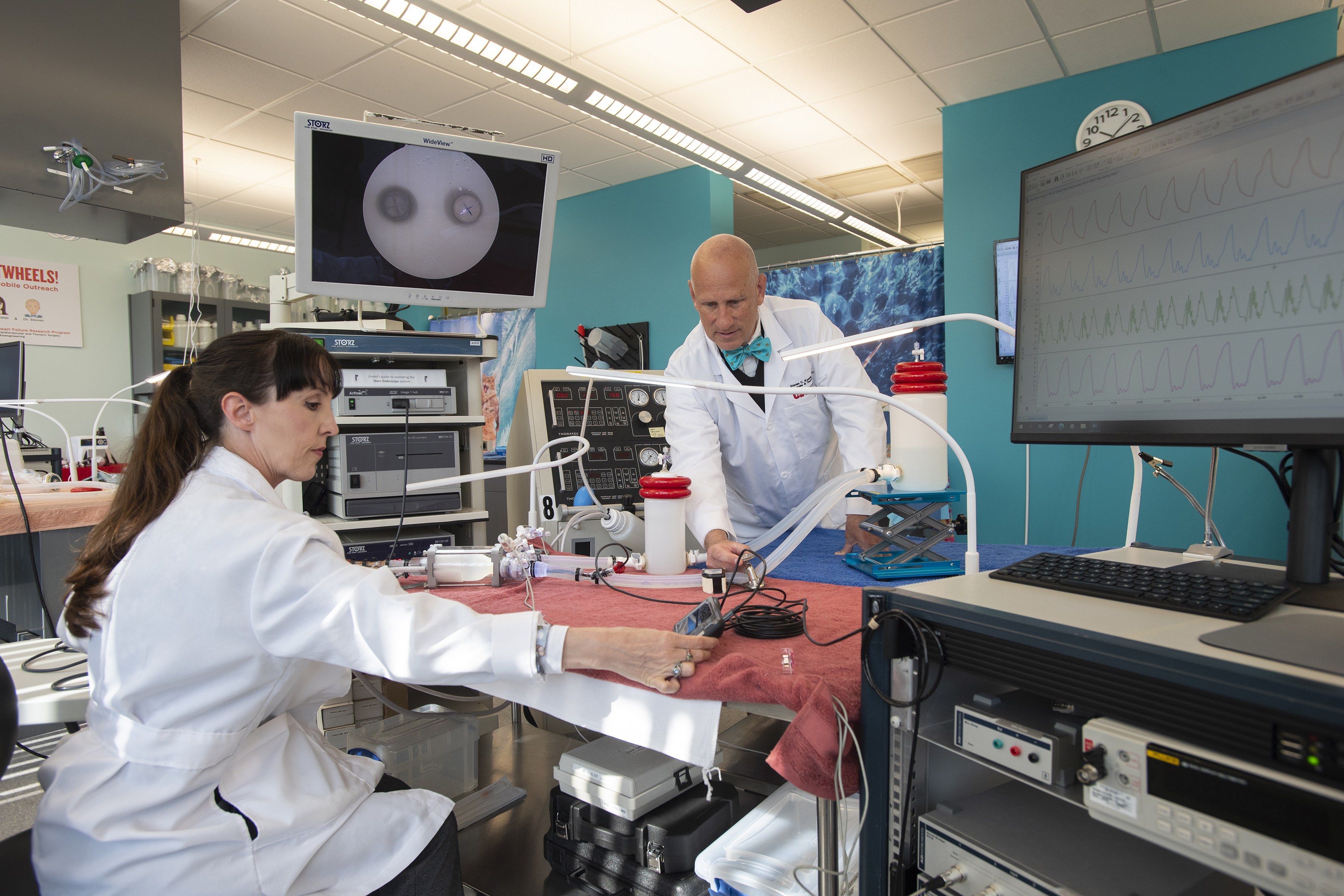
        Menze animal anhydrobiosis lab (‘life without water’) - Baxter 2 Biomedical Research Building
        Advanced Heart Failure Research Program, 4th floor of Cardiovascular Innovation Institute
Campus Sustainability Walking Tour leaves from in front of the Belknap Academic Building  atr 4:30 and ends at the ESSR building for the Reception at 6pm
Micro/Nano Technology Center (MNTC), Shumaker Research Building 1st floor  (If you didn't RSVP, you can still see the lab and do the self-guided audio tour)
Speed School Outreach Lab - Miller Information Technology Center (MITC) lower level
Basemann organometallic catalysis lab, 3rd floor Chemistry building
Marklein Anthropology Lab Belknap Academic Building Room 417
Physics Lab - Belknap Academic Building Room 422
Demarco stem cell lab - Shumaker 353
Christian  microbes & plants lab, Shumaker 327

Friday, November 21, 2025  6:00pm - 8:30pm
Kentucky Scientists Reception
Engineering Student Success & Research Building
After the Lab Crawl, we'll reconvene for food & beverages at the Speed School of Engineering's new Engineering Student Success & Research building!  See the 15,000 square foot Maker Space and see some projects students are working on there.  The ESSR building sits behind Ernst Hall (216 Eastern Parkway).
Saturday, November 22, 2025  8:00am - 9:00am
KCTCS Faculty Breakfast (by RSVP)
309K
Saturday, November 22, 2025  8:00am - 2:30pm
Check in at Registration Table
SAC 201
Good morning! Nametags and materials will be at the Registration Table. Coffee & Light Breakfast will be available
Saturday, November 22, 2025  9:00am - 10:15am
Keynote: Dr. Joel Brown
SAC 201
"The evolution of an evolutionary ecologist: from desert rodents to cancer"
Dr. Joel S. Brown is a Senior Member of Integrated Mathematical Oncology at the Moffitt Cancer Center, and Distinguished Professor of Biology Emeritus at the University of Illinois at Chicago.  He is a wildlife biologist, urban ecologist, and cancer researcher.  Childhood experiences in Zimbabwe created a love of nature and animals that grew into an academic career. For 30 years, his laboratory and graduate students have worked from A to Z, from aardvarks to zebra, with a particular love for squirrels.  He takes an evolutionary approach to wildlife behaviors, populations, communities, conservation, and most recently cancer.  Dr. Brown applies ecological and evolutionary principles to define, study, mathematically model, and treat cancer.  With Drs. Zhang and Gatenby, Dr. Brown developed the first mathematical model of adaptive therapy that was applied to a successful clinical trial of castrate resistant metastatic prostate cancer.  Joel completed his bachelor’s degree in zoology at Pomona College (1980, Prof. William Wirtz, advisor), and his Ph.D. degree in ecology and evolutionary biology at the University of Arizona (1986, Profs. Michael Rosenzweig and Thomas L. Vincent, advisors).

Saturday, November 22, 2025  10:30am - 12:00pm
Agriculture Oral Presentations (Part 1)
W118
Chair: Dr. Theoneste Nzaramyimana  Secretary: Navdeep Singh
10:30 - Impact of Magnesium Fertilization on Mineral Nutrient Accumulation in Hydroponically Grown Cress.
First Author
Richard Kabanda
Kentucky State University 
Co-author
Theoneste Nzaramyimana 
Kentucky State University 
Cress (Barbarea verna. and Nasturtium officinale L.) is a nutrient-rich leafy vegetable with growing interest due to its distinctive flavor and health-promoting compounds. Its hydroponic production provides opportunities to optimize nutrient availability and enhance mineral accumulation. Magnesium (Mg), an essential element in photosynthesis and enzyme activation, may also influence the uptake of other mineral nutrients. This study investigated the effect of Mg fertilization on nutrient accumulation in watercress and upland cress cultivated in a controlled environment greenhouse using a Nutrient Film Technique (NFT) hydroponic system under a split-plot design. Four Mg levels (100, 150, 200, and 250 mg L⁻¹) were applied, and mineral nutrients were quantified using spectrophotometric analysis. Results revealed that varietal differences significantly affected nutrient accumulation, with watercress generally exhibiting higher uptake of several minerals compared to upland cress. Magnesium fertilization at 200 mg L⁻¹ enhanced potassium (K) and silicon (Si) accumulation, while copper (Cu) concentrations were unexpectedly highest under the control treatment (0 mg L⁻¹). These findings suggest that both cress variety and Mg fertilization play critical roles in shaping nutrient composition. Optimizing Mg supply not only improves the nutritional profile of hydroponically grown cress but also provides insights into sustainable nutrient management strategies for controlled environment agriculture.
 
10:45 - Water Quality and Microbial Community Changes During Low-Cost Aquaculture Effluent Mineralization Methods
First Author
DeAira Watts
Kentucky State University 

     Maximizing nutrient utilization is critical for aquaponic producers due to high feed costs. While the majority of fish feed derived nutrients are used by plants, a significant portion of these nutrients remains bound in solid fish waste. Mineralization is a technique where the solid fraction of waste from fish is removed and broken down by microbes. This process releases otherwise bound nutrients into the water which can then be utilized by plants. A study conducted at the Kentucky State Aquaculture Research Center, looked at the effects and usefulness of low-cost mineralization methods on aquaponic systems. Eight 208L tanks were placed on an elevated platform and were filled with 160L of effluent from active aquaponic systems (5600L volume, tilapia, fed 60g/m2/day). Two treatments, aerobic and anaerobic, were assigned at random to four tanks each and operated or 28 days. Results showed changes in nutrient concentrations and water quality parameters over the course of the study. Water quality results found that Aerobic method had increased elemental recovery, increased nitrate recovery, alkalinity depletion, and solid load decrease. Whereas anaerobic method had general loss of dissolved element; especially P, increased alkalinity, increased ammonia, and increased suspended solids. Denitrification likely occurred in anaerobic treatments, indicated by alkalinity and ammonia increases. A difference was found between the communities with different treatments.

11:00 - Verification Methods for Breeding Techniques in Pawpaw
First Author
Nabin Adhikari
Kentucky State University 
Co-author
Kirk Pomper 
KENTUCKY STATE UNIVERSITY 
Co-author
Jeremy Lowe 
KENTUCKY STATE UNIVERSITY 
Co-author
Sheri Crabtree 
KENTUCKY STATE UNIVERSITY 
Co-author
Srijana Thapa Magar 
KENTUCKY STATE UNIVERSITY 
The North American pawpaw is the largest edible tree fruit native to the United States and is being grown in orchards by small growers in Kentucky. Breeding efforts are underway at Kentucky State University and by other private breeders to develop superior cultivars. Pollen from the male stage flower must be transferred to the female stage flower of a different genotype for successful fruit set in pawpaw. Various breeding techniques are practiced. Breeders commonly use techniques such as bagging flowers before and after pollination, while others leave flowers unprotected.  However, even bagged flowers can be contaminated by small insects carrying foreign pollen. In this study, we assessed the success rate of achieving desired crosses with hand pollination of flowers without bagging before and after the pollination, via molecular markers to verify the breeding method for producing successful crosses. Young leaves of offspring from the unprotected crosses were collected and frozen (-15 ºC) until DNA extraction. The DNAMITE Plant Kit was used for DNA extraction, and PCR was performed using SSR markers already developed. Using a SeqStudio capillary electrophoresis system, PCR products were separated, and genotyping was performed with GeneMapper software. Offspring were genotyped to determine parentage based on the presence or absence of alleles from the parents. The success rate in making successful crosses with the unprotected technique was less than 50%, making it problematic as a technique for making controlled crosses in pawpaw breeding approaches.
 
11:15 - Molecular Markers in Fish Genetics
First Author
Emmanuel Annang
Kentucky State University 
Co-author
Jeffrey Warner 
Kentucky State University 
Co-author
Noel Novelo 
Kentucky State University 
Molecular markers in fish genetics are essential for assessing genetic diversity, tracing inheritance, identifying species/strains, supporting selective breeding and conservation. The goal of this review was to define, and explain how molecular markers function and why they are important in fish genetics. The objectives were to: (1) provide an overview of molecular markers and their applications; (2) list and define common types of DNA molecular marker used, and (3) explain and illustrate use of microsatellites (SSRs) and Single Nucleotide Polymorphisms (SNPs). Key terms such as ‘molecular markers in fish genetics,’ and ‘DNA markers in fish genetics’ were used in search engines (google.com, scholar.google.com, researchgate.net) to identify publications. Twenty-five publications were identified. Molecular markers include protein markers, and two major types of DNA markers: mitochondrial (mtDNA), and nuclear (nDNA) markers. Common DNA markers used included Restriction Fragment Length Polymorphisms, Random Amplified Polymorphic DNA, Amplified Fragment Length Polymorphisms, SSRs, and SNPs. SSR and SNP allele polymorphisms were identified by using primers of specific sequences that bind to complimentary template nDNA, and enable DNA polymerase to synthesize and amplify the targeted nucleotide sequence. SSRs and SNPs markers will be used in my proposed research for species identification and assessment of genetic diversity of wild and hatchery Largemouth Bass and Florida Largemouth Bass.
 
11:30 - Impact of Drought Periods on Consumer Perception of Jalapeños, Capsicum annuum grown in Aquaponic Systems
First Author
Ariana Billings
Kentucky State University 
Capsaicin, the main alkaloid responsible for the spicy sensation in hot peppers, can vary widely in concentration in peppers produced in deep water culture aquaponic systems. This compound is more concentrated in peppers during periods of drought stress, and may be able to be manipulated in an aquaponic system by using different forms of production. The aim of this study was to determine whether the concentration of capsaicin varies within fruits of jalapeño peppers subjected to different irrigation periods in a media-based aquaponic system. The study took place between September and December in a temperature-controlled greenhouse. The research system was composed of a 250-gal fish tank, a 60-gal sump, two 30-gal biofilters and 9 (115cm x 45cm) media-based troughs. Four LED lights (Neosol DS) were placed at an average PAR of 300 PPFD above the troughs to extend the light period to 16:8. Koi fish, fed 190g of 36% protein feed daily, were stocked into the system. This study evaluated three different drought periods 2h, 4h and 6h, each with three replicates and three plants per replicate. Treatments were compared based on total plant biomass (g), quantity and weight of peppers (g), and overall consumer perception of spice and bitterness.
 
11:45 - Effects of organic and inorganic fertilizers on soil properties and tomato yield
First Author
Mattalyn Johnson
Western Kentucky University 
Co-author
Myrissa Belcher 
Western Kentucky University 
Co-author
Becky Gilfillen 
Western Kentucky University 
Co-author
Navdeep Singh 
Western Kentucky University 
The overuse of inorganic fertilizers in intensive agriculture can impact soil health by altering structure, organic matter, and biological activity. Organic fertilizers offer an alternative, but their effects on soil physical and hydraulic properties and crop yield, especially in tomato (Solanum lycopersicum L.) systems, remain unclear. Therefore, a 2-year field experiment was conducted in Bowling Green, KY to evaluate the effects of organic and inorganic fertilizer application on soil physical, chemical and hydraulic properties, and tomato yield. Study treatments included organic fertilizer application (OF), inorganic fertilizer application (IF), and a control (CK) with neither organic nor inorganic fertilizer application, established in a randomized complete block design with three replications. Preliminary results from year 1 showed that both OF and IF treatments increased average soil nitrogen levels (p=0.004), with no major differences in crop yield or bulk density compared to the CK treatment. Saturated hydraulic conductivity varied substantially among the treatments; however, the results were not statistically significant. Analysis of year 2 samples is currently underway and will provide further insights into treatment effects over time. The preliminary results indicated that fertilizer type affected soil parameters differently and underscore the importance of long-term research to understand how fertilizer inputs influence both productivity and soil sustainability.
Saturday, November 22, 2025  10:30am - 12:00pm
Chemistry: Analytical/Physical Oral Presentations (Part 1)
W117
Chair: Laura Rowe  Secretary: Laura Walther
10:30 - Electrochemical Deposition (ECD) of ˂2 nm Gold Nanoclusters
First Author
Binu Thapa
University of Louisville 
Co-author
Francis P. Zamborini 
University of Louisville 
            Metal nanoclusters (NCs) are particles containing less than ~300 atoms with a diameter less than 2 nm. Due to their ultrasmall size, they have unique properties different than bulk metal and individual atoms.  As a result of their intriguing optical, electronic, chemical, and electrochemical properties, NCs are useful for versatile applications including catalysis, sensing, biomedicine, and energy conversion. Their size plays a vital role in these different applications. Au NCs are mainly synthesized chemically using an oxidized Au(I) or Au(III) complex, molecular ligands, and a strong reducing agent.  They are often attached chemically to functionalized electrodes or drop-cast onto the electrode for electrochemical studies.  Our group previously attached metal NPs and NCs to indium-tin-oxide-coated glass (glass/ITO) electrodes chemically by functionalizing with aminopropyltriethoxysilane (APTES) or by electrophoretic deposition (EPD) or electrodeposition (ECD) and studied their unique size-dependent electrochemical properties. The smallest size of Au NPs synthesized by ECD from an acidic electrolyte solution of AuCl4- was ~6 nm in diameter.  Here we report the ECD of Au onto glass/ITO by reduction of AuCl4- at -0.9 V in presence of sodium diphenylphosphinobenzene-3-sulfonate (TPPS) using 0.1 M KClO4- electrolyte, which leads to formation of Au NCs estimated to be ~1 nm or smaller based on the oxidation potential in anodic stripping voltammetry (ASV), electronic structure determined by UV-vis spectroscopy, and Au binding energy in x-ray photoelectron spectroscopy.  ASV shows a broad oxidation peak from ~ -0.1 V to 0.4 V, UV-vis data has a broad peak near 300-400 nm, and XPS reveals a peak for Au(0) with a binding energy between that of bulk Au(0) and Au(I). The films could be useful for future applications in sensing, electrocatalysis, and energy storage.
 
11:45 - Jacobi-Davidson Diagonalization Methods for Second-Scale Rotational Spectroscopy Simulation of Free Radicals
First Author
Leandro Ajo
Univesity of Louisville 
Co-author
Jinjun Liu 
University of Louisville 
High-resolution rotational spectroscopy provides in-depth detail of molecular geometry. Fine structure, present in the spectra of free radicals, is exponentially difficult to interpret and simulate. Spectra of free radicals hold importance in research within astrochemistry, medicine, manufacturing, and pharmaceuticals. Hamiltonian diagonalization methods directly solve the Schrodinger equation in simulating spectra. Hamiltonian models of molecules' environments are created prior to simulation. This work presents an optimized implementation of the Jacobi-Davidson algorithm and fitting to achieve second-scale times of simulation while preserving numerical accuracy. By combining GPU accelerated sparse linear algebra methods, preconditioned correction equations, and adaptive subspace expansion the method efficiently computes eigenvalues and eigenvectors corresponding to rotational energy levels and transition intensities. We show that the program is scalable, passes benchmark tests, and can provide analysis of molecules. We plan on implementing machine-learning based pseudo-inversion of the spectra to obtain physical constants and provide LEAN-based tools for creating Hamiltonian models. 
11:00 - Laser-Induced Fluorescence and Dispersed Fluorescence Spectroscopies Studies of Strontium Alkoxide Radicals
First Author
Rajan Lamichhane
Department of Chemistry, University of Louisville 
Co-author
Md Touhidul Islam 
Department of Chemistry, University of Louisville 
Co-author
Oleg A. Vasilyev 
The Ohio State University 
Co-author
Jinjun Liu 
Department of Chemistry, University of Louisville 

                                                                                                          Abstract

The
E ← A1 electronic transition of strontium methoxide (SrOCH3), a C3v-symmetric top molecule, was investigated using laser-induced fluorescence (LIF) and dispersed fluorescence (DF) spectroscopy under jet-cooled conditions. To simulate the experimental spectra, excitation energies and vibrational frequencies of both the ground and excited states were calculated using Coupled Cluster Singles and Doubles (CCSD) and Complete Active Space Self-Consistent Field (CASSCF) methods. The energy separation between theE3/2 and E1/2 spin–orbit (SO) components for SrOCH3 was determined to be 267 cm−1.

In addition, the A′ A′ transition of strontium ethoxide (SrOC2H5) was investigated using LIF spectroscopy. Based on the LIF spectra, the spin–orbit splitting was found to be 273 cm−1, and the experimental spectra were simulated using CCSD calculations to support experimental observations. Experimental DF measurements for SrOEt are currently underway, aiming to provide a more comprehensive characterization of this molecule.

Current work also focuses on developing a setup to acquire rotationally resolved spectra using a continuous-wave (CW) laser, which will enable high-resolution characterization of both SrOCH3 and SrOEt, further assessing their potential as laser-cooling candidates.

11:15 - Sensing Applications of Poly Hydroquinone Gold Nanoparticle Films
First Author
Fahad Bin Halim
University of Louisville 
Co-author
Francis P. Zamborini 
University of Louisville 
Gold nanoparticle (AuNP)–poly(hydroquinone) (polyHQ) films were grown on glass/ITO by electrophoretic deposition (EPD) from 15 nm citrate–AuNP solutions containing hydroquinone (HQ). Holding 1.4 V for 30 min while varying HQ concentration from 0.066–0.242 M (0.11–0.40 g in 15 mL) produced a morphology transition from sparse fractal dendrites (≤0.10 M) to dense, high-aspect “microneedles” (≥0.18 M). The needles arise from destabilization of citrate by HQ oxidation(local pH change), AuNP chain growth, and concurrent electro-polymerization of HQ that welds particles into Au-rich, polyHQ-bound structures. With the increase in EPD deposition time (1→30 min) and HQ concentration, the films become thicker and are more resistant to current flow showing diode like behavior. Scanning electron microscopy (SEM), optical microscopy and digital images revealed distinct anisotropic growth, with needles several microns wide and millimeters in length extending several hundred nanometers to microns from the electrode surface. The presence of HQ was confirmed by FTIR spectroscopy. The AuNP-polyHQ films on Au-Interdigitated electrodes (IDE) showed rapid, reversible conductometric changes due to the swelling of PHQ film and modulation of AuNP percolation pathways to certain vapors namely acetone, ethanol and isopropyl alcohol while being unresponsive to toluene and water under standard atmospheric conditions. The gas sensing was monitored by performing Chronoamperometry and applying positive and negative bias versus air. In the future, we look to monitor the electrochemical detection of dopamine- a neurotransmitter as the films display a surface-confined polyHQ/quinone couple centered at ~0.15–0.25 V vs Ag/AgCl in phosphate-buffered saline.
 
11:30 - Sticky Situation: An Investigation of the Use of Activated Charcoal Coated Tapes for Fire Debris Analysis
First Author
Grace Boyer
Eastern Kentucky University 
Co-author
Cynthia Tran 
Eastern Kentucky University 
    In the recovery of ignitable liquids (IL), passive headspace concentration using activated charcoal strips (ACS) is the standard method. Activated charcoal powder (ACP) is a less expensive alternative to ACS but is more difficult to use due to its powder form. This research quantitatively evaluates the use of adhesive tapes as a solid vehicle for the ACP and replacement of ACS in the process of passive headspace concentration.

    In order to effectively replace ACS, the tapes should retain an adequate amount of charcoal for the duration of a headspace extraction, effectively adsorb volatile analytes for extraction, and exhibit minimal interference with subsequent gas chromatography-mass spectrometry (GC-MS) analysis. Fifteen household tapes were tested for their loading capabilities, persistence of ACP, and interference on the GC-MS after an extraction with either carbon disulfide, diethyl ether, or pentane.

    Using the most compatible tapes identified, the collection of each tape was quantified using a standard mixture of 12 different common compounds for ignitable liquids at a concentration of 0.05 uL/mL each. An internal standard of known concentration was used for comparative measurements from the chromatograms.

    While several tapes show promising results as a cost-effective alternative to activated charcoal strips, technical challenges remain in optimizing charcoal retention and ensuring compatibility with extraction solvents. Ultimately, these findings may inform future revisions of fire debris analysis protocols or spur additional development of alternative collection substrates.
 
10:45 - Synthesis of Bimetallic and Trimetallic Nanoclusters via Anti-Galvanic Replacement (AGR)
First Author
Nura Fahmida Sultana
University of Louisville 
Co-author
Francis Zamborini 
University of Louisville 
Ultrasmall metal nanoclusters (NCs), typically less than 2 nm in size, exhibit distinct physicochemical properties such as quantum confinement, discrete energy levels, and molecular-like electronic transitions. These unique features make NCs highly promising for applications in catalysis, sensing, and biomedicine. Recent advancements have focused on multimetallic nanoclusters (MMNCs), which integrate two or more metals to achieve tunable compositions and enhanced functionalities. In this work, tetrakis(hydroxymethyl)phosphonium chloride (THPC)-protected Au nanoclusters (1.6 nm average diameter) were subjected to anti-galvanic replacement (AGR) with Pd, Ag, and Cu precursors on (3-Aminopropyl)triethoxysilane (APTES)-functionalized indium tin oxide (ITO) electrodes. The resulting MMNCs were characterized by anodic stripping voltammetry (ASV). The formation of bimetallic AuPd, AuAg, and AuCu NCs, as well as trimetallic AuAgPd and AuAgCu NCs through sequential deposition, was confirmed. Among the tested metals, Ag exhibited the highest AGR activity toward AuNCs and shifts in stripping potentials after AGR. These findings offer insights into the controlled assembly of MMNCS and open new possibilities for developing functional interfaces for electrochemical sensing, electrocatalysis, and biomedicine.
 
Saturday, November 22, 2025  10:30am - 12:00pm
Engineering Oral Presentations
309K
Chair: Madhav Baral  
Section meeting opens at 10:30
10:45 - Experimental Investigation of the Effect of Vacancies on Electrocatalytic Properties
First Author
Farshid Ramezanipour
University of Louisville 
Co-author
Md. Sofiul Alom 
University of Louisville/DUET 
We have demonstrated an improvement of the electrocatalytic activity as a result of the creation of oxygen-vacancies in a perovskite-type material La2FeNiO6 (LaFe0.5Ni0.5O3). This compound has a crystal structure comprising transition metal ions surrounded by six oxygens in octahedral geometry. The octahedral units are connected to form a 3-dimentsional network. The spaces between the octahedral units are occupied by La3+ ions. After synthesizing this material, we incorporated oxygen-vacancies within its crystal lattice. We confirmed the crystal structures of both the original and oxygen-deficient materials by X-ray diffraction. The material containing the oxygen-vacancies showed the same crystal structure as the original compound, but with a larger unit cell, consistent with a lower oxygen content and higher oxidation states of transition metals. We investigated the oxygen content and transition metal oxidation states by X-ray photoelectron spectroscopy (XPS) and iodometric titrations. Scanning electron microscopy showed that the presence of oxygen-vacancies did not affect the microstructure significantly, and both the original and oxygen-deficient materials had a similar particle size. Importantly, the material containing oxygen-vacancies showed a substantial enhancement of electrocatalytic properties for both half-reactions of water-splitting, namely oxygen evolution reaction (OER) and hydrogen evolution reaction (HER). This was evident from significantly lower overpotential, faster reaction kinetics, and substantially larger turnover frequency. Furthermore, an enhancement of charge-transport due to oxygen-vacancies was demonstrated by electrochemical impedance spectroscopy, indicating a correlation between charge-transport and electrocatalytic properties.
11:00 - Mg-Based Spinel Oxides as Cost-Effective Materials for Energy Conversion
First Author
Hoang Anh Nguyen
University of Louisville 
Co-author
Farshid Ramezanipour 
University of Louisville 
Spinel oxides are attracting attention as efficient and earth-abundant electrocatalysts for oxygen and hydrogen evolution reactions (OER and HER). In this study, two magnesium-based spinel materials were synthesized via a solid-state method and characterized by X-ray diffraction (XRD) to confirm their single-phase spinel structures. The diffraction patterns indicate good crystallinity and slight variations in lattice parameters related to cation distribution between tetrahedral and octahedral sites. These structural differences strongly influence catalytic activity. Both materials were evaluated for the oxygen evolution reaction (OER) and hydrogen evolution reaction (HER) to examine their potential as catalysts for water-splitting applications. In addition, Mg-based spinel oxides possess great potential for use in solid-state Mg-ion batteries; therefore, the electrical conductivity of both materials was measured over a range of temperatures to investigate their ion transport capability. This work highlights how crystal structure and transition-metal valence states govern the electrocatalytic efficiency of Mg-based spinels. The combination of chemical stability, abundance, and dual conductivity makes Mg-based spinel attractive for cost-effective, sustainable energy systems, particularly as bifunctional electrocatalysts and conductivity in next-generation electrochemical devices.
11:15 - An MISL-enabled MIL-STD 1553 communication board for enhanced inter-connectivity across the International Space Station
First Author
Michael Brooks
Northern Kentucky University 
Co-author
Gang Sun 
Northern Kentucky University 
Co-author
Elijah Rader 
Northern Kentucky University 
The International Space Station (ISS) houses a diverse range of equipment, spanning various ages and employing different communication protocols. Notably, NASA's legacy equipment operates on the MIL-STD 1553 protocol. Due to discrepancies in communication protocols, these legacy devices cannot interface with modern equipment, resulting in communication breakdowns when new devices are introduced on the ISS to exchange data and information with older ones. To address this challenge, this project proposes adopting a NASA-standard and space-qualified Modular Integrated Stackable Layers (MISL) hardware structure to design and develop an innovative MISL-based MIL-STD 1553 communication board. This communication board incorporates a new 1553 layer based on a Holt 2130 MIL-STD 1553 terminal circuit. Furthermore, the board is embedded with off-the-shelf MISL power, MSP430F5438A intelligence, and other MISL layers to form a MISL stack that serves as a communication interface between legacy instruments and new devices. By integrating the latest electronic components and state-of-the-art MISL architecture, this research project aims to enhance inter-connectivity across international space station equipment in order to advance technologies in space research and services.
11:30 - Enhanced electrochemical water-splitting catalyzed by quasi 1D oxides Sr9M2Mn5O21 (M = Co, Ni, Cu, and Zn)
First Author
Narayan Acharya
U of L 
Co-author
Surendra B. Karki 
PNNL 
Co-author
Farshid Ramezanipour 
University of Louisville 
Electrochemical water splitting is an environmentally friendly and promising method for generating hydrogen molecules (H2). This process involves two main half-reactions: the cathodic hydrogen evolution reaction (HER) and the anodic oxygen evolution reaction (OER). despite its benefits, it faces a major challenge due to sluggish reaction kinetics, particularly in the OER, which requires active catalysts to enhance the overall reaction rate. Various electrocatalysts have been developed to enhance the reaction kinetics of both HER and OER, with metal oxides being among the most prominent types. In particular, metal oxide catalysts featuring one-dimensional (1D) structures have demonstrated excellent efficiency in promoting the water-splitting process. In this work, our focus was on the electrocatalytic activities of four quasi-1D oxides, where the transition metal varied systematically from Co to Ni, Cu, and Zn, each exhibiting bifunctional electrocatalytic behavior. Among these, the Ni-containing oxide Sr9Ni2Mn5O21 stood out for its superior OER performance, with an overpotential of just 0.37 V. Its OER activity exceeds that of numerous 3D and 2D oxides and is comparable with the performance of precious metal catalysts, such as RuO2. X-ray diffraction and X-ray photoelectron spectroscopy analyses further confirmed that these oxides maintain their structural integrity and stability under electrocatalytic conditions. These findings highlight the potential of quasi-1D oxides as effective electrocatalysts for splitting water.
 
Saturday, November 22, 2025  10:30am - 12:00pm
Mathematics Oral Presentations
W107
Chair: Justin Trulen  Secretary: Jenalee Hinds
Section meeting opens at 10:30
10:45 - Mitigating Water Scarcity with Stochastic Partial Differential Equations and Spectral Neural Discovery
First Author
Advika Rastogi
DuPont Manual High School 

Water scarcity poses a severe threat to global agriculture, with UN projections estimating up to 40% yield reductions in vulnerable regions by 2050 due to climate variability, including ongoing 2025 droughts in Kentucky that have already placed over 50% of the state under moderate drought conditions, straining local farms and contributing to broader food insecurity linked to approximately 9 million annual hunger-related deaths worldwide. This project introduces a spectral stochastic neural framework to discover governing soil moisture equations and optimize irrigation under uncertainty. Anchored in the Richards partial differential equation enhanced with stochastic noise terms and Fourier spectral methods for computational efficiency, the model leverages physics-informed neural networks with gated mixture-of-experts to learn novel scarcity dynamics from an augmented crop dataset. Reinforcement learning refines dynamic irrigation schedules, while game-theoretic Nash equilibria model collaborative farmer strategies amid resource constraints. Validation utilizes an Arduino-based soil moisture sensor deployed across 3-4 potted plant micro-farm testbeds under induced drought scenarios (20-50% water reduction), aiming for prediction accuracy exceeding 90% and RMSE below 5%, with preliminary analyses suggesting 40-60% water savings without compromising crop vitality. By fusing discovered physics with hardware validation, this work advances UN SDG 6, potentially averting billions of liters in annual global losses and yielding estimated economic benefits like $30-40 million for Kentucky's agriculture through enhanced water efficiency. Additionally, this framework aims to mitigate global water losses, potentially saving millions of lives by enhancing food security in drought-stricken regions.


11:00 - Matrix Valued Trigonometric Functions on Time Scales
First Author
Amber Wu
Gatton Academy 
Co-author
Ferhan Atici 
Western Kentucky University 
In this talk, we introduce two derivations of a formula based on the Jordan Canonical Form that constructs matrix-valued functions defined in discrete and hZ time scales. The usage of these formulas is demonstrated through the computation of each term of each Jordan block in the matrix-valued cosine and sine of A. To illustrate the utility of our approach, we present some examples.
11:15 - Modeling diffusion of oxygen, nutrients, or drugs through scaffolds using fick's laws.
First Author
Sai Charan Chouta
The Gatton Academy of Mathematics & Sciences 
Co-author
Suren Dhasarathan 
The Gatton Academy of Mathematics & Sciences 

     This study uses Fick's laws of diffusion to mathematically model the diffusion of oxygen, nutrients, and drugs through tissue-engineering scaffolds. By focusing on the derivation, analysis, and solution of diffusion equations rather than experimental validation, this study seeks to produce a purely mathematical representation of molecular transport within a scaffold. Together, Fick's first and second laws govern diffusion, a process fueled by concentration gradients, and provides a framework for simulating both steady-state and time-dependent diffusion phenomena. With such laws, a general diffusion PDE was established for the estimation of concentration of diffusing molecules over time. The results indicate the degree to which accurately flux and concentration profiles through scaffolds are estimated by PDE-based modeling. Properties of scaffolds may be optimized for molecular transport efficiently by mathematical formulation without conducting laboratory experiments. As a whole, this work shows how beautifully mathematics works when used in partial differential equations to create solutions to real problems of diffusion and tissue engineering. We were motivated to pursue this project because we were especially interested in how mathematical models can be applied to address challenges in biology and medicine, and this project highlights exactly that.
 

11:30 - Mathematical Modeling of Diabetic Foot Ulcers with Individual Patient Data
First Author
Malleshwar Jayaraman Suresh
Gatton Academy 
Co-author
Anthony Lin 
Gatton Academy 
Co-author
Richard Schugart 
Western Kentucky University 
A system of four ODEs has been developed within this research program to study the healing of diabetic foot ulcers, tracking the dynamics of MMP-1, TIMP-1, extracellular matrix (ECM), and fibroblasts. The model has previously been calibrated to averaged patient data, providing insight into the role of protease and inhibitor balance in tissue repair. We extend the model to individual patient data to capture variability and improve parameter estimation.
 
A structural identifiability analysis has been carried out on the full 12-parameter formulation to determine which parameters can be uniquely estimated with perfect data. The model is then fit to individual trajectories using nonlinear mixed-effects methods, producing both population-level and patient-specific parameter values. Parameter influence have been examined using Fisher Information Matrices and Spearman rank correlations. Insensitive parameters are then fixed at nominal values and the reduced model is re-fit. The parameter estimation techniques will be presented and future efforts such as using an optimal design framework with the re-fit values will be briefly discussed.
 
11:45 - Newton vs. Leibniz: The Great Calculus Feud
First Author
Dwight Smith
Other 
Isaac Newton and Gottfried Leibniz are both credited with the invention of Calculus. This led to a famous feud between them and their supporters as to who should get the credit. The battle was still raging when Newton died in 1727. It still is a subject of conversation, even today. In this talk, I plan to present the facts on the controversy, and encourage the participants to form their own opinions. Even a debate here is welcome, but please keep it civil!

 
Saturday, November 22, 2025  10:30am - 12:00pm
Microbiology Oral Presentations
W303A
Chair: Amanda Seaton  
Section meeting opens at 10:30
10:45 - Viral Evolution, Emerging Viruses, and Next Pandemic?
First Author
Alexander Lai
Kentucky State University 
Emerging viruses pose a significant threat to public health. Due to the rapid evolution and the presence of natural reservoir, some viruses will emerge to infect humans—as zoonotic viruses, or worst-case scenario, as pandemic viruses. COVID-19 pandemic appears to be a distance past for most, but the virus, SARS-CoV-2, remains in circulation. The negative impact has subsided somewhat due to available antiviral drugs and vaccines, and by “viral adaptation”—a coadaptation of virus and the host. By comparing SARS of 2002-2003 and COVID-19, and by including influenza virus as a model, the knowledge gained and the knowledge gaps from these pandemics will be discussed. Furthermore, new public health measures and novel mitigation strategies should be developed to prepare for the next pandemic.
 
11:00 - Microbes in the Underworld: Mining the Subsurface for Medical Potential
First Author
Rachel Washburn
University of Kentucky 
Co-author
Michael McGlue 
Kentucky Geological Survey 
Co-author
Kevin Tidgewell 
University of Kentucky 
Microorganisms that inhabit extreme environments, such as caves, represent a largely unexplored reservoir of bioactive compounds with significant medical, ecological, and economic potential. While geological influences on microbial communities and metabolism are well recognized, most cave studies to date have focused on mineralogy, geochemistry, or community composition, leaving direct links between geological processes and bioactive metabolite production largely unexamined. This study integrates geology, microbiology, and metabolomics to investigate how subsurface conditions shape microbial biosynthetic potential. Water, sediment, and cave wall samples were collected from ten oligotrophic cave environments near Cave City, Kentucky, USA. Microbial communities are being isolated and sequenced using 16S and 18S rRNA to assess alpha diversity (microbial richness within sites) and beta diversity (community variation among sites). Metabolites are extracted and analyzed to characterize the diversity of bioactive compounds associated with each microbial population, emphasizing those relevant to medicine, bioremediation, and biomining.To contextualize microbial and metabolic patterns, environmental parameters (temperature, relative humidity, pressure, water vapor, carbon dioxide, ethane, and methane) are monitored in situ. Geochemical analyses include X-ray diffraction (XRD) for bulk mineralogy, X-ray fluorescence (XRF) for bulk elemental composition, and inductively coupled plasma optical emission spectrometry (ICP-OES) for quantifying ions, heavy metals, and nitrates. This interdisciplinary framework enables the systematic linkage of Earth system processes to microbial ecology and bioactive compound production in cave systems. All results are being incorporated into an open-access, interactive microbiome map to guide future research, identify high-priority sites for novel compound discovery, pathogen tracking, and to inform public health decision-making.
 
11:15 - Meiotic viability of telomere-free circular chromosomes in the eukaryote Saccharomyces cerevisiae
First Author
Rebecca Bailey
Morehead State University 
Co-author
Adelyn Weaver 
Morehead State University 
Co-author
Megan Shirley 
Morehead State University 
Prokaryotes generally have a single circular chromosome, while eukaryotes have multiple linear chromosomes capped by repetitive DNA sequences called telomeres. Telomeres shorten as we age because they cannot be completely replicated before the cell divides. To overcome this shortening, telomeres can be lengthened by telomerase. However, more than 85% of cancer cells upregulate telomerase, allowing cancerous cells to divide uncontrollably. Since telomeres and telomerase contribute to aging and cancer, we set out to understand why eukaryotes have linear chromosomes with telomeres instead of circular chromosomes. To this end, we developed a genetic engineering strategy to delete telomeres by circularizing individual chromosomes in the single-celled eukaryote Saccharomyces cerevisiae. We have successfully circularized chromosomes II, IV, and XV. We also fused II and IV to create a linear control strain that lacks two telomeres. In asexually dividing cells, modified chromosomes exhibit no obvious phenotypes. Current hypotheses posit that eukaryotes evolved linear chromosomes to permit meiosis and sexual reproduction. To test this, we mated haploid yeast to form diploid strains with one or both copies of a modified chromosome. Upon starvation, diploid cells undergo meiosis to form four haploid spores. We find that circular chromosomes II and XV cause significant decreases in spore viability, especially when both copies of these chromosomes are circular, but chromosome IV has less of a defect, possibly due to chromosome size. Our data supports the hypothesis that linear chromosomes may have evolved to allow sexual reproduction, but not all circular chromosomes cause defects to the same degree.
11:30 - Metabolic Reprogramming of Inflammatory Macrophages Through PPAR-Alpha to Promote Digit Regeneration
First Author
Malleshwar Jayaraman Suresh
Gatton Academy 
Co-author
Jennifer Simkin 
University of Kentucky 
Adult limb loss typically results in scarring and a shortened digit, reducing dexterity and quality of life. Occasional regrowth in children suggests a possible human regenerative program, yet the role of macrophages and the mechanisms that enable such regeneration remain poorly understood. Our project leverages a mouse model to unravel the intricate role of macrophages and develop a simple, low‑cost therapy that reprograms macrophage metabolism toward a pro‑regenerative state. Primary bone‑marrow–derived macrophages were stimulated with interferon‑gamma and a Toll‑like receptor‑4 agonist, with and without a peroxisome proliferator‑activated receptor‑alpha (PPAR‑Alpha) agonist that activates fatty acid oxidation. Expression of inflammatory markers interleukin‑6 (IL‑6) and glucose transporter‑1 (GLUT1), the metabolic enzyme carnitine palmitoyltransferase‑1A (CPT1A) and osteogenic factor bone morphogenetic protein‑2 (BMP‑2) was measured. Inflammatory cues produced a scar‑like transcriptional profile with elevated IL‑6 and GLUT1 and reduced CPT1A. PPAR‑Alpha activation modestly shifted cells toward a repair phenotype but did not overcome the inflammatory state. These findings suggest that a metabolic push via PPAR‑alpha must be coupled with an inflammatory brake to unlock regeneration. Understanding how macrophages create regeneration‑permissive environments could lead to targeted, clinic‑ready interventions that harness the body’s natural healing processes, which holds significant public‑health relevance by informing regenerative medicine strategies for individuals with amputations or congenital limb defects.
 
Saturday, November 22, 2025  10:30am - 12:00pm
Special Session: Federal Funding updates with a focus on Kentucky EPSCoR and NIH IDeA Opportunities
308 Floyd Theatre
Organizer: Cathleen Webb  
This session will provide an update on Federal Funding issues with a special focus on Kentucky EPSCoR  and NIH IDeA opportunities. In the current climate, strategic persistence is required when seeking federal funds.  This session will offer insights and assistance to help all faculty move forward in this critical time.
Saturday, November 22, 2025  10:30am - 12:00pm
U of L Campus Tours
Starts in SAC 212
U of L Admissions Office offers a presentation at 10:30 and campus tour begins at 11.
Reserve your spot or take a virtual campus tour at https://apply.louisville.edu/portal/campusvisit
Saturday, November 22, 2025  10:30am - 12:00pm
Zoology / Botany Oral Presentations
Center for Engaged Learning conference room
Chair: Jeremy Gibson  
Section meeting opens at 10:30
10:45 - The evolution of katydid calls in response to opposing selective forces by female mates and eavesdropping parasitoids
First Author
Kayla Murphy
Murray State University 
Co-author
Oliver Beckers 
Murray State University 
Katydids communicate in the context of reproduction with males producing conspicuous signals to attract and guide females. The parasitoid fly, Ormia lineifrons, eavesdrops on these signals to locate their hosts as well. Once located, the fly deposits larvae on the host, which burrow into the katydid to continue development. As long as the infested katydid continues calling, it is detectable by other flies and is susceptible to additional parasitism events. Such superparasitism increases competition among unrelated larvae inside the host and, most importantly, when the first clutch of larvae emerges (~8 days later), the host dies, killing the larvae from subsequent parasitism events. In this arms race, selection would favor changes in host calls and/or reduced calling activity to make the parasitism status of the hosts detectable and/or reduce the chances of parasitized hosts attracting further flies. However, these call-related changes would also drastically reduce the chances of males attracting females, setting up competing selective pressures on the host’s behavior. We hypothesized that no changes in calls and calling activity could indicate strong selective pressure on males remaining attractive to females, while changes in the calling behavior could indicate strong selection on preventing superparasitism. We tested these hypotheses by recording and analyzing the calls of unparasitized and parasitized hosts from three species of Neoconocephalus katydids. Preliminary analyses indicate contrasting responses among parasitized species with some not changing their calls and calling behavior, whereas others immediately cease calling. We discuss the contrasting results in an evolutionary context.
11:00 - A species left behind by glaciation: Appalachian mustard lineage dispersal due to climate change during the Ice Ages.
First Author
Joshuwa Strode
Murray State University 
Co-author
Ingrid Jordon-Thaden 
Murray State University 
The research presented here pertains to the population genetics of a diploid glacial relict mustard, Draba ramosissima (Brassicaceae), in the Appalachian Mountains and associated foothills. Draba ramosissima is a diploid Appalachian perennial herb found primarily on limestone-rocky outcrops and is endemic to the area. Draba ramosissima's closest relatives are in Siberia and Beringia based on previous phylogenetic analysis. These data led us to conclude that the original Draba lineage was of Asian descent during the time of glaciation cycles of the Pleistocene. With this research, we have been observing the present-day habitat, specifically the stability of the habitat, as well as collecting phylogenetic and population genetic data for its entire distribution. The research is testing the hypothesis that the lineages that gave rise to the diploid Draba ramosissima were pushed throughout the North American continent and were unable to retreat with the melting ice sheet that once boarded the Appalachian mountains, and can be classified as a “glacial relic” species. Preliminary population genetic data of a subset of sites also indicates population structure typical for glacial relict species. We have gathered data from both SERNEC and iNaturalist, compiling all known sightings of Draba ramosissima throughout the Appalachian mountains and across six states (Kentucky, Maryland, North Carolina, Tennessee, Virginia, and West Virginia). Methods used for this research are population sampling, sub-genomic analysis using ddRADtag and Illumina sequencing, population genetic statistics, phylogenetic, and phylogeographic analysis, and potentially chromosomal observations. At the moment have procured population samples from Virginia and West Virginia in 2025, and will be collecting in the rest of the aforementioned states in early spring 2026. We will use this genetic data to test for relatedness of the populations throughout the Appalachian mountains to explore the effects of glaciation on speciation.
11:15 - Modernized Compilation of Pleistocene Glacial Extents of North America for Shapefiles used in Phylogeographic Research
First Author
Noah Garland
Murray State University 
Co-author
Ingrid Jordon-Thaden 
Murray State University 
Our lab group is beginning to focus on studying the effect of climatic fluctuations during the Pleistocene on alpine plant populations in North America. Glaciation cycles of the most recent Ice Ages have resulted in species distributions known as disjunct species as their lineages were split. We seek to compare population genetic dynamics between sites that were unglaciated vs. those that experienced glaciation. As part of this multi-year project, the first step is to identify accessible localities for plant collections of specific alpine tundra species, and to choose these sites we need to understand glacial extents. An important collaboratively compiled map coordinated in 1946 by US Geologist, Richard F. Flint, showcased continental and alpine glaciers covering Canada and parts of North America. Since then, various other updated glaciation maps have been digitized and made available as either smaller shapefiles, images, or projections with variable accuracy. A shape file has been provided by the Paleoglaciers working group, titled, “Western US Paleoglacier Outline” that shows the most up to date glacier outlines, however is still incomplete and accuracy is inconsistent. When locating actual glaciated vs. unglaciated sites on the ground for boots-on-the-ground field work, this resource is useful but needs to be supplemented. For this study, we are comparing these North American glaciation boundaries with Flint’s exhaustive 1946 map to find “missing” glaciers in modern data. We are using digitization methods with a trained semantic segmentation AI model to extract all possible glacial data from the Flint map, and supplementing modern data with this older, generalized but viable data. This supplemented shapefile is then used in conjunction with EPA eco region IV zones, USFS roads and trails, satellite imagery, and USFS National Forest boundaries to locate field sites that fulfill logistic, biologic, and geographic criteria.
11:30 - Seed dispersal of plants by white-tailed deer, Odocoileus virginianus, across Western Kentucky
First Author
Ashlee McCarty
Murray State University 
Co-author
Joshuwa Strode 
Murray State University 
Co-author
Ingrid Jordon-Thaden 
Murray State University 
Documentation of seed dispersal in Western Kentucky of native and invasive plants by North American ungulates is the focus of this study. White Tailed Deer, Odocoileus virginianus, are a prominent long-distance seed disperser of this region. We are testing the hypotheses of how land management practices affect plant species variation in dispersal. For this study, there were 43 collection sites from two different land areas (Clark’s River National Wildlife Refuge and Murray State University Hancock Biological Station) across 17 locations. Clark’s River National Wildlife Refuge (NWR) was divided into three categories: Reforestation/Low Agriculture, Control/Low Agriculture, and Control/High Agriculture. Murray State University Hancock Biological Station was divided into three categories: 1-year since burn, 2-years since burn, and a control site. Species of diversity of plants was recorded, and herbarium voucher specimens were created for each study site. Harvested pellets were placed in paper bags and set on the windowsill to air dry until processing, in order to induce seed dormancy. Pellet dissection was done under a dissecting microscope overtop U.S. standard sieves utilizing distilled water. Seeds separated were stored in coin envelopes at 4℃ for dormancy to prepare for germination. The first true leaf will be harvested for DNA barcoding to correctly identify the taxa, using a set of standard plant barcoding primers. This work is developing proof-of-concept for a larger study planned in the Western United States for the seed dispersal of Draba oligosperma by American Pronghorn, Antilocapra americana
 
Saturday, November 22, 2025  10:30am - 12:15pm
Computer & Information Sciences Oral Presentations
W116
Chair: Neil Moore  Secretary: Nathan Johnson
Section meeting opens at 10:30
10:45 - Algorithmic Image Enhancement by Combining Multiple Images
First Author
Maylin Kidwell
duPont Manual High School 
The purpose of this project is to find a mathematical process to enhance images of a subject, deriving results purely from data in the subject being observed rather than relying on AI assumptions. AI can produce inconsistent results that are not created purely from our source data and can raise ethical concerns. An AI model that has been trained on a large number of images may be able to enhance an image in a way that looks good to the eye but may not reflect the actual details of the original subject of that image. It was hypothesized that it is possible to enhance image resolution by applying repeatable algorithms across multiple similar images. Data was collected by taking 100 pictures of the same illegible text, intentionally not aligned at a pixel level. The text used was 50 assorted words, in five-point Arial font. The same text was tested in uppercase, lowercase, and propercase. Algorithms from OpenCV were then applied across the images. The images were cropped, greyscaled, normalized, inverted, upscaled with bilinear interpolation, and correlated. They were then shifted to the point of maximum alignment and averaged. This process was continued across all images, and the result was stored as a greyscale image. The input and output images were analyzed using eight optical character recognition engines to measure the improvement. The results for all samples were significant, although improvements were most drastic for lowercase words. Both color and greyscale art were also tested, with visible improvement occurring in clarity.
11:00 - RecuNet: A Novel, Low-Cost, & Automated Pipeline for the Spatiotemporal Prediction of Brain Tumor Recurrence
First Author
Gopalaniket Tadinada
North Oldham High School 
Co-author
Jack Grinband 
Columbia University 
Gliomas affect 90,000 people annually in the United States and have 5-year survival rates as low as 7%, largely due to 5-year recurrence rates of 52-62%. Current imaging techniques rely on contrast enhancement (CE) to visualize the glioma, which has several limitations: (1) tumor infiltration often extends far beyond CE margins; (2) After surgery, non-contrast enhancing tumor grows undetected & appears as “recurrence” in follow-up scans. Blood Oxygen Level-Dependent (BOLD) fMRI measures blood flow, which can be disrupted by the tumor microenvironment. Therefore,  BOLD, combined with current imaging, could detect real-time tumor progression prior to radiologic “recurrence”, defined by CE. This project, RecuNet, aims to (1) establish a link between BOLD, non-contrast enhancing tumor, and recurrence, and use deep learning to (2) detect the non-contrast enhancing tumor and (3) spatiotemporally predict tumor recurrence.  Both algorithms take standard (T1 + FLAIR) scans and BOLD fMRI as inputs. The detection algorithm uses a 3D-UNet Architecture with optimized loss functions and Attention Gated Networks (AGNs). The Prediction Model is a CNN that uses temporal-spatial convolutional layers and AGNs to extract features in peritumoral regions. Preliminary detection results show an IoU of 94.1%, accurately detecting non-contrast enhancing tumor portions. The prediction algorithm has a 94.52% location accuracy and a mean average error of 5.3 days from recorded recurrence time, significantly outperforming current methods. RecuNet nearly eliminates recurrence risk by imaging the previously invisible tumor areas and accurately predicting areas with a high risk of developing tumor growth, saving money, resources, and lives.
11:15 - Detecting cyber-physical attacks in networked 3D Printing using G-code sequence learning and parameter optimization
First Author
Kshitij Poudel
KENTUCKY STATE UNIVERSITY 
Co-author
Richard Maiti 
KENTUCKY STATE UNIVERSITY 
Co-author
Mark Derriso 
KENTUCKY STATE UNIVERSITY 
     Networked Additive Manufacturing (AM), also called 3D Printing, is vulnerable to subtle manipulations of machine instruction code (G-code) that produce silent but dangerous physical defects like voids, delamination, and mis-layering. This work proposes a hybrid detection approach that correlates network-level data traffic with physical-level telemetry data to detect networked caused G-code parameters modifications before defective parts are 3D-printed. We propose to design an end-to-end pipeline to capture commands from network streams and create parametric data dictionary to extract features importance in those commands parsing per-line and each layer window. The trained classifier flags network events that produce anomalies in G-code commands by optimizing features value towards optimal estimation. The early findings suggest telemetry data containing flow rate, Z-offset, nozzle-end temperature and bed temperature results in surface roughness in layer-by-layer decomposition of 3D models. As sequence of G-code instructions contains varying sets of such parameters that govern the printing outcome, these parameters are analyzed over time to estimate their optimal value by learning the rate of change through backpropagation in a recurrent model.
     We propose to evaluate datasets containing benign print-parameters and controlled network injections measure per-window detection performance and show that fusing network sequence and physical evidence reduces false positives over anomaly. Thus, enhance early detection lead-time compared to prior single-domain detectors.

 
11:30 - Prediction of glioma tissue stiffness using metabolomic signatures
First Author
Vedant Garg
The Gatton Academy of Mathematics and Science 
Gliomas are aggressive tumors in critical need of improved therapeutic options. Recent work has demonstrated that glial tissue from core (inner) and edge (infiltrating) regions possesses distinct metabolic signatures and biomechanical properties that are linked to tumor aggression and migration. In this proof-of-concept study, Young’s moduli (stiffness) of core and edge tissue are predicted using paired metabolic signal intensities.

Core and edge stiffness previously measured from n = 25 patients were paired with metabolomic data previously obtained using 2D liquid chromatography-mass spectrometry/mass spectrometry. Low (≤median) and high (>median) stiffness were predicted from paired core and edge metabolomics using a machine learning (ML) workflow that included forward feature selection, model training, grid search hyperparameter tuning, and repeated k-fold cross-validation. 

Key core metabolites predictive of low and high stiffness in core tissue included N6-methyllysine, 2',3'-cyclic UMP, and gamma-amino-n-butyric acid. Top core metabolites in predicting edge moduli included guanosine, acetylcholine, glutamic acid, and N6-methyllysine. The top edge metabolite in predicting edge moduli was DL-p-hydroxyphenyllactic acid. Using ≤5 features, machine learning models predicted core and edge moduli using core and edge metabolites individually and in combination, achieving AUROC, maximum F1, and PRAUC values ≥0.90.

     This study shows that regions of differing glioma core and edge stiffnesses exhibit unique metabolic signatures. These signatures could potentially be explored to develop personalized therapeutic strategies.
 
11:45 - Hybrid quantum enhancement of hyperparameter tuning for optimized machine learning models
First Author
DaYou Choi
Eminence Independent High School 
Hyperparameter tuning is a critical component of machine learning (ML) programs, essential for model performance and computational efficiency. Optimal configurations are crucial for ML accuracy and efficient training time. This project presents a hybrid, quantum-classical approach to enhance hyperparameter tuning by using Grover’s algorithm – an unstructured search algorithm that utilizes quantum superposition. Employing an integration of Grover’s algorithm to the existing Bayesian optimization method allows for quantum enhancement of machine learning to remain computationally feasible by leveraging the strengths of both quantum speedup and superposition with probabilistic surrogate modeling. Using the Bayesian optimization method alone for hyperparameter tuning presents limitations for scaling to large datasets and increased computational costs in high-dimensional spaces. However, this project presents a conceptual proof that through the application of Grover’s algorithm, these limitations can be effectively addressed with quantum enhancement. Based on program trials in Qiskit, IBM’s open-source quantum programming framework, this hybrid approach demonstrated a quadratic quantum speedup in identifying efficient hyperparameter configurations while using fewer iterations, suggesting a complementary relationship between quantum-accelerated search and classical surrogate modeling. This conclusion is directly applicable to electrical energy systems: reduced computational costs use less energy - making the training process of ML models more sustainable. Additionally, load forecasting in electrical grid systems can utilize this hybrid approach to effectively process large amounts of consumer data and monitor energy distribution, integrating innovative technology for sustainable energy systems.  
12:00 - Physics-Informed Graph Neural Networks for Peridynamic Fracture Simulation
First Author
Amul Dhungel
Kentucky State University 
Co-author
Richard Maiti 
Kentucky State University 
Co-author
Chi Shen 
Kentucky State University 
Co-author
Clifton Wise 
Kentucky State University 
Co-author
Mark Derriso 
Kentucky State University 
Fracture in materials is notoriously difficult to model because classical continuum mechanics assumes differentiable fields and therefore struggles at displacement discontinuities. Peridynamics circumvents this limitation by replacing spatial derivatives with non-local integral interactions, so cracks can nucleate, branch, and propagate without ad-hoc criteria or remeshing. The price of this fidelity is computational cost: every material point interacts with dozens to hundreds of neighbors within a finite horizon, leading to millions of bond evaluations and damage updates per run. This thesis develops a physics-informed graph neural network (GNN) surrogate to accelerate peridynamic fracture while preserving accuracy and physical consistency. Training data are produced with a high-fidelity C++ peridynamic solver. At each time step the solver outputs particle coordinates (x, y), displacements (uₓ, uᵧ), and a scalar damage indicator D. We convert these states into graphs: nodes correspond to material points with kinematic features, and edges correspond to peridynamic bonds enriched with geometric attributes (reference and current bond vectors, length ratios, orientation, and volume weights). The surrogate performs message passing over this graph to predict the next-step displacements and damage increments. To embed governing principles, the loss combines supervised terms with physics-informed penalties enforcing linear momentum balance, antisymmetry of pairwise forces, damage irreversibility (Ḋ ≥ 0 and D ∈ [0,1]), and boundary conditions (fixed or prescribed velocities). The architecture supports variable neighborhood sizes and changing topologies as bonds fail, enabling simulation of crack initiation and growth. We evaluate the model on notched-plate tests and other geometries held out from training. The GNN reproduces displacement fields and localization patterns consistent with the peridynamic solver and predicts crack paths from the notch tips toward coalescence. 
Saturday, November 22, 2025  10:30am - 1:30pm
Taking Flight Posters
Location TBD
Middle School scientists present research conducted as participants in the Taking Flight environmental education program. Taking Flight is a partnership between the University of Kentucky's  Ecological Research and Education Center, the Red Oaks Forest School, and KidsMakeIt, and was recognized by KAS in 2022 with our Excellence in Science Education and Outreach Award. Watch a Video about the Program
Do parent house sparrows trade-off load size versus time when feeding growing nestlings?
First Author
Isaac Kinnard
STEAM Academy 
Co-author
David Westneat 
UNIVERSITY OF KENTUCKY 
Parent house sparrows (Passer domesticus) likely benefit by maximizing food delivered to growing nestlings per unit of time. Two aspects of time are relevant: trip time taken to find food, and time with the nestlings to feed them. First, I wanted to determine if amount of food brought (load size) can be predicted by trip time, and second, if a larger load size will result in a greater amount of time at the nest box. To do this, I will watch 2 h videos of occupied nest boxes containing broods of four nestlings that are 7 days of age. I will record the time parent sparrows spend both at and away from the nest box as well as the load brought back from each trip away from the nest box. My first hypothesis is that larger food items will take more time to collect as they are rarer, and my second is that larger portions of food will take a greater time feed nestlings as the parent sparrow will need to divide the item among nestlings and orient it a certain way to feed them. If this is true, we can determine that parent house sparrows will trade-off the size of food for the time they have to spend gathering it and distributing it to the nestlings. Some ecological factors that play into this trade-off are that different kinds of food may be more difficult to find due to food scarcity or high levels of competition at different times of the year. 
The Northern Cardinal's bill of flights: Bill size and color as they relate to body size, age, and sex
First Author
Mayani Montanez
Taking Flight Next Level 
Co-author
Kedley Zimmerman 
Taking Flight Next Level 
Co-author
Parker Brandenburg 
Taking Flight Next Level 
Co-author
David Westneat 
Taking Flight Next Level 
Bird bills are the main way birds acquire food. We thought that bill dimensions and color would differ between the sexes, perhaps because of mate choice. We also wondered if bills might get bigger and brighter for larger and older birds. The Taking Flight program has been taking measurements on Northern Cardinal (Cardinalis cardinalis) bill size and color since 2018. We trapped cardinals using seed-baited traps, banded them if they were new, and measured them whether they were new or a recapture. Bills were measured for length, width, and depth, and photos were taken with a color standard. We analyzed these by the time since first capture, the bird’s tarsus length, and their sex. Our results could reveal additional tasks that bird bills may perform besides just obtaining food.
Where the wild things are: A pilot for rewilding urban green spaces
First Author
Lillybelle Barnhill
Taking Flight Next Level 
Co-author
Celestine Hewitt 
Taking Flight Next Level 
Co-author
Flora Christensen 
Taking Flight Next Level 
Co-author
David Westneat 
Taking Flight Next Level/University of Kentucky 
Green spaces in cities are often low in biodiversity and have lots of invasive species. The Taking Flight Next Level Program with support from the Walking Softer Foundation undertook a small rewilding project at the University of Kentucky’s Ecological Research and Education Center in spring 2025. We set out to create a new hedgerow along the edge of a field that would be composed of native species rather than invasives. We removed honeysuckle, multiflora rose, and Bradford pear and planted walnut, two types of oaks, redbud, juniper, holly, and chokeberry. We have also spread yarrow and milkweed seeds. We have tracked how the plantings have done. We collected data on wildlife use, including birds, mammals photographed using trail cams, and pollinating insects such as butterflies. We are preparing plans for future Taking Flight students to  continue to take data over multiple years to see how our efforts have increased biodiversity within Lexington.
Saturday, November 22, 2025  12:00pm - 1:15am
Lunch on your own
Lunch options listed elsewhere in this program
Saturday, November 22, 2025  12:00pm - 1:15pm
KAS Annual Business Meeting Lunch
SAC 201
The Business meeting is open to KAS members.  We'll provide updates about KAS' work over the past year, look ahead to 2026, and meet the newly elected board members.  If you did not RSVP and would like to attend please ask at the Registration desk.
Saturday, November 22, 2025  1:15pm - 4:45pm
Physics & Astronomy Oral Presentations
W116
Chair: James Adkins  Secretary: John Waite
Section Meeting opens at 1:15
15 minute break at 2:45
1:30 - Assessing Short-Term X-Ray Variability Across 54 AGN with XMM-Newton
First Author
Trevor Butrum
University of Louisville 
Co-author
Dirk Grupe 
Northern Kentucky University 
In recent years, numerous monitoring campaigns have enabled extensive studies of short-term variability, revealing significant correlations and anti-correlations between X-ray variability and physical properties such as black hole mass and accretion rate. However, preliminary results from long-term monitoring campaigns, such as SWIFT, show little to no significant correlation with these parameters. These contrasting findings highlight the need for comprehensive comparative studies to understand better the physical processes driving both short- and long-term X-ray variability in active galactic nuclei (AGN). In this effort, we analyze a sample of 54 AGN spanning a range of types, using 239 total observations from XMM-Newton to measure variability on timescales of approximately 10–100 ks and to investigate correlations with the previously mentioned physical parameters. Based on previous short-term studies, we expect to find anti-correlation between variability and black hole mass and little or no correlation between variability and the Eddington ratio.
1:45 - Long-term Ultra-violet Variability of Active Galactic Nuclei
First Author
Cameron Easton
Northern Kentucky University 

This study analyzed the ultraviolet (UV) flux and color variability in Active Galactic Nuclei (AGN).  The goal of this study is to analyze how this variability relates to AGN properties, such as black hole mass accretion rate. Data were collected by the NASA Neil Gehrels Swift Observatory, which is a multi-wavelengths observatory that observed in the Optical/UV as well as in X-ray. Preliminary results do not suggest any correlations with of the long-term variability with black hole mass or accretion rate. These data will be combined with X-ray data in order to see if there are correlations between the UV and X-rays. The final goal of our students is to analyze the data of a sample of more than 100 AGN.
2:00 - Analysis of Scintillator Response for ePIC Detector Forward Hadronic Calorimeter
First Author
Paula Diaz Pumara
Berea College 

The Electron-Ion Collider (EIC) is a next-generation facility under development to explore the internal structure of protons and nuclei with unprecedented precision. The ePIC detector will be the first experiment at the EIC, and is designed to provide high-resolution measurements of energy deposition and tracking. This work focuses on analyzing data from a September 2023 ePIC forward hadronic calorimeter prototype test beam.This test was conducted in a configuration without absorber plates to study the scintillator response. The analysis required the implementation of a new routine to process previously converted ROOT files. Energy deposition plots were generated and evaluated to determine whether Landau-Gaussian fits accurately described the observed distributions. ROOT-based tools were used to visualize and inspect the signal behavior across multiple runs. This poster will present results from this ongoing analysis that shed light on the scintillator performance in the ePIC forward hadronic calorimeter (LFHCal) prototype and inform calibration strategies for future detector development

2:15 - Analysis and Visualization Studies of Exoplanet Data
First Author
Samia Mahmood
Bellarmine University 
Co-author
Akhtar Mahmood 
Bellarmine University 
Using NASA’s large exoplanet dataset comprising over one million data parameters of more than 5600 exoplanets that have been discovered to date by both ground and space-based telescopes utilizing a multitude of exoplanet detection methods, we conducted extensive data analysis to extract and filter information from NASA’s exoplanet dataset using code written in Python to search for search for Earth-like exoplanets. We also developed a visualization software within Python in order to plot several exoplanet parameters including exoplanet radii, mass, orbital period, surface temperature, the exoplanets’ distance from their host star, stellar type, stellar mass, stellar radius, and the distance of exostars from Earth. Using the Python code, we incorporated various data filtering techniques to perform data preprocessing to refine the raw dataset, ensure data integrity, and to validate data through statistical methods. Utilizing the information gathered from our data analysis, we classified all exoplanets into seven categories based on a combination of the exoplanet mass and radius into Earth like, Super-Earth like, Neptune like, Saturn like, Super-Saturn like, Jupiter like, and Super-Jupiter like.  We used complex querying to identify key features of exoplanets to compare to Earth’s parameters in order to make predictions for determining the number of potentially habitable Earth-like and Super-Earth like exoplanets orbiting a Sun like (type-G) star in our Milky Way galaxy’s habitable zone (HZ).
2:30 - Deconstructing Galaxies: Informing Science by Estimating Parameters with Improved Spectral Energy Distribution Fitting
First Author
Kyle Cook
University of Louisville 
Co-author
Benne Holwerda 
University of Louisville 
The spectral energy distribution (SED) of a galaxy is its fingerprint, containing within itself the effects of nearly every process occurring in the galaxy. Many of these processes are driven by the star formation history, the cycle of turning gas into new stars. Therefore, proper measurements of the star formation history of a galaxy are necessary to properly constrain other parameters such as stellar mass and dust content. Ultraviolet light contains much of the information about recent star formation, but unfortunately high-quality ultraviolet information is often unavailable. By examining existing data for the highest quality ultraviolet information and conducting new SED fits, we aim to tighten our constraints on star formation and provide better parameters for galaxies within the heavily studied Chandra Deep Field South. Initial results from these new fits will be presented.
3:00 - Long-term X-ray Variability of Active Galactic Nuclei
First Author
Skie Pleshinger
Northern Kentucky University 
This presentation is to discuss the X-ray variability of a set of 20 Active Galactic Nuclei (AGN), and how this variability is correlated with properties of the AGN, such as black hole mass, accretion rate, and luminosity. We are using data from NASA’s Neil Gehrels Swift Observatory (Swift). Preliminary analysis suggests no correlation has been found so far, but this is only a subset of a much larger sample of AGN.
3:15 - High Polarization in Narrow Line Seyfert 1 Galaxy IRAS 1239.7+3333
First Author
Bryn Connelly
University of Louisville 
IRAS 1239.7+3333 is a narrow line Seyfert 1 galaxy discovered during the ROSAT All-Sky survey. What makes this narrow line Seyfert 1 galaxy particularly interesting is that it shows relatively high (5% vs normal 0%) optical polarization, but very little intrinsic cold X-ray absorption. This may potentially reveal more insight into the classification of Seyfert galaxies. An Active Galactic Nucleus, or AGN, is an accreting black hole at the center of a galaxy. Galaxies containing these AGNs are known as active galaxies. There are several different types of active galaxies, including Seyfert galaxies. These are a common galaxy type, making up around 10% of galaxies. They are classified by having strong emission lines and detectable host galaxies. There are several subtypes of Seyfert galaxies, separated by the presence of broad line regions. However, the question has arisen as to whether all of these subtypes are truly different, or if they are simply obscured. As mentioned, IRAS 1239.7+3333 is a narrow line Seyfert 1 galaxy, but several of its qualities, especially the high polarization, suggest potential dust blocking our line of sight. To investigate, we have taken data from the Swift, XMM-Newton, and NuSTAR telescopes and compared it to several potential models.
3:30 - Discovery of Changing-Look AGN using the Swift AGN legacy sample
First Author
Dirk Grupe
Northern Kentucky University 
I will report on the most discoveries of Changing-Look AGN by using the Neil Gehrels Swift Legacy Sample of Active Galactic Nuclei (AGN).
Changing-look AGN are a rare group that changes its type within a few years. Our continuous monitoring of AGN over the last two decades has lead to the discovery of several of these AGN. AGN in the Legacy Sample are observed at least once a year allowing to catch them when they go into deep minimum flux states. When discovered, this triggers a set of follow-up observations, starting with Swift, but then XMM and NuSTAR in X-rays and HET/SALT observations for ground-based optical spectroscopy. The most recent discoveries were RX J0128-1848 in January 2023 and RX J0134-0430 and PG 1149-110 in January 2025. I will present preliminary findings from these observations. 
3:45 - Single-Frequency Faraday Tomography: 3-D Magnetic Turbulence from One Polarization Map
First Author
Aliaksandr Melnichenka
Berea College 
Co-author
Alex Lazarian 
University of Wisconsin–Madison 
Co-author
Dmitri Pogosyan 
University of Alberta 
Magnetized turbulence shapes star formation, cosmic-ray transport, and the polarized sky, but many data sets lack the dense spectral coverage required for RM synthesis. I present a single-frequency diagnostic that recovers the inertial-range magnetic turbulence directly from one polarization map. The observable is a polarization-angle directional correlation, S(R) = ⟨cos[2(χ(x) − χ(x+R))]⟩, whose 2-D Fourier power—P_dir(k) = |FFT(cos 2χ)|2 + |FFT(sin 2χ)|2—tracks turbulence slopes without angle unwrapping and is resilient to missing short spacings. In a unified emission–screen model, the observed polarization can be written as P(x, λ) = exp{2i[ψ_emit(x) + λ2 RM(x)]}. The competition between intrinsic synchrotron angles and Faraday rotation is governed by a simple crossover criterion at scale k: λ2 σ_RM(k) = 1. Short wavelengths yield synchrotron-dominated slopes; long wavelengths transition to RM-dominated behavior set by n_e B_parallel.

I validate the method on controlled two-screen tests and ATHENA MHD simulations spanning sub- and super-Alfvénic regimes. Where expected, the directional spectrum recovers Kolmogorov-like −5/3 slopes; in shock-rich, super-Alfvénic flows it reveals the anticipated flattening. I compare against Polarization Frequency Analysis (PFA) and find consistent regime identification, with the directional spectrum more robust to interferometric filtering. This provides an observer-ready recipe for single-band data (LOFAR/MeerKAT/VLA) and a low-overhead path to quantify 3-D magnetic turbulence when only one or two nearby bands are available. The approach enables immediate science from archives and complements RM synthesis where full spectral coverage exists, advancing practical Faraday-screen tomography.
4:00 - Particle Tracking in a Cloud Chamber Using a Stereoscopic Camera System
First Author
Prthu Naik
Gatton Academy of Mathematics and Science 
Co-author
Ivan Novikov 
Western Kentucky University 
Although the cloud chamber is over 100 years old, it remains a useful way of being able to visually see radiation. Radiation such as alpha and beta particles can be seen using a supersaturated alcohol vapor, the benefit of a medium such as supersaturated alcohol vapor is how energy is deposited by particles. Higher energy deposition provides a bigger cloud track, allowing a viewer to differentiate between an alpha particle which has a bigger particle track and an electron which has thinner particle track. Additionally, other particles like muons may be seen through other factors such as track angle. The visual capabilities of the cloud chamber allow a different method of particle detection that utilizes cameras with an algorithm that tracks and classifies the particle track. This is done with a stereoscopic camera system which allows a 3d view of the cloud chamber, the track characteristics are then able to be determined accurately. This project used a Raspberry Pi 5 along with a stereoscopic camera system over a diffusion cloud chamber. Multiple videos were taken for two hours each. The code employed instance segmentation to map out the particle tracks and then used 3d reconstruction with the stereoscopic camera system to visualize the particles in a 3d plane. To classify particles Linear Energy Transfer (LET) was utilized to differentiate between alpha and beta particles. After classification of the particles their characteristics will be determined such as track length, angle, and energy deposition. This research will allow a deeper understanding of how particles move through a medium with experimental results.
4:15 - On Stacking Permanent Magnets to Increase Field Strength: A Cautionary Note
First Author
John Waite
Morehead State University 
Co-author
Jennifer Birriel 
Morehead State University 

We present a “discrepant event” observed in the design of a Faraday free-fall lab for introductory physics courses. Using a commercial Faraday free-fall device, we desired students to observe the effect of increasing magnetic field on the induced voltage by stacking magnets. Naively, we expected staking two of the magnets provided would nearly double the induced voltage and stacking three magnets to nearly triple the induced voltage. Surprisingly, we found that stacking the magnets provided with the device showed no significant increase in the induced voltage. The resolution of this discrepant event lies in the dependence of magnetic field strength as a function of the ratio of magnet length to radius. We discuss the optimal ratio of length to radius using theoretical magnetic field strengths and conclude with recommendations for those who wish to design such an experimental investigation for introductory labs.

4:30 - The Effect of White Dwarf Mass on the Efficiency of a Three-Body Mean Motion Resonance Chain in Polluting the Atmosphere
First Author
Jeremy Wood
Bluegrass Community & Technical College 
Co-author
Kristina Mitchell 
American Military University 

White dwarf stars are the burned out cores of former low to intermediate mass main-sequence stars that shine only due to residual heat as nuclear reactions have ceased. The atmospheres of white dwarf stars should be composed mainly of hydrogen and helium. However, a significant fraction of white dwarf stars have been shown to have elements heavier than helium in their atmospheres. Elements found in white dwarf atmospheres include beryllium, calcium, magnesium, iron, and other metals. A likely source of this pollution is asteroids whose orbits are perturbed by planets so that the asteroids are sent inward to their stellar Roche limit where they can be torn apart by stellar tidal forces. This project measured the effect of white dwarf star mass on the efficiency of the 6:3:2 and 4:2:1 mean motion resonance chains in delivering asteroids to their stellar Roche limit for the case in which the resonance chain consisted of two planets in the outermost orbits and an asteroid in the innermost orbit. We found that an asteroid can have up to a 2.37% and 2.27% chance of being delivered to the stellar Roche limit due to the 6:3:2 and 4:2:1 resonance chain, respectively, and this probability had a general trend of decreasing with increasing white dwarf mass. The highest probabilities were obtained for the lowest white dwarf mass we studied of 0.2 solar mass. The average dynamical lifetime of an asteroid generally increased with increasing white dwarf mass, and all average dynamical lifetimes were below 1 Myr.

Saturday, November 22, 2025  1:30pm - 2:45pm
Chemistry: Analytical/Physical Oral Presentations (Part 2)
W117
Chair: Laura Rowe  Secretary: Laura Walther
Chemistry Section meeting opens at 1:30
1:45 - Structure determination of doped silicon and magnesium hydride clusters
First Author
Jonathan Lyon
Murray State University 

Strongly bound atomic clusters are convenient models for bulk materials.  Here, we present theoretical investigations from our laboratory on palladium doped silicon clusters and titanium doped magnesium hydride clusters containing between 2 and 25 atoms.1,2 Global optimization techniques were used to find low energy candidate geometric isomers. The importance of using these unbiased techniques were seen by locating several new structural isomers previously not considered. Each low energy isomer was then stringently optimized using high level density functional and ab initio calculations, and the unique properties were further explored.  Important results that will be presented here include the transition between exohedral and endohedral doped clusters, observed differences occurring with dopant atom types and concentrations, hydrogen adsorption saturation limit, and the unique structures of these doped clusters for each system. Experimental results from our laboratory and other cluster systems may also be presented.

2:00 - Qualitative Isolation of Ignitable Liquids using Activated Charcoal Coated Tapes
First Author
Derek Collins
Eastern Kentucky University 
Co-author
Cindy Tran 
Eastern Kentucky University 

Ignitable liquid (IL) residues are commonly isolated from fire debris through the process of volatilization and adsorption onto activated charcoal strips (ACS) for an efficient and accurate extraction. While ACS offer ease of use and minimal contamination, rising costs and single use methods present a limitation. Activated charcoal powder (ACP) is inexpensive and readily available but requires a solid backing to be useful. This work evaluates fifteen commercially available tapes as a backing for ACP use through assessing compatibility with extraction solvents, ACP loading and persistence, and qualitative collection of representative ignitable liquids. The promising results of this technique will be presented.

2:15 - Anti-Galvanic Doping of 1.6 nm Gold Nanoclusters with Palladium
First Author
Bhagawat Poudel
University of Louisville 
Co-author
Francis Zamborini 
University of Louisville 
Bimetallic nanoparticles (NPs) are typically synthesized either by co-reduction, seed-mediated growth, or by galvanic replacement (GR) between monometallic NPs and metal ions of another metal.1, 2 GR enables the fabrication of diverse nanostructures with tunable optical and electronic properties, which are widely applied in catalysis and biomedical applications such as cancer therapy. Antigalvanic replacement (AGR) is a unique, size-dependent phenomenon in which ultrasmall (<3 nm) Au nanoclusters (NCs) can be oxidized by less noble metal ions (e.g., Ag⁺), a process that is thermodynamically unfavorable in bulk systems.³ AGR has been demonstrated for various metals and is widely applied in catalysis and in multimetallic synthesis with controlled composition. In this study, we aim to precisely control the composition of AuPd NCs via AGR between 1.6 nm phosphonium-stabilized Au NCs attached to indium-tin-oxide-coated glass (glass/ITO) electrodes and PdCl42-, quantify the metal composition using anodic stripping voltammetry (ASV), and study electrocatalysis of the hydrogen evolution reaction (HER). When PdCl42- concentration was 10⁻⁴ M, AGR  between 1.6 nm Au NCs and Pd(II) from PdCl42- was observed after 5 minutes of soaking resulting in an Au:Pd composition ratio of approximately 77:23. ASV provides a simple, low-cost, and rapid method for determining metal composition compared to more expensive and time-consuming techniques such as mass spectrometry, synchrotron X-ray absorption, and high-resolution TEM (HRTEM).  Optimized electrocatalysis of HER is possible with controlled composition and compared to AuPd NCs prepared by other methods.
2:30 - Molecular Dynamics Simulation of Sulfur-Based Atmospheric Aerosols Using AMBER
First Author
Rebecca Awe
Western Kentucky University 
Co-author
Matthew Nee 
Western Kentucky University 
Atmospheric aerosols play a critical role in air quality, human health, and climate change, with concerns dating back to the 90s. Early evidence linked sulfur-containing aerosols to crop damage and respiratory illnesses, highlighting the need to understand their formation and behavior. Sulfur dioxide (SO₂) oxidation products are among the major constituents of these aerosols. Molecular Dynamics (MD) simulations provide a powerful way to investigate nucleation and growth processes. In this presentation, I will discuss how the Assisted Model Building with Energy Refinement (AMBER) software is applied to study the nucleation and formation of sulfur-based atmospheric aerosols. By gaining a deeper molecular-level understanding of these processes through analyzing diffusion, radial distribution functions, and clustering behavior of sulfur-containing species with water, we can better predict the impacts of aerosols on human health and climate change.
 
Saturday, November 22, 2025  1:30pm - 4:00pm
Agriculture Oral Presentations (Part 2)
W118
Chair: Dr. Theoneste Nzaramyimana  Secretary: Navdeep Singh
Section meeting opens at 1:30
3:00 - Age dynamics in the adoption of agricultural technology for enhancing food security in the Caribbean
First Author
Shristi Adhikari
Kentucky State University 
Co-author
Buddhi Gyawali 
Kentucky State University 
Co-author
Asmita Satyal 
Kentucky State University 
The Caribbean is highly vulnerable to the global impacts of the unpredictable changes in weather events. Given the challenges faced by the region, the survey was conducted in 2025 in the Caribbean region to explore the experience of the farmers in the context of food security with fluctuation in weather events. The agriculture sector is significantly affected, with drought becoming the most frequently experienced disaster, followed by hurricanes and floods. Despite agriculture becoming a key source of income for farmers, the financial support from the government and access to market information have been limited. Thus, this study highlights the need for the adoption of technology in farming to enhance food security in the face of weather stress. It is observed that the younger farmers between the ages of 25 and 44 are more inclined to adopt new technology and have been actively investing in technology such as irrigation systems, pest control, etc., to enhance the farm's resilience. They are more aware of new technology, emphasizing how age plays a significant role in the adoption of technology. However, if provided hands-on training, cost-effective technology, support from the extension service, and adequate network access, even the elderly farmers aged 55 to 64 are willing to adopt new technology for their farm. Thus, this study signifies the need for an extension of technological solutions to improve food security, enhance disaster resilience, and strengthen agricultural practices in the Caribbean.
 
3:30 - Engineering a Drought-Tolerant Plant: A CRISPR Knockout of SLEEPY1 in Arabidopsis
First Author
Ainjini Patra
Paul Laurence Dunbar High School 
Co-author
Barunava Patra 
KTRDC, University of Kentucky 

Drought stress is a major constraint on global food security, significantly reducing crop yield and productivity. Developing drought-tolerant crops is a key strategy to mitigate this challenge and ensure stable agricultural output. Plants, as sessile organisms, exhibit developmental plasticity by reallocating energy between growth and stress responses to optimize survival under adverse conditions. Hormonal signaling networks play a central role in this adaptation, with gibberellic acid (GA) acting as a crucial regulator of growth and development. GA plays a crucial role in maintaining growth plasticity under stress conditions by integrating environmental signals with plant developmental programs. SLEEPY1 (SLY1), an essential component of the GA signaling pathway, mediates GA-dependent degradation of the growth repressors. Mutations in SLY1 can disrupt GA signaling, offering a potential strategy to enhance drought tolerance by modulating growth responses. CRISPR/Cas-based genome editing provides a precise and efficient approach to engineer GA response pathways for improved stress tolerance. In this study, I have characterized a CRISPR/Cas-edited Arabidopsis sly1 mutant line and assessed its drought tolerance. Additionally, I evaluated agronomic traits such as seed germination rate, efficiency, and seed size. The results indicate that sly1 mutant plants exhibit enhanced drought tolerance while maintaining favorable agronomic performance, demonstrating the potential of CRISPR-based genome editing for developing climate-tolerant crops.

3:15 - Exploring the Impact of Regenerative Agricultural Practices on Soil Health and Crop Performance in Kentucky
First Author
RICHARD OJO
Kentucky State University 
Co-author
Gebremedhin Maheteme 
Kentucky State University 
Co-author
Bolaji Ibidapo 
Kentucky State University 
Co-author
Jacob Brown 
Kentucky State University 
Soil degradation caused by intensive tillage, monoculture approaches, and excessive agrochemical use significantly threatens the long-term productivity and ecological resilience of agriculture in Kentucky, particularly affecting low-income farmers who work on marginal lands. This two-year field study aims to measure the advantages of three regenerative practices, biochar incorporation, winter crimson clover cover cropping, and reduced tillage on soil health indicators and corn performance across five demonstration sites that represent Kentucky’s key agro-ecological zones. The research employs a randomized complete block design, featuring four treatments (control, biochar, cover crop, and synthetic nitrogen), replicated twice at each site on 4-acre plots. Soil samples will be collected from a depth of 0–15 cm at baseline, mid-season, and after harvest, to analyze macro- and micronutrients, pH, cation-exchange capacity, soil organic matter, and both labile and total carbon stocks. Simultaneously, measurements of corn biomass and grain yield will be taken. Farmer field days will be organized to foster knowledge sharing and showcase the effectiveness of these practices under local conditions. Although laboratory analyses and on-farm demonstrations are still in progress, the study is anticipated to demonstrate that biochar, cover cropping, and reduced tillage can improve soil organic carbon, enhance nutrient availability, and increase corn productivity compared to conventional management methods, with likely synergistic effects when these practices are integrated. The study’s participatory design will foster farmer involvement and continuous knowledge exchange, while the resulting evidence is intended to guide climate-smart, socially equitable farming strategies and provide actionable recommendations for extension specialists, policymakers, and Kentucky’s low-income farming communities.
 
 
2:15 - Knowledge and Likelihood to Subscribe to CSA Programs among Farmers Market Attendees in Warren County, Kentucky.
First Author
MaKayla Burrell
Western Kentucky University 
Co-author
Jean Dominique Gumirakiza 
Western Kentucky University 
Community Supported Agriculture (CSA) is a 40-year practice in the United States, after the idea started in Japan in the mid 1960s. Since then, its popularity continues to grow for consumers interested in fresh organic produce, sustainable agriculture, and local farmer support. However, there is a limited body of research examining the knowledge and likelihood to subscribe to CSA Warren County, Kentucky. This study aims to examine knowledge about and likelihood to subscribe to CSA among consumers who attended four farmers markets in this county. This study uses primary data collected through in-person surveys of 116 consumers at four farmers markets during the summer market of 2025. Results indicate that the majority of farmers market attendees in Warren County are unaware of CSA’s but those who are aware are highly likely to subscribe to CSA programs. Their likelihood varies significantly based on gender, race, support for local farmers, frequency of local fresh produce bought, and word of mouth. These results are beneficial to farmers who operate CSA programs in order to bridge the gap of knowledge and highlight characteristics of farmers market attendees who are interested in subscribing to their programs.
1:45 - Magnesium Concentrations in Hogland Solutions Affect Carotenoid and Glucosinolate Contents in kale
First Author
Alex Kofi
Kentucky State University 
Co-author
Theoneste Nzaramyimana 
Kentucky State University 
Co-author
Adekunle Adeyeye 
Kentucky State University 
     Magnesium (Mg) is a crucial macronutrient for plants, playing a vital role in photosynthesis and the synthesis of secondary metabolites. However, the optimal Mg concentration in hydroponic systems remains largely unexplored in terms of its impact on crop yield and nutritional quality. This study aimed to evaluate how different Mg levels in Hoagland solutions (12.3, 24.6, 36.9, and 49.2 mg/L) affect fresh biomass, carotenoid levels, and glucosinolate content in three kale varieties: ‘Darkibor,’ ‘Mamba,’ and ‘Red Russian.’ The findings revealed a non-linear relationship between Mg supplementation and fresh shoot biomass, with 24.6 mg/L yielding the greatest biomass for all cultivars. ‘Red Russian’ achieved a mean biomass of 483.05 g, while both lower (12.3 mg/L) and higher (49.2 mg/L) Mg concentrations led to significantly lower yields. Carotenoid accumulation also peaked at intermediate Mg levels, with the highest concentrations found at 36.9 mg/L. Carotenoids increased with Mg levels up to 36.9 mg/L, but a further rise to 49.2 mg/L caused a substantial drop. In contrast, glucosinolate levels showed an inverse relationship with Mg concentrations. As Mg concentration increased, glucosinolate levels decreased, reaching their lowest at 49.2 mg/L. These results suggest that while moderate Mg availability promotes primary metabolic functions and pigment synthesis, excessive Mg inhibits the production of glucosinolates, which are essential for plant defense. The optimal range for Mg concentration is identified as 24.6–36.9 mg/L, which maximizes both fresh biomass and carotenoid accumulation but reduces glucosinolate content, important for health benefits.

Keywords: Magnesium nutrition, hydroponic kale, carotenoid accumulation, glucosinolate content
WITHDRAWN - Molecular De-Extinction and Algal Biofactories of Computationally-Mined Antimicrobial Peptides for Antibiotic Resistance
First Author
Hosamulhaq Brula
Gatton Academy of Mathematics and Science 
Co-author
Mustafo Mustafokulov 
University of Pennsylvania 
Co-author
Cesar de la Fuente 
University of Pennsylvania 
Reviving Ancient Immunity: Harnessing Molecular De-Extinction and Scalable Algal Biofactories of Computationally-Mined Antimicrobial Peptides to Eradicate Livestock Antibiotic Resistance
 
    The overconsumption of antibiotics in livestock drives bacterial resistance, threatening global food security and human health. This unchecked trend imposes escalating economic and sustainability burdens with prevalent mortality and diminishing feed efficiency. In the absence of antibiotic discovery for decades, antimicrobial peptides (AMPs) offer broad-spectrum, membrane-disruptive mechanisms but face emerging resistance and prohibitive synthesis costs. This study presents a molecular de-extinction strategy employing the APEX deep-learning pipeline to mine 10.3 million peptides reconstructed from extinct proteomes. Three lead candidates (Elephasin-1.5, Mylodonin-2, and Staph-2) were validated, exhibiting minimum inhibitory concentrations (MICs) of 2–8 µM against Clostridium perfringens, 1-4 µM against Enterococcus cecorum, and 16 µM against avian pathogenic Escherichia coli (APEC), with no hemolysis up to 64 µM. By accessing peptide diversity beyond modern pathogenic evolutionary exposure, these de-extinct AMPs circumvent prevailing resistance mechanisms. For scalable, cost-effective deployment, Chlamydomonas reinhardtii chloroplasts were engineered to function simultaneously as photosynthetic biofactories and oral delivery vehicles. Algae-produced AMPs can be freeze-dried into feed, protecting peptides from gastric proteolysis and ensuring targeted intestinal release while preserving MIC potency. This green bioprocess leverages phototrophic cultivation to obviate complex chemical synthesis and sustain circular bioeconomics. Collectively, this end-to-end platform, from extinctome-inspired discovery to algal biomanufacturing, mitigates livestock-driven antibiotic resistance, thereby safeguarding human health and preserving a $1.3 trillion food industry. Moreover, it establishes a blueprint to harness this vast, untapped sequence space for rapid discovery and delivery of novel therapeutics across various disorders.
 
2:00 - Proposed study on growth of Genetically Male Tilapia derived from two parental cross combinations.
First Author
Ifeoluwa Durowaiye
Kentucky State University 
Co-author
Jeffrey Warner 
Kentucky State University 
Co-author
Noel Novelo 
Kentucky State University 
    Nile tilapia Oreochromis niloticus (Linnaeus) is the third most widely farmed finfish worldwide, and among the most consumed white-fleshed fish in the United States because of its mild flavor, and affordability. Recirculating aquaculture systems (RAS) enable controlled environment for tilapia production, but little is known about how genetically improved tilapia perform in a low-cost Intermediate Bulk Container (IBC) RAS. The proposed study will evaluate survival, weight gain, daily growth rate, specific growth rate, and feed parameters of two cross combinations: Genetically Improved Farmed Tilapia female x YY Male Silver strain (Cross 1), and Silver strain female x YY male Silver strain (Cross 2). Progeny derived from these two crosses will be cultured in an IBC RAS equipped with a 55-gallon biofilter, airlift aeration, and a solids settler. Each IBC unit will be stocked with 30 fingerlings per cubic meter. Fish will be fed based on Tilapia Feeding Guidelines (Cargill™, Franklinton, Louisiana) and grown for 100 days. Water quality variables (dissolved oxygen, temperature, pH, total ammonia nitrogen, nitrite, alkalinity, and water use) will be monitored to assess system stability and biofiltration efficiency. The hypothesis is that growth of fish produced by two crosses will either be the same, or significantly different. The RAS will be intentionally designed as a small-footprint with IBC-based units to develop an aquaculture module that is affordable, straightforward to manage, easily built by individuals, families, homesteaders, and small-scale farmers. This will provide an opportunity for increased local food production to improve household nutrition and build community food security.
 
3:45 - Stable Isotope Dynamics in Aquaponic Systems when using Mineralized Aquaculture Effluent As A Nutrient Addition
First Author
Charlie Wilbers
Kentucky State University 
Mineralization is a process where aqueous microbes break down organic compounds bound in fish waste into dissolved nutrients that can be utilized by plants for growth. Using mineralized fish effluent in aquaponics may offset reductions in feed rates and allow farmers to maintain plant production while reducing production costs. While some studies show increased plant growth when applying mineralized effluent, the terminal location of nutrients from each nutrient source are unclear. To test this, a study evaluated the addition of mineralized tilapia effluent to aquaponic production systems and the effects on Bibb lettuce (Lactuca sativa var. capitate) production at a low feed rate. Six 1500L deep-water culture aquaponic systems were stocked with tilapia at 5.64 kg/m3 (n=10) Three tanks were supplied with mineralized aquaculture effluent collected from 3 of the study systems (Min) while the other three tanks received no mineralized effluent (Control). The study covered four production cycles of lettuce (21 days each) for a total of 84 days, and systems were monitored for plant production metrics, water quality, and energy use. Stable N isotopes were collected from fish feed, fish tissue, fish waste, and plant tissues. Results showed the addition of mineralized effluent increased overall lettuce harvest (Min, 3,027.9g; Control, 2,613.3g) and individual plant weights. Min systems also showed increased nitrate (NO3-N), iron (Fe), and alkalinity levels, along with increases in most major and minor elements tested. Isotope testing revealed an increased uptake of mineralization derived nitrogen early in the study, that decreased with each subsequent lettuce harvest.
Saturday, November 22, 2025  1:30pm - 4:00pm
Health Sciences Oral Presentations
W107
Chair: Fred Bebe  Secretary: Savannah Blair
Section Meeting opens at 1:30
1:45 - Fusion Imaging
First Author
Jennifer Clark
Morehead State University 
Fusion imaging enhances lesion detection accuracy by combining two imaging modalities. Fusion can occur with ultrasound, computed tomography, nuclear medicine, and magnetic resonance. Fusion imaging can be utilized along with procedures such as ablation, elastography, biopsy, contrast, etc. Fusion imaging has few complications and improved differentiation between the malignant and benign status of a lesion. Fusion also enhances collaboration between diverse professionals.
2:00 - My Year With Morty: A Perspective on the Value of HealthForce Kentucky
First Author
Monica Cook
Brescia University 
Co-author
Bruce Williams 
HealthForce Kentucky 

HealthForce Kentucky (HFK), an organization inspiring careers in healthcare by providing access to a variety of healthcare resources, serves 16 counties in Western Kentucky.  

In December of 2024, a team from HFK transferred a SynDaver to the Anatomy lab on the Brescia University campus. For one year, the SynDaver (affectionately named Morty) has been a central and critical part to first- and second-semester Anatomy students advancing their education.  

In this presentation, we will highlight the innovative nature of HFK, the value of having a SynDaver for undergraduate Anatomy students through collaboration with HFK, other examples of HFK resources and the future plans of the simulation center.  
 

WITHDRAWN - Peer-Led Cancer Education Intervention in Appalachian Kentucky
First Author
Jiwoo Kim
The Gatton Academy of Mathematics & Science 
Co-author
Aleen Bakhos 
The Gatton Academy of Mathematics & Science 
Co-author
Erin Simpkinson 
The Gatton Academy of Mathematics & Science 
Co-author
Nathan Vanderford 
University of Kentucky 
Kentucky ranks first in cancer incidence and second in cancer mortality rates, experiencing one of the heaviest cancer burdens in the United States. Further, the eastern Appalachian region of Kentucky faces severe cancer rates. Such disparities are due to health behaviors and social determinants of health, including environmental and community factors, economic instability, and low education attainment. More educated individuals with increased health literacy are less likely to engage in high-risk behaviors. Youth are especially vulnerable and are at risk of developing risky behaviors and habits; thus, youth cancer health education, as a preventative measure, is essential in reducing cancer prevalence. Previous research has shown that peer-led interventions have positive effects such as improving academic performance. Thus, this study aimed to implement a peer-led cancer education intervention in an Appalachian Kentucky K-12 school. Participants completed pre- and posttests measuring their cancer knowledge, as well as Likert-scale items and short answers regarding their perspectives. The intervention increased participants’ cancer knowledge in the experimental group (N=24) compared to the control group (N=32). The mean test score in the control group showed no significant change, while the mean score in the experimental group increased from 58.5 to 65.3% (V=55.5, p=0.01). Answers to Likert-scale and short answer questions suggested that students perceived an increase in their cancer knowledge and thought that the use of peer teachers was a strength of the intervention. This study illustrates the effectiveness of a peer-led cancer education intervention that could reduce cancer health disparities in the long term.
2:30 - Engineered Exosomes Unlock the Therapeutic Potential of Cannabidiol for Breast Cancer
First Author
Disha Nagesh Moholkar
University of Louisville 
Co-author
Raghuram Kandimalla 
University of Louisville 
Co-author
Richa Singhal 
University of Louisville 
Co-author
Carolyn M. Klinge 
University of Louisville 
Co-author
Ramesh C. Gupta 
University of Louisville 
Co-author
Farrukh Aqil 
University of Louisville 
Breast cancer is the second leading cause of cancer-related mortality in women worldwide. Current chemotherapeutic approaches are constrained by systemic toxicity, poor oral bioavailability, and limited tumor targetability. This study aimed to enhance the oral bioavailability and therapeutic efficacy of cannabidiol (CBD) for breast cancer treatment. We developed folic acid-functionalized bovine colostrum exosomes (FA-ExoCBD) as nanocarriers to preferentially deliver CBD to tumor cells.
 
Exo and FA-Exo were successfully loaded with CBD, achieving a drug load of ~20%.  FA-ExoCBD showed a 3-fold reduction in the IC50 value in triple-negative breast cancer (TNBC) cells (MDA-MB-231, MDA-MB-436; IC50 ≈ 3.8 μM) compared with free CBD (IC50 ≈ 10.5 μM).
 
Using an in vivo xenograft mouse model, FA-Exo achieved over 3-fold greater tumor accumulation compared to Exo highlighting its enhanced tumor-targeting capability. Oral FA-ExoCBD absorption occurred partly through the FcRn-mediated pathway and increased the in vivo uptake as demonstrated by higher CBD levels in plasma and mammary tissues compared with free CBD. FA-ExoCBD treatment suppressed breast tumor growth by 68%, compared to ExoCBD (55%) and free CBD (34%). Furthermore, FA-ExoCBD reduced lymph node enlargement, indicating decreased metastatic spread. RNA-seq analysis revealed modulation of multiple genes associated with apoptosis, NF-κB signaling, and metastasis suppression.
 
In summary, FA-ExoCBD markedly enhanced antiproliferative activity, tissue uptake, bioavailability, and tumor targeting, thereby improving the therapeutic efficacy of CBD against breast cancer.
 
Funded by Jewish Heritage Foundation Research Grant and the Duggan Endowment.
 
3:00 - Full Development and Validation of an Accessible, Rapid Calcium Monitoring Diagnostic
First Author
Chaturya Paladugu
duPont Manual High School 
Currently, testing calcium in the blood requires a hyper- or hypocalcemic patient to visit a healthcare facility and wait 4-5 days before receiving results back. This is not only inconvenient but also time-consuming, especially in situations that could be life-threatening. This study is conducted to investigate the making of an efficient, accessible calcium measuring device using repurposed ISEs for the prevailing challenges of timely diagnosis and accessible management of calcium disorders like hypocalcemia and hypercalcemia. Whereas most of the currently used methods of diagnosis, like the traditional laboratory tests and even ISEs, have issues with delays and accessibility, this study focuses on the creation of a portable and rapid testing solution. This project involves the development and testing of a reused ion-selective electrode (ISE) to quantify calcium concentrations in a rapid and accessible way, attempting to avoid the limitations of standard methods. In this work, a quantitative experimental method is used to develop an improvised ISE to achieve results within 24 hours and make it suitable for use outside the laboratory environment. The device's performance in timeliness, accessibility, and accuracy was also contrasted with the gold-standard HORIBA LAQUAtwin Ca-11. Results show quick results within the preferred timescale. The portability of the instrument and its functionality beyond the laboratory setting address the potential for increased accessibility, though there were limitations experienced in the handling of ISEs. This study suggests that redeveloped ISEs hold a promising potential for the quick and accessible measurement of calcium.
3:15 - Real-Time Pressure Mapping & Personalized 3D-Printed Orthotics for Low-Cost Diabetic Neuropathy Detection & Prevention
First Author
Ajay Sutaria
duPont Manual 
Co-author
Simon Fisher 
University of Kentucky 
Every 30 seconds, a person loses a lower limb due to a diabetic complication. Diabetic peripheral neuropathy (DPN) causes degenerative nerve damage in approximately 50% of the world's 537 million diabetics, with 75% in impoverished regions where advanced healthcare is limited. This nerve damage results in pressure ulcers, infections, and fractures that fail to heal or require amputation. Current diagnostic options are either inaccurate, such as monofilament testing with only 50-75% accuracy, or prohibitively expensive, like nerve conduction studies costing $500-$2,000, while prevention relies on ineffective mass-manufactured orthotics or cost-prohibitive custom orthotics. This research focuses on engineering low-cost pressure-sensing insoles to detect DPN early and using the pressure data to create affordable, personalized 3D-printed orthotics to prevent further complications. Pressure data was collected from 34 DPN patients and 21 controls to train a gradient-boosted random forest model that achieved an accuracy of 83.33% and an AUC of 0.875. This <$100 system significantly outperforms monofilament testing and rivals nerve conduction studies. Beyond detection, the system models pressure patterns to design variable-density 3D-printed orthotics at approximately $5 per pair. These orthotics provide personalized pressure redistribution that generic options cannot, potentially preventing ulceration and subsequent complications. This research democratizes healthcare globally by providing accessible technology to detect DPN and prevent millions of unnecessary amputations in resource-limited regions, potentially transforming diabetic care worldwide and significantly reducing DPN's $4.6-13.7 billion annual burden in the US alone.
3:30 - Utilizing Machine Learning Techniques to Model and Predict Diabetes Based on Demographic Data
First Author
Ryan Yang
Gatton Academy 
Co-author
Huanjing Wang 
Western Kentucky University 
     Diabetes mellitus is a chronic condition that affects how the body regulates glucose by causing the pancreas to produce insufficient insulin, resulting in excess sugar buildup in the bloodstream. Diabetes onset can often be difficult to detect and track, as symptoms are often subtle or misdiagnosed. This study develops and evaluates several machine learning models to classify individuals into three progressions of diabetes (none, prediabetic, diabetic) and to highlight key features that may be important indicators of diabetes. Using Python and a preprocessed 2021 Behavioral Risk Factor Surveillance System (BRFSS) dataset hosted on Kaggle, we developed and evaluated several models: Decision Tree, AdaBoost, XGBoost, LightGBM, and Multilayer Perceptron Neural Network (MLP), for diabetes prediction. Although the MLP model had the highest average accuracy (~82%), the AdaBoost model demonstrated the best Area Under the Curve (AUC) value (~0.80). To achieve high performance, methods such as Adaptive Synthetic (ADASYN) oversampling were used to form a more balanced representation of the imbalanced input dataset. Finally, we were able to calculate the significance and contribution of different features through utilizing SHAP, allowing for effective feature selection and providing insight into correlating factors of diabetes. This study provides potential methods for preemptive early diagnosis of diabetes from demographic data alone, leading to early prevention and early treatment.
 
3:45 - Stress Versus Radiography Students
First Author
Savannah Blair
Morehead State University 
Stress, itself, is an emotional state that any human being will feel in their lifetime, and there is plenty of research pertaining to the causes of stress, called stressors, and how these stressors are dealt with. Individuals all deal with stress differently, much related to their specific coping mechanisms, cultures and societies they are a part of, and the particular stressors that are presenting themselves. College students are often considered to be a part of a ‘special population’, often due to the stages and patterns of life that higher education pursuance can bring, while also being linked together through the stressors that are distinctly related to the status and needs of college students. While there are plenty of stressors related to being a college student in general, there are unique stressors to healthcare field students, and even more specified down to radiography students. The goal of this study is to dive into stress versus a radiography student, mentally, by identifying common stressors of radiography students through original survey results, and physically, by assessing vital signs of radiography students. There is clear evidence, through literature review and original research in this study, that being a radiography student can be inherently correlated with increased stress levels, especially when combining the results of the survey and vital signs assessment. In taking a closer look at the responses, one can start to determine what concepts and implementations could be of benefit for radiography students versus their stress.
 
Saturday, November 22, 2025  1:30pm - 4:15pm
Environmental Sciences Oral Presentations
Center for Engaged Learning conference room
Chair: John Starnes  Secretary: Lalitha Kannan
Section meeting opens at 1:30
1:45 - Role of Energy Fluxes During Rain-on-Snow Events Across the Northern Hemisphere
First Author
Sanskar Adhikari
Western Kentucky University 
Co-author
Zachary Suriano 
Western Kentucky University 
Co-author
Christopher Tuwor 
Western Kentucky University 
Rain on Snow (ROS) events play a vital role in altering water availability and hydrological hazards across cold regions. The energy fluxes involved in these events trigger rapid snowmelt, which has a long history of contributing to floods that cause significant damage to life and property. Understanding the spatial variability of energy fluxes during snowmelt is essential for predicting water availability and managing the risk of flooding. Most ROS research focuses on a specific ROS event, which is regional and local in scale. However, there have been limited studies that focus on large-scale analyses of ROS events.  In this study, we utilize ERA5 reanalysis, creating a gridded 3-hourly dataset of snow melt events for 45 year period 1980 to 2024 defined based on all ablation, rain on snow ablation, and non-rain on snow ablation to evaluate ROS frequency and how different energy fluxes —heat from the air (turbulent fluxes) and radiation from the sun and atmosphere (radiative fluxes)— contribute to snowmelt during both ROS and non-ROS events across a larger Northern Hemisphere. Results suggest evidence for spatiotemporal variability in ROS frequency and energy fluxes during snowmelt and ROS events in the Northern Hemisphere. 
2:00 - Kentucky Climatology of Natural Disasters
First Author
Carly Crockett
Western Kentucky University 
Co-author
Zachary Suriano 
Western Kentucky University 
Natural disasters have a vast array of impacts on a community. Often these events alter a community's economy and infrastructure, and in the most extreme cases cause devastating loss of life and property. Within the United States, Kentucky is among the top 10 states to experience the greatest number of disaster declarations, and five Kentucky counties are among the top 10 counties in the country to experience the highest number of disaster declarations. Despite the frequency of disasters, relatively little research into the climatological nature of disasters in Kentucky has been conducted. Using data collected from the United States Federal Emergency Management Agency, the purpose of this research is to identify the socioeconomic impacts, spatial extent, and frequency of occurrence of disaster declarations in Kentucky from the period of 1950-2024. Results indicate severe thunderstorms and floods make up the largest percentage of Kentucky disasters at 38% and 29%, respectively, while biological and hurricane disasters had the largest spatial extent, impacting every Kentucky county per occurrence. Eastern Kentucky experienced the highest frequency of natural disasters across the study period. Finally, analysis revealed a significant increase in the frequency of disaster declarations in Kentucky with time, where there was an increase of 1.72% average annual disasters between the periods 1950-1974 and 2000-2024. The detection of significant temporal trends coupled with detailed spatial investigation of disasters provides a comprehensive view of Kentucky disasters that may inform future research into their forcing mechanisms.  
2:15 - Enhanced methane emissions in small, peri-urban wetlands dominated by emergent and floating vegetation
First Author
Nathan Earl
University of Louisville 
Co-author
McKenzie Goodwyn 
University of Louisville 
Co-author
Andrew Mehring 
University of Louisville 
Wetlands can act as carbon sinks, but they may also be strong emitters of methane, a potent greenhouse gas (GHG). Whether these emissions are great enough to counteract the functioning of a wetland as a carbon sink depends largely on plant community structure. By blanketing wetlands, blocking atmospheric oxygen diffusion into water, and generating copious amounts of decomposing detritus, duckweed (Lemna and Wolffia spp.) coverage generates hypoxia and augments methane emissions. Simultaneously, emergent plants with aerenchyma are able to co-occur with duckweed and are known to conduct sediment gases (e.g., methane) to the atmosphere. To determine whether the copresence of these two aquatic plant groups maximize methane emissions in small, peri-urban wetlands, we measured GHG fluxes from open water and duckweed-covered pond plots with and without the presence of cattails (Typha spp.). Fluxes were measured under light and dark conditions to allow for an estimation of ecosystem respiration and differences in aerenchymal gas fluxes with open or closed stomata. We used linear mixed effects models to analyze the effects of plant community structure, water chemistry, temperature, and photosynthetically active radiation on gas fluxes. Greatest methane emissions occurred in areas with both cattails and duckweed, while cattails exhibited the highest rates of atmospheric carbon capture. These findings help characterize how plant community composition influences GHG emissions and could inform land management strategies that implement nature-based solutions to mitigate climate change.
 
2:30 - Land Cover Changes from 1985-2024 in Southern Indiana using Mixed Methods
First Author
Marlea Ferber
University of Louisville 
The transformation of rural lands into built land cover along the rural-urban continuum impacts land use patterns in rural communities near larger cities across the United States. Mixed methods were used to examine changes in the built environment (1985-2024) for two counties in Southern Indiana across the Ohio River from Louisville, Kentucky to examine quantified shifts in land cover along the rural-urban continuum. Using Landsat imagery, I created a binary built/non-built trajectory based on a support vector machine classification for land cover change. I collected 30 interviews from February-March 2025 and summarized them using snowball sampling and inductive coding with thematic frequency analysis. Results show an overall increase in built land cover with 37.20% in Clark County and 41.60% in Floyd County. Floyd County had the largest % increase in built land cover from 2000 to 2011, whereas Clark County had its largest % built land cover increase from 2011 to 2024. Main findings from the interviews were that residents have noticed increased traffic, pollution, and housing due to urban flight. When intersecting changes in land cover with perceptions, there are associations between where people live along the rural-urban gradient with political party affiliation, views on economic development, and environmental conservation. The findings support the rapid expansion of built land cover along the rural-urban continuum with critical insights from local perceptions that support economic growth while encouraging smart developments that will enhance the community for future generations. These results are beneficial for urban planning with direct residential feedback data.
3:00 - Spatial and Temporal Variability of Snow-Liquid Ratios Across the Central United States
First Author
Alexis Fugatt
Western Kentucky University 
Co-author
Zachary Suriano 
Western Kentucky University 
    Understanding how snowfall contributes to total precipitation is important for assessing hydrologic and climatic change across snow-affected regions. While some past studies have examined trends in snowfall amounts or timing, far fewer have assessed variations in the snowfall-to-liquid ratio (SLR), which is an important factor in identifying observed changes in precipitation phase under a warming climate. Temporal and spatial changes in SLRs across the central United States were evaluated using daily, quality-controlled observations from 362 stations from 1948 to 2021. SLRs were calculated as the quotient of daily snowfall divided by total precipitation, with missing or zero values excluded. Analyses included linear and non-parametric trend assessments, descriptive statistics, and two-sample t-tests between two 22-year subperiods to find significant temporal changes. Aggregations on monthly, seasonal, and annual (September-August) scales were performed. Correlations between SLRs and mean, maximum, and minimum temperatures estimated thermal influences on precipitation phase. Median SLR values showed the most spatially coherent and consistent distribution, which shows the regional patterns characterized by the variation in the SLR values. These results show that SLR is a highly sensitive component to temperature variability and the larger impacts of snowpack, runoff, and water resource management in a changing climate.
3:15 - Campus Sustainability: Sustainable Practices at Kentucky State University and Resiliency to Climate Change Impacts
First Author
Sumaiyah Johnson
Kentucky State University 
Co-author
Sait Sarr 
Kentucky State University 
    
3:30 - Effects of Magnesium fertilization on Vitamin C accumulation in Watercress and Upland Cress grown hydroponically
First Author
Richard Kabanda
Kentucky State University 
Co-author
Marie Merci UWIMBABAZI 
Kentucky State University 
Co-author
Theoneste Nzaramyimana 
Kentucky State University 
     Watercress(Nasturtium officinale) and Upland Cress(Barbarea verna) are green leafy vegetables that belong to the Brassicaceae family. These two cresses have gained global interest in both culinary and health circles due to their unique peppery flavor and notable nutritional profile. They are rich sources of vitamins A, C, and K, minerals, and other phytonutrients. They provide a bioavailable source of vitamin C (Ascorbic acid) which offers various health benefits, including antioxidant protection, immune system support, and reduced risk of chronic diseases. Humans cannot synthesize vitamin C endogenously due to the lack of function in the gene coding for L-gulonolactone oxidase, hence they must rely on plant-based foods for vitamin C intake. Therefore, enhancing vitamin C concentration in crops is critical for supporting human health. Several studies have shown potential in magnesium fertilization effects on vitamin C content and overall crop yield. This study aims to optimize magnesium nutrient management to enhance cress performance. Four magnesium fertilization rates (100, 150, 200, and 250 mg/L) were applied to cresses grown in a Nutrient Film Technique (NFT) hydroponic system under controlled greenhouse conditions. Vitamin C was quantified using Spectrophotometry method. The findings indicated that magnesium fertilization influenced vitamin C accumulation at different rates. These results improve understanding of magnesium's role in vitamin C synthesis in cress, particularly at the varietal level. Further studies can be conducted to explore the relationship between additional cress varieties and magnesium fertilizer rates, which could help guide producers in optimizing both nutritional quality and crop yield.

 
3:45 - Quantifying Altitudinal Variation in Atmospheric Particulate Concentrations
First Author
Agastya Mishra
duPont Manual High School 
Co-author
Pratham Tippi 
duPont Manual High School 
Co-author
Murari Balla 
duPont Manual High School 
Co-author
Pramath Kodukulla 
duPont Manual High School 
     The transport of terrestrial pollutants into the stratosphere remains poorly constrained in climate models, where particulates can impact radiative balance and cloud formation. This investigation aimed to create a vertical profile of particulate concentrations across a wide altitude range to address this gap. We hypothesized that particulate concentrations would decrease with increasing altitude. A custom payload was designed and launched on a NASA-sponsored high-altitude balloon to perform active sampling by drawing air through filters at ground level, 30,000 feet, and 70,000 feet. The payload successfully operated across extreme environmental conditions, including temperatures below -70℉ and pressures less than 3% of sea level. Post-flight, filters were analyzed using a commercial particle counter to quantify total particulates greater than 0.5µm in diameter. The results strongly supported the hypothesis, revealing concentrations of 985 particles per m3 at ground level, decreasing to 51 particles per m3 at 30,000 feet, and 12 particles per m3 at 70,000 feet. This concentration gradient demonstrates vertical stratification of atmospheric particulates. While the absence of comprehensive contamination controls and flow verification introduces uncertainty in absolute concentration values, the consistent decreasing trend provides empirical evidence for particulate distribution. These measurements represent direct sampling of the lower stratosphere and contribute data that can inform atmospheric models. Future work will incorporate replicate sampling and field blanks to better constrain measurement uncertainties. This investigation provides foundational data for understanding vertical particulate transport.
4:00 - Identifying Ideal Sites for Automated Snow Monitoring in Kentucky, USA
First Author
Zac Suriano
Western Kentucky University 
Co-author
Jerry Brotzge 
Western Kentucky University 
The real-time detection and monitoring of snow play an important role in informing a variety of environmental and socioeconomic decisions, where snow can have large impacts on transportation, logistics, education, and water resources. In Kentucky, much like the rest of the southern United States, snow is highly transient during the winter season and thus there has been limited investment, to-date, in snow monitoring infrastructure at sub-daily time scales. Such monitoring capabilities would enhance research and operations across the Commonwealth, and there is a need to efficiently identify where best a targeted deployment of stations could be located as to maximize impact relative to cost. In this study, we leverage archives of gridded snow characteristics over a multi-decadal period to statistically identify regions within the Commonwealth of Kentucky most suitable for snow monitoring in alignment with the existing infrastructure of the Kentucky Mesonet. Results indicate a large portion of Kentucky can explain over 80% of the variance in snow characteristics within each of the state’s four climate divisions. A total of five Kentucky Mesonet stations within each climate division were flagged with high potential for explaining the spatiotemporal variability in snow depth, snow water equivalent, and snow cover frequency within its respective climate division. Such stations are recommended for deployment snow monitoring infrastructure.
4:15 - 21st-century projections of variations in the atmospheric environments causing extreme precipitation
First Author
Christopher Tuwor
Western Kentucky University 
Co-author
Zachary Suriano 
Western Kentucky University 
Extreme precipitation induced flooding has long been one of the most damaging natural hazards affecting livelihoods in Kentucky and the broader Ohio River Basin. In a changing climate, nearly all projections indicate an increase in both the frequency and intensity of these events, leading to heightened hydrological and socioeconomic impacts in the region. To enhance early warning systems and improve prediction, a deeper understanding of the physical and dynamical processes driving the atmospheric patterns associated with extreme precipitation is essential. The Self-Organizing Map (SOM), a neural network capable of classifying high-dimensional meteorological data, has proven effective in synoptic rainfall pattern recognition but has seen limited application within the Ohio River Basin, particularly for extreme events. This study leverages 45 years of reanalysis data and SOM classification to identify and characterize the dominant circulation patterns and their variability under changing climatic conditions. Preliminary results suggest that the SOM produces nine archetypal circulation regimes, with two key nodes accounting for approximately 40% of basin-wide extreme precipitation days, both associated with strong southerly moisture transport and a downstream trough in the mid-troposphere. Further analysis will examine how the intensity, frequency, and seasonality of these circulation patterns evolve under CMIP6 climate model projections. The findings are expected to provide valuable insights for flood risk assessment, disaster preparedness, and regional hydrometeorological management.
Saturday, November 22, 2025  1:30pm - 4:15pm
Special Session: Kentucky Aerospace Research
308 Floyd Theatre
Organizer: Jacob Owen  
1:30 - In-situ Growth of Carbon Nanotubes (CNTs) for Reinforcement in Lunar Building Materials
First Author
Samuel Wright
University of Louisville 
Co-author
Young Hoon Kim 
University of Louisville 
Co-author
Gamini Sumanasekera 
University of Louisville 
Co-author
Zane Ronau 
University of Louisville 
Current aims in space exploration are focused on supporting manned missions to the moon’s surface and eventually a sustained human presence. Achieving these goals requires the development of building materials that are both suitable for the harsh lunar environment and feasible to produce. In this context, carbon nanotubes (CNTs) are excellent at providing tensile reinforcement for brittle materials. However, CNTs are not naturally found on the moon, so in-situ resource utilization (ISRU) methods must be developed for their production. This research synthesized CNTs through plasma enhanced chemical vapor disposition (PECVD) on both lunar simulants and iron nanoparticles (Fe-np) using methane gas, a human by-product. Fe-np was of special interest because in-situ lunar regolith has been observed to contain Fe-np due to meteorite impacts but are not included in the lunar simulant. The successful growth of CNTs through PECVD demonstrates that CNTs are a viable material for reinforcing lunar construction materials.
 
1:45 - Characterization of aerospace-grade aluminum alloy under multiaxial stress states
First Author
Tanner Castleberry
University of Kentucky 
Co-author
Madhav Baral 
University of Kentucky 
The accurate calibration of anisotropic yield and fracture behavior is critical for optimizing aerospace-grade materials subjected to complex loading conditions. In this study, the anisotropic plasticity and fracture characteristics of AA2024-T3 aluminum sheet, widely used in aircraft and spacecraft structures for its superior strength-to-weight ratio and fatigue resistance, are comprehensively studied using advanced experimental and analytical methods. Traditional yield locus calibration typically relies on uniaxial tension and equal-biaxial tension tests; however, the latter requires specialized equipment. Here, an expanded calibration approach integrates stack compression, shear, and plane-strain tension tests along the rolling, diagonal, and transverse directions, all achievable using a universal testing machine. These complementary experiments capture stress states ranging from uniaxial to biaxial and shear-dominated regimes, enabling accurate calibration of advanced anisotropic yield functions. In parallel, the fracture behavior of AA2024-T3 is evaluated through notch tension, shear, and central-hole specimens, with strain fields monitored using digital image correlation (DIC). The resulting yield and fracture loci together provide a robust description of the alloy’s direction-dependent deformation and failure response. This integrated framework offers practical and accurate means for modeling anisotropy and fracture in aerospace-grade aluminum, aiding in the design, optimization, and safe manufacturing of lightweight structural components for advanced aerospace applications.
2:00 - Optimal Design and Uncertainty Quantification of 3D Printed Lattice Structures for Lightweight Landing Systems
First Author
Lucas Stevenson
University of Kentucky MAE Dept. 
Co-author
Xingsheng Sun 
University of Kentucky MAE Dept. 
     Lattice structures demonstrate considerable promise in enhancing the efficiency of landing systems for space missions due to their distinctive mechanical properties, lightweight characteristics, and adaptability. While NASA has undertaken significant research efforts in developing and testing lightweight lattice structures, a critical knowledge gap remains regarding the optimization of these structures concerning the microscopic features and the effects of manufacturing imperfections on the behaviors of lattice structures during landing.
     To tackle these challenges, the central strategy of this project involved the development and validation of a comprehensive computational framework. This framework leverages the Finite Element method, the Limit Analysis method, and the Monte Carlo method to model and analyze the complex behaviors of additively manufactured lattice structures. The specific lattice structure under primary investigation is the stretching-dominated octet-truss lattice. The project unfolded in two key phases. The initial phase centered on the optimal design of lightweight lattice structures with a particular emphasis on superior mechanical performance under various compression loads. The design variables encompassed parameters such as the number of unit cells, surface orientations, and aspect ratios. The second phase delved into the quantification of uncertainties arising from geometric and material variations. This included an examination of factors such as cross-sectional areas of structural components and yield strengths of the bulk material. The objective was to assess how these uncertainties impact the mechanical performance of the lattice structure, encompassing aspects of stiffness and strength. Addressing these issues will expedite the design and fabrication of lightweight lattice structures for future space applications.
 
2:15 - The KRUPS Flight Project
First Author
Savio Poovathingal
University of Kentucky 

The Kentucky Re-entry Universal Payload System (KRUPS) is a university-led hypersonic flight experiment platform designed to enable affordable, repeatable atmospheric re-entry testing. Developed at the University of Kentucky, KRUPS provides a compact, instrumented capsule capable of measuring aerothermal, material, and ablation phenomena under true flight conditions. The system integrates high-temperature sensors, heat-shield materials, and wireless telemetry within a suborbital re-entry trajectory, providing valuable validation data for computational models and ground-based testing. KRUPS advances research in gas–surface interactions, thermal protection systems, and flight instrumentation, while supporting workforce training and industry partnerships in hypersonic science and technology.

2:30 - NASA KY Program Opportunities and Projects
First Author
Jacob Owen
Kentucky Space Grant Consortium 
     The Kentucky Space Grant Consortium and NASA Kentucky EPSCoR Programs (NASA KY) will host a special session at the Kentucky Academy of Science 2025 meeting at the University of Louisville. The session will include an overview of NASA KY funding programs and follow with presentations of aerospace-related projects and research, with opportunity for Q&A. 
 The NASA KY Program supports over 60 active projects across the Commonwealth in partnership with NASA. These projects include aerospace research and technology development, student team projects and research, curriculum enhancement and pre-college STEM activities.
 Current research and outcomes from NASA-related projects will be presented by representatives from Kentucky engineering and science departments. Presenters will include faculty, graduate, and undergraduate students from Kentucky institutions and organizations directly involved in projects that support NASA missions and Kentucky’s science and technology initiatives, with added focus for this session on R&D at the University of Louisville.
Presentation topics will include spaceflight and science payloads, rocket development, NASA internship and fellowship experiences, and aerospace R&D in areas including computational modeling, materials science, and robotics.
   he NASA KY programs help support the expertise of Kentucky faculty and students in fields including aerospace, aeronautics, space science and related disciplines such as energy, physics, geosciences, biomedical, materials science, robotics, human health and performance, and computer science.

 
Saturday, November 22, 2025  3:00pm - 4:30pm
Chemistry: Organic/Inorganic Oral Presentations
W117
Chair: Laura Rowe  Secretary: Laura Walther
3:00 - Bioinspired CO2 capture: mimicking carbonic anhydrase with a Zn(II)-histidine metal-organic framework
First Author
Leah Chen
Gatton Academy 
Co-author
Bangbo Yan 
Western Kentucky University 
     Carbonic anhydrase (CA) is an enzyme with remarkable catalytic efficiency in the hydration reaction of carbon dioxide to bicarbonate. This property creates great potential for CA to be used in environmentally friendly CO2 capture, but practical utilization is limited by its sensitivity to extreme pH and high temperatures. This study presents a novel metal-organic framework, (MOF)-[Zn(HIS)] (HIS = histidine), capable of mimicking the structure and function of CA. Two types of Zn(II) coordination geometry were discovered in the crystal structure of the MOF using single crystal x-ray diffraction. One is a tetrahedral geometry with three nitrogen atoms and one oxygen atom from three histidine ligands, imitating the active site of CA, and the other is a distorted trigonal bipyramidal geometry also coordinated by the histidine ligands. The p-nitrophenyl acetate (PNPA) hydrolysis reaction was used to model the extent of which the MOF could mimic the catalytic function of CA, and the chemical stability of the MOF was demonstrated using powder x-ray diffraction to examine its structural integrity before and after being soaked in basic solutions. The efficacy of histidine-based Zn(II) MOFs in mimicking the role of CA in the catalytic CO2 conversion process is exhibited by these findings.
 
 
3:15 - Enhanced electrocatalytic activity of perovskite oxides synthesized by various methods: A case study of Sr2FeCoO6-δ
First Author
Snahasish Bhowmik
University of Louisville 
Co-author
Farshid Ramezanipour 
University of Louisville 
Enhancement of the electrocatalytic activity of a perovskite oxide can be done by different methods such as modifying its structure, changing electronic states of its transition metal ions, creation of oxygen vacancies and tuning its particle size.  In this study, Sr2FeCoO6-δ was synthesized via four different approaches- solid state, sol-gel , auto combustion and polymeric steric entrapment. Synthesized materials were characterized by X-ray Diffraction (XRD), Transmission Electron Microscopy (TEM), Scanning Electron Microscopy (SEM), Particle Size Analyzer (PSA) Iodometric titrations and X-ray photoelectron spectroscopy (XPS). XRD results revealed that the synthesized four samples were pure. Iodometric titration and XPS results indicated that both Fe and Co exist as +3 and +4 oxidation states in Sr2FeCoO6-δ. From the TEM, SEM and PSA, it has been found that particle size of the synthesized material depends on the synthesis conditions. Lower synthesis temperature leads to a smaller particle size. The material obtained by polymeric steric entrapment method possessed the smallest particle size while material obtained by solid state showed the largest particle size. Furthermore, electrocatalytic activities of the four samples towards alkaline water splitting (1M KOH) were analyzed. Alkaline water splitting process involves oxygen evaluation reaction (OER) at anode and hydrogen evaluation reaction (HER) at cathode. The highest electrocatalytic performances for both the OER and HER were shown by the   Sr2FeCoO6-δ obtained by polymeric steric entrapment method while solid state material showed the lowest performance. Overall, the electrocatalytic activity of perovskite oxides varies with their particle size.
 
3:30 - Compositional Tuning of LaMn-based Perovskite Oxides for Effective Oxygen Evolution Reaction
First Author
Rabiah Amal
University of Louisville 
Co-author
Farshid Ramezanipour 
University of Louisville 
Perovskite oxides (ABO3) exhibit structural and stoichiometric flexibility, as A- and B- site elements can be fully or partially substituted with different metals in the periodic table. Perovskite oxides provide scientists with an opportunity to correlate the composition and structure to catalytic properties of different inorganic materials. Perovskite oxides are emerging candidates for electrocatalytic oxygen evolution reaction (OER), a key step in water-splitting that enables sustainable hydrogen production. Scientists are striving to enhance catalytic activity and long-term stability by tailoring the composition of perovskite oxides. In this work, a series of perovskite oxides was synthesized via the sol-gel method and applied for OER. Electrochemical studies revealed that transition metal substitution significantly influenced the catalytic performance. Among the synthesized materials, the complex material containing five different transition metal ions exhibited the lowest overpotential at 10 mA/cm2, demonstrating improved catalytic performance compared to the parent LaMnO3 material.  Moreover, chronopotentiometry and stability tests were performed to assess the catalytic stability in the alkaline medium. These results indicated that compositional tuning of LaMn-based perovskite by substituting the B-site with other transition metals offers promising potential for optimizing electrocatalytic efficiency and stability toward OER.   
 
3:45 - Heterodinuclear Metal-Organic Coordination Polymers as Catalysts for Photoreduction of Carbon Dioxide in Visible Light
First Author
Ismail Gilani
Taylor County High School 
Co-author
Bangbo Yan 
Western Kentucky University 
The growing human population underscores the need for sustainable energy production. Currently, this is largely achieved by burning fossil fuels, which releases large amounts of CO₂ and pollutes the atmosphere. Photocatalytic reduction of carbon dioxide under sunlight holds great promise as a solution to both challenges, since it converts CO₂ into usable energy. Semiconductor-based catalysts have been employed, but their wide band gaps and reliance on UV light make them inefficient at harnessing solar energy. Heterodinuclear metal-organic coordination polymers have shown strong potential as efficient photocatalysts for carbon dioxide reduction. This study aims to develop solid state materials with extended structures as heterocatalysts via self-assembly, targeting enhanced catalytic activity and improved efficiency. Reported here are the synthesis, crystal structures and catalytic properties of new compounds constructed from osmium complexes and 3d transition metal complexes.
 

Quick Links
Annual Meeting Overview
Registration & Abstracts
2025 Keynote Speaker
2025 Sponsors & Exhibitors
Social Media Photo Contest
Publish Your Research
Under 18 Waiver


See you in 2026 at Murray State University!!



2025

Print Version